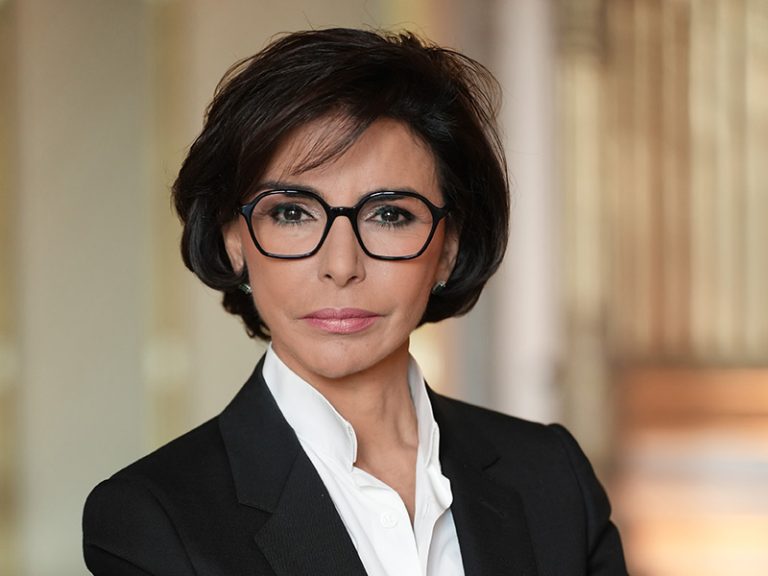
France. Great evening. This March 22, France attended the parade of champions. Atmosphere of a football World Cup and parade of exhausted gladiators. Happy above all. In Paris, the picaresque image of an urban Don Quixote riding his Vélib’ to storm the town hall, shaped the style of the new mayor, Emmanuel Grégoire, elected with 50.52% of the vote. Along the procession…well done. Hands clap in the wake of the councilor who, guiding his horse with one hand, greets the crowd. Victorious. Undoubtedly relieved after the tough battle against a pugnacious Rachida Dati but who allowed herself to be overwhelmed, then devastated by her old demons of power at all costs and her barely veiled appeals to far-right voters. For the new mayor, the cultural ambitions are clear. Continuity. But “ with a reinforcement of what was built by Bertrand Delanoë, Anne Hidalgo and Christophe Girard »he states, then affirming that he wants “create new bridges between public and private actors”. The issue? Maintain the cultural rank of Paris by inventing models to attract young people from the neighborhoods. But also by integrating audiences from immigrant backgrounds.
To the east of Paris, these ambitions for influence are shared by the socialist Catherine Trautmann who is returning to her role as mayor of Strasbourg after twenty-five years of absence. With, as a bonus, some great scares at the start of the election evening where, due to an error by the Ifop institute, Lionel Jospin’s former Minister of Culture was declared defeated. Cold shower then victory at 37% in confusion. For her, the urgency is to “lay the foundations of a culture that shines through events that bring attractiveness”. In short, keep the European Crossroads moving all year round by making it one of the capitals of urban cultures and street performance. In Lyon, the cultural atmosphere will undoubtedly be much more complex. If the city remains on the left with the re-election of Grégory Doucet with 50.67% of the votes, the Metropolis shifts to the right. However, the Musée des Confluences, financed by the Agglomeration, risks becoming the site of difficult cohabitation.
The electoral weight of culture
Faced with these bitter battles, the strategy of conquest through culture has paid off in certain cities like Bourges. On the doorstep of his office, Yann Galut is enjoying his re-election with 53.4% of the votes. All around, there is nothing but cheers. Whistles of encouragement. “For magnificent Bourges, we must stay the course (…) a city that we have put on the roof of Europe”exclaims victoriously the mayor who is reaping the fruits of his strategy of having won the “Bourges European Capital 2028” label. In an unstable and insecure context, would culture gain its electoral weight? Still, in Clermont-Ferrand where the city suffered a setback for this same title, the fall of the socialist Olivier Bianchi is perhaps not unrelated to this disappointment.
In Lille, if a change of style is necessary with the election of Arnaud Deslandes at 49.33%, the victory of Martine Aubry’s colt is seen as a desire for continuity on the part of Lille. Under the flashes and cheers in a crowded room, the councilor affirms that a “a new page is being written here, in Lille, (…) faithful to our ability to reinvent ourselves”. Announcement which undoubtedly sounds like the end of the Aubry cultural system in its omnipotence. The new mayor wants to give power back to local cultural actors in the face of big machines like Lille 3000, which he wants to perpetuate while changing the model.
In the South, the victory of modern conservatives, led by figures like Olivier Galzi in Avignon or Patrick de Carolis in Arles, confirms the challenge of a winning cultural base. The former CEO of France Télévisions won his re-election with 42.39% of the votes, highlighting the countless economic benefits of a city focused on culture. The mayor will continue his creative Arles project, “a full-fledged approach designed to bring together local skills, supported by the image and creative professions”he explains. Same concern for cultural dynamism in Avignon where the Galzi method worked with a hard-fought victory at 40.62%. The former journalist knew how to find the words. And the promises of a cultural influence which will no longer be compartmentalized between July 5 and 25 for the Festival but will extend to the rest of the year with the development of artist residencies and digital and audiovisual creative industries.
Carcassonne, reverse mirror of Villers-Cotterêts
Contrast. On the evening of March 22, two atmospheres reigned in Carcassonne and Villers-Cotterêts. Two ideological readings too. In the first city, Christophe Barthès, the elected RN who captured the city with 40.4%, displayed his determination “to clean the neighborhoods literally and figuratively”. Behind him, no jubilation. No applause. But the mayor’s affirmation of duty accomplished. With the arrival of the extreme right, the medieval city runs the risk of transforming into a bastion of “national novel” with a stated priority in the program of the new councilor, to built heritage and local traditions. Change of scenery in Villers-Cotterêts where the centrist Jeanne Roussel, winner of the RN after twelve years of reign with 52.51%, is carried in triumph by her supporters. The elected official intends to focus on the International City of the French Language as a tool for outreach and openness to the world. Unlike the old RN town hall which sought to link the City to a restrictive vision of the French-speaking world, seen as a bulwark against foreign influences or societal developments. For Emmanuel Macron, who had wanted this cultural facility in the city in 2017, in order to provide a barrier against extremes, it was a winning bet. The head of state had in fact declared that “the reconquest of hearts, of minds, of the Republic, also involves culture” in a territory where the RN achieves its best scores.
Finally, in Nîmes, the communist Vincent Bouget appears on the balcony of the town hall, in front of an audience of supporters. “I will fight for Nîmes to once again become a major Mediterranean city that counts”he declared straight away, with his 40.97% of votes. This professor, who won over the town hall from the right, wants to break the image of a culture reserved for the historic city center and tourists. To achieve this, one of its priorities will be to deploy creative spaces and artists’ workshops in outlying neighborhoods while strengthening artistic education from primary school onwards. But already in the city center of the ancient city, the polling stations are closing their doors. A few exhausted activists are still hanging around before returning. Because behind the paper promises, a question remains. Will culture remain a link or will it serve as a mask for ideological conflict?