Barcelona,
Its exhibitions are necessarily immersive, without the need for screens, because they combine architecture, solutions close to engineering, words and nature. On this occasion, in addition, its spaces are sheltered by those that Antoni Gaudí conceived for Casa Milá, letting himself be carried away by its fluidity and not attending to chronologies in its arrangement, but to curved lines and movements.
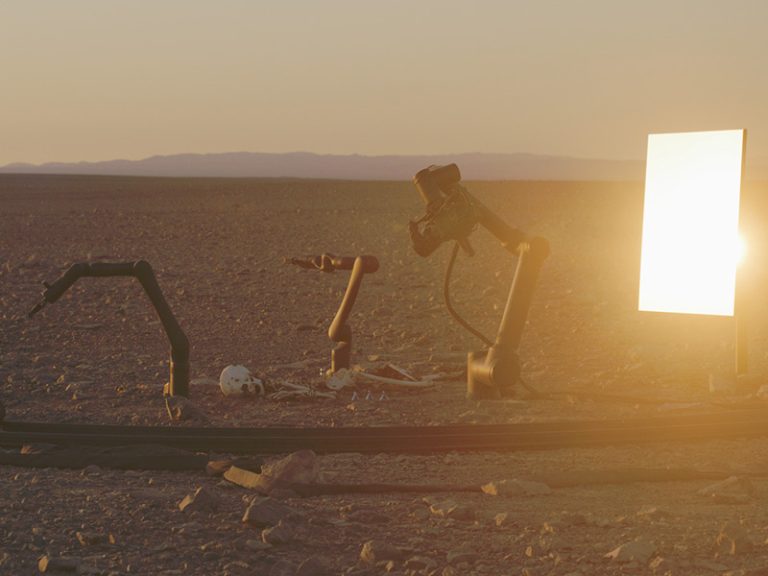
From today until next January, the Fundació Catalunya La Pedrera presents “Passages”, which is the first monographic exhibition of Cristina Iglesias in Barcelona, curated by James Lingwood. It consists of thirty works dated between 2002 and the present, made in very diverse techniques and all of them representative of the career of this artist from San Sebastián, whose production focuses on the possible generation of non-obvious narratives through forms and materials, on the articulation of alternative ways of inhabiting and understanding the environment and on the study of the viewer’s perception when they are trapped in those new spaces within the usual space.
One of the works exhibited is unpublished for the occasion (Mineral Forest) and another, large format, greets the visitor in the courtyard of Paseo de Gracia (You will see the land). From their very titles they evoke the landscapes and geologies, even the subsoils, that have nourished Iglesias’ proposals, which formally offer an evident richness of textures, volumes and changing perspectives. In that last one, You will see the landthe passage of time and water become sculptural elements: the presence of the first, fluid and transparent, prevents the piece from remaining static and also disorients us.
Iron, bronze, cement, concrete, glass and water, shadows, chiaroscuros, plays of depth and hidden texts make up pieces that can almost never be contemplated from the outside, but wandering along paths and passageways that amplify their lighting effects.
Suspended ceilings completely modify our vision of the rooms of La Pedrera; and lattices with influences typical of Arab carvings still delimit interiors and exteriors, filter ambient light and incorporate fragments of classic stories, such as those of Arabian Nightsprojected by their shadows.
This author possibly immersed herself in the deep ties that can be established between sculpture and architecture in London in the eighties, with the help of the so-called new British sculpture, and also with the Düsseldorf School. There she became familiar with the proposals of Eva Hesse and those closest to the land art of Robert Smithson, although she decided to stay away from defined currents and work on her own path, combining materials of diverse origins with those natural or organic forms. The readings of his projects are broad, but it is easy to perceive that Iglesias appeals to the basic and telluric essences of primitive architectural constructions or to the idea of refuge in the natural environment on which so many authors have created since the Renaissance, uniting symbolism and architectural past when treating water, air or volumes. Aside from these historicist connections, or perhaps energetic ones, these works also connect with the imagination: with places of the mind and with the thresholds that separate them from the tangible and real.
Another fundamental aspect of his work is the exaltation of the living side of the same materials, only perceptible by those who are capable of transcending the contemplation of their inert appearance.
This exhibition will be completed, starting October 28, with a documentary by David Trueba that offers an intimate look at her creations: it delves into Cristina Iglesias’ studio and her processes, and also addresses the preparation of this exhibition, with testimonies from the artist about what organizing a presentation in La Pedrera entails.
Iglesias’ next exhibitions will take place in London and New York; He is also working on permanent works in Sweden, Denmark and Chicago and, as early as 2027, the Parisian Fondation Cartier will also show his past and recent pieces.

“Cristina Iglesias. Passages”
CATALUNYA LA PEDRERA FOUNDATION
Carrer de Provença, 261 – 265
Barcelona
From October 9, 2025 January 25, 2026