Vienna,
The brilliance of their brushstrokes, their versatility, the extensive range of themes he cultivated (including male nudes and history painting, unusual among women artists) and the security with which he represented those same anatomies related to Michaelina Wautier (1614-1689) with the great figures of the flamenco baroque, but his name will only be familiar to a few.
At his death, he fell practically forgotten and his work was subject to erroneous powers that survived recent time, hence the importance of the anthology that the Kunsthistorischesches Museum Viennese dedicates to tomorrow and that has been organized along with the Royal Academy of London, where he will travel in 2026. It consists of almost all the work that they were winning today. shown to the public.
It is likely that he was born in Mons, in a cultured family and relieved economy that allowed him to devote himself to painting, although we know he did not have access to academic training. He achieved, however, to make his way in the intellectual and artistic circles of the Habsburg Court in Brussels, a city where he lived with his older brother, Charles Wautier, also a painter.
Possibly both shared study, but if they collaborated, for example, in the realization of large -format works, it is still a mystery. The fact that he never married could have been a deliberate decision, for his preference for painting, but it is an assumption: we barely have biographical data, documents or letters as an informative source, only of his work, which came to possess the archduke Leopoldo Guillermo, governor of Brussels and large collector.
This is a signed work: unlike many artists of his time, Wautier used his full name in his Latin form (not Michelle, but Michaelina), perhaps a way- again, perhaps- of emphasizing both his education and his independence. And in two of his fabrics he went further: he used the formula Invenit et FECIT (conceived and executed), maybe in response to those who would like to question their creative imagination.
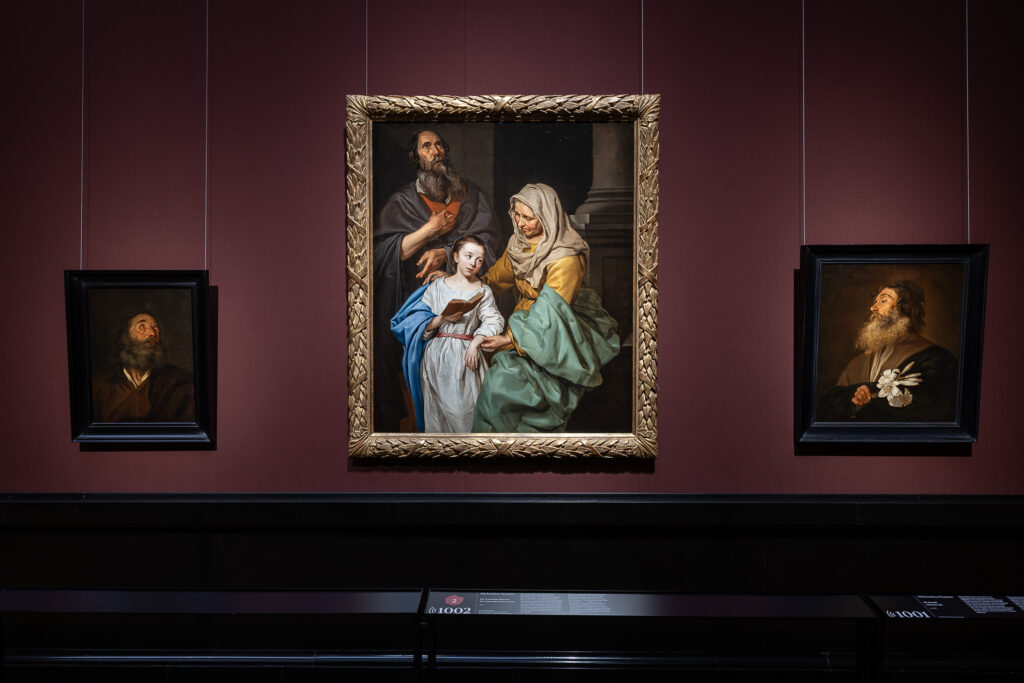
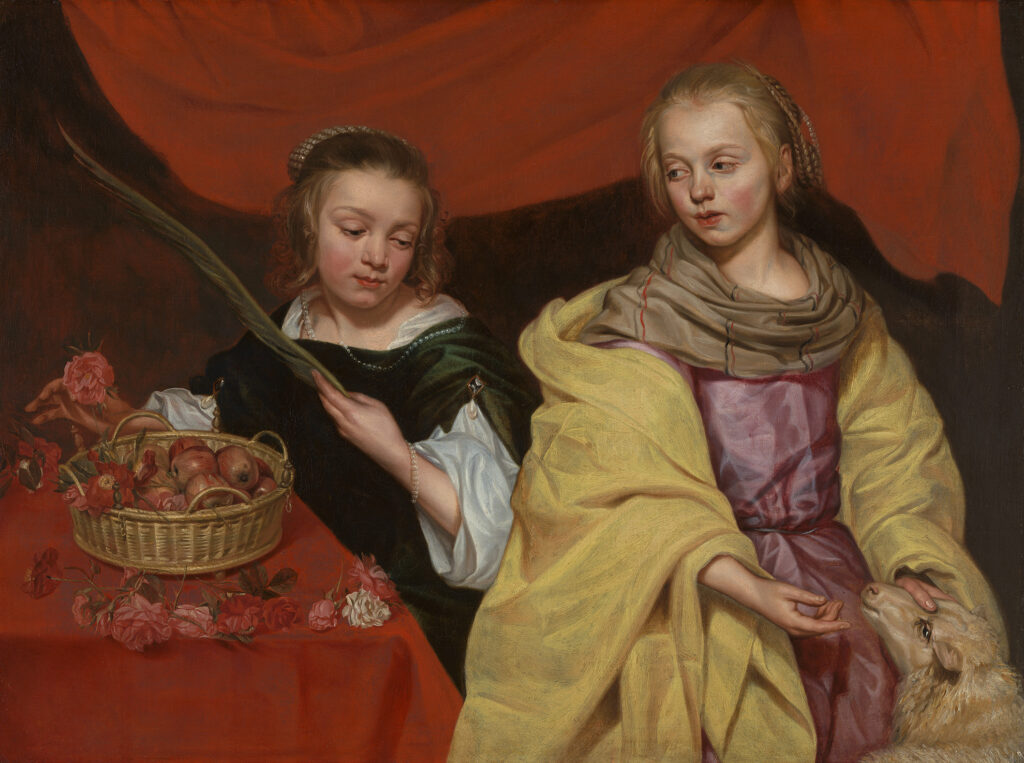
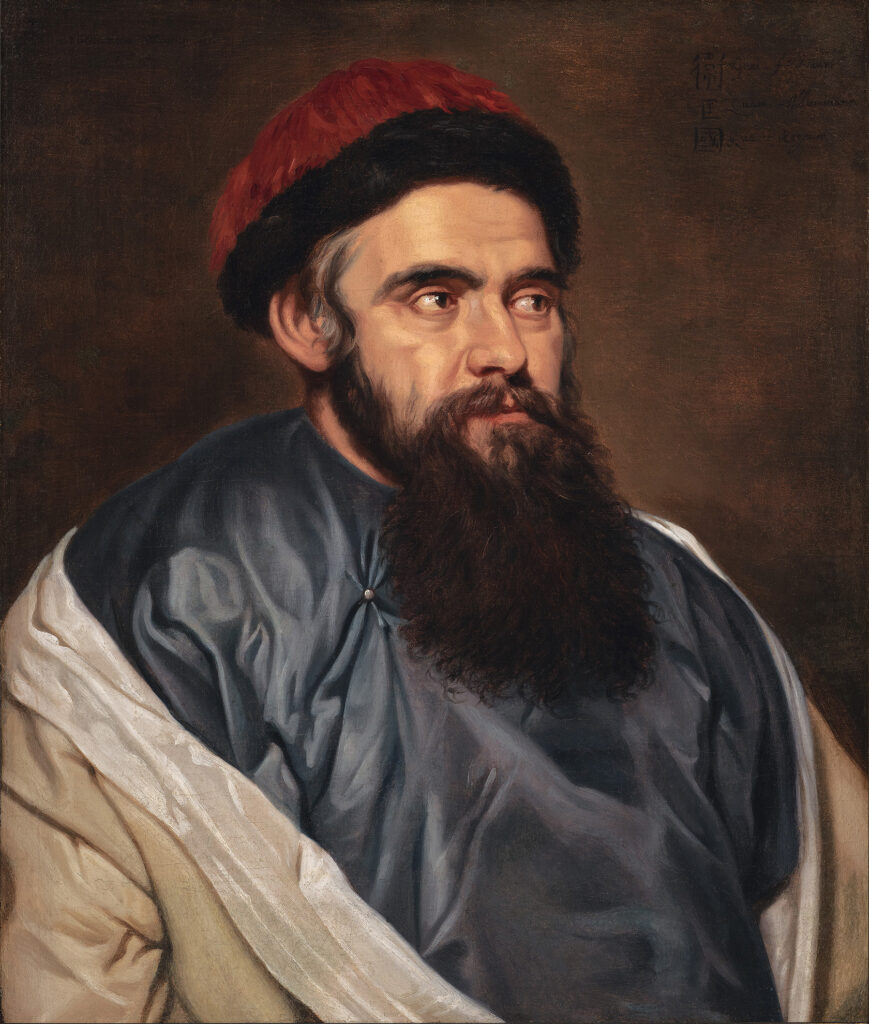
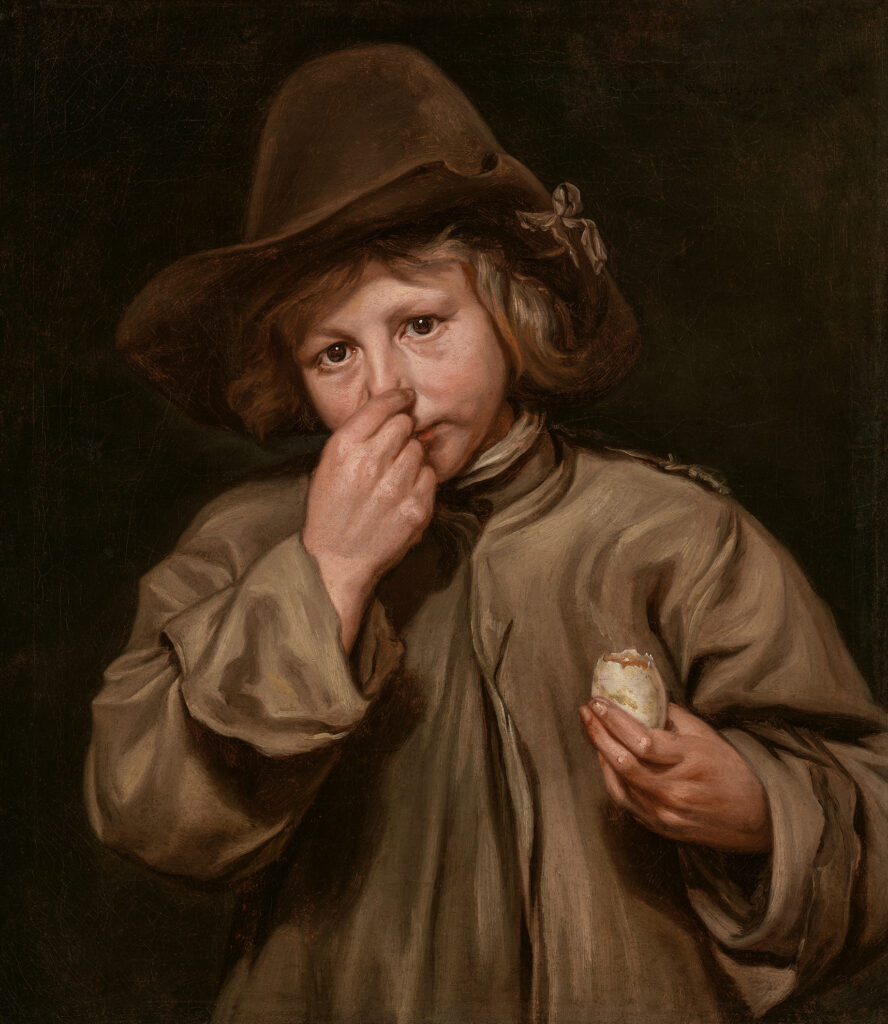
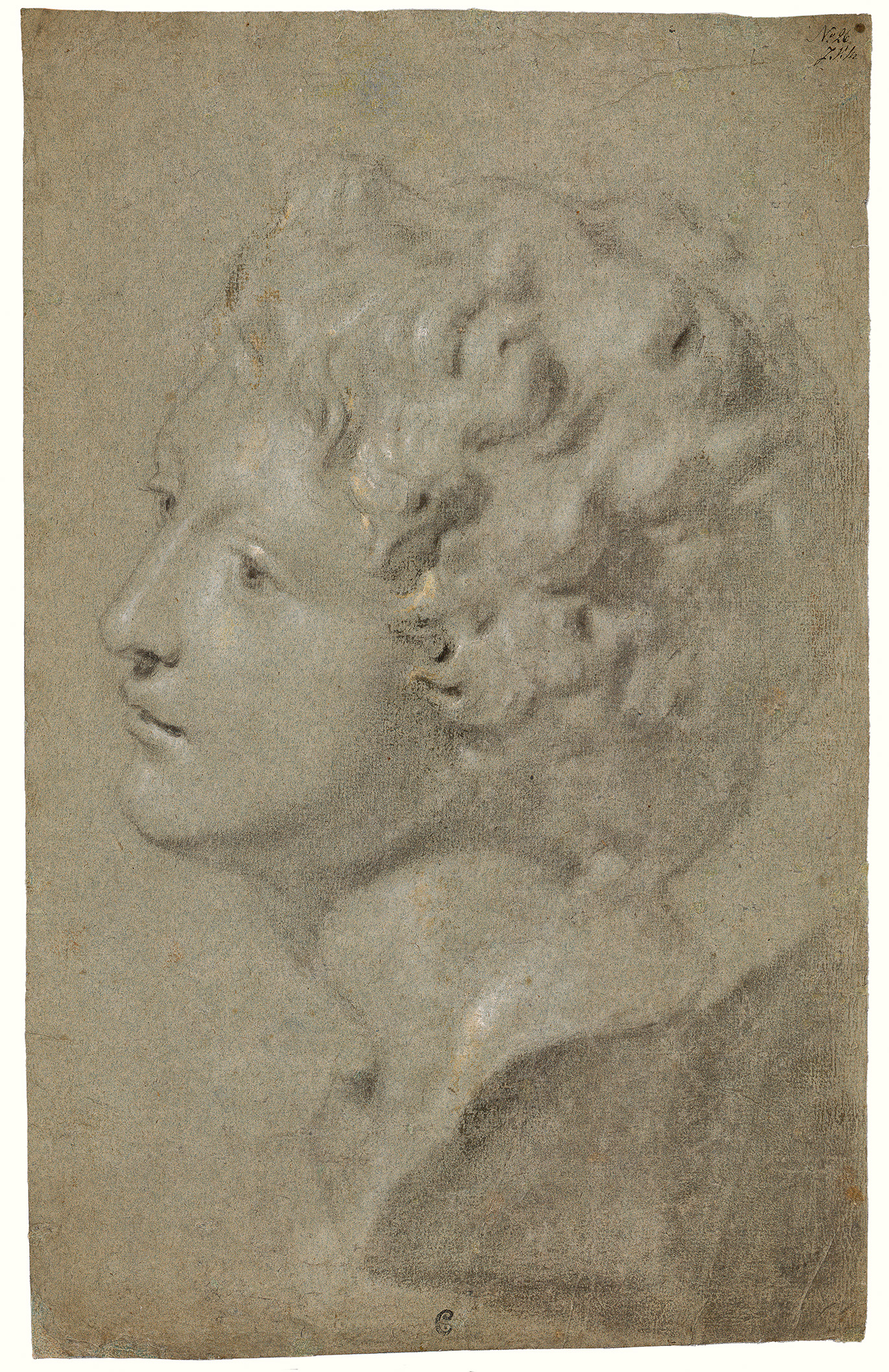
On the tour of this exhibition, twenty -nine paintings await us, a signed drawing and an engraving based on a lost work, which are put in relation to pieces of classical antiquity and flamenco teachers such as Rubens and Van Eyck. Most of its production is treasured by the Kunstmuseum thanks, precisely, to which it belonged to the archduke Leopoldo Guillermo, but they have also reached Vienna canvases of Austrian and international collections and private funds; We can contemplate your major works (Baco’s triumph, San Joaquín reading, San José and San Joaquín) and a series dedicated to The five senses which is exhibited for the first time in Europe, a self -portrait, a beautiful Flower guirnalda with butterflychildren’s portraits of Santa Inés and Santa Dorotea, another of the Jesuit missionary Martino Martini or a scene of The education of the Virgin.
Commissioner Gerlinde Gruber has worked by extracting from the images the information that cannot be found elsewhere: finding influences of Van Dyck, Van Loon and Crayer in the Sutility and Elegance of Wautier, and Echoes of Caravaggio in his chiaroscuros.
This retrospective begins with compositions of biblical or religious theme: the aforementioned stand out The education of the Virgin (1656), which represents the young Mary learning to read, with a masterful use of light. In their portraits of Santa Inés ysAnta Dorotea (1655) demonstrated, on the other hand, his talent for the capture of the psychological depth of the characters.
Their portraits have their own chapter, which show their narrow links with the Court of Brussels and the influential of their patrons. He captured military and clergy from acuity; In the case of Martini, it was extremely rare that a man in his range was portrayed by a woman. Scholar and cartographer, created China’s first printed Atlas, dedicated to the archduke, so in Wautier’s work we watched the court of the court of that country.
It is likely that, if the artist became sued by Leopoldo Guillermo, he had a network of consolidated collectors, and a purchase receipt that has been preserved indicates that she received remuneration for her work.
In contiguous cabinets, works by the Wautier brothers (devotional paintings and altarpieces) are related to those of Rubens, Anthonis van Dyck, Jacob van Oost the old man, Cornelis Meyssens, Pieter de Jode the Younger, Cornelis Galle El Viejo and Theodoor van Merlen the young man, revealing his aesthetic ties.
The exhibition of the Archduke collection is part of the exhibition. Although he believed he was lost for a long time, his rediscovery allowed to verify for the first time the origin of Michaelina Wautier in Mons and attribute three paintings in the funds of this Museum of Art History of Vienna: San Joaquín reading, San José and San Joaquín. The latter had mistakenly attributed to his sister Magdalena in the inventory of 1659, but a contemporary note on the reverse, probably from David Teniers the young man, responsible for the collection of Leopoldo Guillermo in Brussels, appoints “Michelline Woutiers” as its author.
The painting of San Joaquínwhich had not been publicly exhibited since 1781. A radiographic analysis confirmed that it was originally rectangular: it became an oval, by drastic interventions, during the reorganization of the imperial gallery under the reign of Carlos VI and until 1967 its format was not returned first, although later it remained stored.
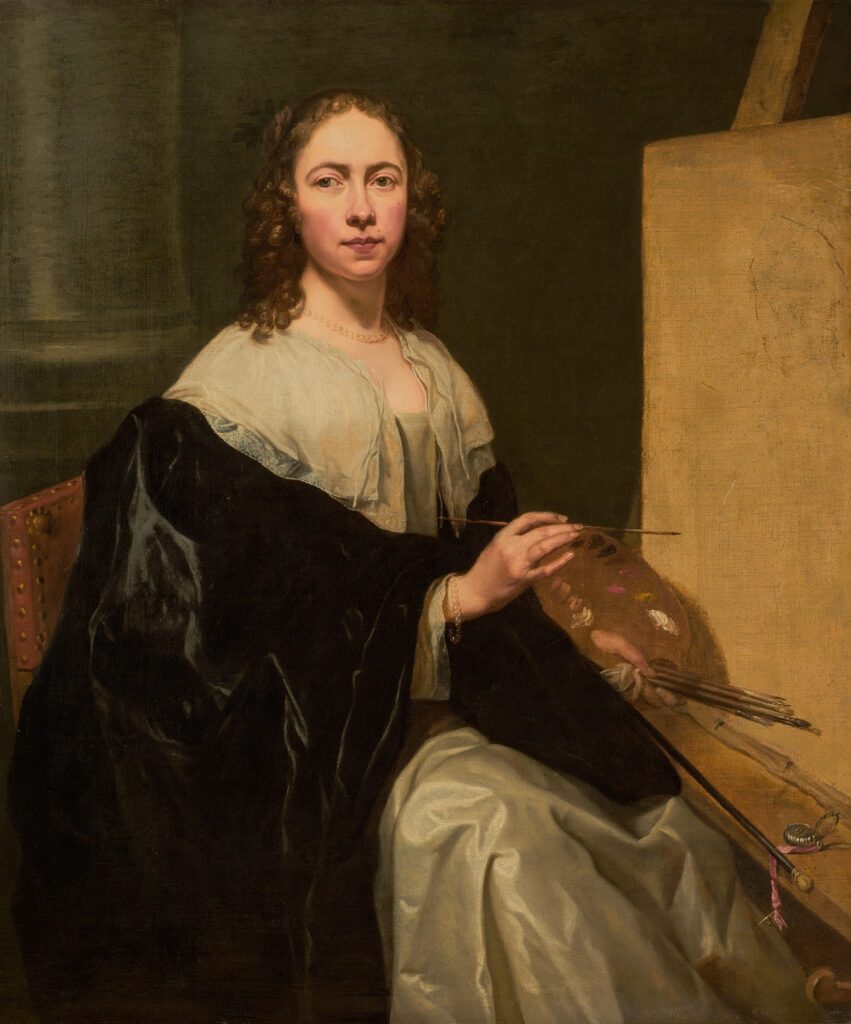
The innovative spirit of the painter is extolled in a section conceived around its self -portrait, where he presents himself as a safe artist of herself, in front of the easel and with her instruments of the trade. Strikingly, the artists in this period were working, claiming in their work, in front of the social recognition symbols that used to accompany them (gold chains, theseques).
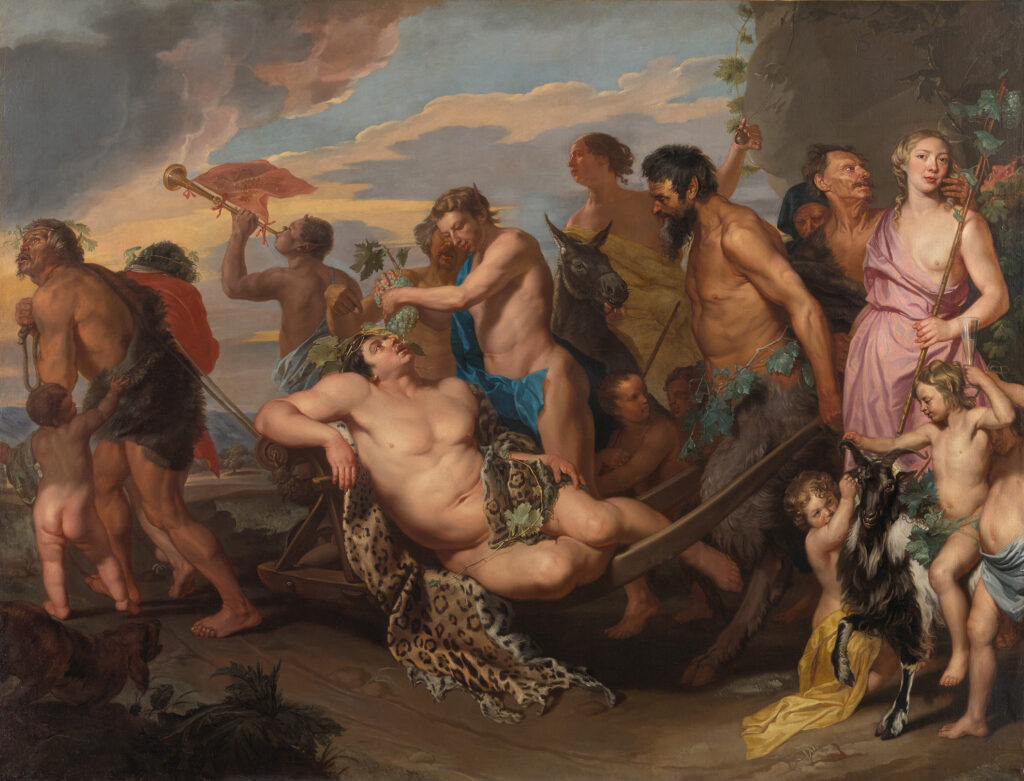
In the Monumental Bacchus triumph Wautier appears again with little clothes, such as a bacante, with his own face in direct visual contact with the public, a powerful gesture of self -affirmation. His knowledge of the male nude, probably acquired through private drawing studies with models, led to this work being mistakenly attributed to painters for a long time, including the Rubens and Luca Giordano workshop.
And with humor and sensitivity would compose that series of The five senses (1650), childhood scenes that reveal their ability to observe and their portrait. Immediately afterwards, another gender scene carried out: Children blowing bubbles (1650-1655), an allegory of the transience of life.
Even their flowers centered on their renovating spirit: those garland painted on table, in Antwerp in 1652, combine the conventions of baroque floral painting with former motifs of loop, a unique approach in flamenco art. Your only known drawing, Study of a Bust of Ganimedes, the Medici (1640-1650), points, on the other hand, to its commitment to antiquity, possibly derived from a trip to Rome, his brother Carlos or his knowledge of the collections of local antiques.
The history of art was for her a trip of discovery of which she wanted to be part.
“Michaelina Wautier, Painter”
Kunsthistorisches Museum
Maria-Theresien-Platz
Vienna
From September 30, 2025 to February 22, 2026