Mostoles,
Crafts, popular folklore, games, teaching, nature and the sky itself are some of the interests of Antonio Ballester Moreno, author of abstract landscapes of pure colors whose creation begins by sketching them as collages and using cardboard and glue. In his canvases we find symbols that, due to their primary colors and the essentiality of their shapes, make clear reference to the vital elements of the countryside (sun, water, plants). Ballester is convinced that, regardless of his intellectual readings, art must summon our senses, and in that way all viewers. Other times he has used materials such as untreated jute or clay, in installations that refer to stars and stars gravitating over chromatic fields.
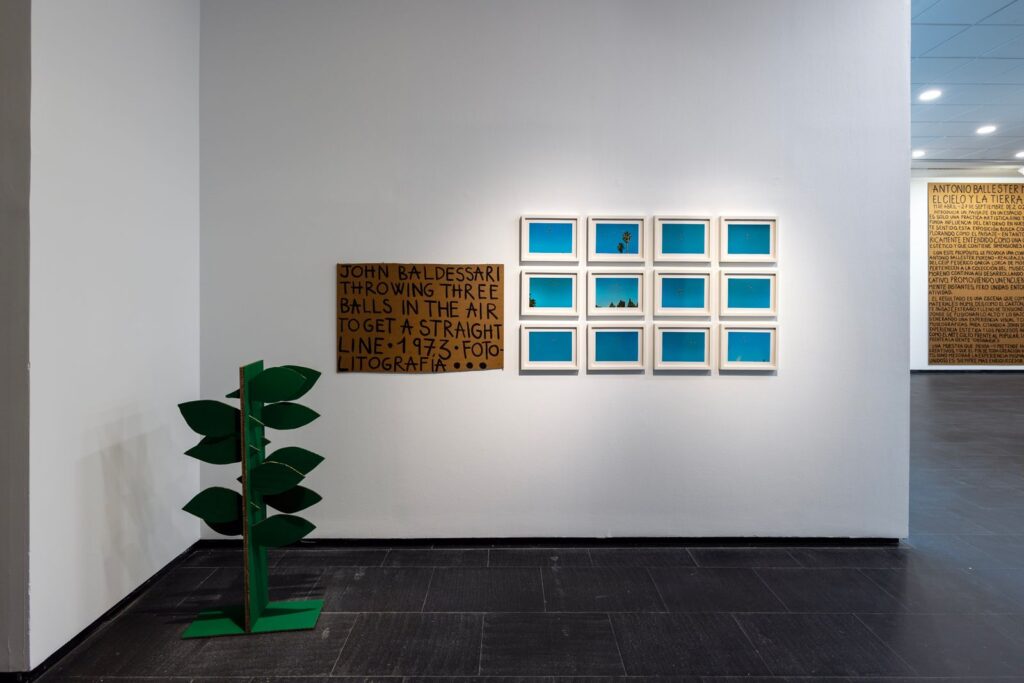
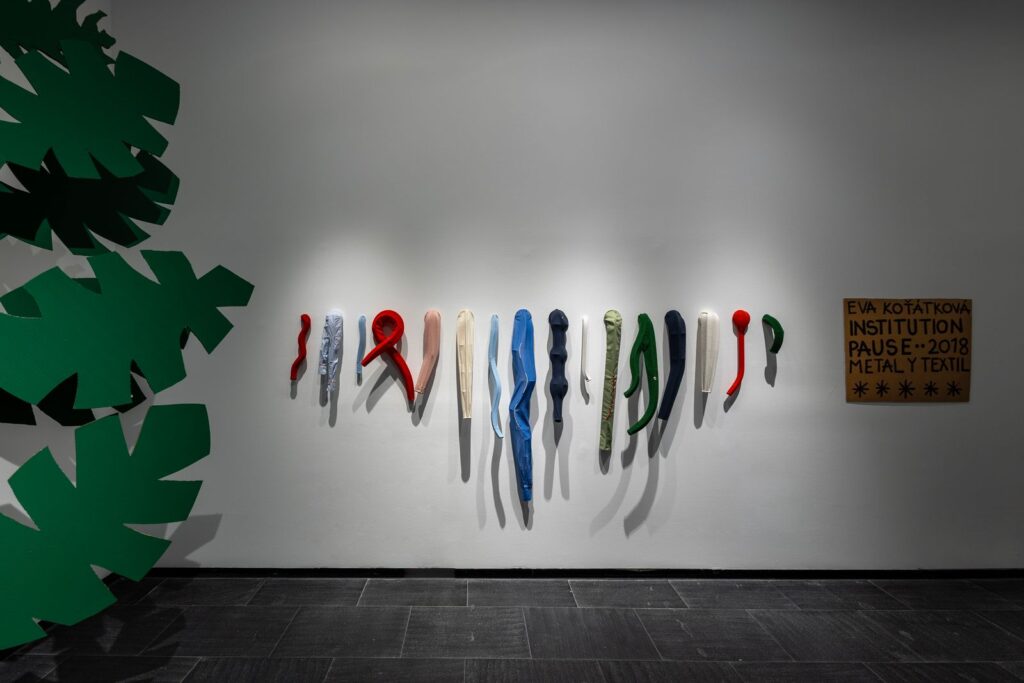
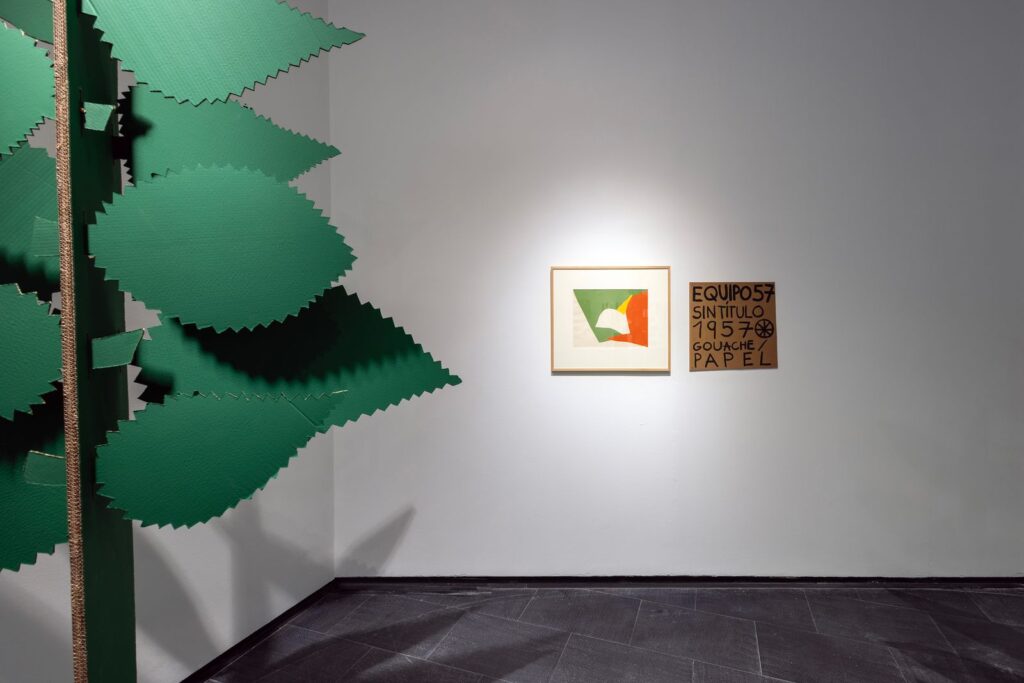
He has also devised pedagogical projects, delving into what the artistic act implies in its aspect of manual action and in the possibilities of creating sets, and both aspects come together in “El cielo y la tierra”, the exhibition that the CA2M of Móstoles is now offering you, until next September.
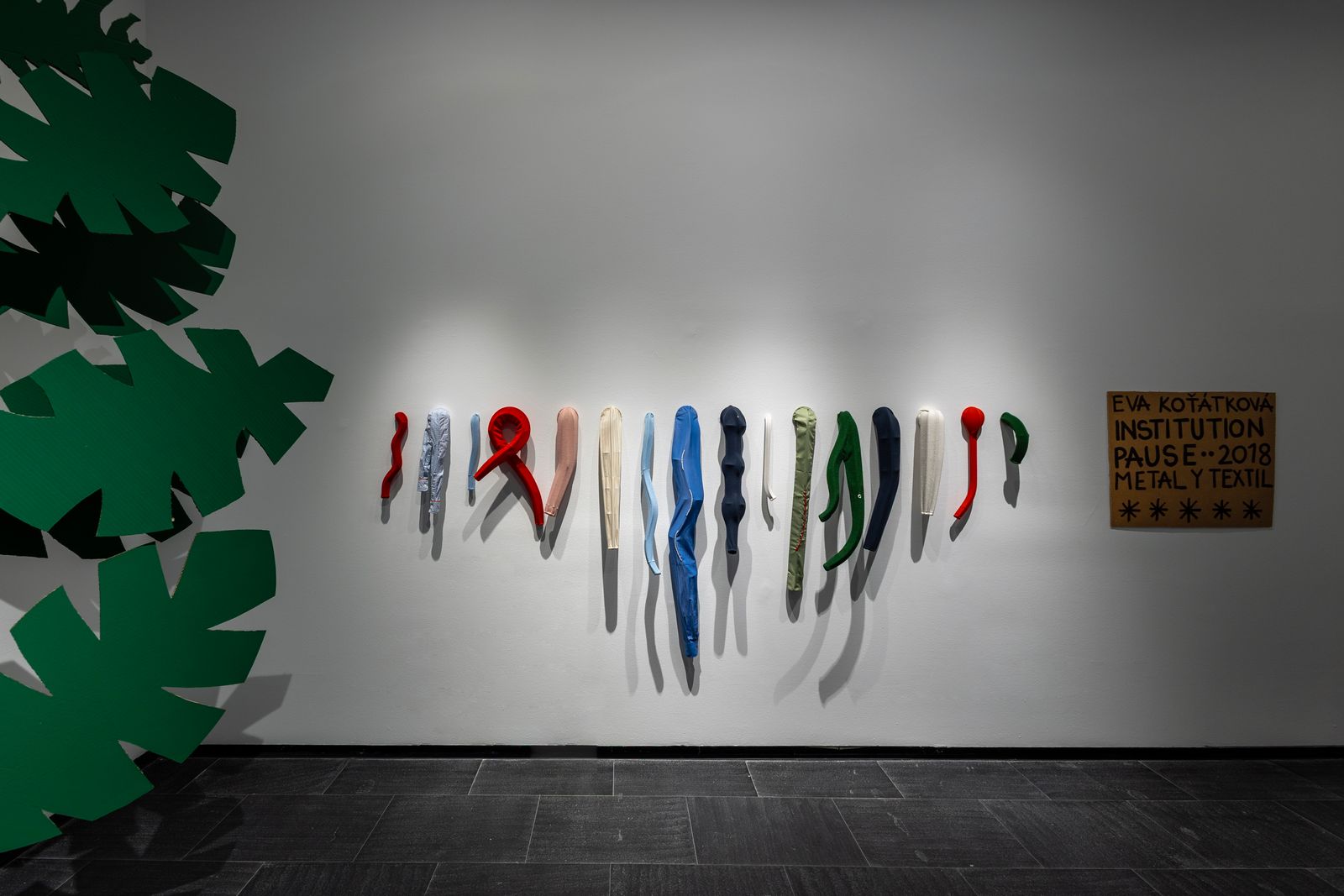
It is a re-reading of a selection of this institution’s collections: around thirty pieces by national and international creators, from different generations and who have worked in very diverse media and purposes; We are talking about Ibon Aranberri, José Luis Alexanco, John Baldessari, James Bishop, June Crespo, Ángela de la Cruz, Equipo 57, Sahatsa Jauregi, Mike Kelley, Leopold Kessler, Sol LeWitt, Ángeles Marco, Ana Mendieta, Itziar Okariz, Alberto Sánchez, Jordi Teixidor or Isabel Villar.
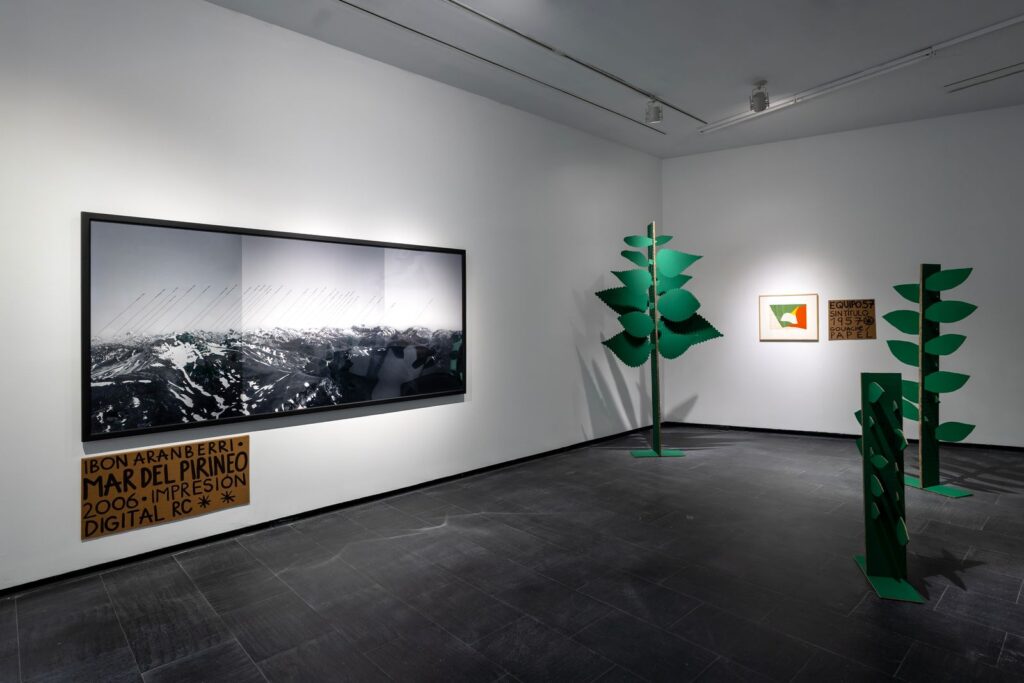
Precisely the heterogeneity of his proposals favors Ballester Moreno’s intentions: to question established museographic trends, claim non-hierarchical creativity and review the possibilities of landscape as an artistic genre that also has geological, anthropological and social implications, which allows it to be examined from non-univocal perspectives.
For this initiative, Ballester Moreno has worked with families and students from the CEIP Federico García Lorca in Móstoles in a set of collective workshops. In these sessions, the participants jointly made creations based on seasonal landscapes and natural elements, such as the sun or the moon, motifs, as we said, constant in their career. Both art and the landscape itself are taken by Madrid residents as starting points for the encounter of different people and for didactic actions.
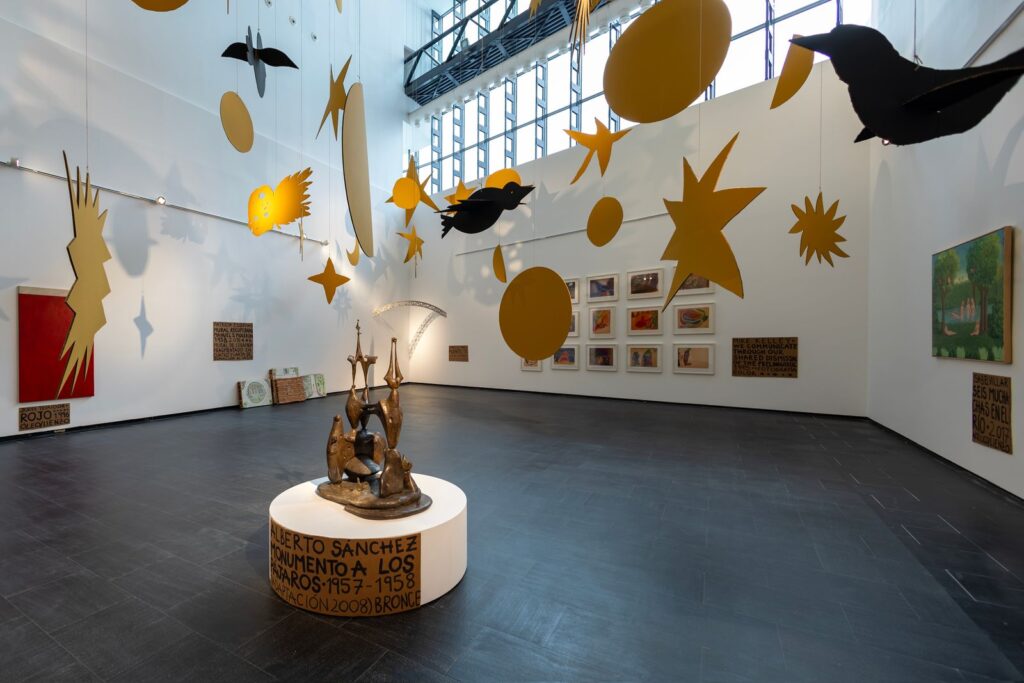
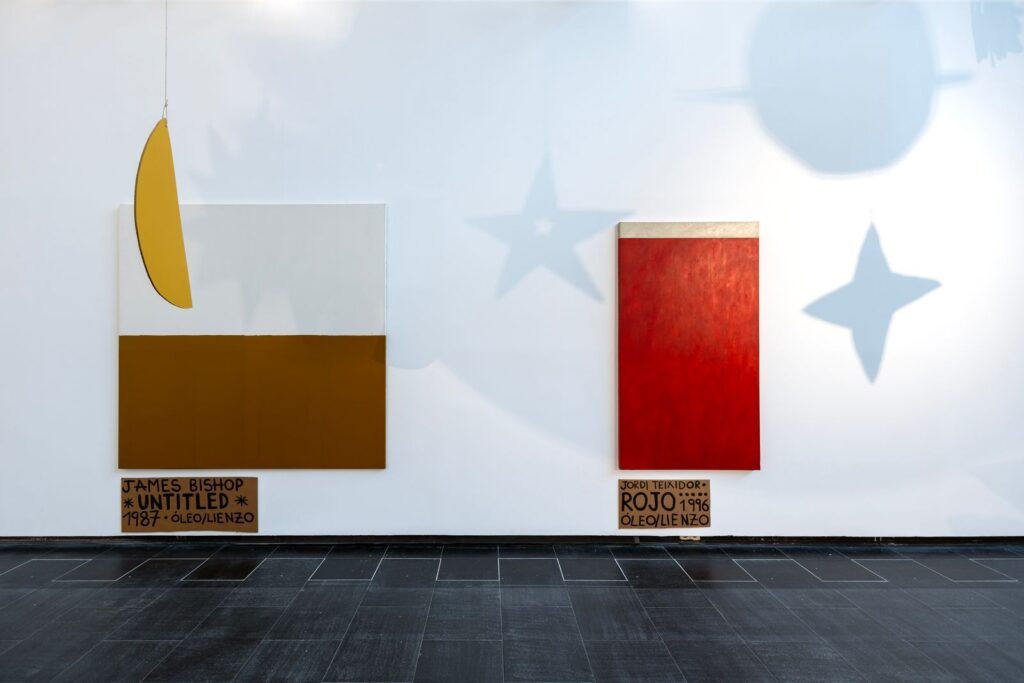
The fruit of these workshops can be seen in the CA2M, along with those nearly thirty pieces from the museum’s collections: thus, the creations of that formative community, made with humble materials, such as cardboard, coexist closely with works by established artists. Rather than placing them exactly on an equal footing, Ballester’s objective has been to question the usual rankings and propose an expansion of the ways of approaching the artistic impulse, without fearing the confrontation of apparently distant views when they have creativity as a common link. It is based on the premise that we are all, precisely, creative and that any artistic work, rather than knowledge, can lead us to an expansion and improvement of our life experiences.
The scenography of the exhibition has been proposed as an interior landscape, focusing on the weight of the environment on individual physical experiences and political understanding in relation to nature. In this case, the fusion of opposite elements – the sky and the earth, the day and the night or the high and the low – are taken as a symbol of other dualities to shoot at, such as those cited by John Dewey and that have traditionally separated high art from popular art or individual authorship from collective authorship. Dichotomies that can be discussed through contemplation, in dialogue, of the works made in the workshops and the pieces in the collection.
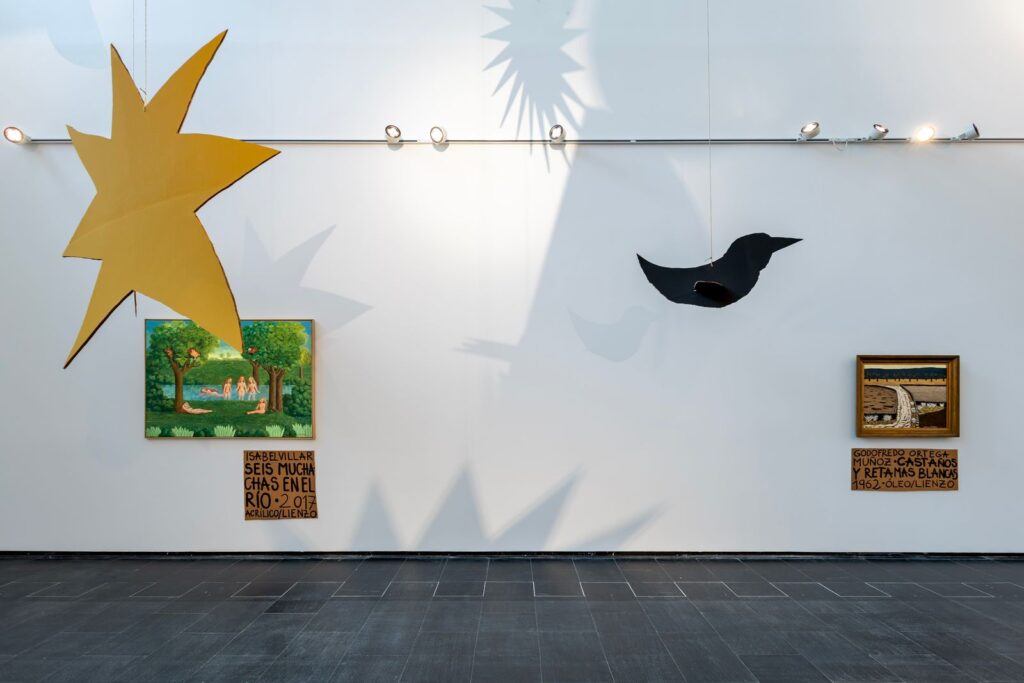
Antonio Ballester Moreno. “Heaven and Earth”
CA2M. DOS DE MAYO ART CENTER
Avenida Constitución, 23
Mostoles, Madrid
From April 11 to September 27, 2026