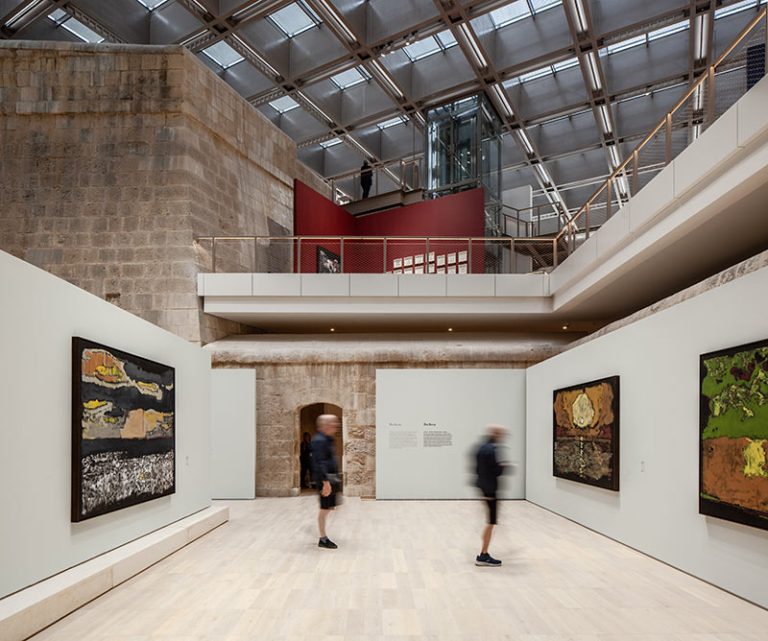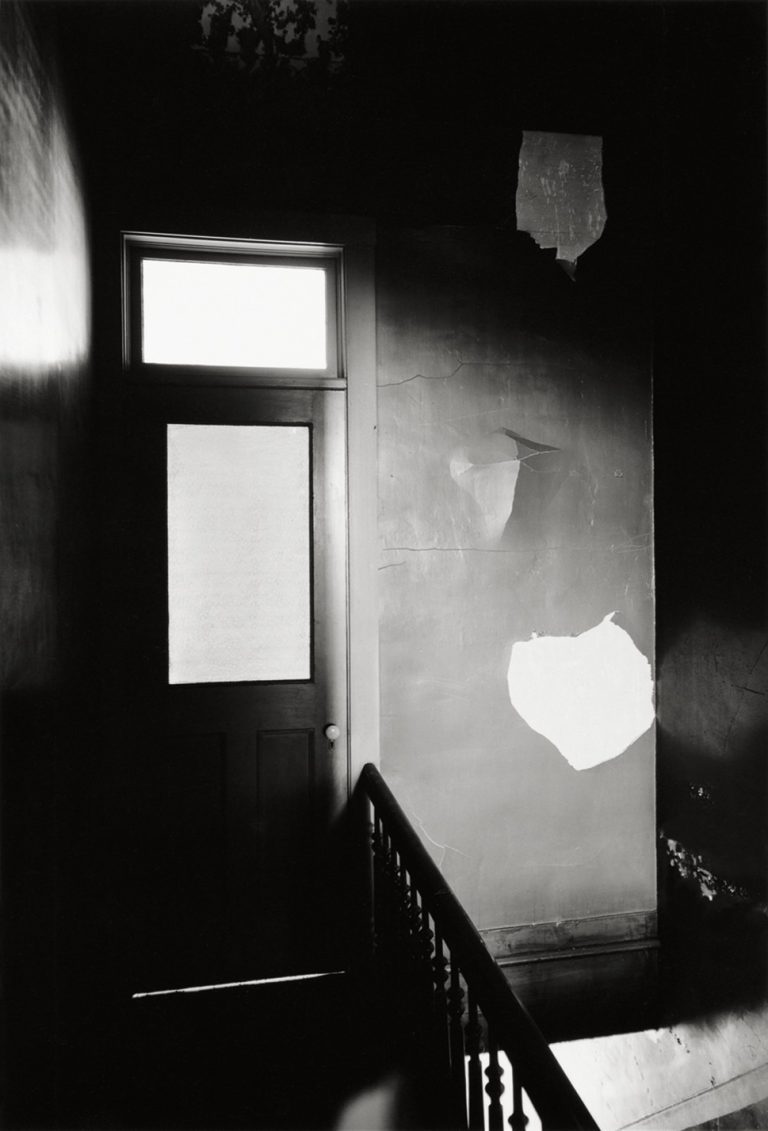
From the evocation of distant sounds, such as bells in the landscape, to carefully painted scores – sometimes legible and recognizable, and others, simple trompe-l’oeil or incomplete – the representations of sound in painting have been deployed on many levels. The artists challenge us and play with our auditory memory in images that also allow us to recognize the materiality of the musical instruments and the objects that sound, the gestures of their players, the dance movements and the abstraction of the schemes of that art. And they can also provide symbolic, aesthetic and cultural keys related to the intersections between music, dance and art in each historical stage.
Until next November at its Cultural Center in Malaga, the Unicaja Foundation offers the exhibition “And the music sounded. Musical iconography in art”, which collects a series of those representations of the musical in visual creation, dating between the Middle Ages and the 20th century and linked to very diverse contexts: from everyday life and ritual to creative inspiration, from spirituality to communication. For this project, curator José Luis Romero Torres has selected paintings, sculptures, engravings, photographs and documents in which, in addition to becoming aware of the importance of sound in compositions intended to be contemplated, in principle, in silence, we will be able to learn about instruments that are no longer used or have disappeared.
And the music played. Musical iconography in art. Unicaja Foundation Cultural Center, Malaga
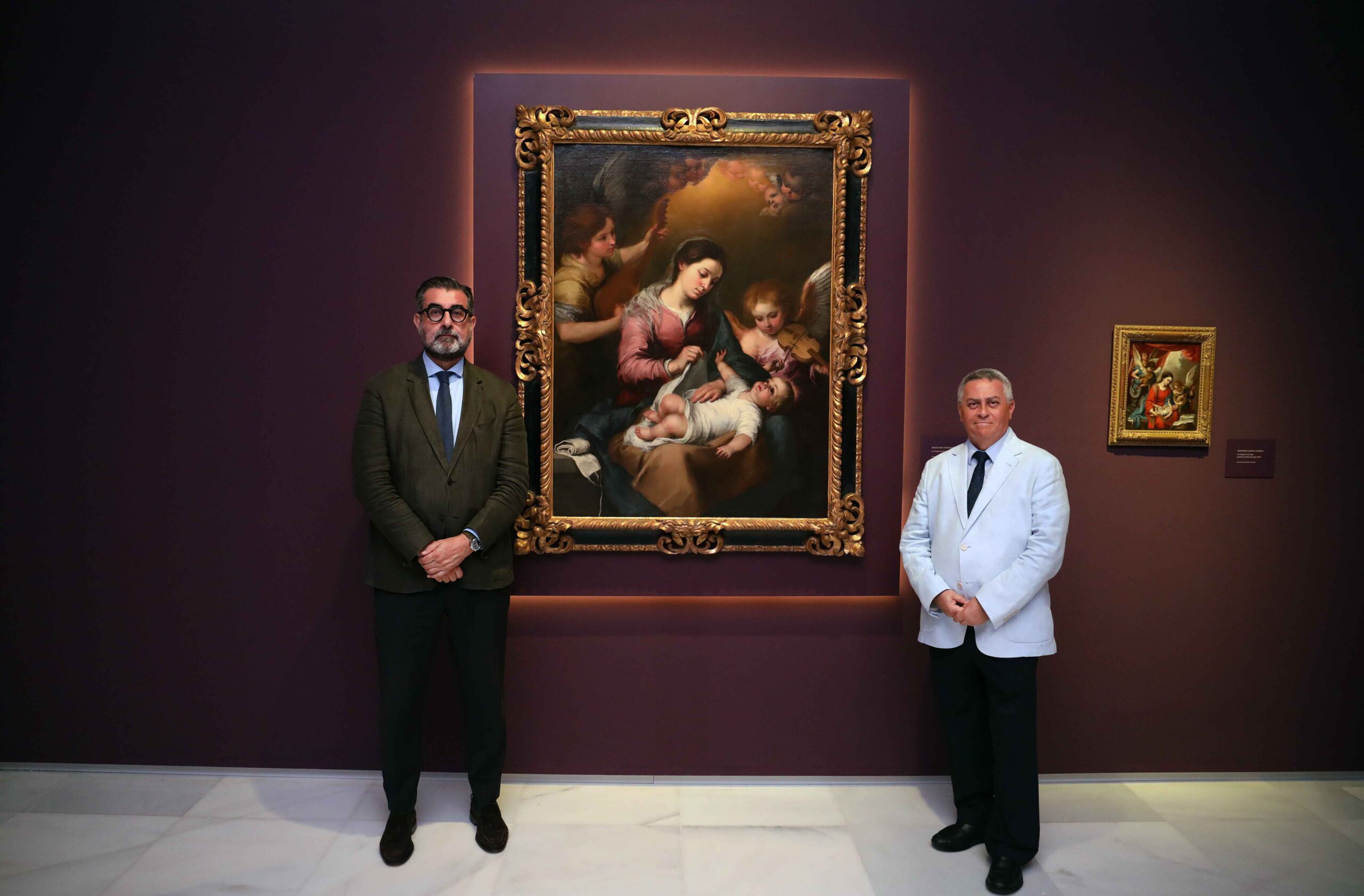
And the music played. Musical iconography in art. Unicaja Foundation Cultural Center, Malaga
The tour is organized into five thematic and non-chronological sections, starting with the least obvious of them, The silencein which we will see still lifes and traditional scenes by authors such as Pedro Camprobín, Cornelius Norbertus Gysbrecht, Enrique Simonet, José Moreno Villa or Rafael Alberti; They have in common the presence in them of scores that make it possible to delve into the evolution of musical notation between the 16th and 19th centuries.
Next, The music stages It includes some of the spaces in which it was performed in the Modern Age and at the beginning of contemporary times. We should not miss a scale photographic reproduction of the curtain of the Cervantes Theater in the Malaga capital itself painted by Bernardo Ferrándiz in 1870, along with other paintings and sculptures that allude to popular celebrations, singing cafés, pilgrimages and traditional festivals.
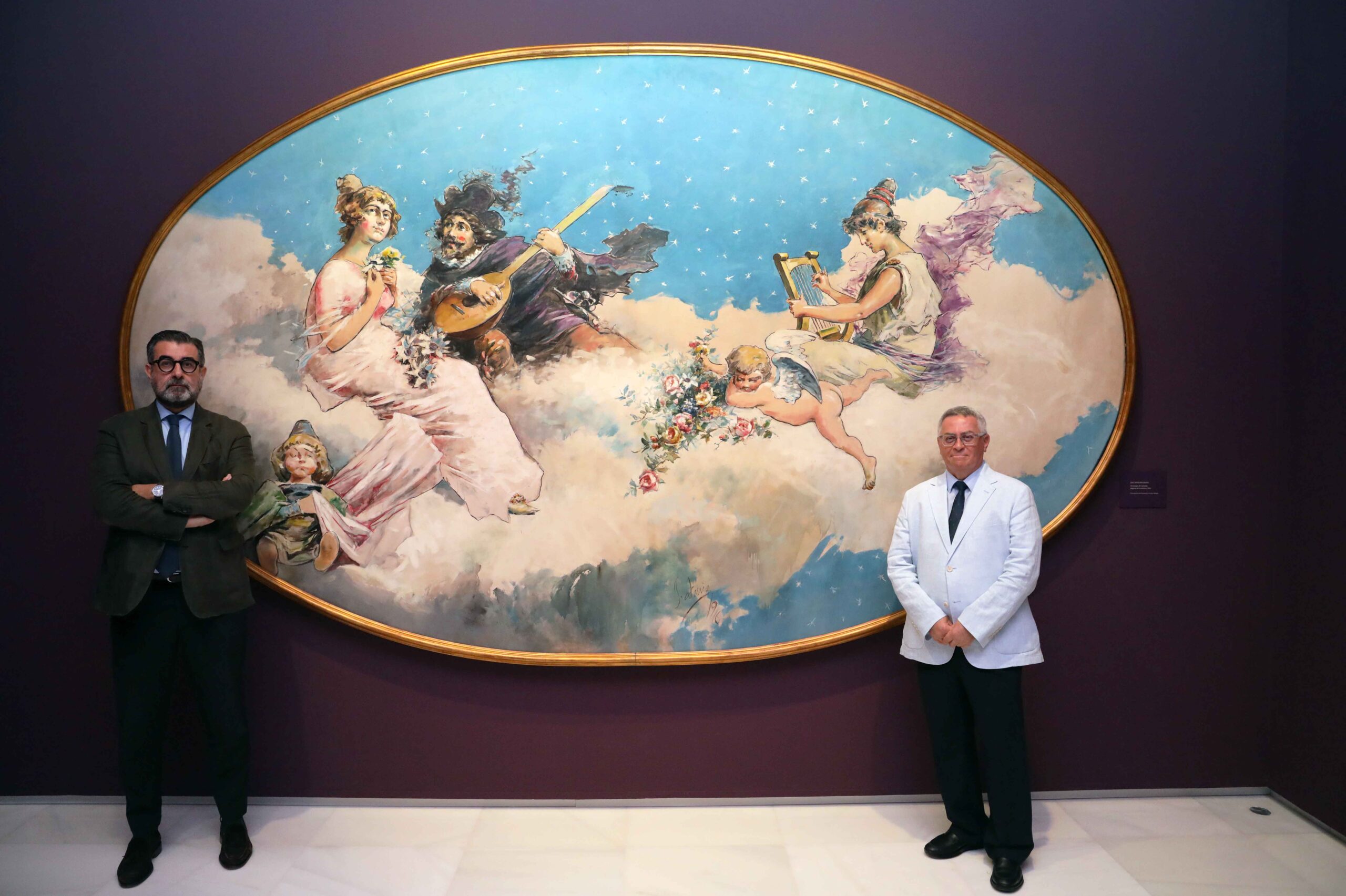
The chapter focused on the protagonists of music is subdivided into several thematic axes related to music as a symbolic language through figures such as Apollo, Marsyas or Orpheus present in compositions by Giovanni Battista Langetti, Miguel March, Bernardo Ferrándiz and José Denis Belgrano; with women as interpreters and protagonists of this discipline according to the perspective of Julio Romero de Torres, José García Ramos and Francisco Domingo Marqués; and with musicians, from King David playing the harp to the blind musician.
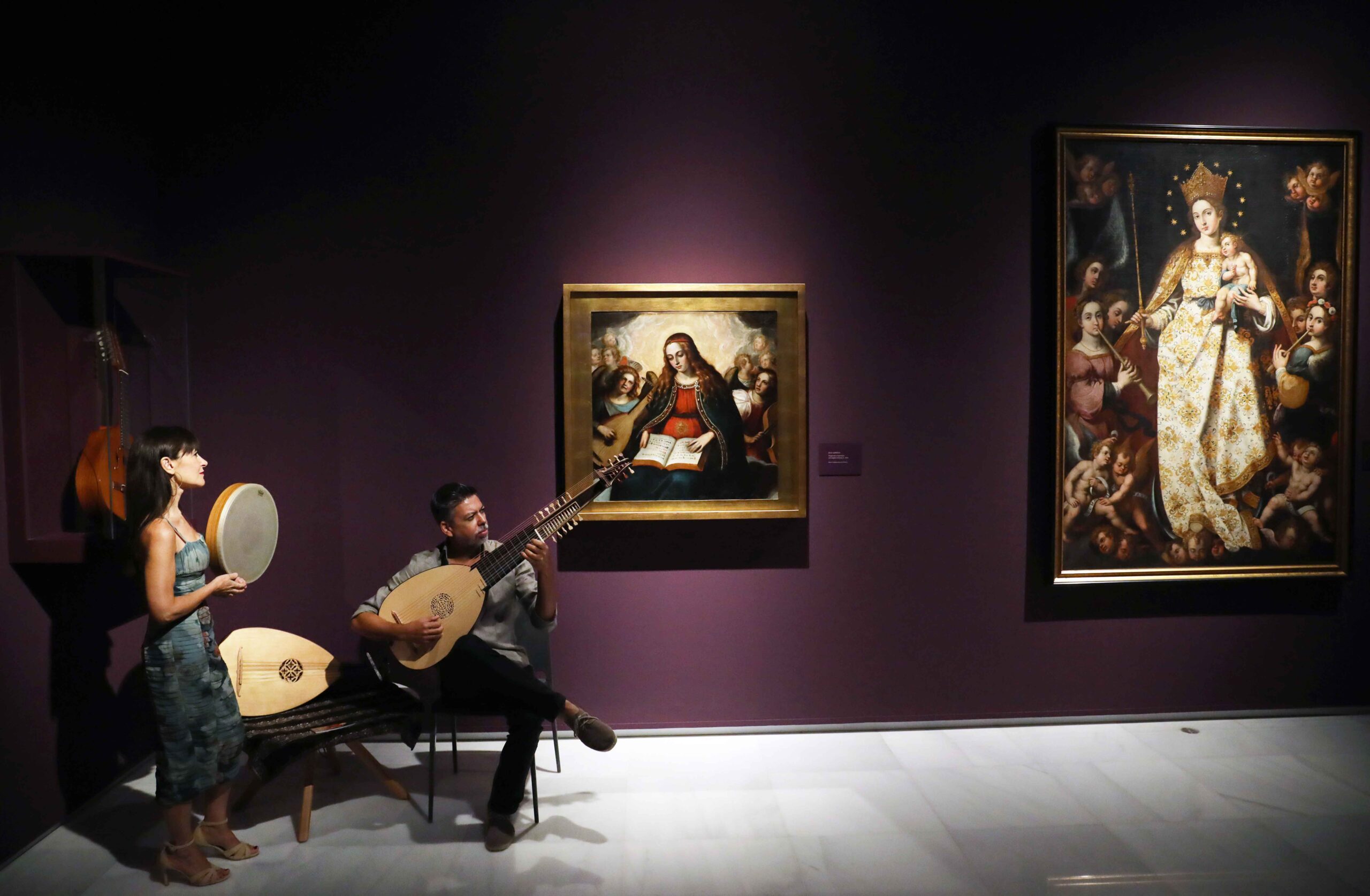
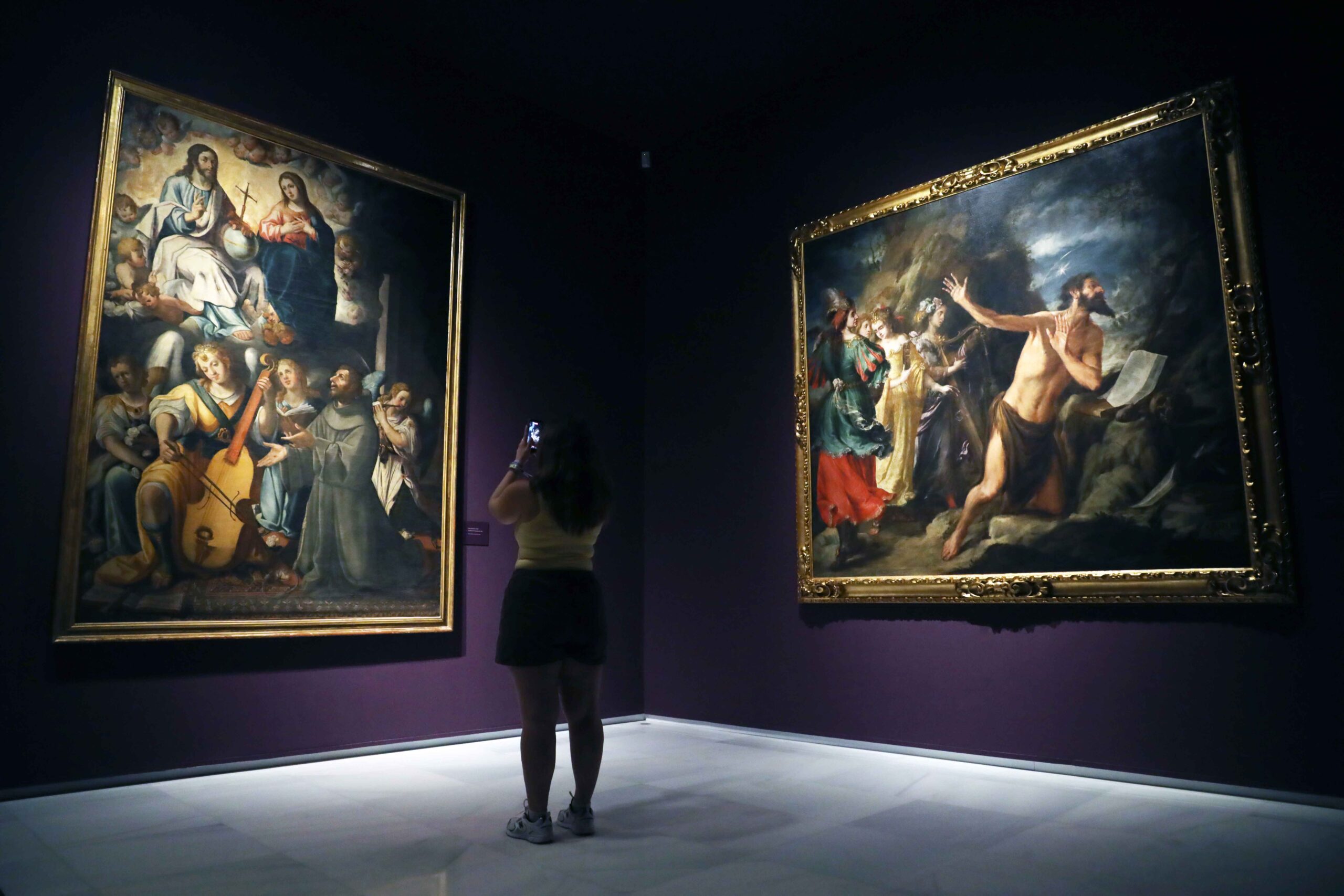
A section focused on celestial music could not be missing: musical angels have often accompanied visions of saints and Marian scenes. We will consider in that section The Virgin of the Girdle by Murillo, who has returned to Spain after his journey through galleries and private collections in Paris, Germany, London, Japan and Switzerland; Likewise, works by artists such as Pedro Campaña, Juan Sánchez Cotán, Francisco Ribalta, Guido Reni, Francisco Pacheco, Juan de Valdés Leal or Alonso Miguel de Tovar are shown here.
And the music played. Musical iconography in art. Unicaja Foundation Cultural Center, Malaga
And the music played. Musical iconography in art. Unicaja Foundation Cultural Center, Malaga
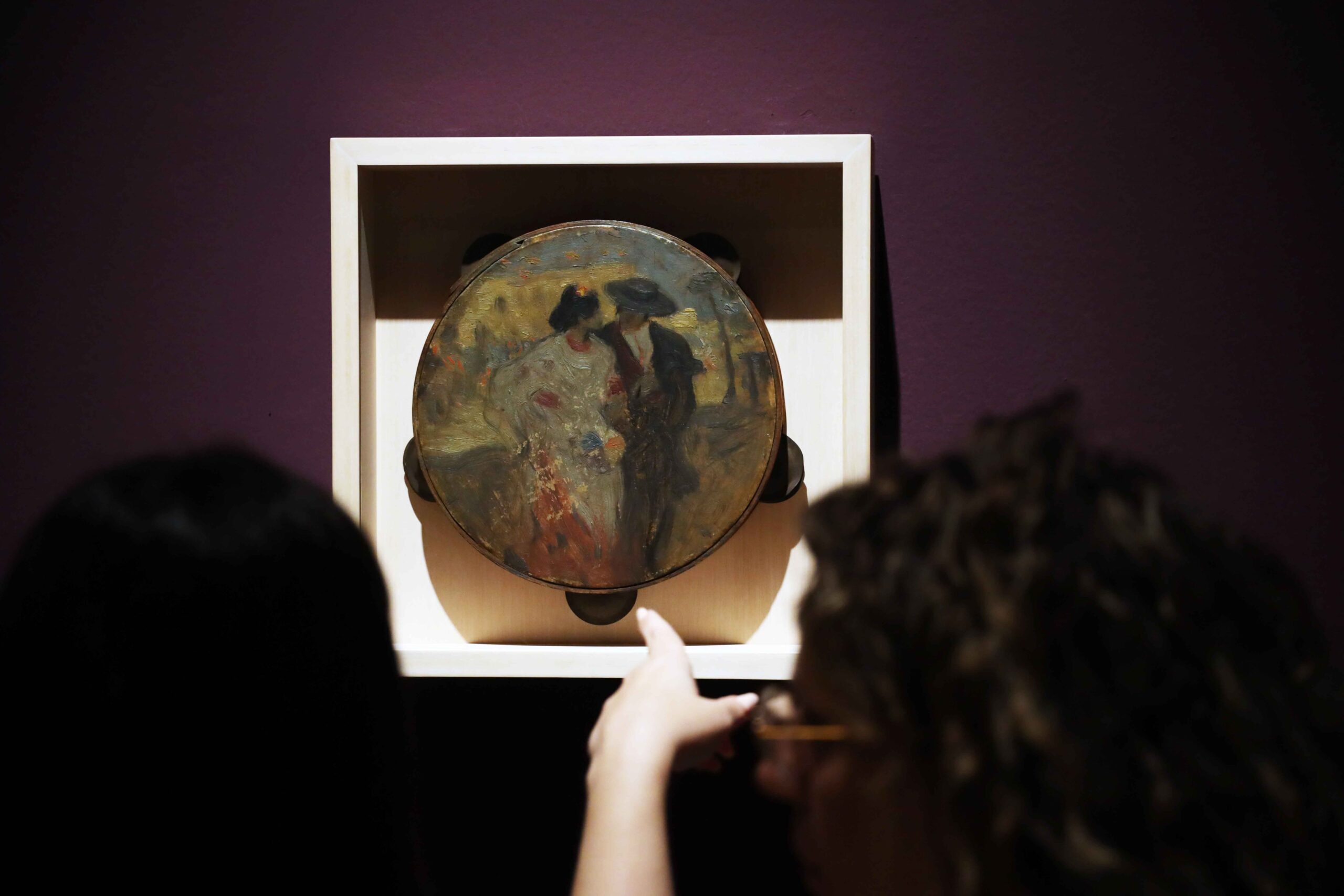
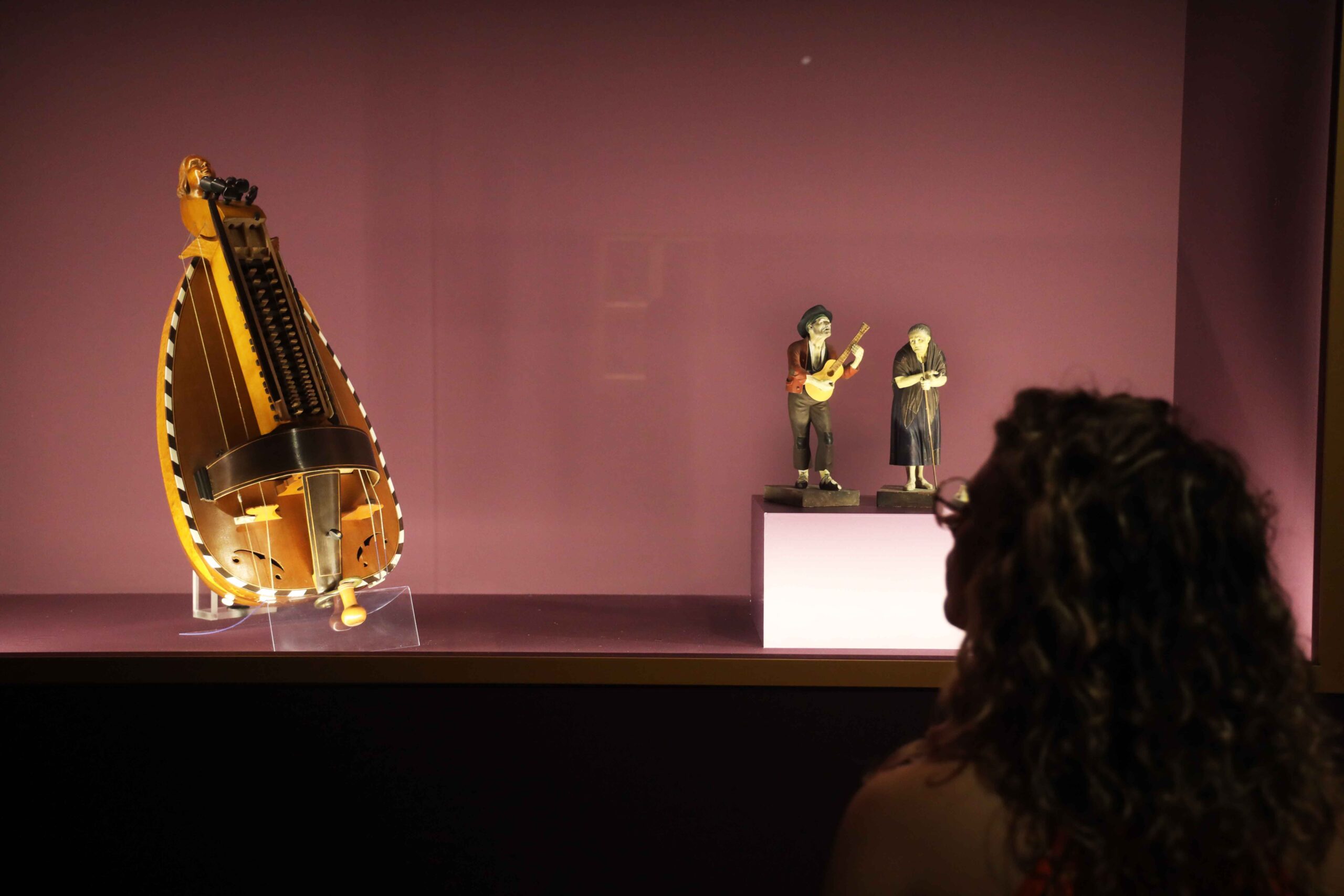
Unicaja Foundation has also remembered the music of verdiales, a variety of fandango typical of the province of Malaga, represented above all in clays from its own collection, as well as in photographs and traditional instruments. In this outcome of the exhibition we will also see, Couple Andalou by Picasso, made in 1899 on a wooden tambourine.
The tour concludes with the section The Last Judgment and Glorywhich houses works by José de Ribera, Alonso Cano, Juan de Roelas, Pedro Camprobín, Pieter de Jode, Andrés Pérez and Antonio Susillo, and with a tribute to Saint Celicia, patron saint of sacred song. We can also visit the musical scenes that shelter the tiled plinth of the cultural center’s garden.
Whoever seeks, for fundamentally pictorial reasons, essential works, will find them in “Y sonó la musica” that are fundamentally baroque: The temptations of Saint Jeromeby Juan de Valdés Leal; Saint Jerome penitent in the desertby Alonso Cano, and Saint Jerome penitentby José de Ribera; Salome’s dance before Herodagain by Juan de Valdés Leal; The coupletby Julio Romero de Torres; Guéridon devant la fenêtreby Pablo Picasso; either The Assumption of the Virginby Guido Reni.
And the music played. Musical iconography in art. Unicaja Foundation Cultural Center, Malaga
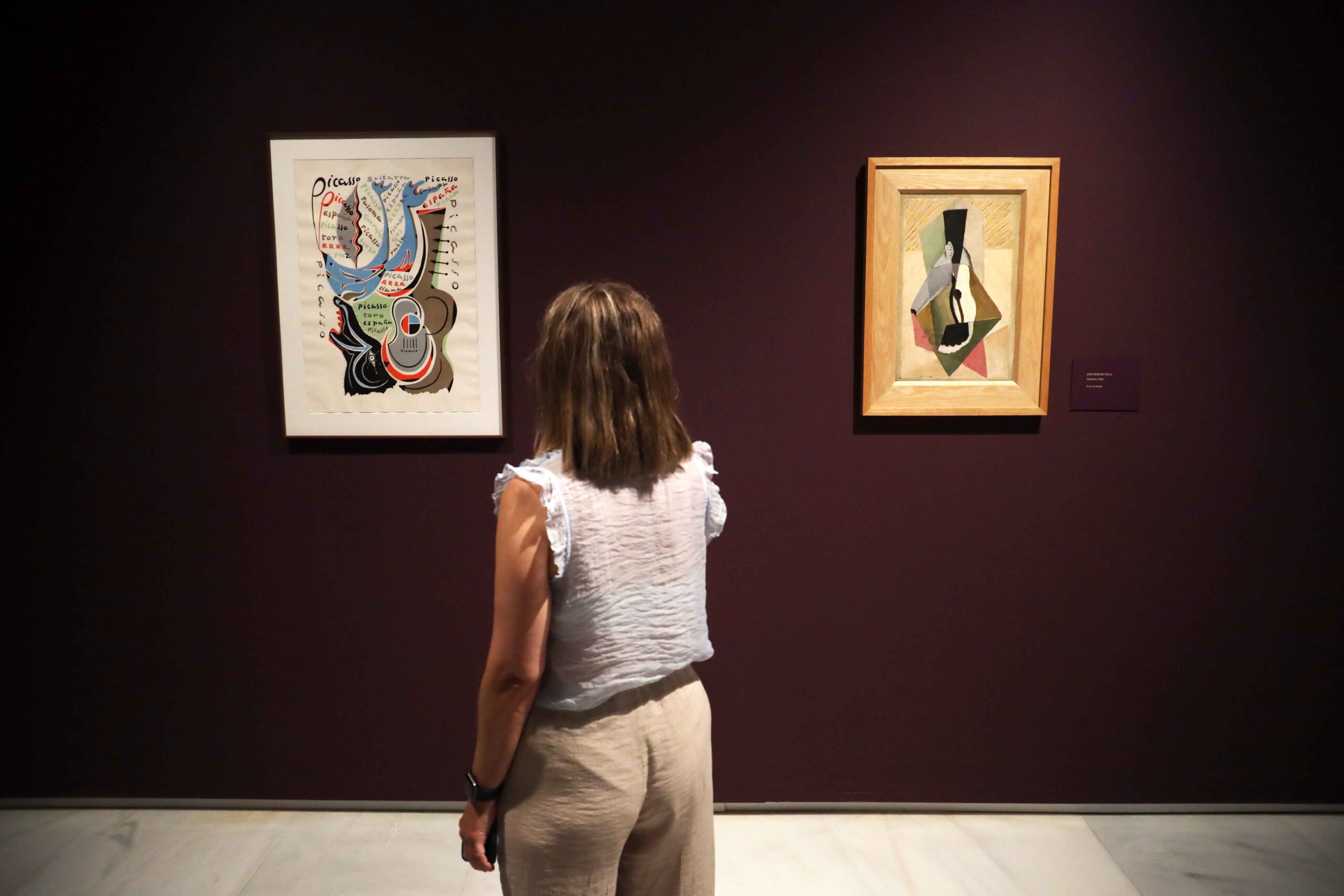
And the music played. Musical iconography in art. Unicaja Foundation Cultural Center, Malaga
«And the music played. Musical iconography in art»
UNICAJA FOUNDATION CULTURAL CENTER
Bishop’s Square, 6
Malaga
From July 27 to November 2, 2026