![Else Blankenhorn. Sin título [Paisaje ribereño nocturno], 1908-1919. Colección Prinzhorn, Hospital universitario de Heidelberg (Alemania)](https://paintandpainting.com/wp-content/uploads/2026/09/1790268941_Prinzhorn-at-the-Mapfre-Foundation-art-madness.jpg)
Almost an apprentice in his twenties, while training in psychiatry and medicine – he had previously studied philosophy and art history – Hans Prinzhorn was an assistant to Karl Wilmanns at the psychiatric clinic of the University of Heidelberg. There, for nearly three years just after the First World War, he dedicated himself to collecting the drawings and paintings made by the admitted patients: in 1921, when he left that job, these works made up a collection of nearly 5,000 pieces made by half a thousand inmates. It would not take him long to articulate, based on them, the essay that was his great legacy: Plastic activity of mentally ill people. A contribution to the psychology and psychopathology of formal configurationcalled to summarize Expressions of madness; Although it was received with reservations from the health field, it aroused enthusiasm in the artistic sphere, especially in Dubuffet, who came to take it as a substrate to structure his notion of art brut and who came to visit the Heidelberg hospital.
In order to review the importance of that volume, which in the interwar period came to suggest that artistic dignity found unexpected channels and scenarios and that mental fragility did not have to be an impediment to its development, the Mapfre Foundation is presenting today in Madrid the exhibition “The other shore of the avant-garde”, which also highlights the impact of Prinzhorn’s observations and work on later creators and on the consolidation itself, subsequently, of the art brutwhich today has its own museum in Lausanne, thanks largely to Dubuffet’s efforts to grant it a nature charter.
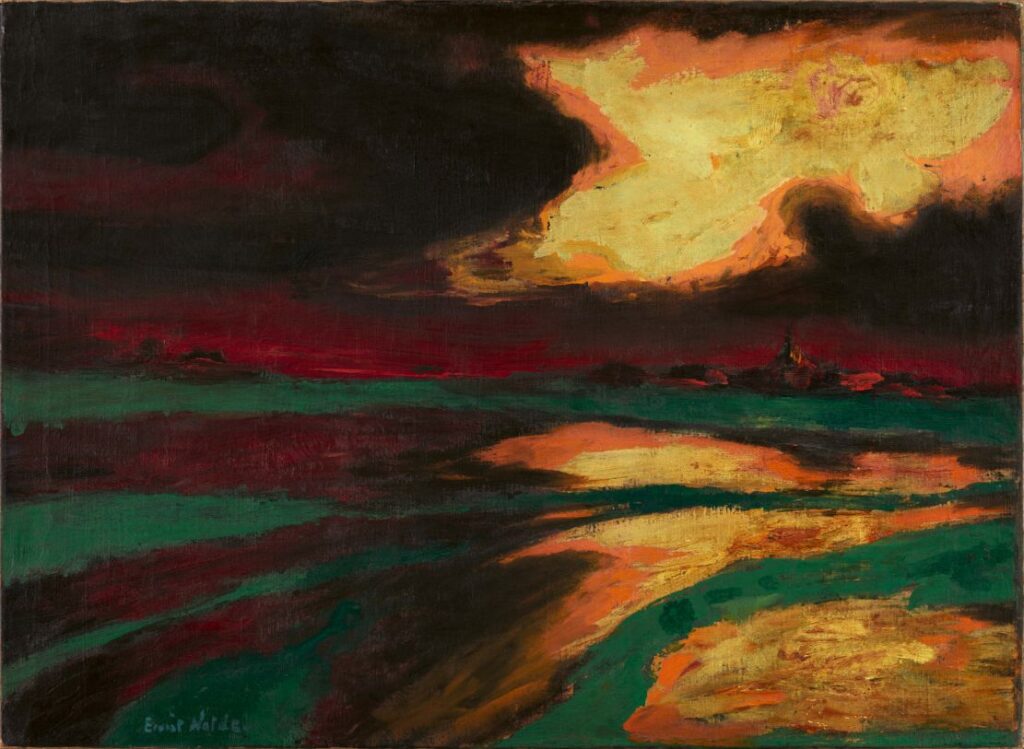
Emil Nolde. autumn sunset1924. Thyssen-Bornemisza National Museum. © Nolde Stiftung Seebüll
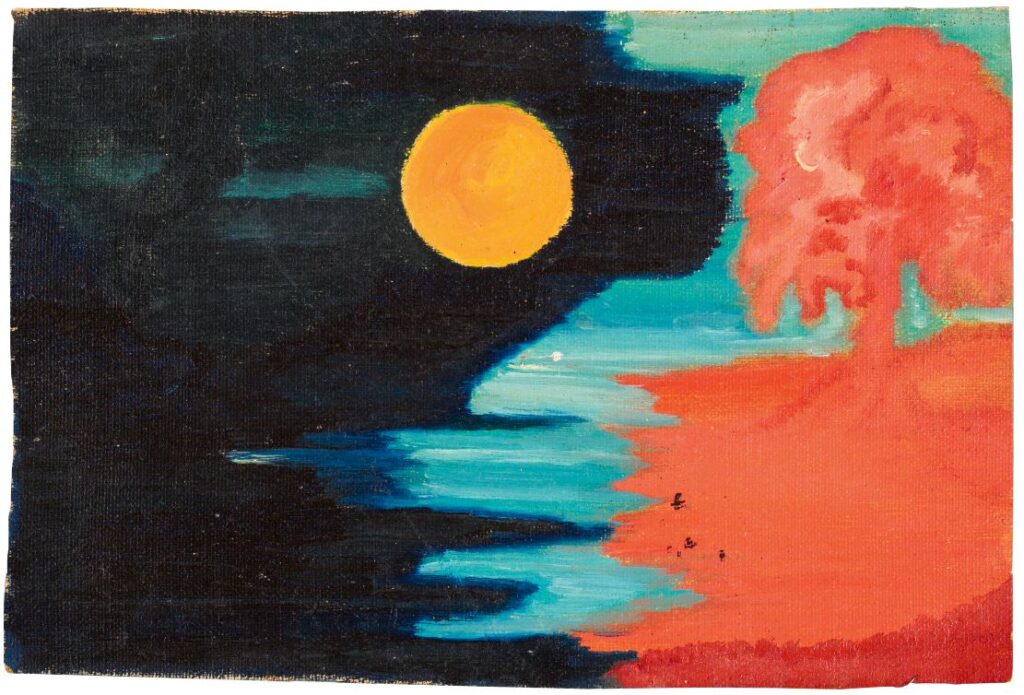
Else Blankenhorn. Untitled (Night riverside landscape)1908-1919. Prinzhorn Collection, Heidelberg University Hospital, Germany
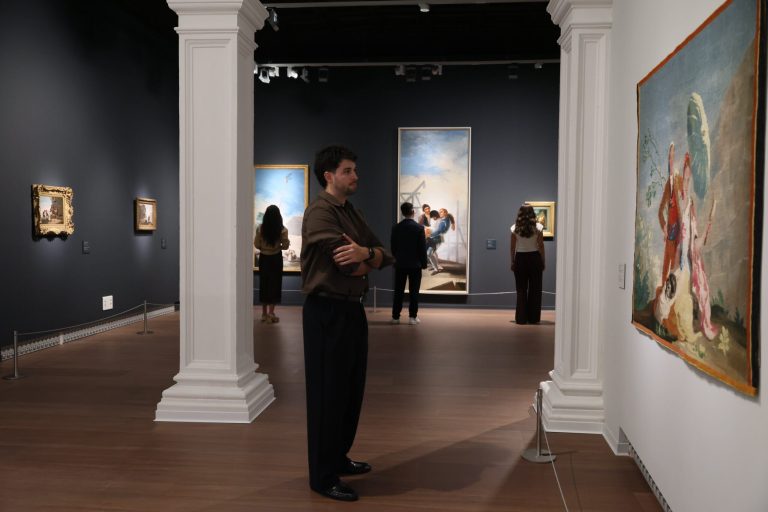
Under the curatorship of Pilar Soler Montes, this exhibition proposes us to contemplate without fear of astonishment and paradox compositions by fundamental artists whose searches were not so distant, in terms of aesthetic and formal freedom, from those present in the images in which psychiatric patients delved into their capacity to invent and express themselves through the visual. It is not difficult to understand why expressionists, dadaists and surrealists, that is, the authors most open to the contributions of subjectivity, the unconscious or dreams, glimpsed in these works codes common to their own, a relationship that not much later Nazism exploited for propaganda purposes to influence the supposed affiliation of what they called degenerate art with mental illness and with a supposed cultural decline. With the exhibition “Entartete Kunst”, which Goebbels promoted in 1937 in Munich, Prinzhorn’s hometown, he wanted to accentuate that link.
The relevance of the essays of the then young psychiatrist lies in a change of focus: the drawings, canvases, sculptures, objects and fabrics that, until that moment, had been considered medical material – we could say, as symptoms and case studies – began to be contemplated as compositions with expressive value, a very particular one in that they were not designed to enjoy success in the market, but from an autonomy far from academicism.
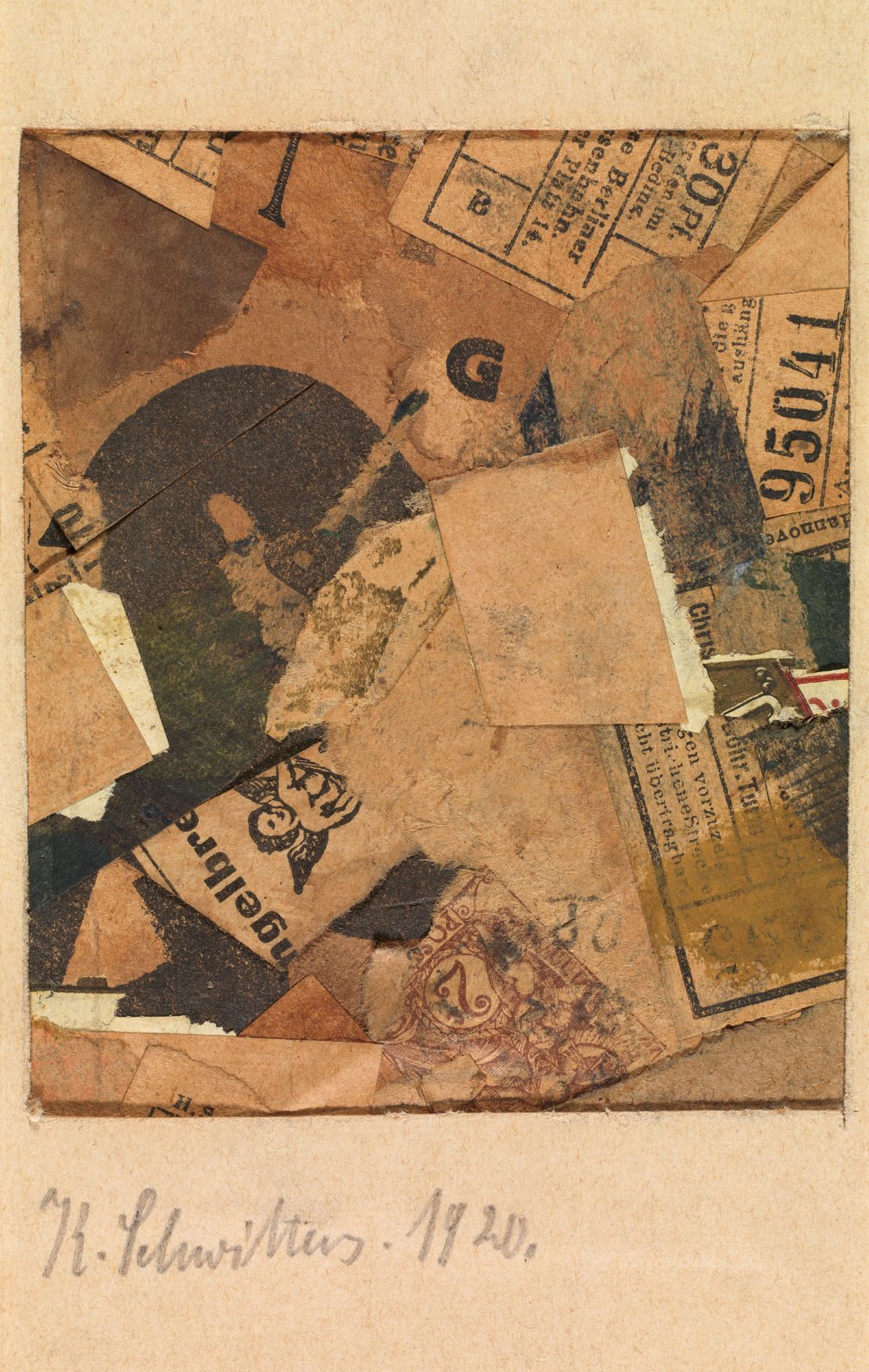
Kurt Schwitters. Untitled (Miniature Merz)1920. Mapfre Foundation Collections. © Kurt Schwitters, VEGAP, Madrid, 2026
Gabriele Urbach. Portraitbefore 1921. Prinzhorn Collection, Heidelberg University Hospital, Germany
The route proposed by the Mapfre Foundation links works by the patients that Prinzhorn met and others by avant-garde creators who are familiar to most of us; The result is powerful and bittersweet: the concomitances are clear and the reasons for the celebrity and anonymity of each are as understandable as they are potentially contradictory or random. Both make up an open and elusive account of contemporary art, relatively noted but never fully examined.
We will see pieces from the Prinzhorn Collection, which continues to be guarded by the University of Heidelberg, and from the Collection de l’Art Brut of Lausanne, the Brücke Museum in Berlin, the Thyssen-Bornemisza Museum or the Reina Sofía, with works also coming from its acquired Lafuente Archive, because documentation is an important part of this proposal. In light of their mutual ties we will ensure how far from decorativeism and friendliness the desires of the authors associated with The Bridge and The Blue Rider, capable of finding in primary impulses, both physical and psychic, a source of creative power, and in the infantile, the unregulated and the most primitive, another terrain for excellence.
It is evident that the traumas derived from the Great War explain the fertile soil of madness as the origin of imaginaries that relegated reason in the absence of norms and bourgeois sophistication in front of the most basic. In decades other than those of the twenties and thirties, Schwitters or Grosz would not have desired to delve deeper into satirical deformation, Max Ernst would not have investigated the hidden side of our mental images, and waste materials would not have been the basis of non-ephemeral designs. But, still, without Prinzhorn’s book and its extraordinary dissemination, almost nothing would have been the same: it was widely disseminated among the surrealists, who fell in love with its illustrations even though they did not understand the German texts, and the poet Paul Éluard came to refer to it as the visual publication most beautiful in the world.
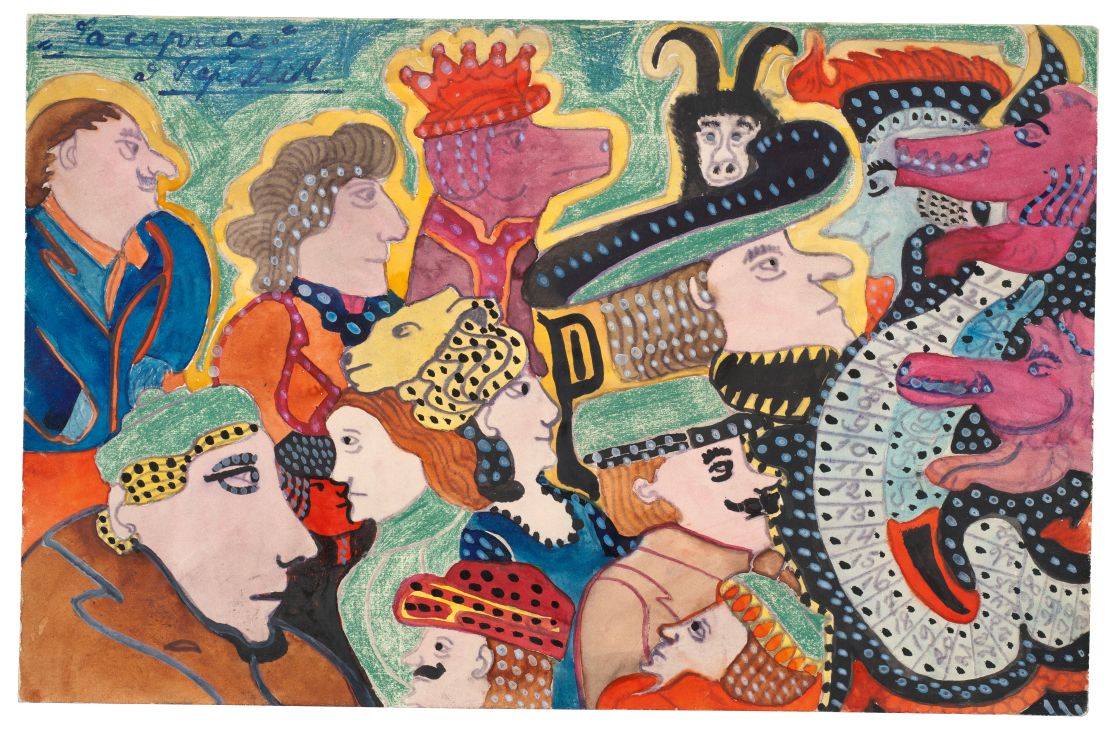
August Klotz (August Klett). “La caprice” for the Republic (sheet VIII), October 4, 1923. Prinzhorn Collection, Heidelberg University Hospital (Germany)
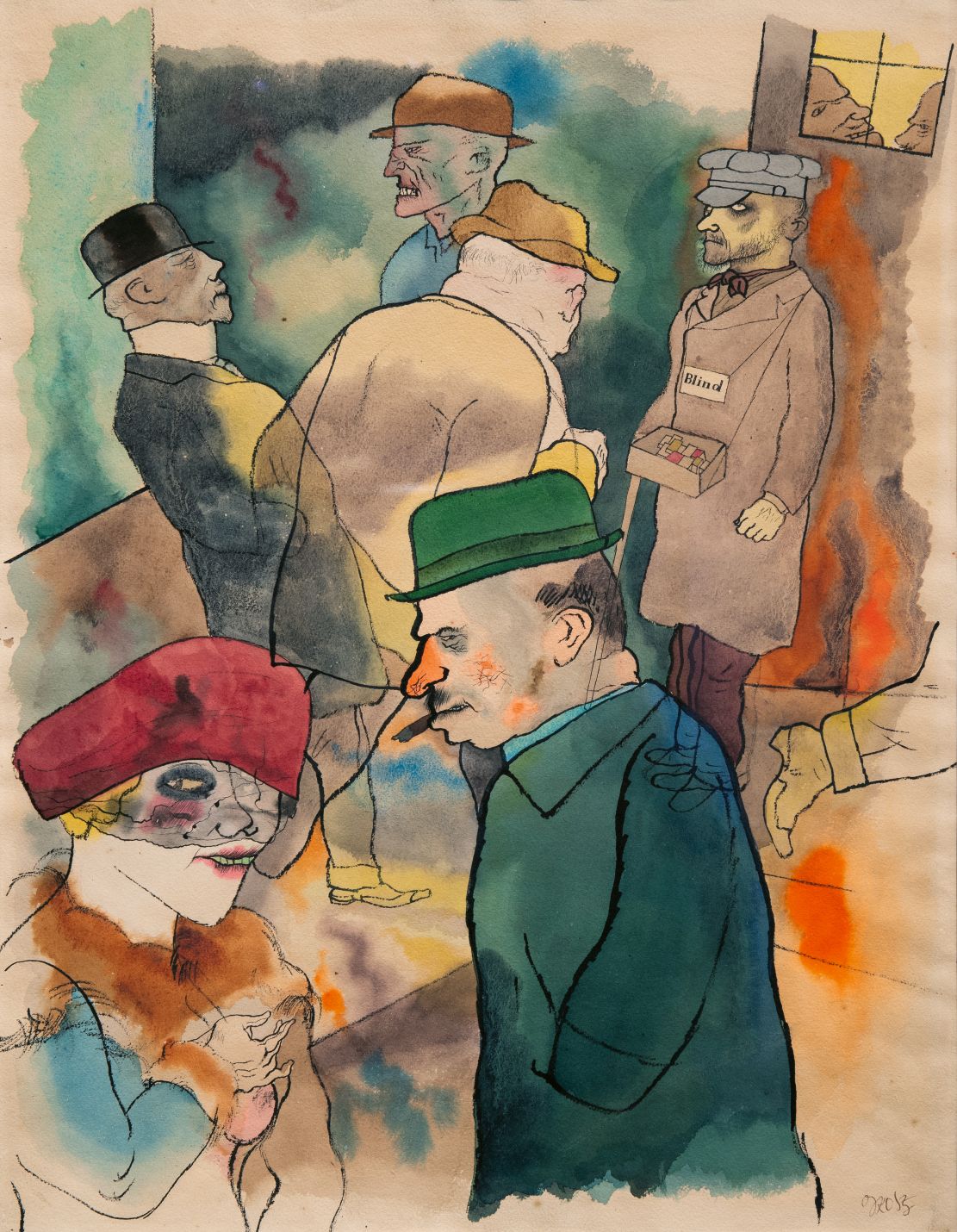
George Grosz. Twilight1922. Museo Nacional Thyssen-Bornemisza, Madrid © Estate of George Grosz, Princeton, NJ, VEGAP, 2026
Some of the pieces included in it even hung in an exhibition in Paris, in the key year of 1929 and under the title “The art of the crazy.” And crazy or not, its creators let themselves be carried away by their psychic automatism with a verve perhaps difficult to achieve for André Breton and Philippe Soupault and surely knew the altered states of consciousness and trance as vividly as Robert Desnos, Henri Michaux, Unica Zürn or Antonin Artaud.
Prinzhorn’s studies, as the last chapter of the itinerary at the Mapfre Foundation proves, were not soon forgotten. The compositions of these psychiatric patients were revalued, as was interest in Dubuffet, who in 1948 co-founded the Compagnie de l’Art Brut to find, preserve, study and disseminate these works and with them he organized, in 1949, an exhibition at the Galerie René Drouin in Paris. Almost twenty years later, in 1967 and also in the French capital, the Musée des Arts Décoratifs hosted the largest exhibition dedicated to this topic up to that time and the first in a public museum. In this proposal in Madrid, geniuses and anonymous people now seem to dissolve into common dreams.
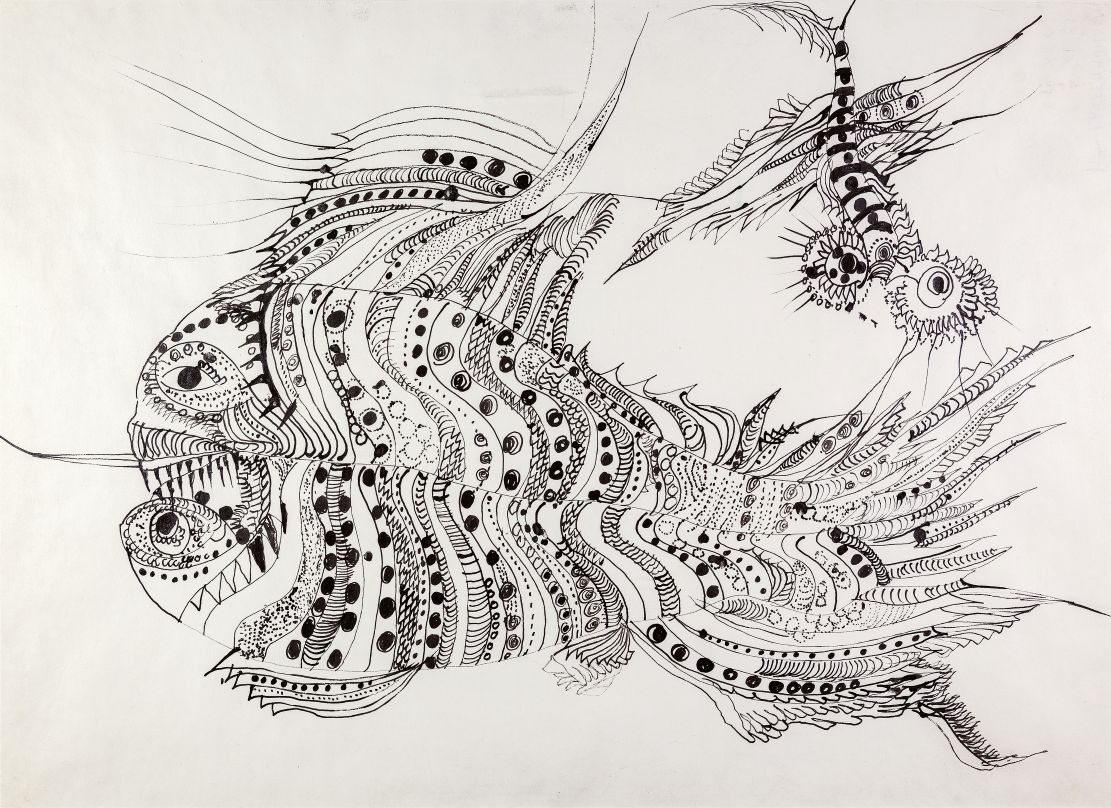
Unique Zürn. Untitled (Fish with small marine animal top right), circa 1961. Musée d’Art et d’Histoire de l’Hôpital Sainte-Anne (MASHHA), Paris
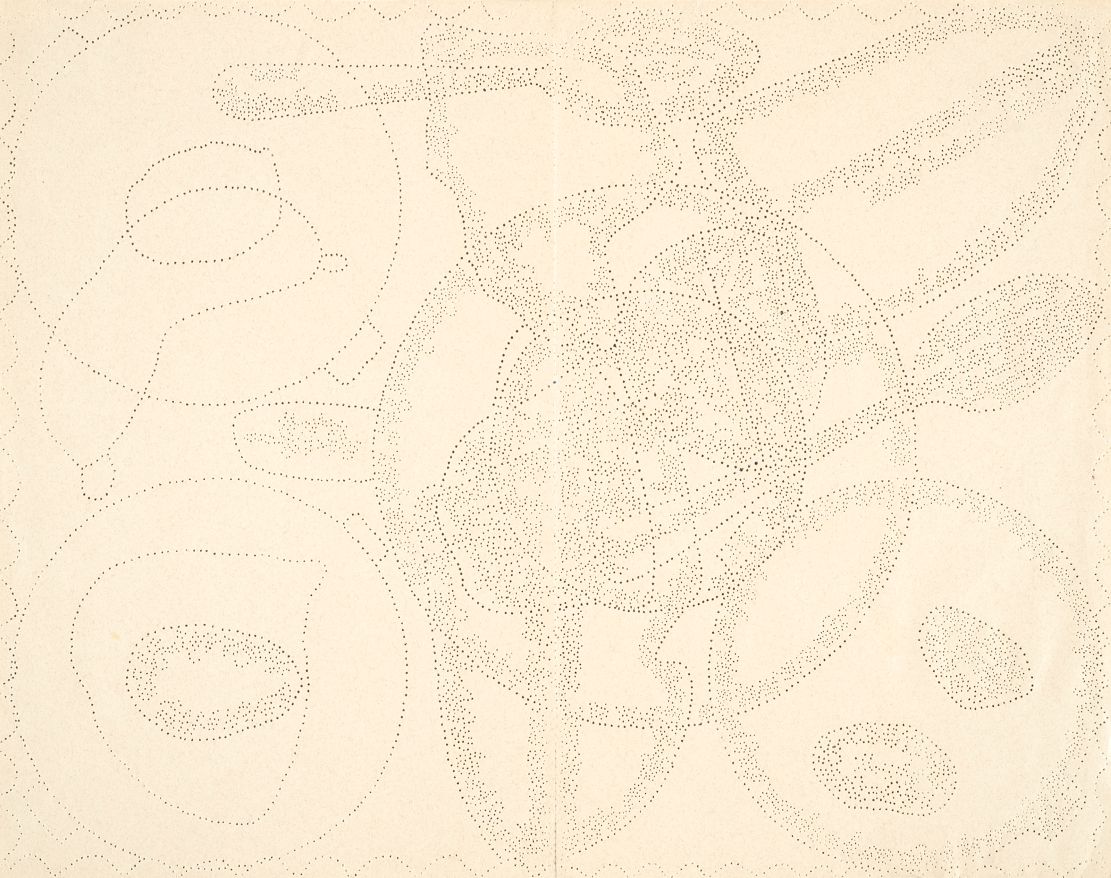
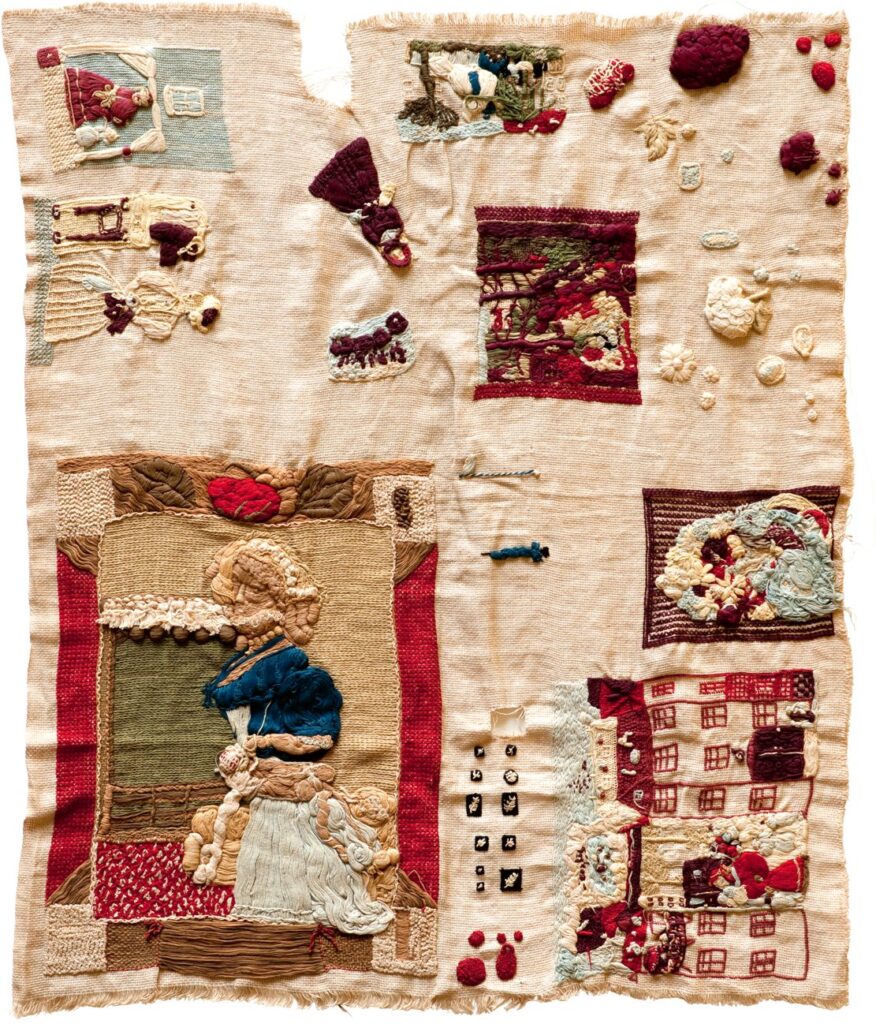
Barbara Suckfull. Untitled (tablecloth from the Werneck Castle Psychiatric Hospital), circa 1910. Prinzhorn Collection, Heidelberg University Hospital, Germany
«The other shore of the avant-garde»
MAPFRE FOUNDATION
Paseo de Recoletos, 23
Madrid
From September 24, 2026 to January 10, 2027