Metz (Moselle). After a first appearance at Bozar (Palais des beaux-arts de Bruxelles) last year, the exhibition “Familiar Strangers. A Multiple Poland” arrives in Metz in a version redesigned to embrace the local context. This is because Poland and Lorraine share a long history, as deep as it is unique: led personally by Stanislas Leszczynski, then king of Poland, in the 18th century, the Lorraine territory welcomed hundreds of thousands of Polish workers two centuries later in its iron mines, coal mines and steel factories. Despite the deindustrialization that has hit the region since the 1970s, the departments of Moselle and Meurthe-et-Moselle still have a large Polish community. With this past in mind, the two commissioners of the Metz section, Fanny Gonella, director of Frac Lorraine, and Joanna Warsza, city curator of the City of Hamburg, have decided to add three artists based in the Grand-Est to the corpus, which also includes 9 of the 12 artists and collectives presented in Brussels and the works of 4 visual artists from the Frac collection.
An uneven grip
At the origin of this last choice, an observation: artists from Eastern Europe are particularly well represented in the Frac Lorraine collection, which preserves works by 16 Polish artists, but also by Slovak, Czech, Serbian and even Bosnian creators. If Bozar’s exhibition already presented the project’s photographs Consumer Art (1972) by Natalia LL, purchased by the Frac in 2003, the three other artists in the collection currently presented make the Lorraine stage unique.
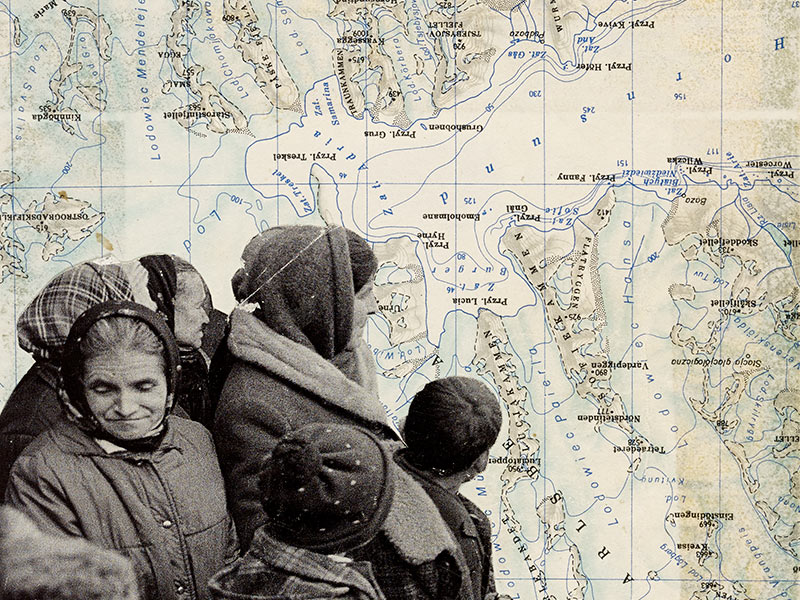
Małgorzata Mirga-Tas, Rosita Grönfors2023.
Courtesy Foksal Gallery Foundation, Warsaw
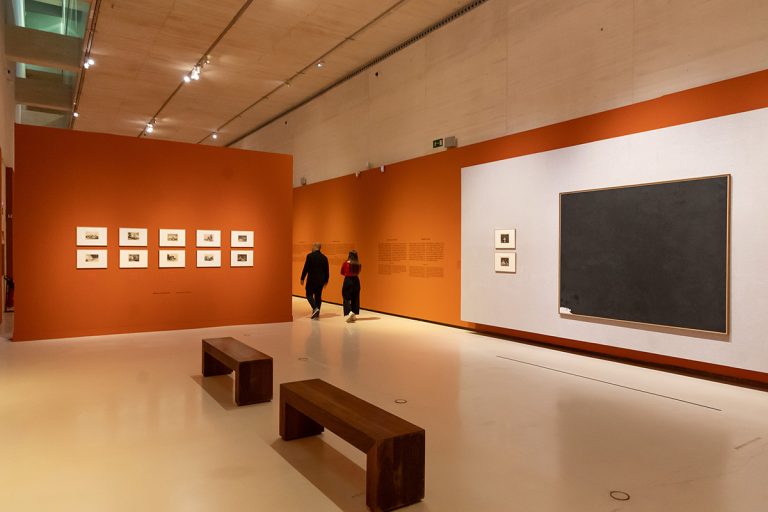
However, the pieces from the collection, which are historical works dating from the 1970s, respond unevenly to the more contemporary productions of the initial corpus. The articulation of the works in the first section of the course, focused on activism, feminism and ecology, illustrates this difficulty well. The hanging garden Miedza (2026) by Renata Kaminska was placed next to the photographs of the land art performance Sculpture for the Earth, Ubbeboda (1974) by Teresa Murak. The echo between the two proposals is obvious: Kaminska’s installation, made up of weeds from her region of origin in Poland, is inspired by the herbarium created by the revolutionary activist Rosa Luxemburg during her successive imprisonments, while Teresa Murak digs a half-sphere in the earth to germinate seeds – in both cases, resistance springs from the interstices and has an ecofeminist subtext.
The commissioners also chose to install a television broadcasting the video Active Poetry, Poem by Ewa (1971-1973) by Ewa Partum in the middle of Renata Kaminska’s installation. In the purest Dada and Fluxus tradition, the artist questions the power of language by mixing large white letters in an undergrowth – the conceptual work has no connection with the ecological question.
The rooms offering a dialogue between the pieces of artists from the Grand-Est region and the visual artists already present in the Belgian exhibition suffer from the same defect. In the third section, which addresses the question of power in public space, the comparison of the hanging banners of Zuzanna Hertzberg (Jewish Shmates2024-2025), which feature portraits of anarchist and Jewish activists, and misappropriations of military uniforms by Jasmina Metwaly in her series “Anbar” (2019) works particularly well. But the addition, in the same section, of aluminum plates by Eva Prusiewicz blurs the readability of the room: the Nancy-based artist explores the relationship between volcanic phenomena and emotions; nothing to do, therefore, with public space.
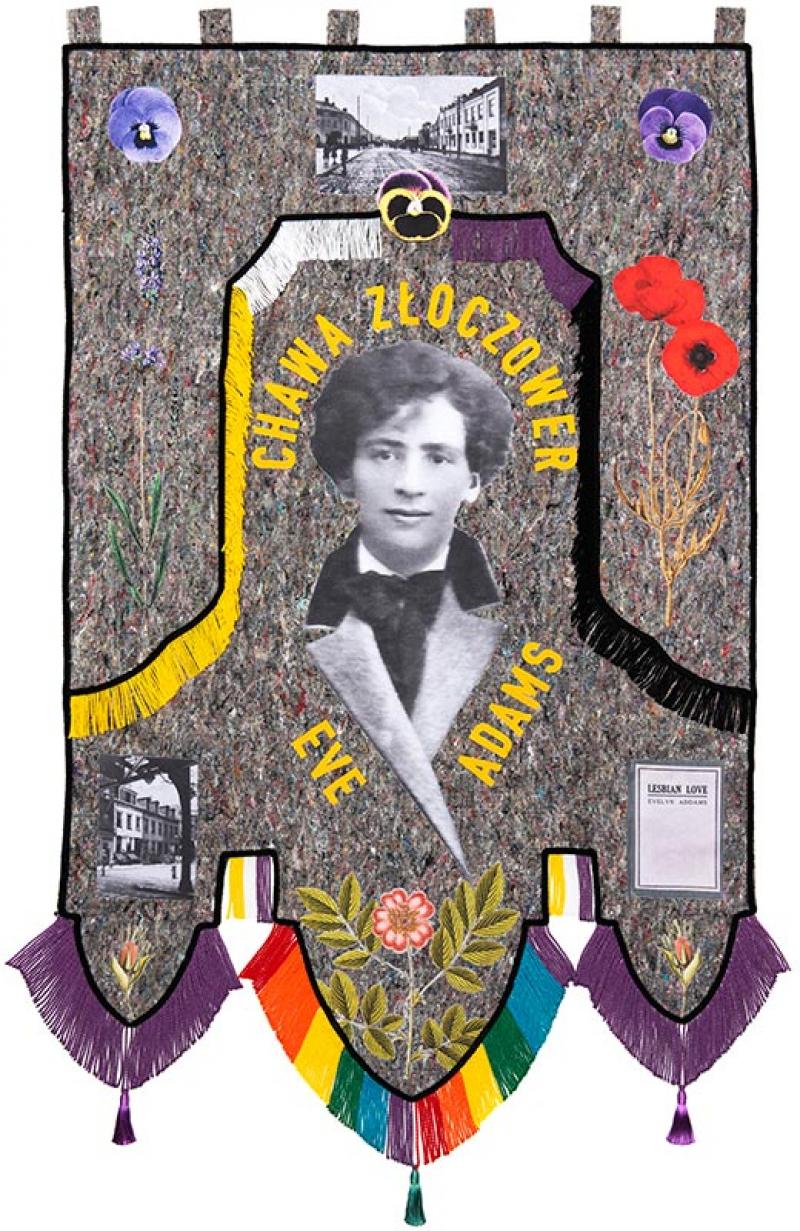
Zuzanna Hertzberg, Tribute to Chawa Złoczower / Eve Adams2025, Jewish Shmates series [Vêtements juifs]textile banner.
© Zuzanna Hertzberg
Little identifiable red threads
In addition to the delicate articulation between the works, the exhibition presents a very different theme depending on the rooms: certain axes are obvious, such as that of activism, ecology and feminism mentioned previously, while the idea underlying certain sections is not understandable. In the last room, which “brings together works reflecting composite journeys” as the general text explains, the curators did not establish porosity between the works through visual correspondences (colors, patterns or compositions), historical or thematic dialogue. Result, the “parallel stories” that the project wants to highlight remain hermetic to each other.
Furthermore, although “the desire to present this exhibition in Metz [vienne] links between Lorraine and Poland”, the dialectic between the two territories remains little explored throughout the course. It would have been desirable to be able to discover more artists from the Polish diaspora whose practice echoes this story – the only related proposition is the participatory work Waiting for the banquet (2026) by Opj Cyganek and Julie Poulain, whose plates, from a collection, evoke the tradition of earthenware in Poland and Lorraine. This would have allowed Frac Lorraine to develop a “located exhibition”in the sense that the American essayist Donna Haraway could have given it, by weaving a real dialogue with its territory.