The KBr Flama program has been running for five years, which the Mapfre Foundation started in 2021 with the aim of providing the opportunity to expose young photographers who are embarking on their careers after completing their academic training in selected Catalan centers: currently, EASD Serra i Abella, Elisava – Faculty of Design and Engineering of Barcelona, Idep Barcelona and IEFC.
This time, those chosen have been Spanish and international authors born in the eighties and nineties who, in their participation in this initiative, will be accompanied by curator Carolina Ciuti: these are Sara Bravo (Girona, 1999), Elena Bulet i Llopis (Barcelona, 1997), Meghan Mathews (Winston-Salem, North Carolina, 1995) and Luca Gaetano Pira (Modena, 1987), whose works share a seed in individual experiences that gradually expand their scope towards the collective. Using both documentary and staging approaches, they address issues such as identity, emotions and memory.
The first author on the tour of the exhibition that they are now offering in Barcelona is Meghan Mathews, who in It Was Good Enough For Our Mothers comes close to the values that have persisted from generation to generation in rural Appalachia. She spent her childhood in northern Tennessee, an area marked by her religious convictions and economic difficulties, and has decided to build her production with one foot in that heritage and the other in her desire to self-determine as an artist. Her own motherhood and the sacrifices it has entailed have also been noted in her images.
The set exhibited at KBr Mapfre, which takes its title from a nineteenth-century gospel whose lyrics link faith to routine and family affection, proposes what makes possible the validity in our time of religious, social and emotional beliefs anchored in the centuries but today highly questioned: combining archival family snapshots with other analogous but current ones, it gives rise to a narration in layers in which past and present converge, in addition to domestic prints, silent still lifes and correspondence between herself and her mother. The series is not closed, to induce a reflection on the treasured legacies and what we can still reinvent.
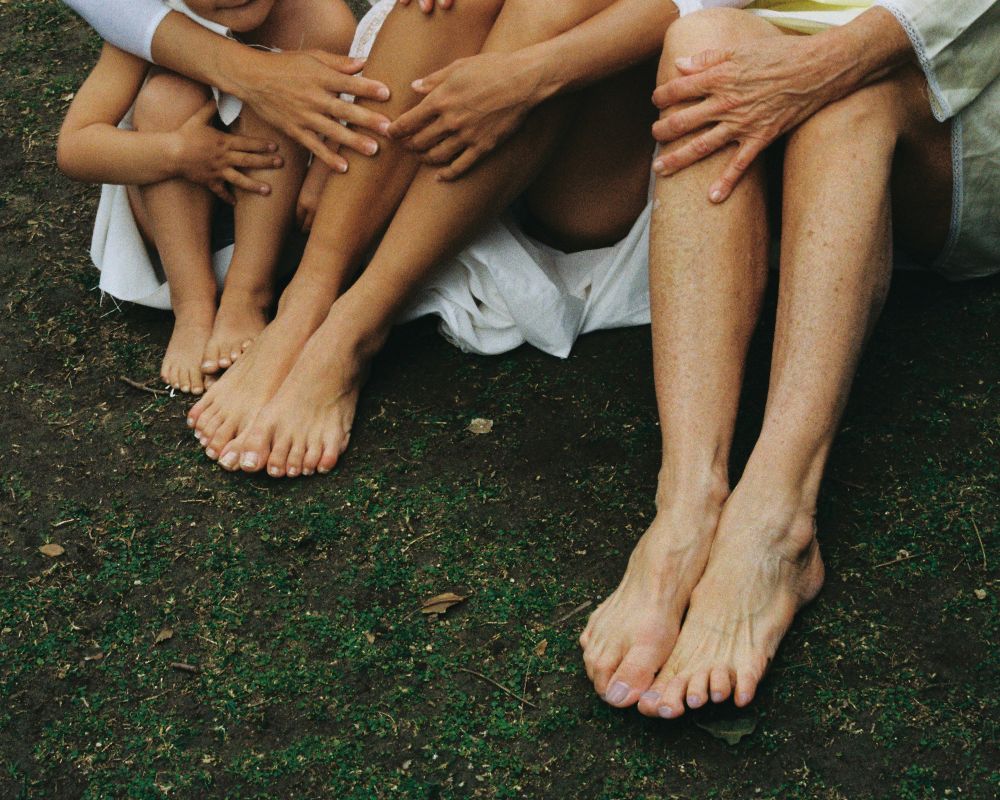
Meghan Mathews. No title. Series It Was Good Enough For Our Mothers2022 © Meghan Mathews
Another type of intimacy is reflected in Sara Bravo’s project: Pink Elephant in the Room. This author focuses on the forms of discomfort that non-binary people go through in society based on her own experiences. It has responded, above all, to attempts at forced classification into closed labels and has sought to express that narrowness in meticulously constructed and intentionally artificial images with which it sought to reveal latent social structures. They often take place in everyday places of passage, such as elevators, subways and offices in which subtle control mechanisms operate.
We say that these are meticulously designed compositions because Bravo has followed in the footsteps of Thomas Demand by recreating life-size enclaves, using paper and also methacrylate or expanded polystyrene. As in the German’s work, the familiar here becomes uncertain and our gaze is destabilized.

Sara Bravo. No title. Series Pink Elephant in the Room2025. © Sara Bravo
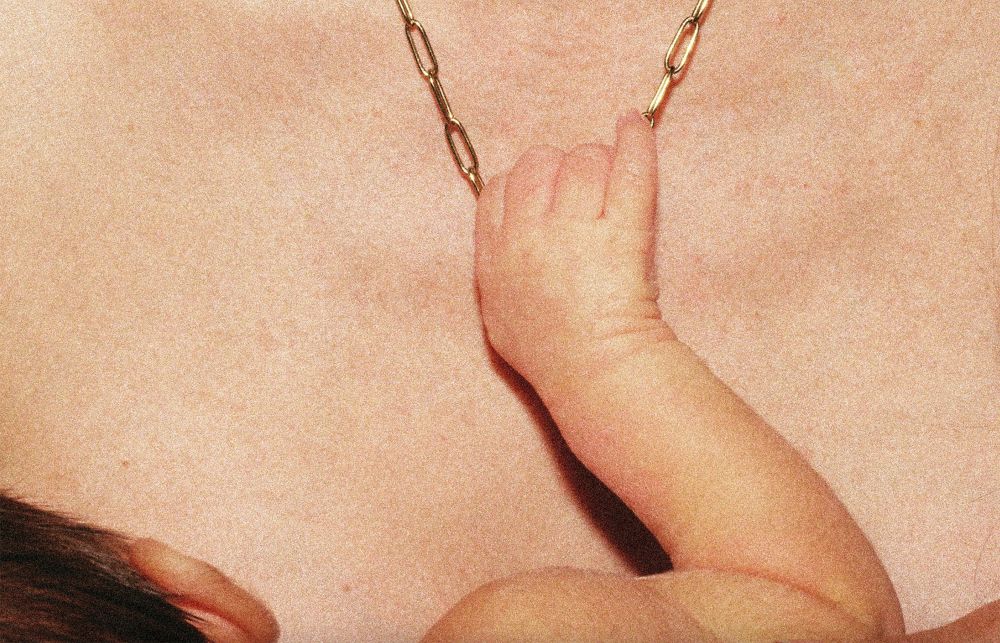
As for Elena Bulet i Llopis, she brings us Tendrila visual investigation halfway between the memory we inherit and poetic imagination. Taking as a starting point her family ties with the Malaga town of Almayate, in the Axarquía, and the archaeological remains that surround the town, this author displays a constellation of images that, connecting with the interests of Meghan Mathews, highlight how it is possible to find ways in which the past resists or evaporates.
In addition to alluding to the traditional term with which we refer to earrings, that word of tendril It refers to the mark of belonging to cattle and the filamentous organ that allows climbing plants to cling to walls; In any case, the word thus speaks to us of roots in places and customs that Bulet has not known directly, but that have been transmitted to him.
For this Barcelona author, photography is not so much a means of recording as a tool for constructing and recreating scenarios in which the inert is animated and the latent begins to become visible; Fossils, ruins, ritual objects or everyday gestures often appear in his works.
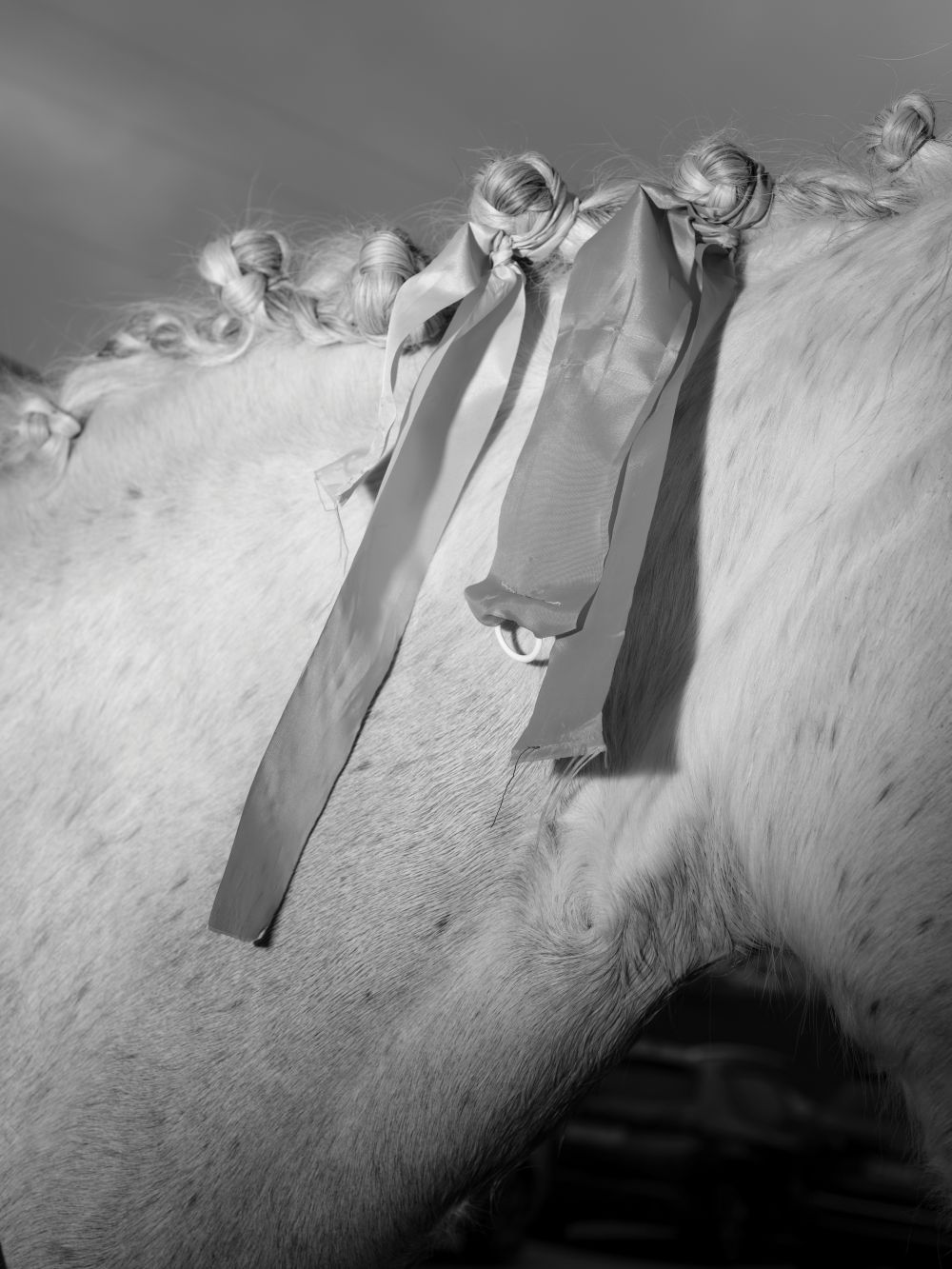
Elena Bulet i Llopis. ribbon race2025. © Elena Bulet i Llopis
Finally, Luca Gaetano Pira has paid tribute in his series, Prison, heels and freedomto the LGBT activist Tania Navarro Amo, approaching the places that have marked her career, public and domestic, and configuring with them a kind of visual map of discrimination -Navarro, a trans woman, has turned seventy years old-.
During the last two, this photographer from Modena has established an intimate and frequent relationship with her, seeing her as a survivor of worse stages and as an older woman who faces challenges common to others: the passage of time, invisibility and illness. His proposal is completed with archival material: period photographs and documentation, including police files linked to his former arrests.
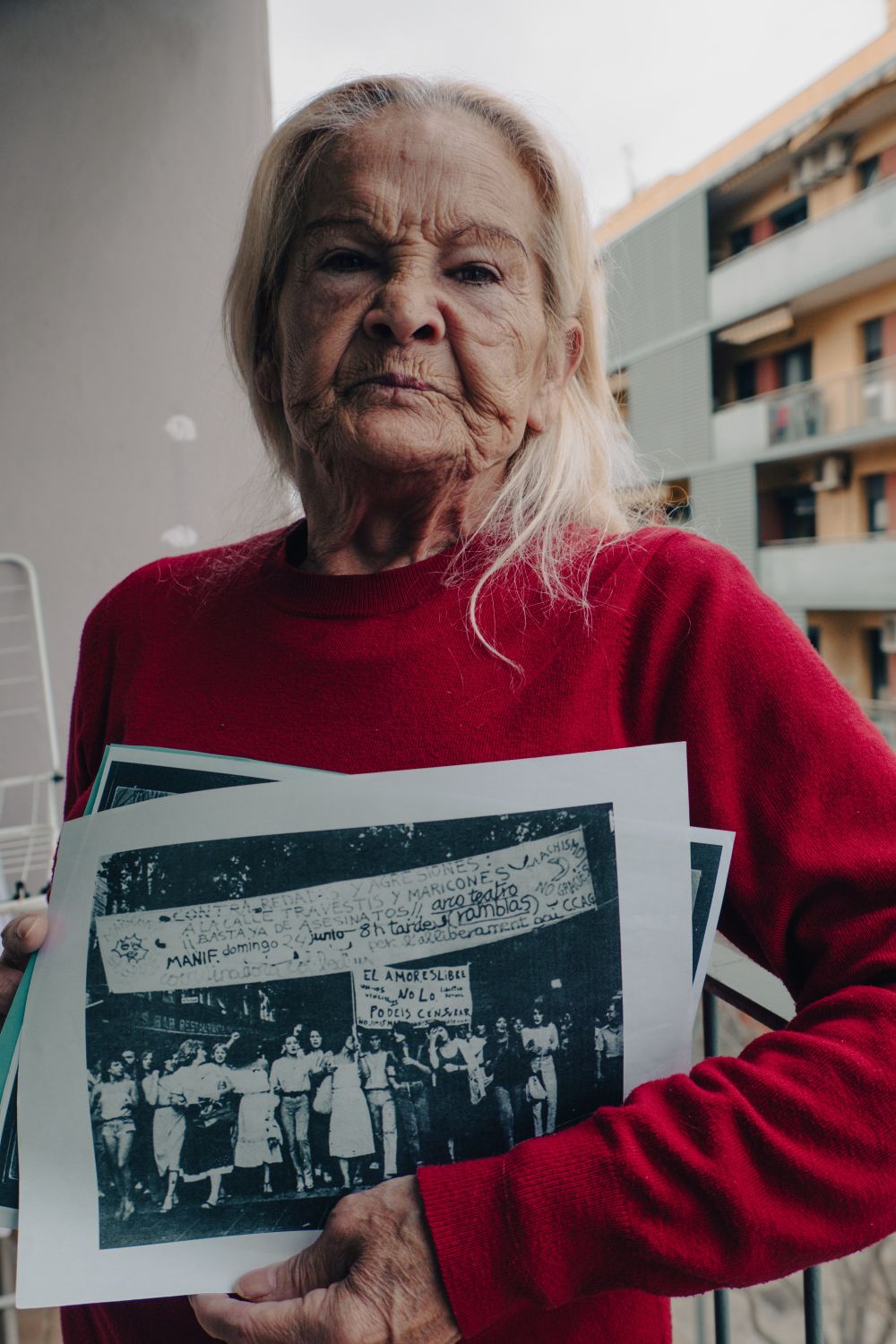
Luca Gaetano Pira. No title. Series Prison, Heels and Freedom2025. © Luca Gaetano Pira
«KBr Flame ’26»
KBr MAPFRE FOUNDATION
Avenida del Litoral, 30
Barcelona
From October 1, 2026 to January 17, 2027