
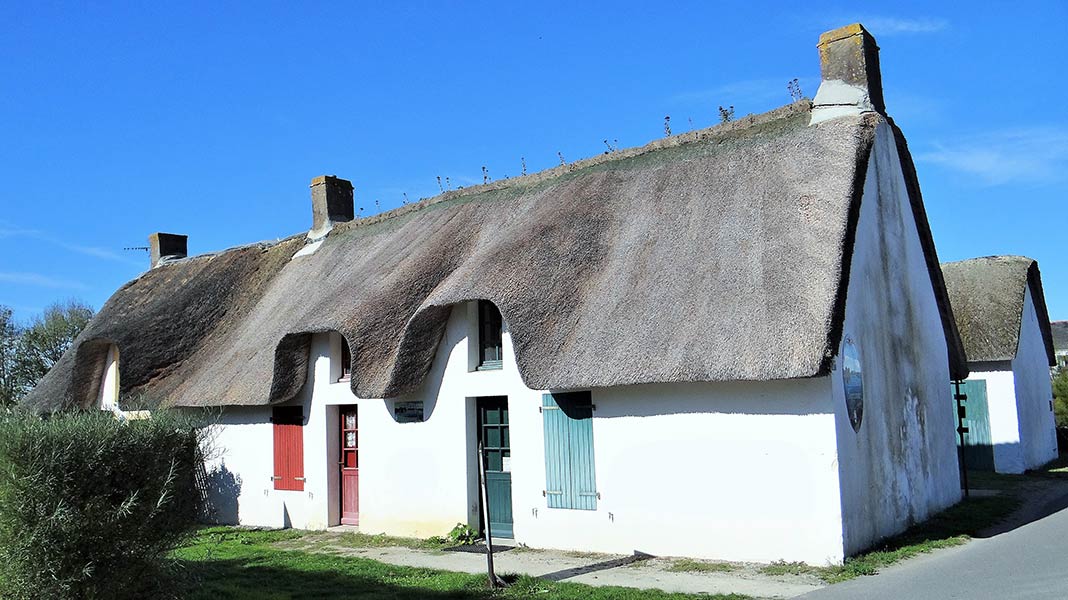
The local town planning plan (PLU) is a document which translates an overall development project and sets the rules. In this context, article L. 151-19 of the town planning code allows the regulations of a PLU to issue requirements aimed at protecting, conserving, enhancing or restoring a building or a group of buildings whose cultural, historical or architectural interest justifies it.
But can a PLU legally impose the use or conservation of a specific construction material for the protection of heritage of local interest? It is this important question that the Council of State has just answered.
The urban community of the Nazaire region and the estuary (CARENE) (Loire-Atlantique) has decided to impose the conservation of certain thatched roofs on buildings identified in the graphic regulations of the PLU as being of heritage interest. Dissatisfied with this new charge, an association of cottage owners contested its validity. Dismissed successively by the administrative court and the administrative court of appeal of Nantes, the association appealed to the Court of Cassation.
The Council of State again rejected the request on July 13, 2026 on the grounds that a PLU can perfectly “identify and locate such buildings because of their particular heritage characteristics and impose, to ensure their conservation, the use of materials which constitute a characteristic component”. The PLU therefore does not limit itself to stating height or location rules but can go so far as to impose the use or conservation of specific materials for the restoration of local heritage.
However, this possibility is not automatic and must meet two cumulative conditions: on the one hand, it is necessary to clearly identify the buildings and their boundaries; on the other hand, the requirements defined must be proportionate and cannot exceed what is necessary for the desired objective. The thatch being here inseparable from the identity of the categories of thatched cottages identified, the PLU was legal.
As we can imagine, the obligation to use a specific material can only be imposed if it is the only means to achieve the objective pursued. Furthermore, the arguments based on the additional cost of materials, the absence of a technical standard specific to the material and the non-existence of a local sector have no impact on the legality of such a charge.
With this judgment the Council of State recognizes the prevalence of the general landscape and heritage interest over individual constraints, in particular the cost of the materials to be used. It reinforces the regulatory leverage of PLUs for the preservation of vernacular built landscapes and strengthens the legal security of municipalities which now have clear legal instructions to justify their material requirements.


