Madrid,
Inéditos is, along with Generaciones, one of the senior calls of La Casa Encendida conceived to support young art professionals, in this case, curators residing in Spain and under 35 years of age. Those selected exhibit recently created projects in their rooms.
This initiative is in its twenty-third edition, now biannual, and La Casa will celebrate its quarter of a century in 2028; By then its director, Pablo Berasategui, has announced special exhibitions around this call. Meanwhile, its latest winners, Raquel Algaba and Álvaro Talavera, both born in 1992, exhibit their proposals at La Casa after being chosen by a jury made up of Violeta Janeiro, Direlia Lazo and Pablo Martínez. Algaba has started from the observation of nature in the context of the climate crisis and Talavera proposes a critical review of the Spanish legacy in the Philippines and a study of its current creative panorama.
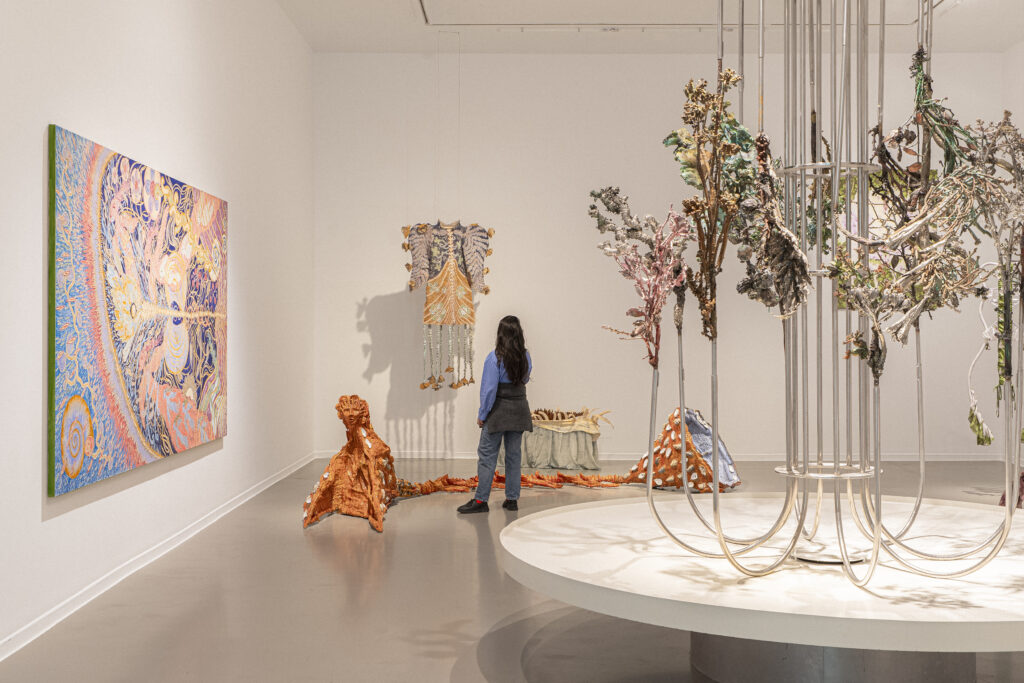
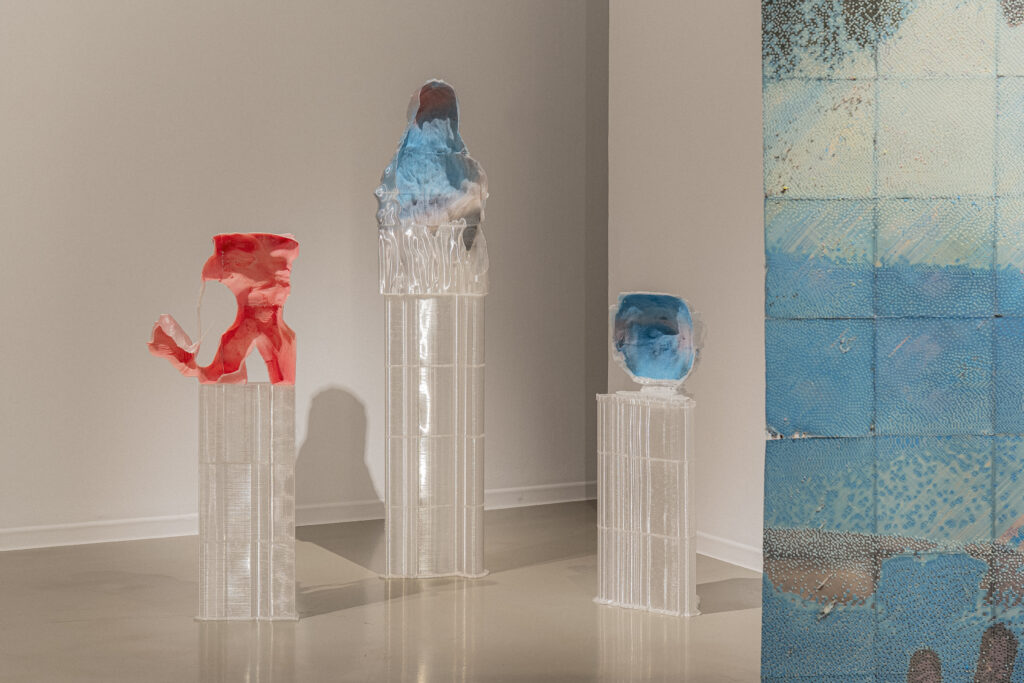
The first exhibition is titled “And I become a river, whose brown tongue will not rest” and immediately introduces the viewer to a peculiar visual ecosystem. Taking into account our current mediated relationship with nature, in this exhibition, in room C, plants and technical systems converge that demand the current validity of ways of understanding the world that are not anthropocentric, but based on the relationships between all living beings and between them and technology.
Algaba has included four artists, starting with the Danish Cecilia Fiona, who presents in Madrid pieces representative of all her languages - painting, sculpture and performance – and also of her interest in fields such as microbiology, quantum physics, alchemy or the literature of Ursula K. Le Guin. Fiona idea worlds born of speculation in which the human, the natural and the cosmic merge into a continuous and fluid whole.
If in his large-format painting in La Casa, rich biomorphic forms come our way, in his sculptures he uses organic materials such as branches, shells, paper pulp, rabbit skin or natural pigments. The hybrid defines his production, almost a questioning of contemporary individualism.
Leticia Martínez Pérez, for her part, has continued to delve into the options for the union of the kitsch and the noble, the real and the fantasy; even the feminine and the monstrous. It exhibits a textile installation presented as a drawing in space that can evoke, at the same time, a body, a flower or an insect.
For this author from Zaragoza, art is a party and a stage: the fruitful terrain where labels can be pulverized and where the status of the creation itself can be discussed.
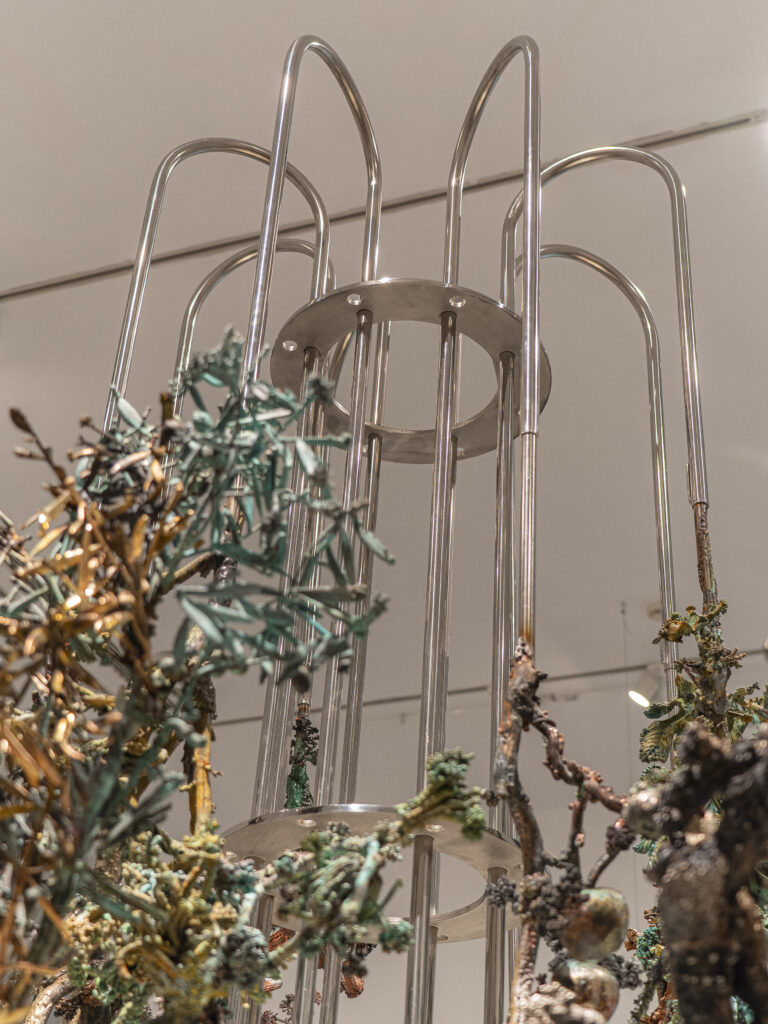
The central sculpture of this exhibition-nursery is due to Leonor Serrano Rivas, and it is precisely alive insofar as it drips. This Madrid-based artist, a researcher above all into production and perception methods that allow the viewer to experience experiences open to intuition, devises installations that can transform over time and that, in turn, generate scenography.
His work in La Casa, of large dimensions, resembles a large tree or fountain inspired by the so-called crying of the girls; This is how they refer in Argentina to the constant dripping of some trees, which is not due to rain or condensation, but to the secretions caused by insects when they extract their sap. Here it is the technology that mineralizes the plant matter through electroformation.
Finally, Lola Zoido has focused her career on the study of the possible intersections between the physical and the virtual and our perception in an era dominated by digital technologies: materiality and presence are not today what they were.
In his creations in this exhibition he shows his attention to imperfection and glitch: he exhibits pieces from his series Exuviasculptures derived from mutation and the random or ethereal shapes that digital devices spit out from our memories when their memory runs out. What we contemplate appears determined by the operation of the databases, capture and translation systems. Algaba wonders in a text in the project catalogue, if our eyes, from seeing so much, no longer see.
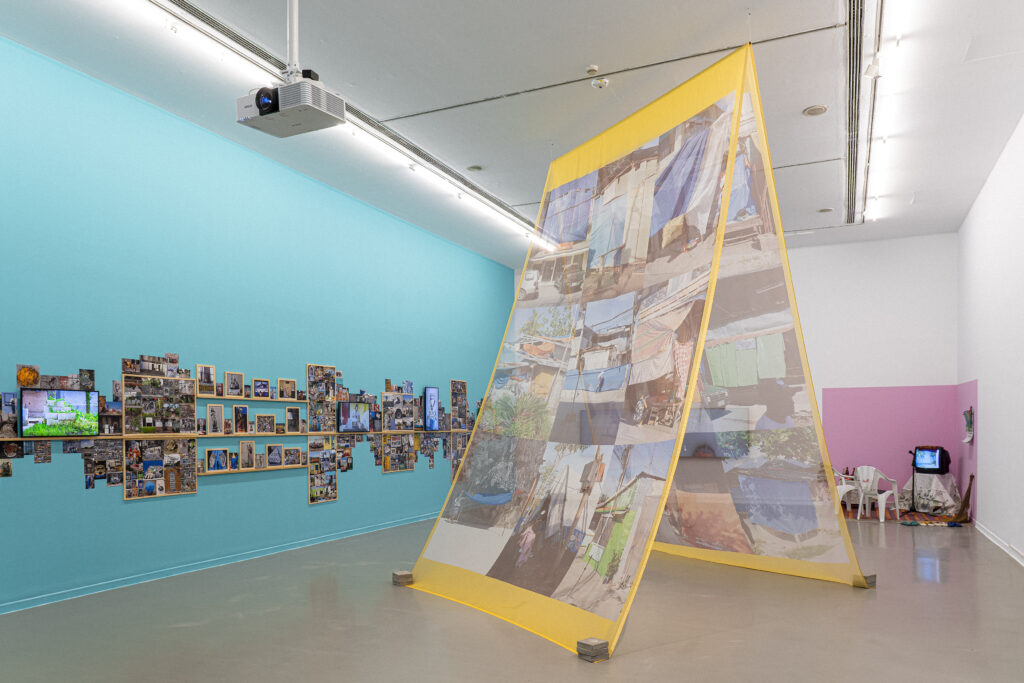
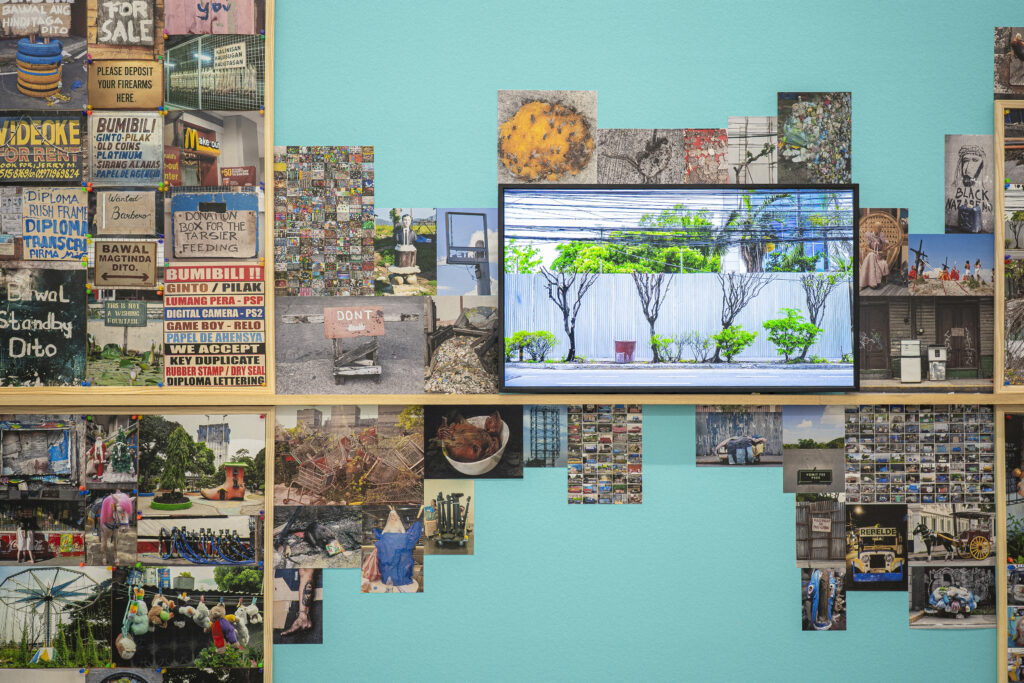
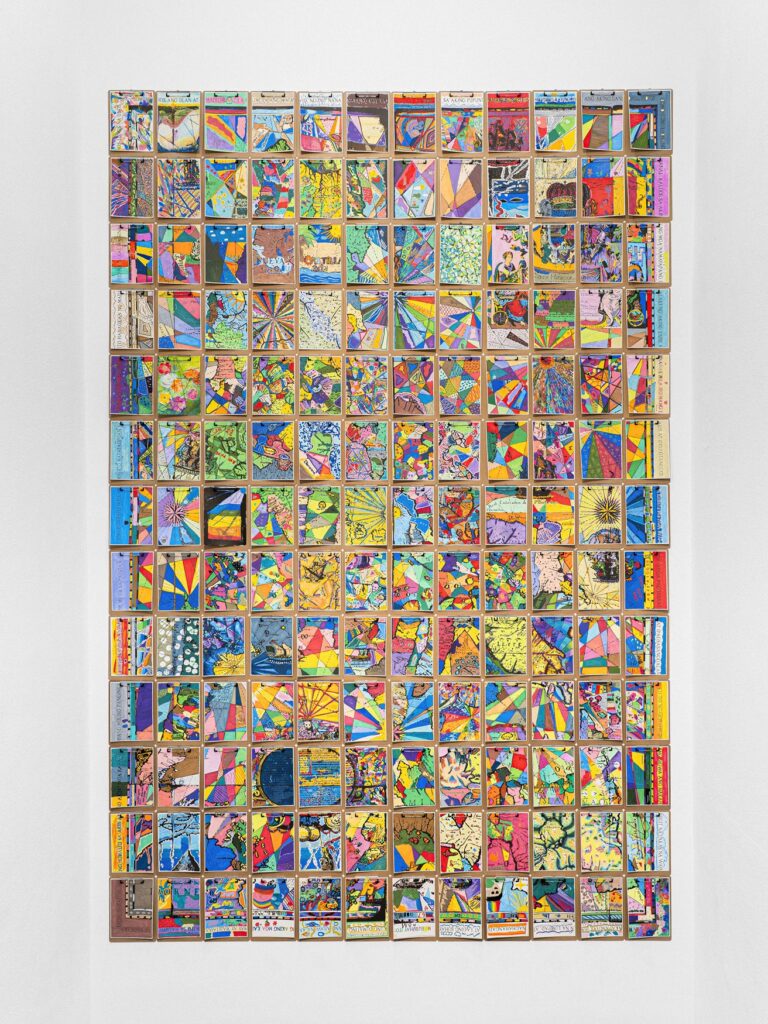
As for Álvaro Talavera, who spent two years residing in the Philippines, thanks to an artistic scholarship, and later returned independently, as a curator, he teaches us “Kumusta na kayo?” (in Spanish, how are you now), a compendium of works by five artists and groups from that country – photographs, videos, installations – in which they address the past and present of the archipelago in relation to its Spanish past, community life and the development of its own identity.
From the very title, a dialogue is structured in which the viewer is invited to listen and the montage of pieces with a more intimate and territorial nature is interspersed.
We will contemplate the reconstruction, by Leslie de Chavez and the population with whom she collaborated, of a map of the islands taking into account problems of memory and identity; a video installation and photographs by Kiri Dalena and Ben Brix that confront the past and present of the Philippines; a Manila archive in continuous transformation by MM Yu, whose images do not fix meanings, but are part of a process; the investigations, in the form of a cabin, by Czar Kristoff P., on traditional and precarious housing in that country; and a Filipino net art platform understood as endless karaoke, the work of Chia Amisola.
In short, Talavera presents a look at the Philippines from within; not an exhibition about the Philippines, but from there.
“And I become a river, whose brown tongue will not rest.”
“Kumusta na kayo?”
THE HOUSE ON
Valencia Round, 2
Madrid
From May 16 to July 26, 2026