Caceres,
Everyday materials, found photographs and texts are the starting point of the Swiss artist Thomas Hirschhorn to articulate installations, usually variegated, in which he offers – and aims to encourage – critical readings on various aspects of contemporary society.
Whether through its presentation in public spaces or through those materials for everyone nearby, it addresses all types of audiences; This is how he continues to do so in his new exhibition at the Helga de Alvear Museum. Under the curation of the center’s director, Sandra Guimarães, this space hosts the first retrospective of the author in twenty years, which reviews his career from his early works, dating back to the eighties and sometimes unpublished, to recent creations, from this same 2025.
One of them, My Atlasgives the exhibition its title and represents Hirschhorn’s interpretation of the notion of an atlas based on the famous Atlas Mnemosyne of Aby Warburg, to whom he dedicated the last years of his life. This is a very relevant project in artistic historiography despite having been left unfinished: it consists of two thousand images compiled in sixty tables that give rise to an open cartography of object and diffuse limits; Between them a network of relationships based on visuality is established: more like proposals for links, since nothing in that proposal was definitive.
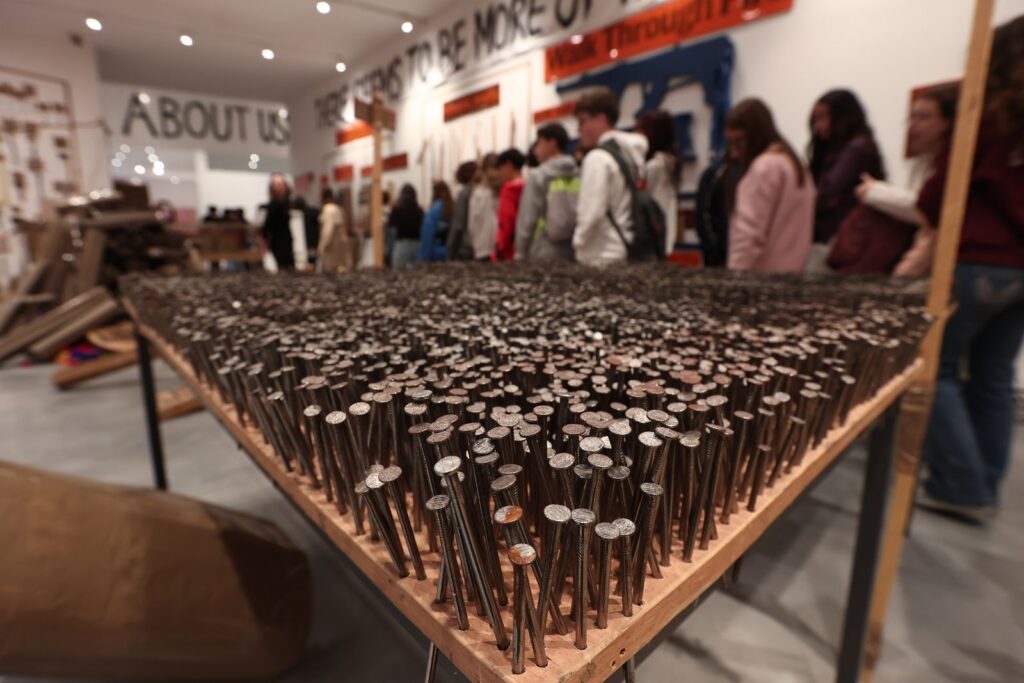
The panels that make up Hirschhorn’s atlas are a few fewer, forty-five, and as a horizontal statement on cardboard and black plastic they reveal the coherence in the artist’s gaze and production and the intertwining of individual issues (my) and collective (atlas); They include numbered images of his works, original pieces and some arranged on the ground without indications, dates or photo captions.
Like Warburg’s, it was born as a tool for the artist to express what he understands to be his mission before the world (pointing out problems without offering univocal conclusions) and it is not a closed work; In the author’s words, it remains non-chronological, infinite, constantly developing, evolving and open to completion by me and, I hope, by those who view it. The purpose of My Atlas is to affirm what can be seen and what is offered to be seen.
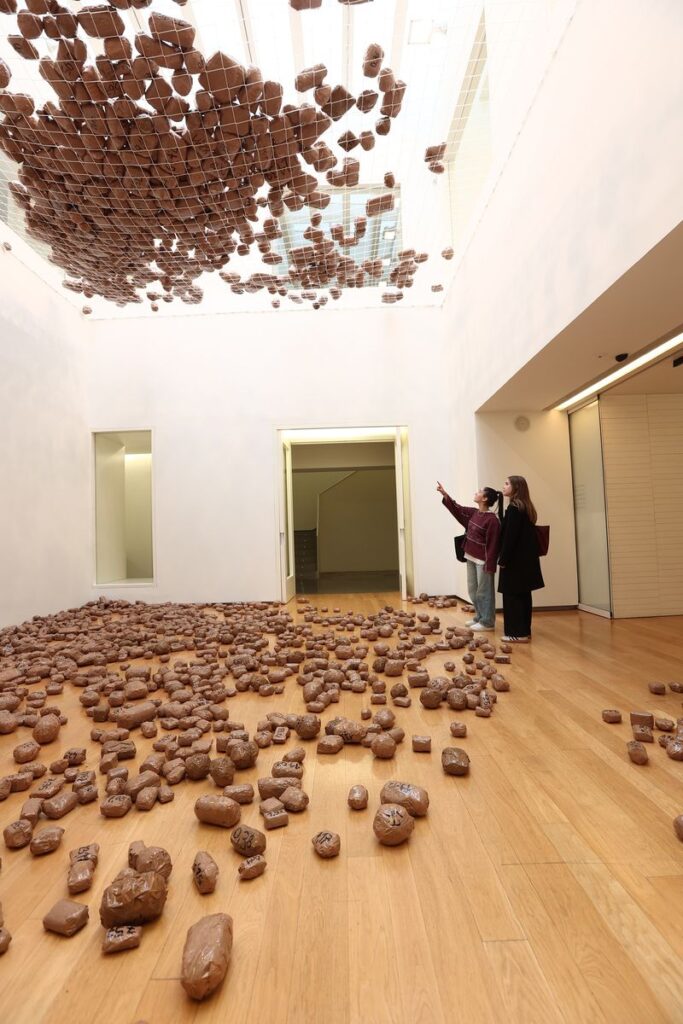
For this exhibition, it has also been produced, specifically thinking about the museum atrium, Gravity, Mass and Democracy (2025), which associates the democratic system with philosophical and scientific concepts. It consists of a network extended horizontally, between the ground floor and the first floor, that holds cardboard objects of various formats, numbered with percentages and taped, some falling to the ground. Visitors can walk through the work under the net and contemplate it from the first floor.
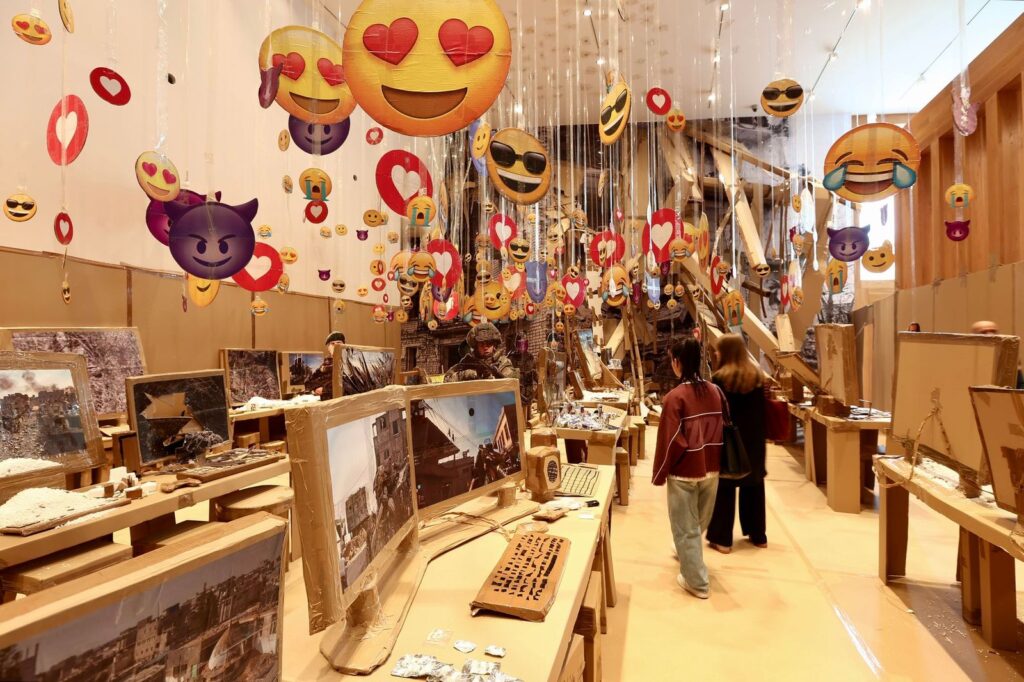
At the main entrance, and for the first time in Europe, we will see Fake it, Fake it–till you Fake it (2024), a monumental work that questions the material and virtual aspects of art in times of war like ours, confronting the analog and digital spheres. We are talking about a fragile cardboard sculpture to which fake computers, credit cards and other elements were incorporated, emphasizing, formally, the plastic consequences of the choice of materials and, thematically, the powerful influence of social networks, the metaverse, artificial intelligence and that ideology of Fake it until you make it.
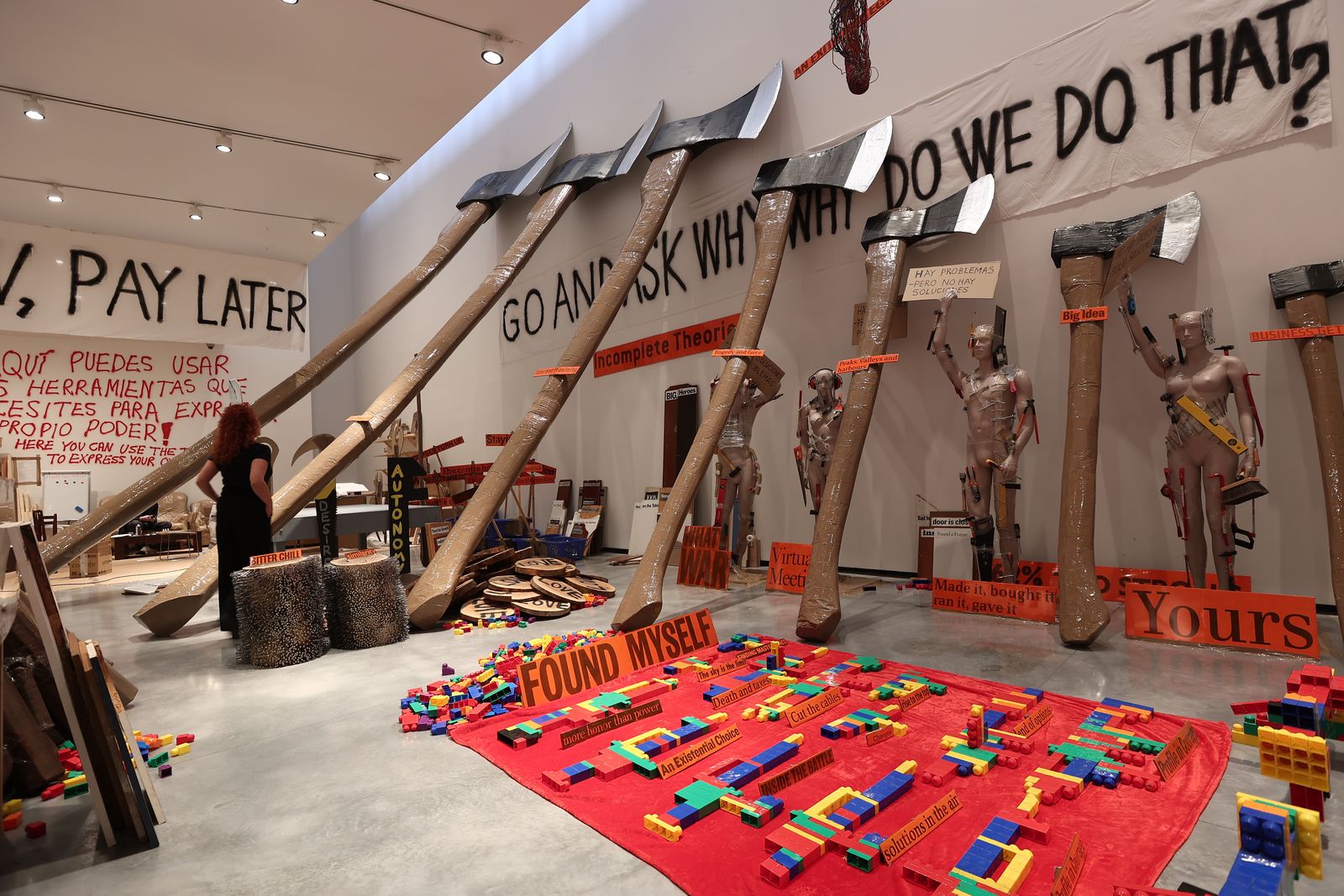
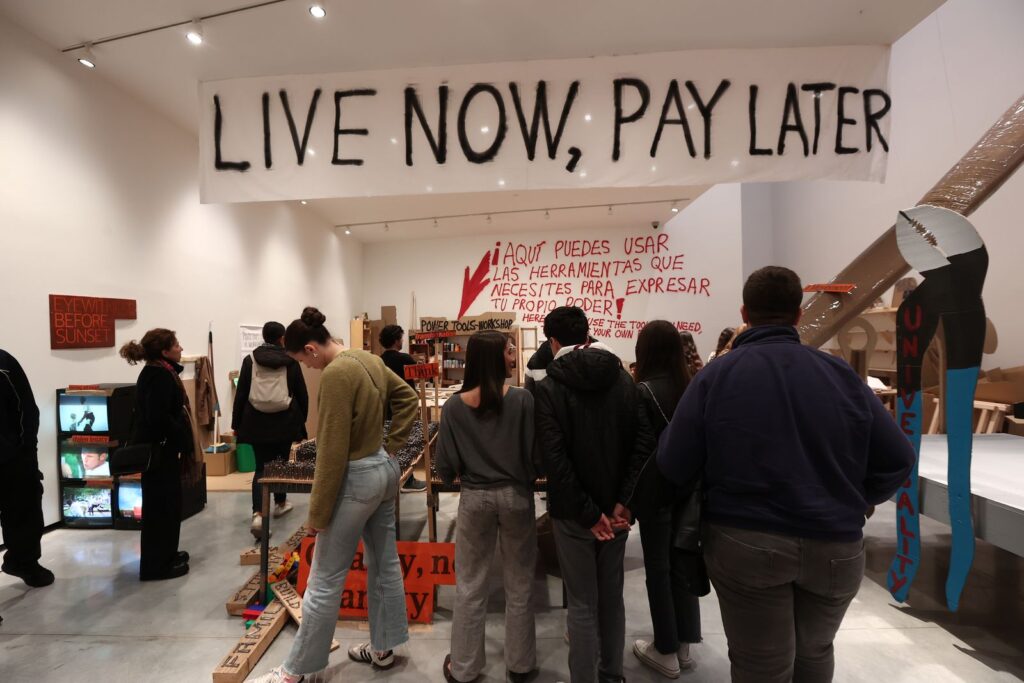
And on the occasion of this anthology, one of Hirschhorn’s works that Helga de Alvear most longed to possess has taken on new vigor: Power Tools (2007). It has been reactivated and expanded to a new location; In addition, the museum has programmed a workshop around it that invites the public to become aware of their power with creative tools.
“Thomas Hirschhorn: My Atlas # Our Atlas”
HELGA DE ALVEAR MUSEUM
C/ Pizarro, 10
Caceres
From November 14, 2025 to May 2026