A Warsaw court ruled admissible, on March 18, the extradition to Ukraine of Russian archaeologist Alexander Butiagin. Moscow speaks of “retaliatory measures”. The decision, subject to appeal, marks a first: never before has a Member State of the European Union opened the way for the extradition of a Russian researcher to kyiv for facts linked to occupied Crimea.
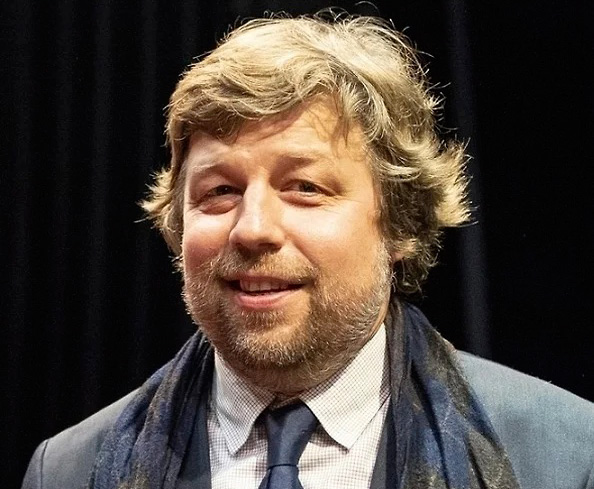
Alexander Butyagin (54 years old) is a figure in ancient Russian archaeology. Head of section in the classical archeology department of the Hermitage Museum in Saint Petersburg, since 1999 he has directed the excavations of Myrmekion, an ancient Greek city located near Kerch, in Crimea. Since 2014, the peninsula has been occupied by Russia in defiance of international law.
After the annexation, kyiv stopped issuing excavation permits. The archaeologist nevertheless continues his work, with the support of the Hermitage and Russian public funding. In the Ukrainian media, he became “Putin’s archaeologist”. It is precisely the continuation of these activities that the Ukrainian authorities today qualify as illegal.
On December 4, 2025, the archaeologist was arrested in a hotel in Warsaw, while returning from a conference in Prague. Initial information suggests an extradition warrant linked to searches carried out in Crimea. The Ukrainian instruction has since clarified the grievances. According to the Ukrainian Security Service (SBU) and the prosecutor’s office of the Autonomous Republic of Crimea, relocated to Kherson, Alexander Butyagin caused the destruction of the “cultural layer” of several hundred square meters in Myrmekion, to a depth of up to two meters. The damage is estimated at more than 200 million hryvnias (around 5 million euros). Investigators mention in particular the seizure of 30 gold coins, including 26 minted under Alexander the Great, as well as the destruction of archaeological structures during unauthorized work.
On the criminal level, Alexandre Boutiaguine is being prosecuted for illegal excavations leading to the destruction or intentional damage of an archaeological site. For kyiv, this is not an administrative offense, but an attack on heritage committed in an occupied territory, likely to fall under international standards for the protection of cultural property in times of war.
In the academic world, museums and scholarly associations, the Alexandre Boutiaguine affair questions the notion of scientific neutrality: can we invoke the protection of heritage when research is carried out under the authority of an occupying power? Russian anthropologist Alexandra Arkhipova speaks of an “illusory ivory tower”. Researchers, she says, are not outside the power relations in which they are part. In Crimea, excavations contribute to the construction of a historical narrative aimed at anchoring the peninsula in Russian continuity.
On a legal level, the Polish decision falls within the framework of the Hague Convention of 1954 and its second protocol of 1999, which oblige the occupying power to strictly regulate excavations. If Russia has ratified the first, it is not party to the second, unlike Poland and Ukraine. By deeming the extradition admissible, Warsaw proposes a criminal reading.