London,
The National Gallery in London has just inaugurated, on May 2, the first major monographic exhibition in the United Kingdom dedicated to Zurbarán, a historical exhibition that as such has been received by international critics: until next summer, some of the best traces of naturalism, frankness and emotional force of the Sevillian baroque will be installed in the British capital, which will later be celebrated in the Louvre and the Art Institute of Chicago.
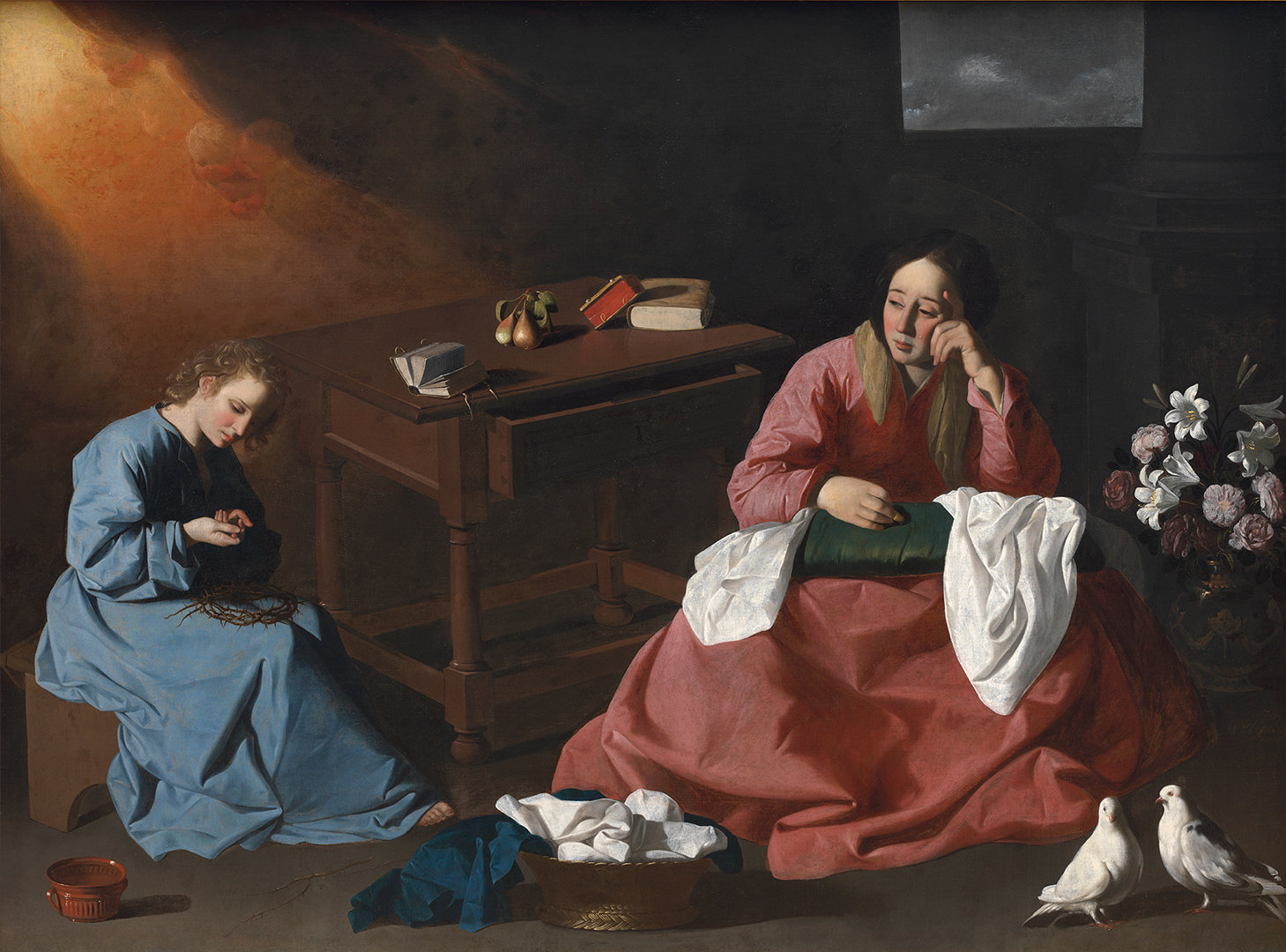
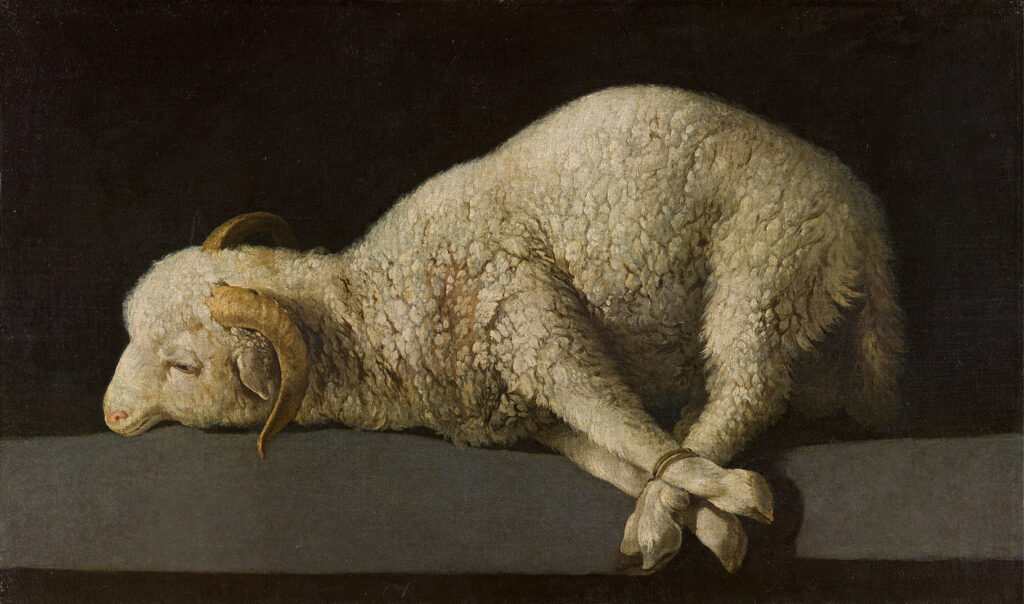
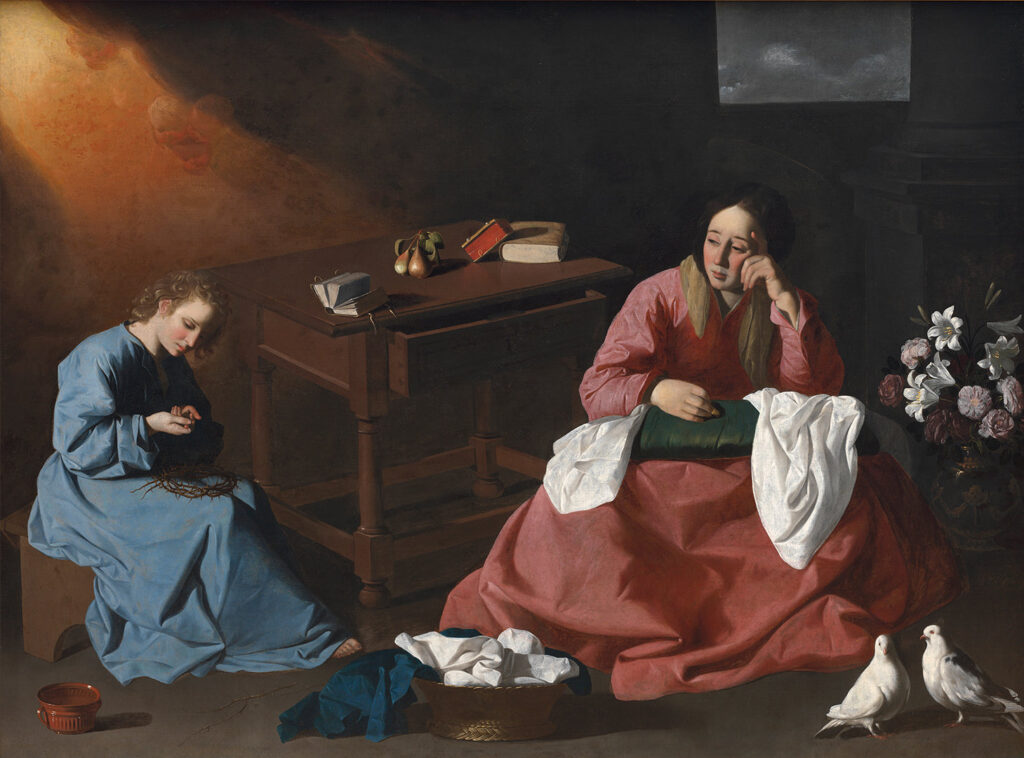
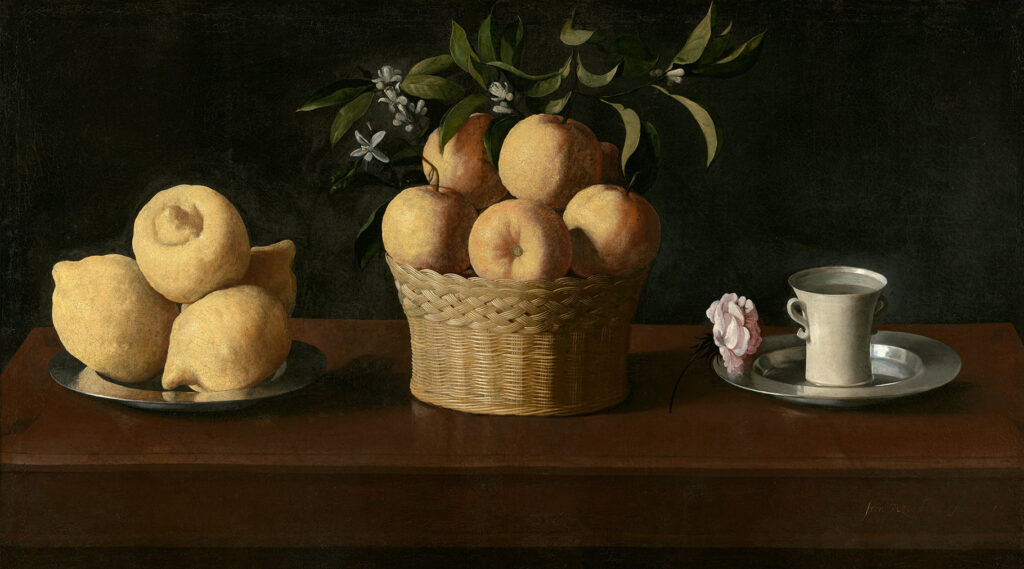
The tour is made up of nearly forty representative works donated by public and private collections, some of them Spanish (highlighting the Agnus Dei, full of symbolism and verisimilitude, and Christ crucified with a painter, of the Prado Museum, and Saint Casilda from Thyssen) and, in a good number, international ones. The Louvre has lent Saint Bonaventure in his coffin and Saint Apollonia; from the Museum of Fine Arts of Lyon arrives Saint Francis of Assisi; from the Cleveland Museum of Art comes Christ and the Virgin in Nazarethand the Norton Simon Museum, Still life with lemons, oranges and a rose. The exhibition is completed with some pieces by his son and pupil Juan de Zurbarán.
The maestro was born in Fuente de Cantos (Badajoz) when the 16th century was declining. He was the son of a shopkeeper (in a good position) who must have appreciated his talent early, since at the age of fifteen he received parental permission to train with the imagery painter Pedro Díaz de Villanueva, in Seville.
In this city, then one of the richest in Europe and the nerve center of international trade due to its connections with America, Zurbarán would develop most of his career, working mainly for religious orders and creating altarpieces and cycles of paintings of enormous scope and ingenuity. It was also used for private patrons and even, for a time in Madrid, for the king of Spain. Both in his mostly devotional compositions and in his still lifes he demonstrated to be a keen observer of reality, which he knew how to capture vividly.
The exhibition is divided into seven sections, starting with a first introductory section in which the viewer is introduced to his vision of the world and his concentrated style, lacking in anecdotes; they are part of it The appearance of Saint Peter to Saint Pedro Nolasco and Crucified Christ with a painterboth from the Prado.
Below we will see a selection of the canvases that Zurbarán made for those numerous religious orders of Seville, for which he was increasingly in demand; we can mention The vision of Alonso Rodríguezarrival of the Royal Academy of Fine Arts of San Fernando. He began to demonstrate his skill in large formats and narrative painting, and to attest to his inventiveness when it came to granting structure and iconographic solutions to his compositions.
We couldn’t miss a room in which we will be surrounded by white and tan garments with incredibly realistic and original textures. The one from Badajoz achieved immense skill in representing the saints as figures of our world, especially through the evocation of fabrics, draping and the feel of wool, embroidery, leather or fine cord. It is not advisable to forget his father’s status as a haberdasher, so it is possible that the artist developed a great interest in textiles from a young age; It was also undoubtedly inspired by the numerous religious processions, parades and theatrical performances that were part of Sevillian visual culture in the 17th century.
In a fourth iconographic section, the Immaculate Conception gains prominence. As different representations of the same theme come together in London at different times in Zurbarán’s career, visitors will appreciate how this author continually strove to find new ways to evoke intense emotions through the brush.
The chapter Beyond Seville examines the paintings he made for patrons outside the capital of Seville, with which he never lost his connection. In 1634 he received the most prestigious commission of his career: an invitation to travel to Madrid and participate in the decoration of the newly built Royal Palace of Buen Retiro. Specifically, it was chosen to contribute to the decoration of the Hall of Kingdoms, in the center of that very spacious palace complex: about thirty-five meters long and ten meters wide. For this space, Zurbarán carried out a dozen paintings, including a series focused on the labors of Hercules: the Prado has lent it for the occasion Hercules and Cerberus and Hercules and the Cretan bull.
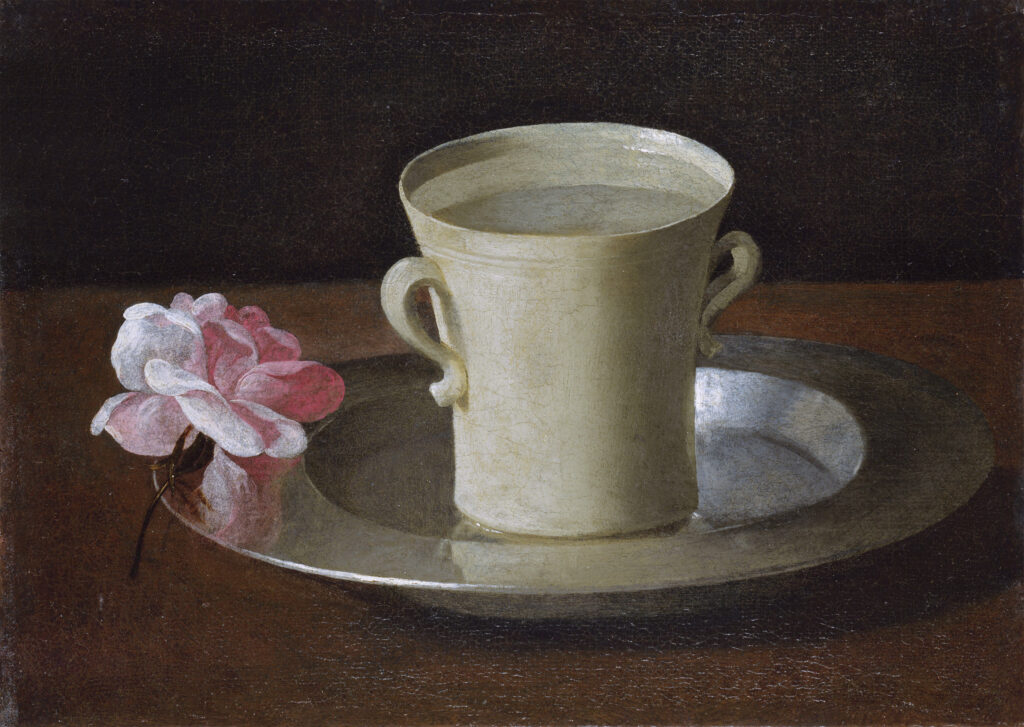
A sixth room shows still lifes, including four by the aforementioned Juan Zurbarán. It is believed that Francisco did not create more than a dozen still lifes in his entire life, so the exhibition represents, for international visitors, a unique opportunity to discover some notable examples of his immersion in that genre, which he approached with as much austerity as dignity and without ever resorting to sumptuary objects. For the first time they can see themselves united Still life with lemons, oranges and a rose and Cup of water and a rosefrom the National Gallery itself. It has been written that this vessel could be a symbolic reference to the purity of the Virgin and that the flower would refer to Mary as the Mystical Rose – in the litany of the Virgin in the Rosary she is spoken of as spiritual vessel, vessel worthy of honor or vessel of distinguished devotion-. In any case, here once again sobriety is moving: the white ceramic cup, shown with some lack of perspective, as if this insufficiency were also modesty, rests gracefully on a table. Even delicately, as if its handles were limbs. A silver tray, a material brought from Peru, reflects it slightly on one of its edges, like the rose that begins to wither, while the dark background highlights the objects, favoring their luminosity.
Sánchez Robayna finds in this still life a humilitas which is not present in other works by Zurbarán; Whether or not it has Marian significance, it does have the deep sense of what is close, of the warmth of everyday life, the substrate of this type of compositions by the Baroque artist.
The tour culminates by exploring the paintings that Zurbarán created for private devotion and contemplation (he has traveled The family of the Virginfrom the Abelló collection, or Veronica’s veilfrom the National Museum of Sculpture). Its size is smaller, but its emotional strength is not.
Zurbaran
NATIONAL GALLERY OF ART
Trafalgar Square
London
From May 2 to August 23, 2026