An Angkor temple in the middle of the waters regains its splendor, after fourteen years of Franco-Cambodian restoration. Emmanuel Macron and the King of Cambodia Norodom Sihamoni inaugurated, Monday November 16, the Western Mebon, temple located in Angkor in the province of Siem Reap. The ceremony marked the culmination of a restoration project begun in 2012.
This visit is part of the Head of State’s trip to Cambodia, from November 14 to 16, on the occasion of the 20th Francophonie Summit, organized for the first time in the kingdom. The project, the cost of which reached $12 million according to the APSARA National Authority, was carried out jointly by the French School of the Far East (EFEO) and the Cambodian authority responsible for managing the Angkor archaeological park.
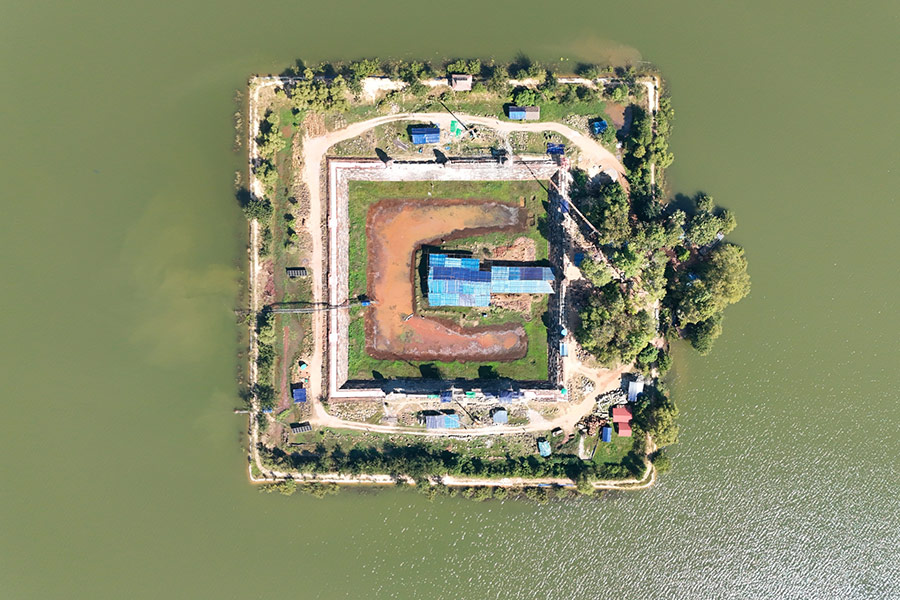
More than a hundred people took part in the work, the majority of them Cambodian artisans, notably stonemasons. The teams restored the sixteen towers, the surrounding walls and the causeway leading to the central sanctuary. The island location of the temple complicated the site, requiring the transport of sandstone blocks and equipment by boat as well as permanent management of the water level of the reservoir.
The Western Mebon temple at Angkor in 2009, Cambodia.
Built in the mid-11th century during the reign of King Udayadityavarman II, the Western Mebon is a Hindu shrine dedicated to Vishnu. It occupies an island in the center of Western Baray, an artificial reservoir measuring eight by two kilometers, built by the Khmer sovereigns. Exposed for centuries to bad weather and erosion, the monument gradually deteriorated.
The temple belongs to the vast Angkor archaeological park, listed as a UNESCO world heritage site since 1992. Between the 9th and 15th centuries, the site was the political, religious and cultural center of the Khmer Empire (802 – 1431), which spread over a large part of South-East Asia. It brings together hundreds of remains, including Angkor Wat, represented on the Cambodian flag.
For more than a century, the EFEO has participated in the study and conservation of the temples of Angkor, including the temple of Western Mébon, which underwent a first restoration in 1940. The place is also famous for the discovery by French archaeologists, in 1936, of a monumental bronze statue of reclining Vishnu, more than five meters long in its original form. It was the subject of a restoration in Nantes before being presented at the Guimet museum, in Paris in 2025, during the exhibition “Royal bronzes of Angkor, an art of the divine”.