Madrid,
Its closest environment, in terms of spaces and people, is the substrate for the silent painting of Vilhelm Hammershøi, one of the great names in Danish art around 1900, not well known outside his country until at least the 1980s. That is why a newspaper article from 1911 stated that visiting the artist at his home was like entering one of his compositions.
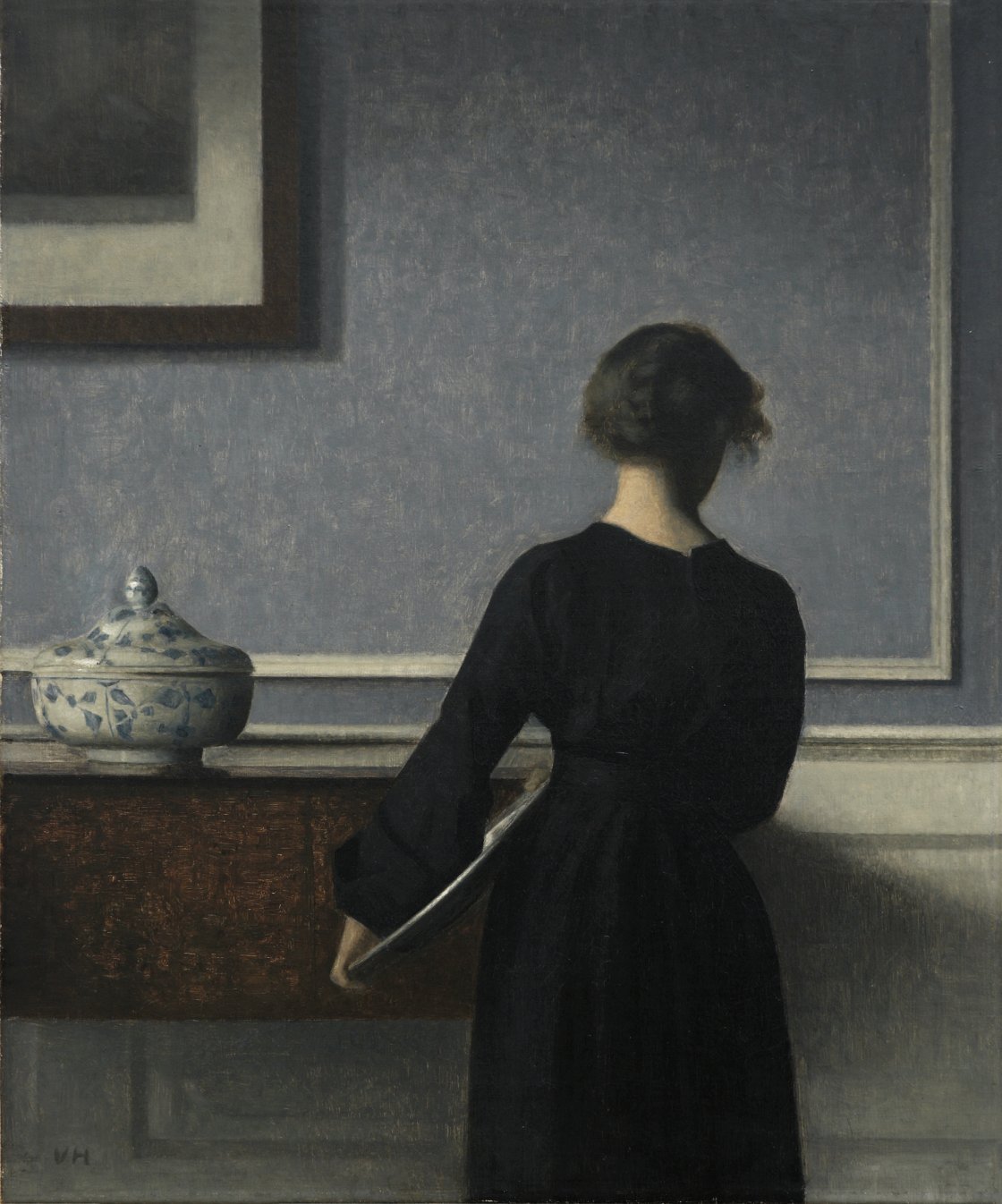
Apparently taciturn in temperament, this author did not fail to represent a world in his image, in which he could find himself welcomed and comfortable, also bathed in silence. The observer can have no doubt that these rooms are private and that it is not possible to have any interaction with the women who appear in them (normally the artist’s wife), immersed in solitude and perhaps in daydreams.
His first major retrospective in Spain, curated by Clara Marcellán, can now be visited at the Thyssen-Bornemisza National Museum and proposes to the public to cross those silent walls in which Hammershøi took refuge, illustrating as much as possible his ties with family and friends, and with other creators who were close to him, to give his canvases more complete readings.
Because of that introverted character, almost evident in his production, the painter surrounded himself throughout his life with a small circle: this anthology includes paintings by his brother Svend Hammershøi, his brother-in-law Peter Ilsted and his friend Carl Holsøe, which we can compare with his own. The affinities are evident, but Hammershøi’s singular genius stands out when it comes to transmitting emotions through spaces, emptiness and light, above all a melancholy in which many viewers have been able to recognize themselves.
He was a slow painter, as Marcellán explained, but not a little prolific – in his half century of life (1864-1916) he produced four hundred works, of which nearly seventy can be seen here. His palette was reduced, his compositions austere, and he gave prominence to white, black and ocher tones; also to the line, the first thing he looked at when choosing his motifs.
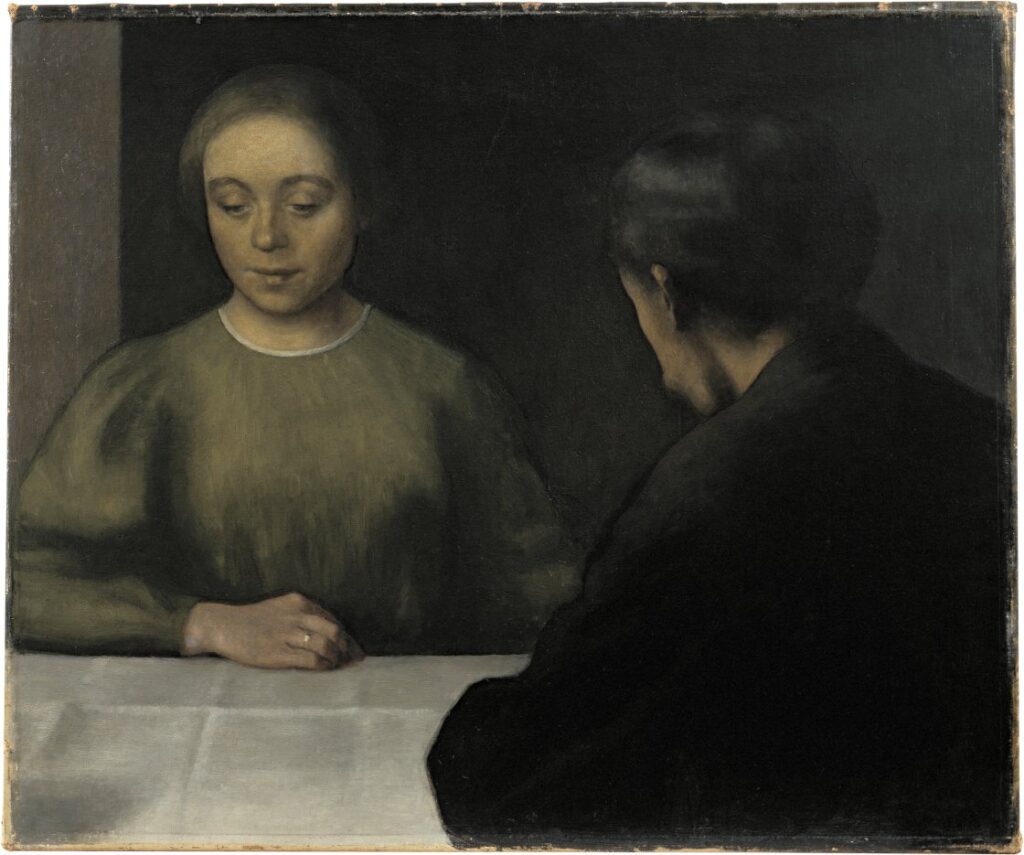
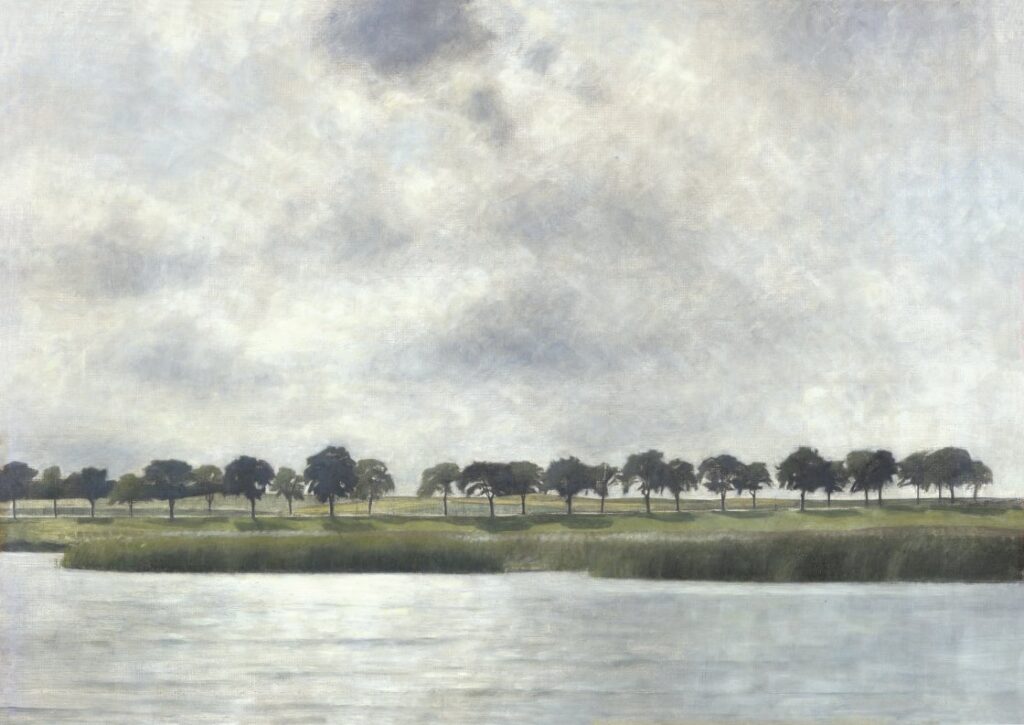
Both today and in life he has been more famous for his interiors than for the rest of the genres he tackled, and it seems that he did not like it too much that it was that way; Landscapes, portraits and self-portraits have also arrived at Thyssen in which he also managed a certain ambiguity and an introspective silence. Together with his wife Ida Ilsted, sometimes playing the piano, and some family members, he also often represented musicians: it seems that he was very interested in this activity, due to its slow and expectant nature. The curator has related this inclination to her whites: Kandinsky, who was her contemporary, associated this color with a silence full of possibilities, with a melodic pause.
Ida, with whom she traveled a lot, was not only a model for her career: she shared searches and concerns with her. He presents her to us in his canvases as a very close figure, although he does not usually show us his face, highlighting in some cases his vulnerability and inserted in those harmonious and still (Protestant) interiors, so refined that they allow us to project in them what the contemplator carries inside.
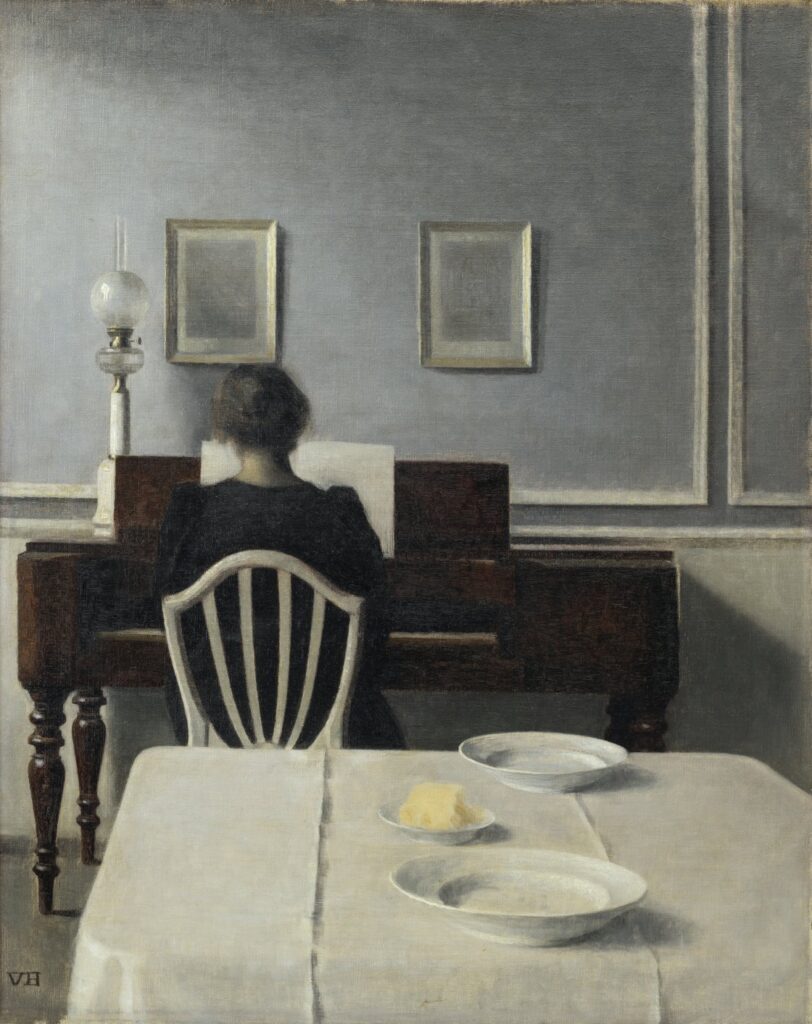
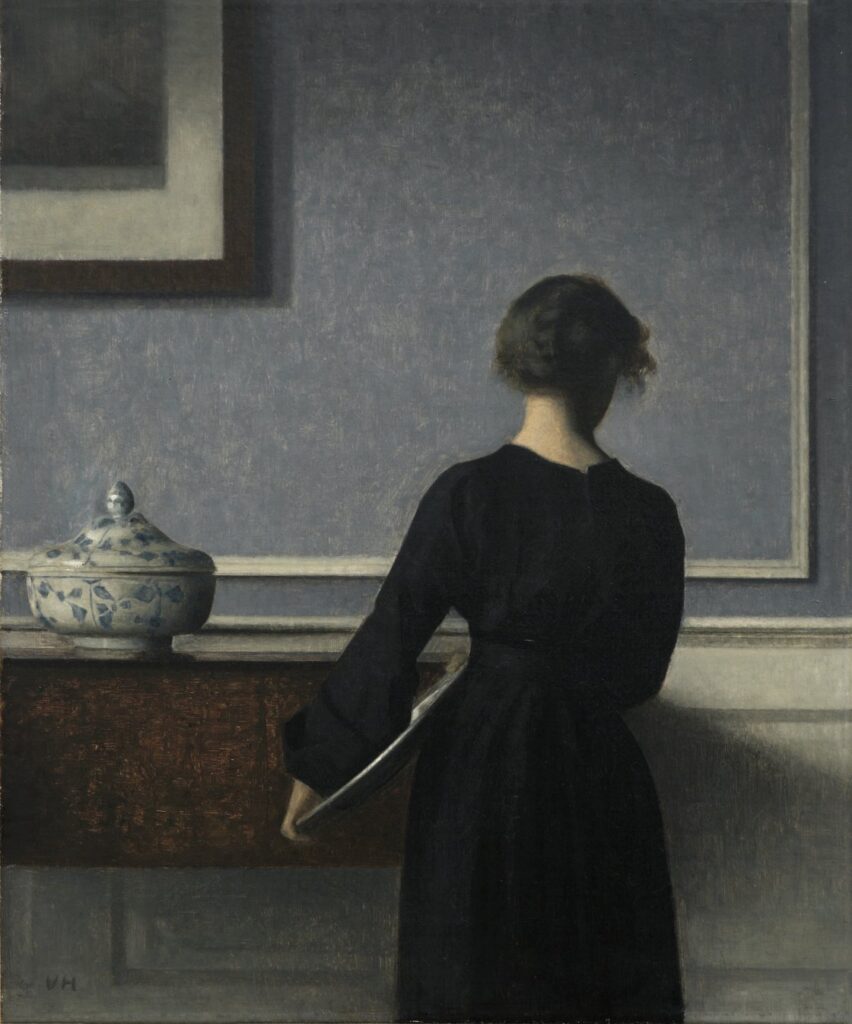
There were more than sixty works that Hammershøi created in his two successive apartments, so in the exhibition we will have the opportunity to become familiar with them, and with the subtle changes of atmosphere that the movement of a painting or a piece of furniture provokes. Time seems so frozen that the butter melting on some plate is enough to introduce dynamism to one of the scenes. Even in his views of nature or the streets of Copenhagen we appreciate a radical absence of the human figure: the Dane preferred to pay attention to the rhythmic succession of lines offered by the windows or columns. He tended towards abstraction, avoiding any detail that could distract the viewer and underlining the proportion of the sky.
Except for the first and last sections of the exhibition, focused on his early period and his final years, the tour is not organized chronologically, because the Dane’s production did not change much over time. We will see his first absorbed figures, whose aura seems to refer to the symbolism of Whistler; those portraits of artists and musicians as devoid of anecdotes as all their spaces; nudes lacking eroticism that tend towards withdrawal; of course, a wide selection of interiors with no more presence of the exterior than the light itself, which he knew how to project with care on the floor or letting us see the dust; humble and lonely landscapes, often misty; and self-portraits in which he presents himself in communion with the rooms he inhabits, next to doors that reflect windows.
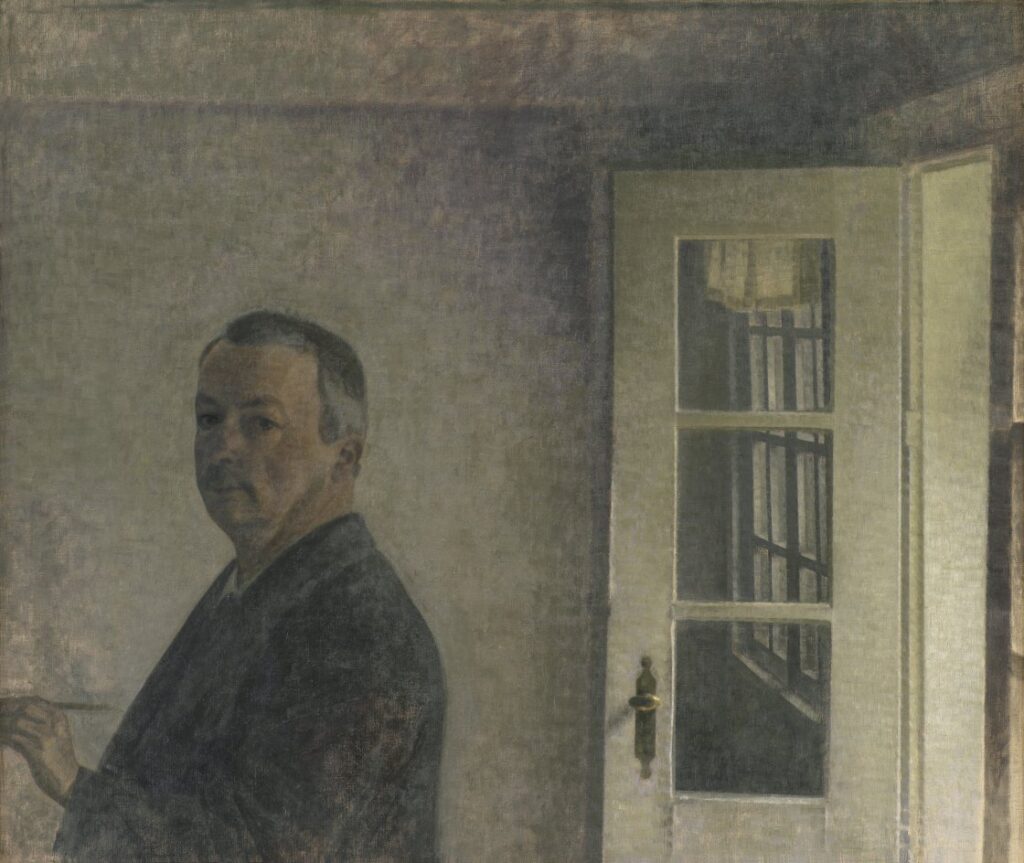
Hammershøi’s apartments were more than a place to live: they were true workshops, the setting for his experiments with light. By comparing the photographs of the artist’s apartment with his works, we can realize that, before painting, he selected: he omitted to represent certain decorative elements, he deliberately stripped the walls of any superfluous details.
We might think that he always remained in the same place, tirelessly painting the same rooms, but he traveled a lot to study and, paradoxically, to achieve the impression of immobility that emanates from his works. It feels like he didn’t leave his own universe, wherever he was; and from there it continues to appeal to us.
“Hammershøi. The listening eye” will travel to Kunsthaus Zürich after passing through Madrid and it is very likely that the exhibitions and popularity of this author will grow in the coming years. Seen today almost as a postmodernist, he is examined in the light of Mondrian and contemporary artists tending toward reductionism.
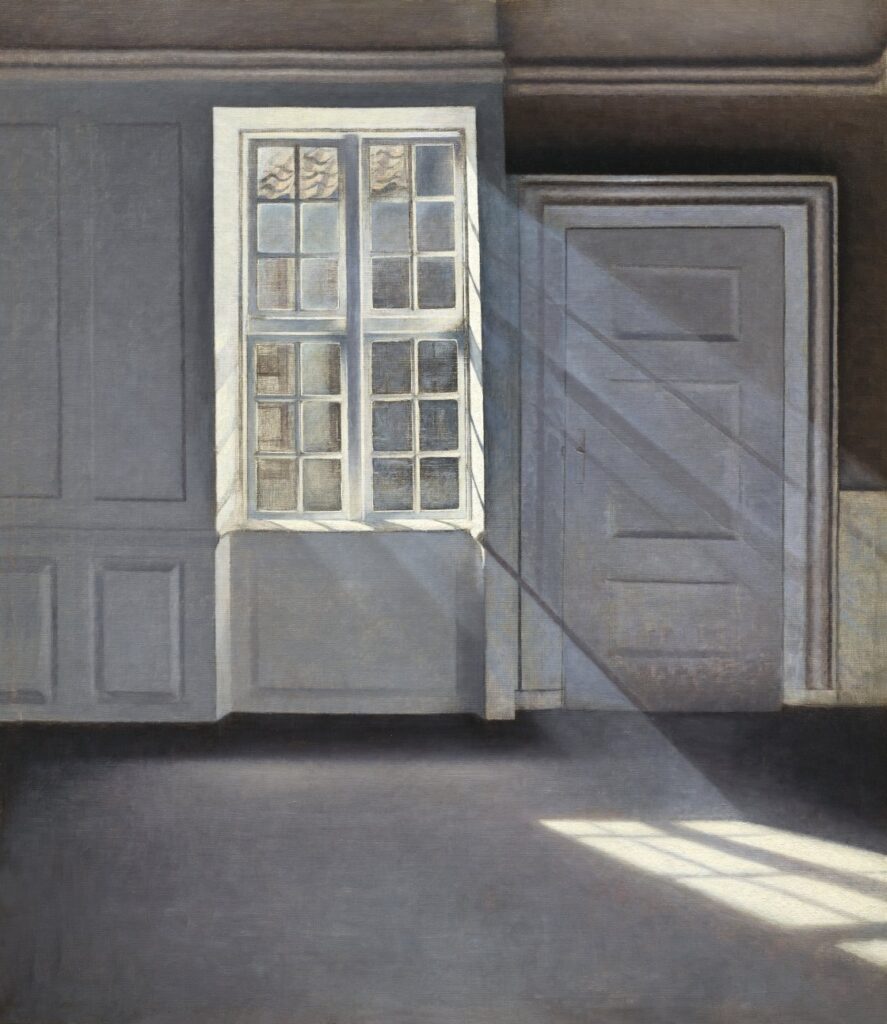
“Hammershøi. The listening eye”
THYSSEN-BORNEMISZA NATIONAL MUSEUM
Paseo del Prado, 8
Madrid
From February 17 to May 31, 2026