Pamplona,
One of the first photographers who, in the mid -nineteenth century, began in Calotype and explored their options both documentaries and artistic was Charles Clifford, Welsh born in 1820 and died in Madrid forty -three years later. A decade of his short career passed in Spain and our country, especially our monumental heritage, he developed a kind of photographic synthesis that would have a long influence.
Faced with the interest of the painters and illustrators of the moment in the landscape, the city and the scenarios that would suggest picturesqueism, Clifford chose as reasons the traces of Romanization, the Andalusian legacy and the medieval and Renaissance architecture: monuments that not long before he began to portray them had been subject to destruction and plunder. It would be around 1840 when a certain public awareness of the need to preserve them would begin to consolidate, which necessarily went through their inventory and to make them known through publications.
In that context, Clifford’s efforts are registered: that Monumental album of Spain, which started from first individual investigations and that acquired vast dimensions. And to that project dedicates its new photographic exhibition the University of Navarra Museum, under the police station of Javier Piñar and Carlos Sánchez; Its paper and glass negatives would spread among the European and Spanish public.
Established in Madrid with his wife, Jane Clifford, in 1851, at first she worked in study portraits, but the following year Charles began to make and sell views of cities and monuments: those of Madrid, Toledo and Segovia. He received the support (and the orders) of the Monarchy of Isabel II and, after that first step, of aristocrats, bourgeois, institutions and companies.
In Salamanca, he related to the architect Francisco Jareño, and with members of the School of Architecture of the Academy of San Fernando, and from that contact his series arose Photographias: About thirty images of the Salamanca and Ávila heritage in relation to the drawings carried out by the students of that center.
It was acquired by the Academy itself, which in 1854 commissioned, for 6,000 reais, an album of photographic tests of cities of Castilla, Galicia and Asturias: its borders and their archive were extended, and they would do it more when traveling to Seville and Granada.
For reasons that we do not know, their ties with that agency would not go further, but those works were presented at international exhibitions and, in any case, they constituted the basis of their own production.
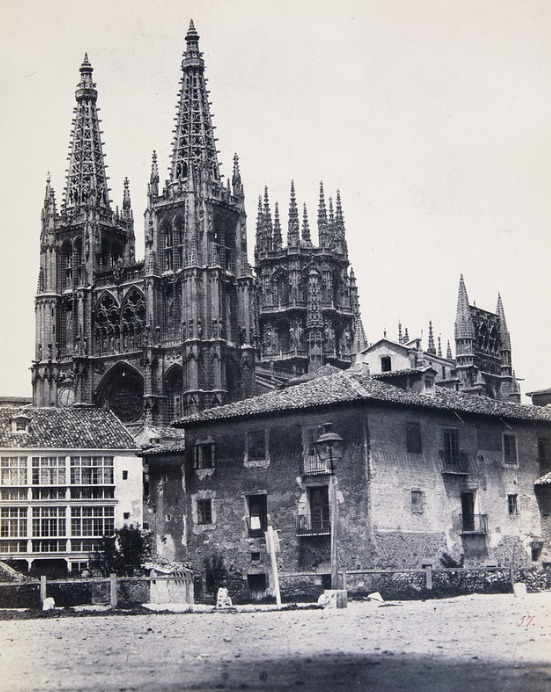
Another of its main support, in the 1850s, Clifford found it in the Court of the Montpensier: his work nurtured the wide photographic collection that Antonio de Orleans brought in the Palace of San Telmo Sevillano and this family demanded several specific orders. Between 1854 and 1858 he would photograph Extremadura enclaves, Castilla La Mancha and Catalonia, and several more from Andalusia.
If his work had clear Spanish roots, his audience was always European, fundamentally British and French, hence Clifford remained in relation to the photographic circles of these countries, where for their artistic and technical qualities it became the great Spanish -subject photographer. He would reach there, in fact, more fame than in our country and starred in exhibitions at the London Photographic Society or Française de Photographie.
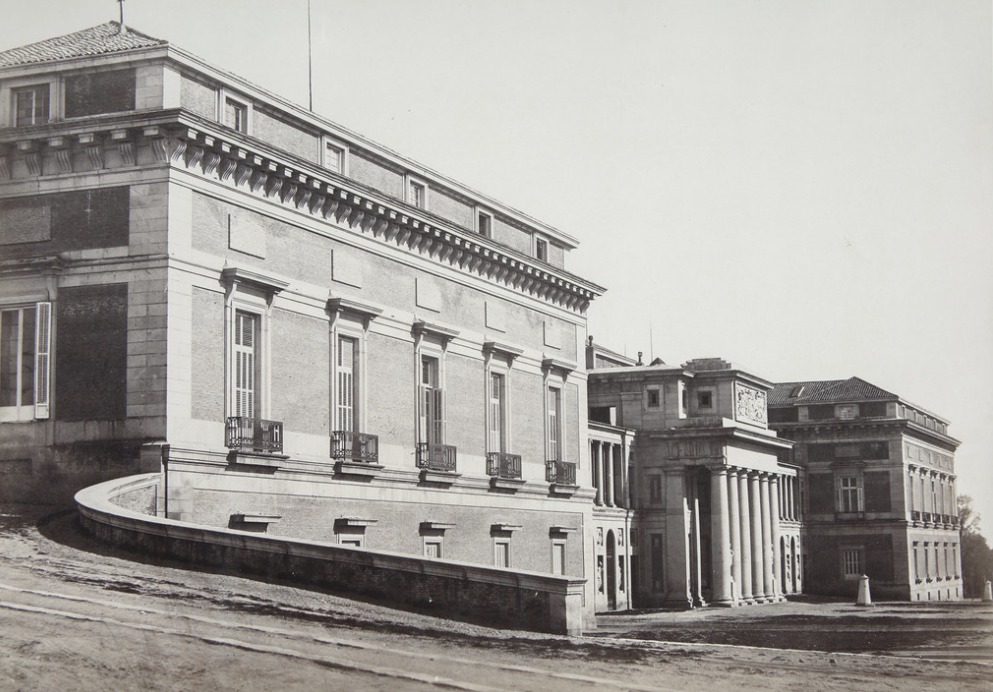
Not only was monumental views entrusted (the majority dimension of his work), but also portraits, painting reproductions and artistic objects, documentation of urban reforms and public works, reports on private possessions and rail construction works. In a way, he always handled them as if he approached monuments, except for some exception: the lifting of the Isabel II channel and the reform of the Puerta del Sol. A selection of these works can also be seen in Pamplona.
He also documented the visit to Andalusia and Morocco of the Prince of Wales in 1859, and Queen Victoria for commission Isabel II, and trips, phases and ephemeral architectures linked to the Spanish royal family.
Until several months after Clifford’s death, that Monumental album of Spain: photographic collection of its best architectural worksformed by three hundred images with their texts.
It came to light over seven years and scarce specimens have been preserved, some incomplete, but it was a pioneering initiative between those destined for the dissemination of our historical heritage, to date insufficiently known.
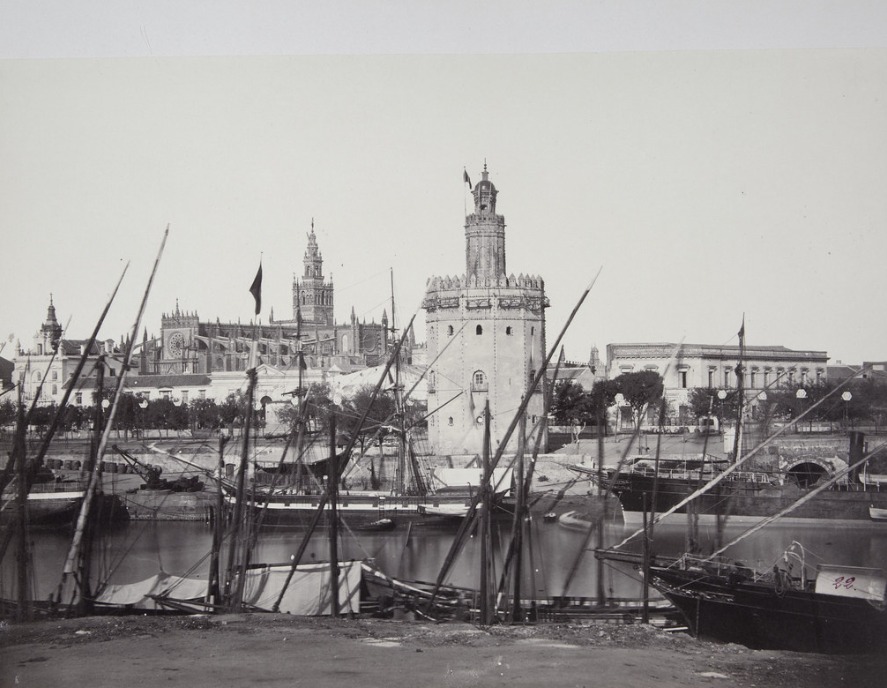
“Charles Clifford and the Monumental Registry of Spain”
University of Navarra Museum
University Campus, s/n
Pamplona
From September 30, 2025 to February 8, 2026