Philippe Bélaval, the former culture advisor of the President of the Republic – still not replaced – went up to the niche in the face of criticism on the loan of the Bayeux tapestry, to explain that road transport would be privileged: “There is an extremely precise study, signed by several people”. Some specialists believe that despite dusting and prior stabilization, the loan remains risky. The project manager aims to be reassuring: “The Ministry of Culture does an additional study on resistance to tapestry vibrations and the possibility of removing them during transport, so that it is without danger. »»
The announcement of the loan of the work at the British Museum on July 8, aroused certain enthusiasm, but also encountered opposition. Cécile Binet, Museum Advisor to Drac Normandy, as well as Isabelle Rédard, former director of the Bayeux Tapestry Museum and Ecologist deputy expressed their disagreement. The latter explained: “The value (of the tapestry) is incalculable and if something happens to it, no amount of money or any other similar object can replace it. »»
Concerns is shared in the United Kingdom. Michael Daley, director of Artwatch UK, told Telegraph :: “What is particularly worrying in the displacement of works of art is that they are intrinsically vulnerable and likely to be damaged by a certain number of possible or likely accidents – blows, vibrations, falls, fluctuations of temperature and humidity, etc. – and even to be completely lost when they are transported by water or by plane. »»
60,000 people signed a petition initiated by The Tribune of Artagainst the loan, qualified by the militant blog of “Heritage crime”. The petition highlights the worrying state of conservation of the tapestry.
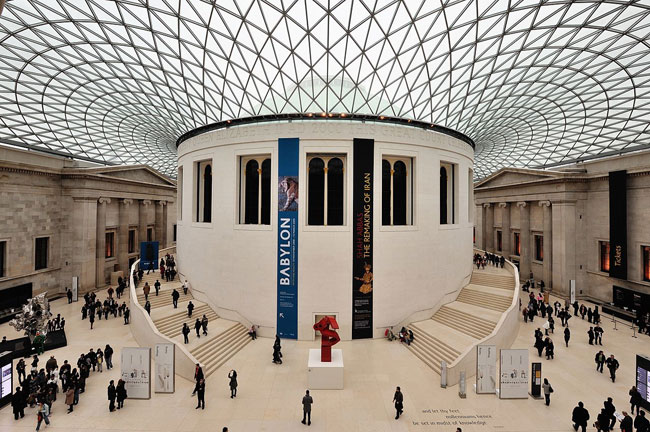
This loan, announced at the July Franco-British summit, has a diplomatic scope. In return, the United Kingdom will lend the Treasury of Sutton Hoo (7th century), the Lewis chess figurines (12th century) and the Battersea shield (1st century BC). The exhibition at British Museum is scheduled between the fall of 2026 and July 2027, as part of the European Normans year, celebrating the millennium of the birth of Guillaume the Conqueror.
The loan is made possible by the closure of the museum for work from September 2025. The reopening, scheduled for 2027, will offer an additional 115 m² of exhibition space as well as new presentation devices. The site, estimated at 38 million euros, will include specific arrangements to accommodate embroidery.
70 meters long, the Bayeux tapestry would have been ordered by Bishop Odon de Bayeux, half-brother of Guillaume the Conqueror, between 1070 and 1077 for the cathedral of Bayeux. Probably embroidered in Canterbury, she traces the conquest of England in 1066 and the battle of Hastings. Registered in the “Memory of the World” register of UNESCO, it is a major testimony of European history and a founding object of English identity, due to the Norman influence on the language, architecture and elite of the country.