Sens (Yonne). It’s hard not to see him now, with his name displayed in large letters at the entrance. The Sens Museum, which adjoins the famous Saint-Étienne Cathedral, the first Gothic cathedral in Christianity, has until now suffered from a lack of visibility. But its change in visual identity is only the emerging part of a much broader overhaul, which concerns its entire permanent journey. After a year of work, the museum has reorganized its collections to make the visit more fluid and accessible. “We have completely modified the course, which until now was very fragmented. From now on, it presents a historical continuity going from prehistory to the 19th century, explains Pauline Arnaud, deputy director of the museum. We also sought to restore continuity to the story on the territory, starting from the origins of Sens and then showing its progressive expansion. »
Mosaic and videomapping
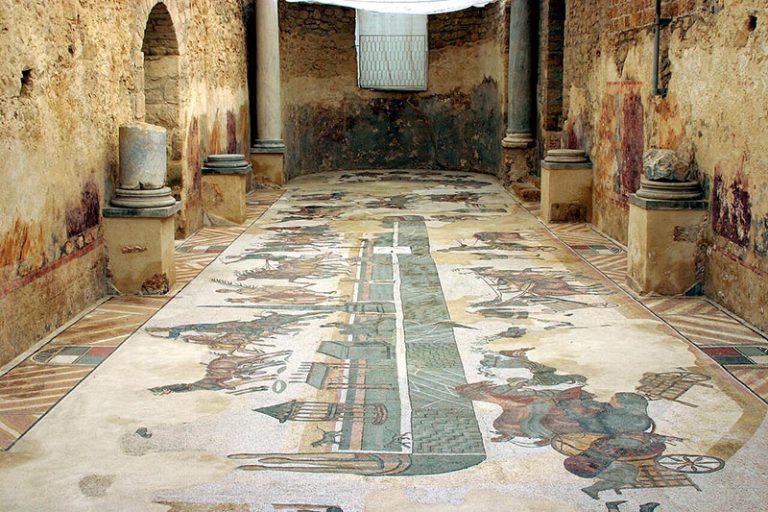
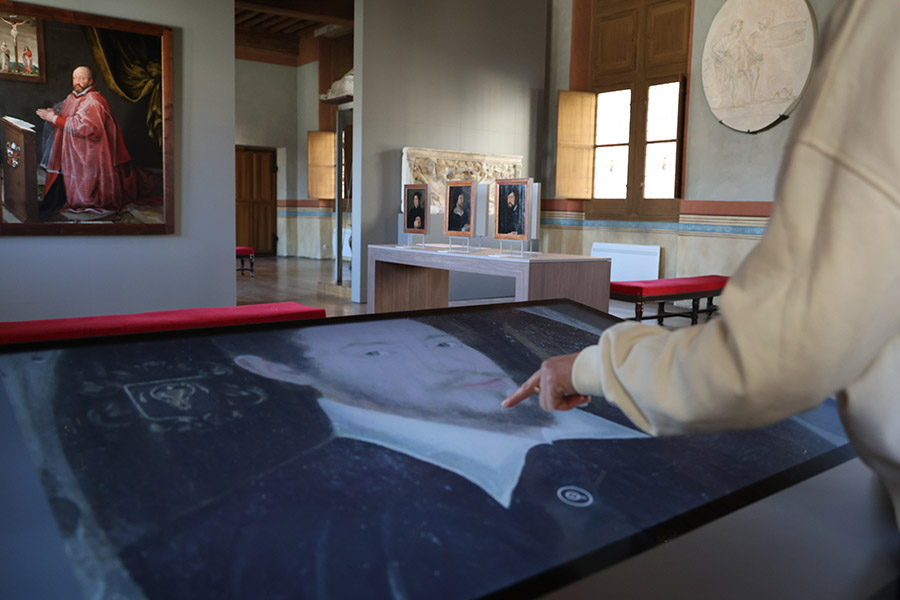
Immersion, first, in the Paleolithic period where a few cut flints, urns and spearheads serve as a prelude to the presentation of the Villethierry treasure, a collection of bronze jewelry restored for the occasion. Then, it is the impressive facade of “the thermal baths”, a set of decorated blocks from disappeared ancient monuments, which benefits from new lighting. “The museum has a rich archaeological collection that we wanted to better highlight, by supporting the visitor more in this section thanks to digital technology,” specifies the deputy director. Touch screens on the richness of the Sénonais territory, benches equipped with an audio device recounting life in Sens in the Gallo-Roman era when the city was called “Agedincum”… The most spectacular device is however located at the level of the remains of the basement, where a huge videomapping projection highlights an ancient mosaic and a 12 meter long wall engraved with numerous inscriptions.
The facade of the Musée de Sens with the new lettering.
© Hélène Allard / City of Sens
“This museographic overhaul was also an opportunity to put the spotlight back on our fine arts collections, which were isolated and poorly showcased. It needed to breathe more. » It is therefore on the first floor that the most visible transformations have been made. If the Treasure Room, which preserves the precious treasure of Sens Cathedral, has remained unchanged, the layout of the rest of the collections has been completely redesigned. More suitable furniture and optimized positioning have made it possible to add around sixty new works to the exhibition. Among them, small stained glass windows dated from the 14th to the 16th century, portraits taken straight from the reserves or even a bas-relief of Mary Magdalene (1567), until now preserved in the Saint-Maurice de Sens church.
A building linked to the archiepiscopal palace
“Our desire was also to breathe new life into this building which has a very strong identity. It is linked to the archbishop’s palace, which the visitor is often unaware of if he is not very knowledgeable. underlines Pauline Arnaud. To compensate for this lack of information, a double label has been integrated into each room: one relates to the collection, the other to the history of the building. A welcome spotlight for this site with declining attendance, which now only welcomes 10,000 to 15,000 visitors per year. With the ambition of doubling this figure, the City covered 85% of the cost of the museography and restoration operations, which totaled 640,000 euros, the rest having been financed by the State and the Region.
An additional envelope has been allocated to the renovation of the Orangery, scheduled to be completed next September. Until now reserved for temporary exhibitions, this large room will be transformed into a sculpture gallery, which will notably present the Émile Peynot (1850-1932) collection. As the deputy director indicates, “the museum will therefore not have any temporary exhibition space for the moment. But by creating this gallery, we will finally have a conference room while continuing to promote our collections.”
The Museum of Sens in time
History. The beginnings of the Sens museum date back to the Revolution, while the synodal palace was used as a repository for revolutionary confiscations. Little by little, the City’s collections are enriched with a set of works from bequests from private collections and local archaeological discoveries. In 1844, a municipal museum was therefore officially established, with the aim of retracing the history of the Sénonais from prehistory to modern times. The museum first moved into the Vezou hotel, the former headquarters of the town hall, which hosted the first presentations of the collections. Cramped, the museum moved in 1985 to the former palace of the archbishops of Sens, which adjoins the cathedral and the synodal palace. Built in the 13th century, the building served as a residence and place of power for the archbishops of Sens. Despite its successive alterations in the 17th and 18th centuries, it retains remarkable Gothic elements, witnesses to the religious and political importance of the city.