Italy. “America is new Rome”proudly affirmed, in 2024, Elon Musk on his social network X. By designating the United States as the natural heirs of the Roman Empire, the billionaire is not content with a rhetorical posture. It commits millions of dollars to support the study and conservation of Rome’s archaeological heritage, with the stated ambition of “rewrite the history books”, thanks to the analysis of new data.
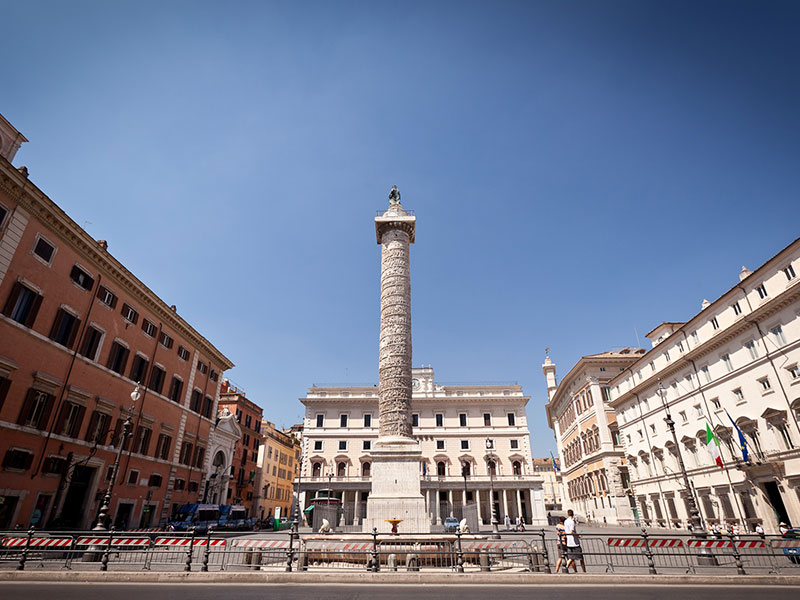
His latest donation, made symbolically on April 21 – the day of the mythological birth of the Eternal City – amounted to one million dollars. These funds feed the international programl “Expandere Conscientiae Lumen” (“Expanding the light of consciousness”). Unlike traditional patronage, Musk bypasses local administrations: funds are paid directly to universities, researchers and restaurateurs. If Rome is at the center of the project, it extends to the former provinces of the Empire, notably in Tunisia, Morocco, Jordan and Albania. Technological innovation is spearheading this initiative, with 3D scanning for ancient monuments such as Marcus Aurelius’ Column or artificial intelligence for deciphering the papyri of Herculaneum.
However, Musk is not an isolated case within the American radical right. This interest in the roots of the Peninsula is part of a broader ideological approach. Before him, Steve Bannon, former Donald Trump strategist, attempted to transform the Carthusian monastery of Trisulti, a majestic 13th century monastery, into a “academy for gladiators of Judeo-Christian culture”. This project aimed to forge the future leaders of the European far right within a setting of medieval spirituality, a sort of school of“culture war”. Although the Italian justice system ended up revoking this concession in 2021, the momentum driven by Bannon left its mark.
Italy erected as a bastion against decadence
The libertarian right displays its wish to exploit the history of Italy, one of the cradles of the West, as a bastion against “decadent modernity”. Investment is not just real estate or financial. The “Bronze Age Pervert” (BAP) movement, led by influencer Costin Alamariu, finds powerful relays within circles close to Vice-President JD Vance. He massively uses the iconography of statues from the Renaissance and Roman Antiquity – as the David by Michelangelo or busts of emperors – to promote an ideal of virility, hierarchy and power. For these ideologues, Rome is not only an open-air museum, but above all a source of inspiration to resist the excesses of liberal democracy.
This obsession with ancient Rome is found even among the most powerful investors in Silicon Valley, like Peter Thiel or Marc Andreessen. The latter regularly cite Roman power structures to criticize the slowness and ” chess ” of democracy. They thus advocate a “technological Caesarism”where a strong leader (or visionary CEO) could bypass bureaucratic institutions to run the company. All roads (of the American radical right) lead to Rome.