The Rijksmuseum in Amsterdam has announced the development of a new sculpture garden, made possible by a major donation from the Don Quixote Foundation. Created by Dutch billionaire Rolly van Rappard (co-founder of a very large investment fund) and the museum’s main private patron, the foundation paid 60 million euros, in addition to a bequest of 12.5 million euros made in 2023 for the annual sculpture exhibitions. The donation covers the renovation of the three technical pavilions, their transformation into an exhibition space and the development of the garden. The specific cost of garden development is estimated at 10 million euros.
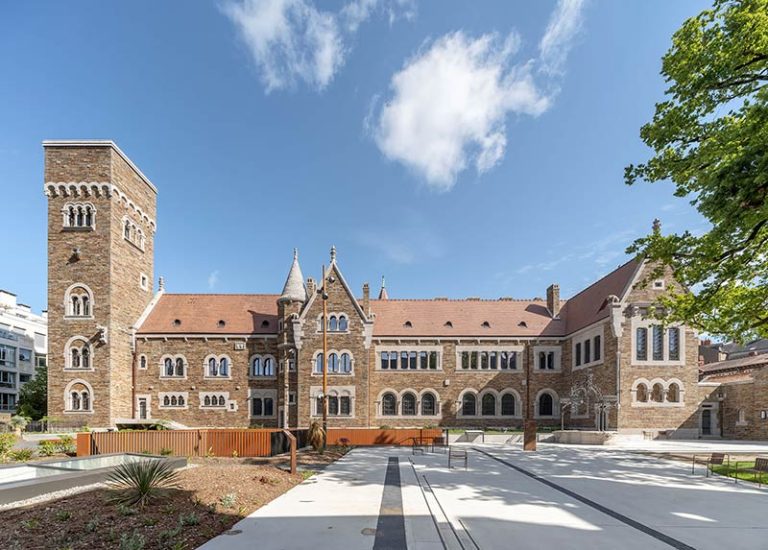
The future complex – called Don Quixote Pavilion and Garden at the Rijksmuseum – will occupy the green spaces bordering the museum, at the intersection of Boerenwetering, Ruysdaelkade and Stadhouderskade streets. It will combine the three existing pavilions and their adjoining gardens with the Carel Willinkplantsoen garden to form a single public garden. The pavilions, built in the style of the Amsterdam School (1915-1940), until then used for technical functions (depot, workshop) will be open to the public for the first time.
The new exhibition spaces will be designed by the architectural firm Foster + Partners, already behind the Great Court of the British Museum and the Zayed National Museum in Abu Dhabi. The garden will be entrusted to Belgian landscaper Piet Blanckaert, known for his Champs de Flandres memorial garden near Buckingham Palace. The exhibited works (modern and contemporary sculptures) will come from the Rijksmuseum fund and long-term loans. Among the artists already mentioned are Alberto Giacometti, Louise Bourgeois, Alexandre Calder, Jean Arp, Roni Horn and Henry Moore.
3D projection of the future sculpture garden at the Rijksmuseum.
© Foster + Partners
An environmental component is also planned: twenty-two new adult trees and a wide variety of native plants will be planted in order to strengthen urban biodiversity and improve the local quality of life. Access will be free during the day, with entrance located on the Stadhouderskade.
The permit application has been submitted and the opening is announced for autumn 2026. The Rijksmuseum is the national museum of art and history of the Netherlands. Housed in Amsterdam in a neo-Gothic building designed at the end of the 19th century by the architect Pierre Cuypers, the museum houses the richest collection in the country and one of the most important in Europe, with around 8,000 pieces exhibited in 80 rooms which retrace almost eight centuries of Dutch art and history. He is particularly renowned for his masterpieces from the Dutch Golden Age such as The Night Watch by Rembrandt and The Milkmaid by Vermeer.
However, this garden is not the only major initiative undertaken by the institution. In December, the museum revealed plans to create a satellite museum in Eindhoven, in the south of the Netherlands. A 3,500 m² center is to be built within six to eight years on wooded land near the Dommel river.