Compiègne (Oise). With around 100,000 visitors per year, the Château de Compiègne attracts fewer visitors than before Covid-19. This 35,000 square meter castle built between 1751 and 1788 for Louis XV nevertheless has a special history, due to its close links with French emperors: Napoleon I and Napoleon III frequently stayed in this area. “ The castle houses the most important collection of the Second Empire in France at the Musée de l’Impératrice »specifies Laura Gutman (curator of the Second Empire and Empress museums at the Château de Compiègne). The building also houses the National Car Museum, whose collections suffer from poor conservation conditions according to the report of the Court of Auditors (read JdA No. 640). Until the beginning of 2026, the Figurine Museum was also housed in the castle, which found itself confronted with strategic choices regarding its spaces and its investment priorities. A large landscaped park with the longest arbor in the world (1,200 meters) completes the offer for visiting the site, which therefore has a multiple identity. Its management by the nationally competent Service of Museums and Châteaux of Compiègne and Blérancourt places it under the supervision of the Ministry of Culture.
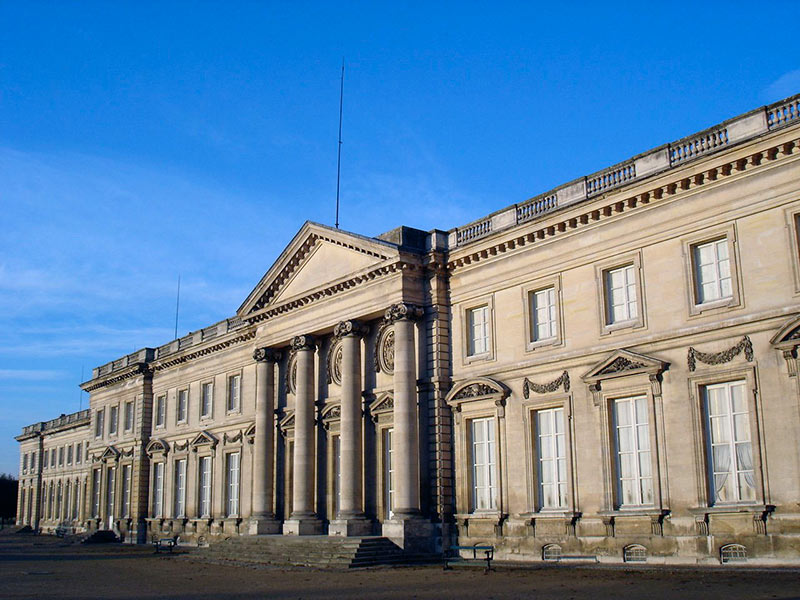
The castle of Compiègne.
© Château de Compiègne
Period rooms
Next to the museums, the main route passes through the apartments and galleries, but since the end of March, visitors can access the small gallery upstairs in the Kitchen Courtyard, where curators display works usually in reserve. Designed in the spirit of “period rooms”, according to Laura Gutman, these six rooms restore artistic taste in France from the 17th to the end of the 19th century: each room exhibits around ten works (paintings, drawings, sculptures) and some furniture or decorative objects (chests of drawers, seats, candelabra). “ These are works and pieces that are not directly linked to the history of the castle”explains curator Étienne Guibert (in charge of the historic apartments at the castle). For the 17th century, the visitor can see Flemish paintings (landscapes, genre scenes) while in the 18th century, there are Coypel’s paintings dedicated to Don Quixote, with “an influence from Watteau and the world of theater”according to Étienne Guibert. The furniture which decorates the rooms comes either from other spaces in the castle (living rooms and apartments) or from donations made in the 20th century: it is therefore not a question of restoring the state of these rooms which often changed use, unlike the Emperor’s apartments which have been entirely restored. Paintings of ruins, views of Italy, portraits of politicians or more familiar scenes, the works, several of which have been restored, recreate a refined atmosphere.
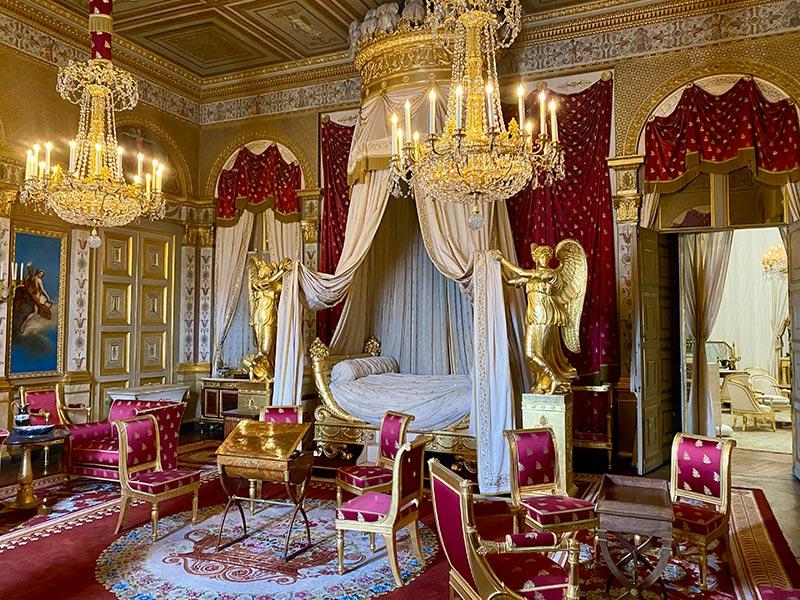
Bedroom of Empress Marie-Louise, second wife of Napoleon I, at the Château de Compiègne.
Difficult to access and small in size, these rooms can be visited by reservation and with a tour guide. This route on the Cour des Cuisines side ends on the ground floor with two rooms dedicated to the unfinished work of Thomas Couture (1856-1879)The baptism of the Imperial Prince – a painter whose castle has a substantial collection of works. Redesigned in 2024, these rooms show the sketches and preparatory drawings for this monumental work (4.80 by 7.90 meters), inspired by the Coronation of Napoleon Ier (1806-1807) of David (1748-1825).
These developments are part of an ambitious work program, of which the restoration of the imperial library, carried out in 2023-2025 for 3 million euros, marked the beginning. Currently, the work concerns the Louis-Philippe theater (1832) affected by structural problems linked to infiltration. Then will come the restoration of the facade on the park side “by 2027 or 2028”according to the curators, and finally the overhaul of the Car Museum. Initially estimated at 38 million euros, its final cost remains under discussion according to the new director Emmanuel Étienne, who confirms that the soon-to-be century-old museum will remain at the castle.
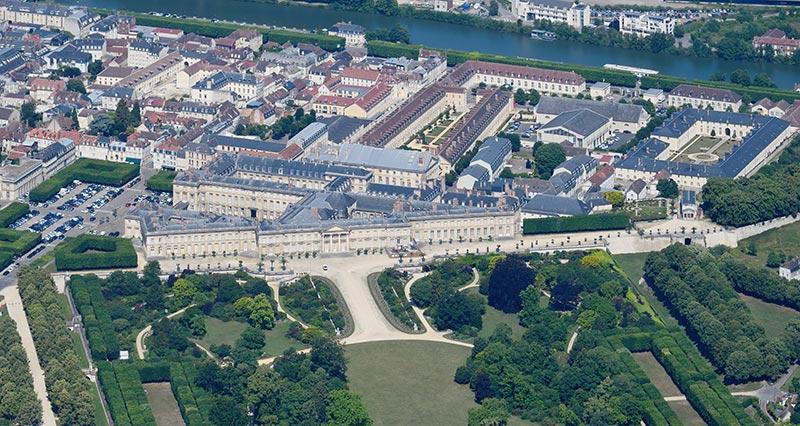
Aerial view of Compiègne castle.