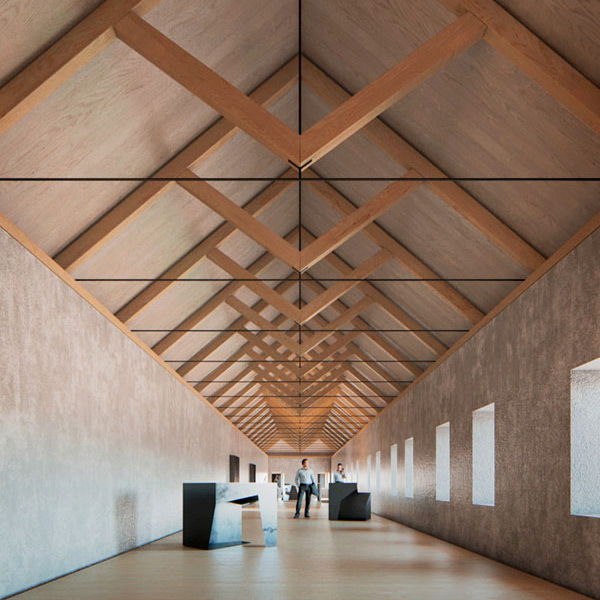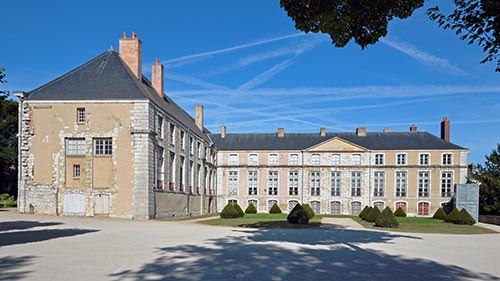
The decision was made by the municipal council: the renovation project for the Chartres Museum of Fine Arts was approved following a project management competition. Restructuring work on the museum, located in the former episcopal palace, will begin in 2028 for a period of two years, during which the museum will be closed to the public.
It is the project of a group of architectural agencies, made up of Lympia, its agent, BLP & Associés and Studio Matters, which won the project management over three other candidates. Led by the new mayor Ladislas Vergne (LR), the discussion during the municipal council was the opportunity to unfold the stages of the renovation, the first phase of negotiations of which will begin in July and will last until the start of the school year, with a signature expected in the fall of 2026. The start of the construction site is not envisaged before spring 2028, after the completion of the phase of studies and calls for tenders for works contracts.
“In addition to a complete renovation of the building and the restoration of the works, the spaces will be redesigned to offer a better visiting experience to the public,” specifies the City of Chartres. If some light targeted maintenance work had been carried out in 2017, after the acquisition of the walls by the municipality, the current project is the most ambitious that the museum has known since its transfer to the current building in 1939. With an estimated budget of 19.4 million euros excluding tax, the museum plans the restoration of the building, the design of premises dedicated to the management of the collections, but also the adaptation of the building to environmental standards and in the spirit of preventive conservation. This new stage also plans to make the museum “a place of life”, by organizing attractive cultural events, such as concerts or shows.
The Chartres Museum of Fine Arts.
The renovation project has been discussed for a long time. In 2013, the Departmental Council of Eure-et-Loir, then owner of the building, announced the extensive renovation of the museum, which no longer met conservation standards. The project was, however, aborted due to a quarrel, during which the Chartres MBA became the scene of a fifteen-year-old political conflict. The mayor at the time Jean-Pierre Gorges (LR) claimed ownership of the building, relying on a promise that had been made to him during his previous mandate by the former president of the Departmental Council, Martial Taugourdeau, who died in office. Faced with repeated refusals from Albéric de Montgolfier, his successor at the Department, the former councilor of Chartres had unilaterally decided to close the museum on January 1, 2017, citing the dilapidation of the spaces. A ludicrous attempt at blackmail, but successful, since the building was sold to the City for a symbolic euro a few months later.
Today, the renovation project must meet the challenges linked to the structure of the building, classified as a historic monument since 1906. Built in the 13th century, most of the current building was built under three bishops, between the 17th and 18th centuries. After the Revolution, the bishopric was first converted into the seat of the departmental administration of Eure-et-Loir, before returning definitively to the public domain in 1905, following the law separating Church and State. In 1914, the city of Chartres was entrusted with usufruct, and the collections of the museum installed in the Town Hall were transferred there in 1939.
Today, the museum has a rich collection of paintings, from the 16th to the 20th century, including masterpieces by Guido Reni (1575-1642), Francisco Zurbaran (1598-1664), Jean-Honoré Fragonard (1732–1806) and Maurice de Vlaminck (1876-1958). It also preserves an important collection of medieval, classical and romantic sculptures, including a bronze bas-relief by Auguste Préault (1809-1879). The collection, which includes 50,000 pieces, also includes decorative arts, including antique furniture, musical instruments and a set of 12 Renaissance enamels by Léonard Limosin (1505-1577), court painter-enameler, made for King François I.