Two years ago, for almost all of us, many of the compositions by Rosario de Velasco (Madrid, 1904 – Barcelona, 1991) exhibited at the Thyssen-Bornemisza National Museum were a discovery. To a large extent, this exhibition was the result of the efforts of her great-niece, Toya Viudes de Velasco, to recover works by the artist whose track had been lost: it included around thirty paintings dated between the twenties and the forties and a set of illustrations for publications such as ABC, Black and White either The Spherethe majority representative of his affiliation to the return to order, the parallel current to the German New Objectivity and the Italian Novecento that combined tradition (through its themes) and contemporaneity (in its forceful forms).
Among the obvious reference figures for the Madrid artist were Giotto, Masaccio, Piero de la Francesca or Mantegna, Dürer, Velázquez and Goya as well as De Chirico, Braque and Picasso. Her teacher was Fernando Álvarez de Sotomayor, a member of the Royal Academy of Fine Arts of San Fernando and director of the Prado Museum on two occasions, but she became aware that she had to open herself to the avant-garde and travel and she established contact with Maruja Mallo, Rosa Chacel and María Teresa León.
When he finished his studies, in 1924, he participated in the National Exhibition of Fine Arts in Madrid and began his foray into illustration. In the 1930s he carried out his most important works – in some he introduced complex perspective forms or cubist still lifes – and he took part in collectives and competitions that gave him success, such as the 1936 Venice Biennale, but the pace of his exhibitions declined after the Civil War. In the conflict she was accused of being a Falangist and sentenced to death; The person who would later become her husband, the doctor Javier Farrerons, was able to rescue her. The harshness of the post-war period and its tendency towards figurative realism at the time of the rise of abstraction caused it to gradually fall into oblivion until this recent recovery.
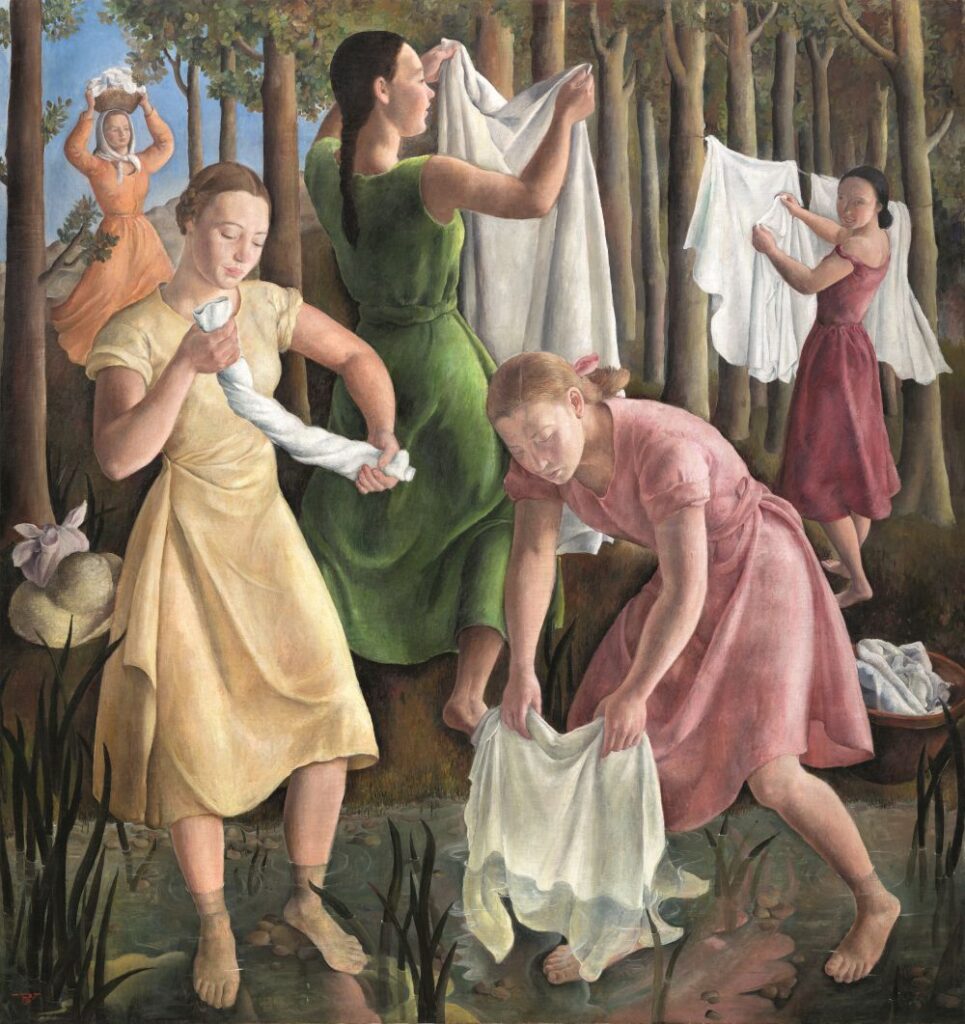
Rosario de Velasco. Laundresses1934. Private collection
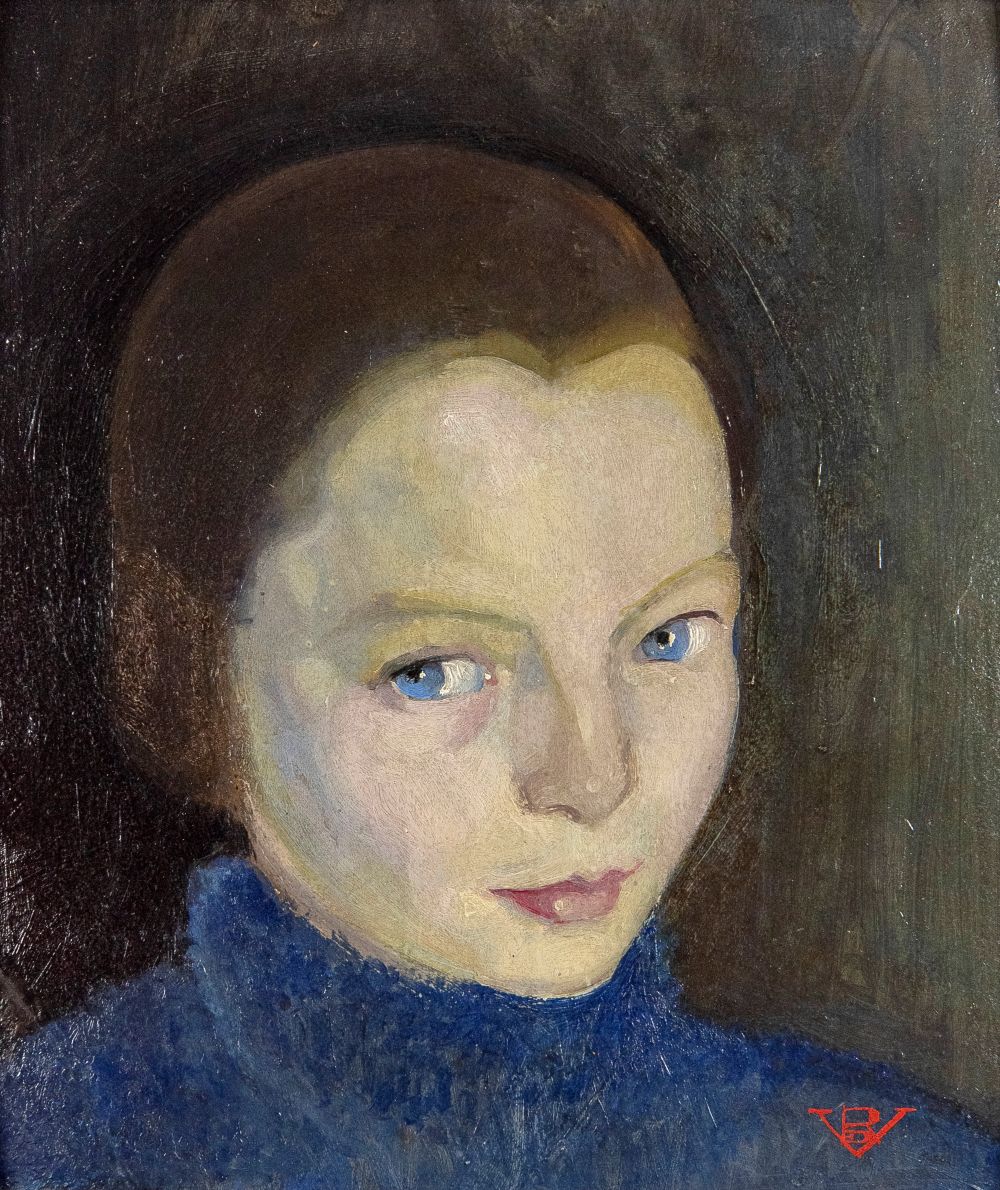
Rosario de Velasco. girl in blue1930s. Private collection
After subsequent exhibitions at the Museum of Fine Arts in Valencia or at the MUREC in Almería, the Las Claras Cultural Center of the Cajamurcia Foundation is now the space that reviews the career of this author, incorporating unpublished pieces in previous presentations and with the curatorship of Alicia Ventura and Toya Viudes herself. His figures have traveled there, both introspective and powerful in their hieraticism, contained in their gestures and polished in their forms, which seem to be part of a frozen time; They were fundamentally like this in their beginnings, very gradually their edges lost hardness and their shapes softened, as if the artist was reflecting on the possibility of painting to fix the real and on the weight of the unconscious in perception. If in his early works the volumes are carefully modeled until they are almost sculptural and their surroundings are essentially stable and solid, over the years the brushstrokes gained autonomy and the matter vibrated, making the bodies less clear. Something was fragmenting in the composition and the suggestion made its way against the initial robustness.
A similar process occurred in his treatment of space: clearly differentiated from the figures that populated it at the beginning, it ended up becoming stained from those until forming a single visual field; In parallel, the artist expanded her readings, trips and interests, allowing herself, of course, to be contaminated by these new paths when it came to taking up her brushes. Thus, this exhibition highlights that it is a mistake to interpret Velasco’s legacy as a monolithic block: his conception of representation was not either. Nor his use of color: if in his youthful compositions the palette is emphatic and saturated, and helps to compose – organizes, delimits -, little by little a new warmth emerged in his tones; The impression was interesting, one that arose from the very materiality of the canvases. Rather than projecting outwards, they emerge from within, and there is no stridency in them, but they do not envelop or comfort either.
This change in his tonal study is also evident in Murcia, where we will see how his mature pieces demand a more meditative and slow attitude from the observer, to capture the growing complexity of his language.
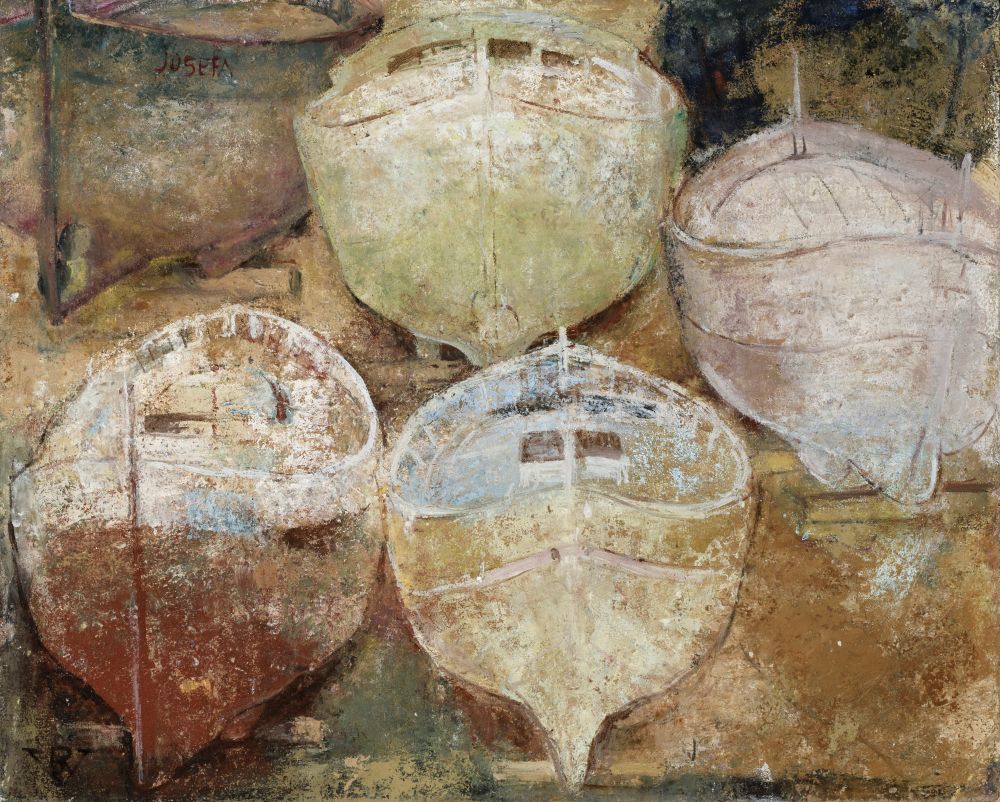
Rosario de Velasco. Boatsaround 1965. Francisco Almazán Collection
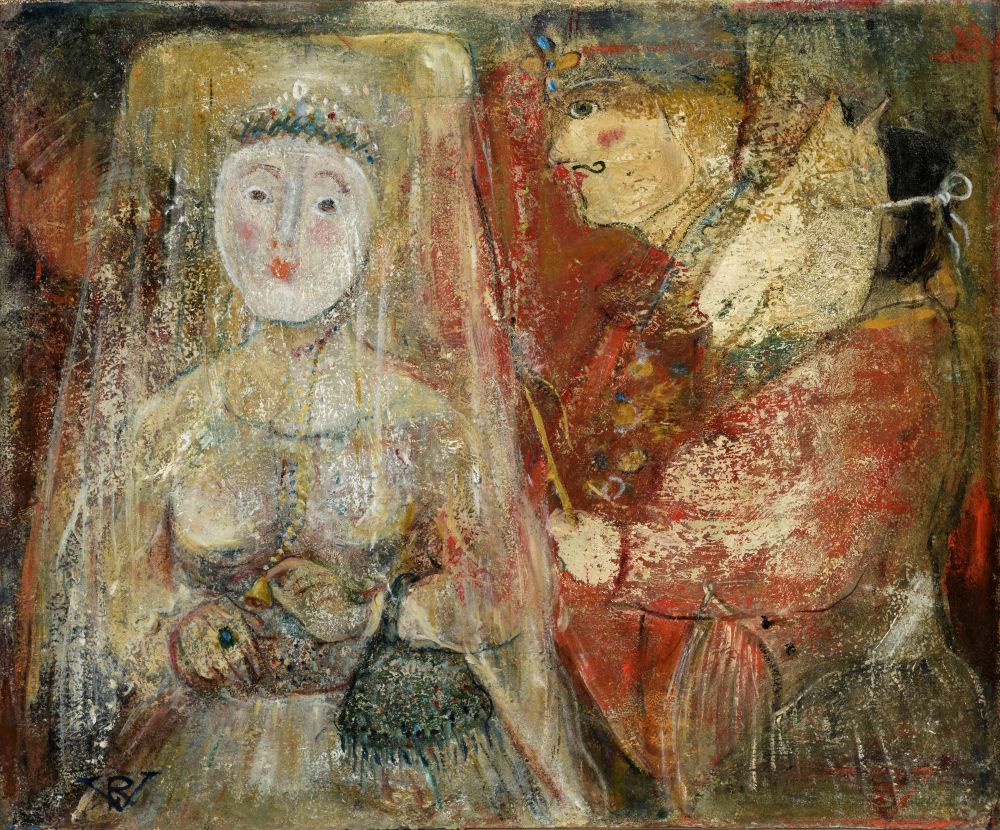
Rosario de Velasco. The bride1971-1972. Esperanza d’Ors Collection
There are sixty compositions gathered in this exhibition, dated between the thirties and the eighties and arranged chronologically to better reflect on that evolution; Those that can be seen for the first time on this occasion are some of the later ones, and therefore more expressive and free. Many of the works collected come from private and family collections; the rest, from institutions such as the Barcelona Provincial Council, the Madrid Costume Museum or the Zabaleta Museum in Jaén. There is no shortage of what is surely his most celebrated canvas, The laundresseswhich evokes the New Objectivity in the forcefulness of its figures but also the masters of the Renaissance in the subtle handling of colors and fabrics, or of the grass itself; his Portrait of Doctor Luis de Velascoone of the hallmark pieces of the return to order in our country; or the still life of echo cubist Thingswhich stands out for its mystery.
Immersed in the Catalan artistic scene from the 1940s until her death, there she carried out the award-winning The red house and The hunterswhich have been restored before the exhibition, and we will also contemplate The Four Seasons, which decorate the Hall of Honor of the Magalia Castle-Palace in Navas del Marqués, portraits of his daughter and Teruel landscapes. Among his recurring themes in that Catalan period were scenes of the sea, countryside, shepherding and carnival, subjects that he captured with vitality and with a misty and enveloping luminosity. The artist herself then declared: Now I know how to paint.
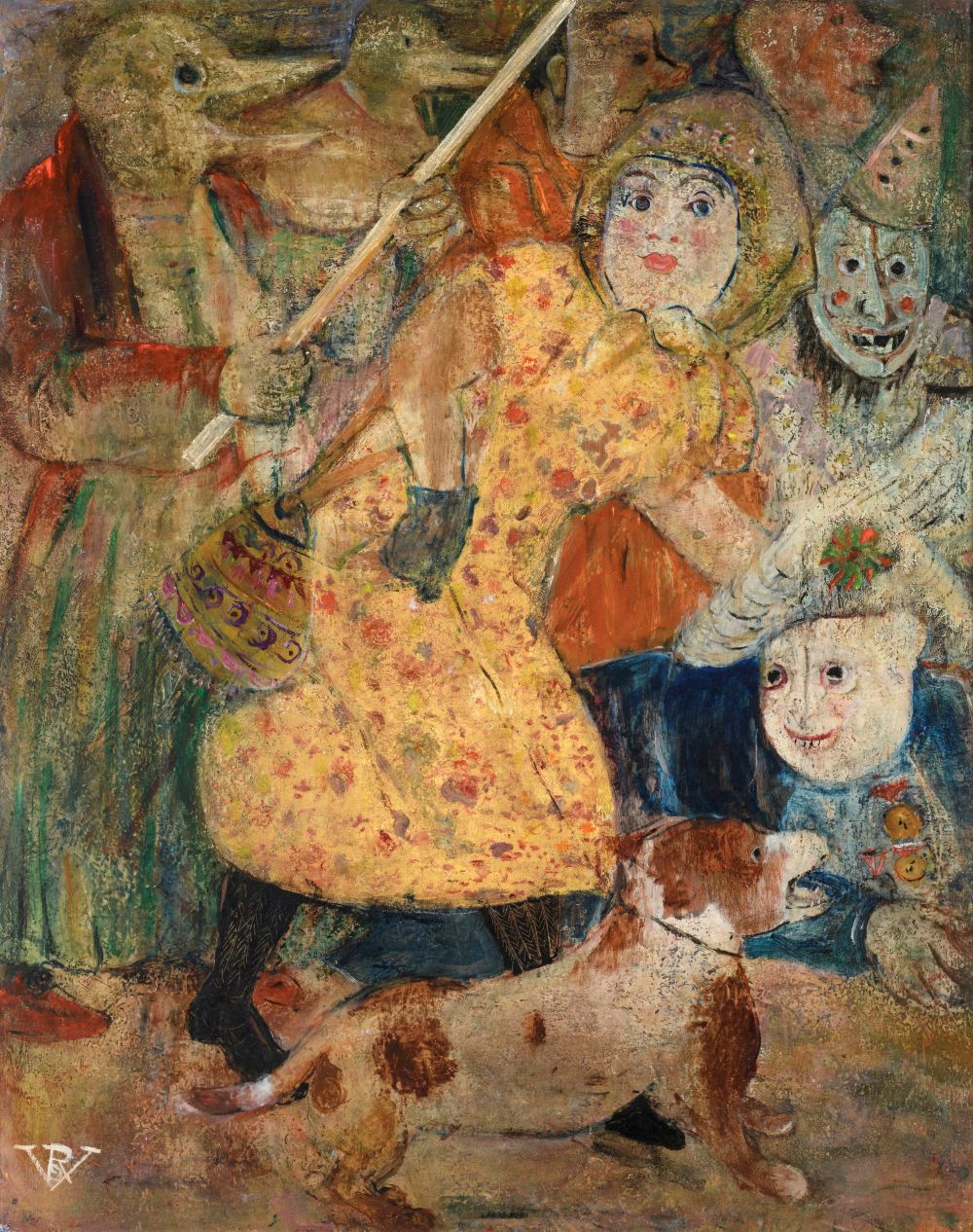
Rosario de Velasco. Carnival1970s. Amaya Ugarte Farrerons Collection
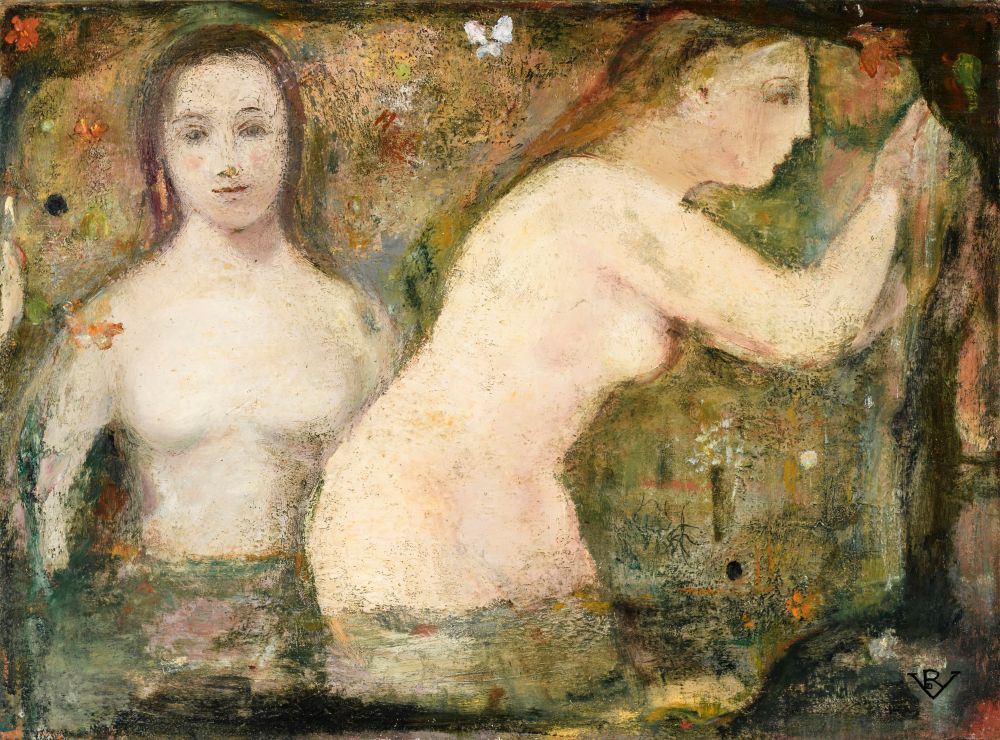
Rosario de Velasco. The bathers1970s. La Mirada Ingenua Collection
«Rosario de Velasco. From oblivion to memory»
LAS CLARAS CULTURAL CENTER. CAJA MURCIA FOUNDATION
C/ Santa Clara, 1
Madrid
From October 7 to November 29, 2026