Madrid and Barcelona,
While in Madrid this summer exhibitions of José Guerrero, Felipe Romero Beltrán and Nicholas Nixon, and in Barcelona exhibitions of Edward Weston and Puig Farran, the Mapfre Foundation has announced the four samples that will offer us the next fall in both cities.
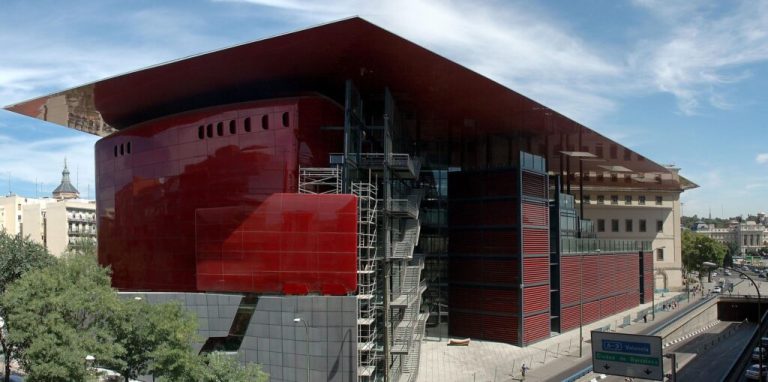
The exhibition hall of the Foundation in Madrid (Paseo de Recoletos, 23) will expose, from September 19 to January 18, 2026, the samples “Raimundo de Madrazo” and “Edward Weston. The subject of forms.” That of the painter will be the first great retrospective that is organized in Madrid of this artist, belonging to one of the most relevant families of Spanish art during the nineteenth century. Resident in Paris from his youth, Madrazo (Rome, 1841 – Versailles, 1920) was distanced from prestigious genres such as mythology and history painting, and the official competitions, to enter the mechanisms of the art market and respond to the tastes of a clientele of the high bourgeoisie that demanded gender painting and portraits. Its refined taste, the precious plasma of the interiors and the tactile qualities of objects and tissues explains that, at the end of the 19th century, its production will be belittled.
Under the commissioner of Amaya Alzaga, professor at the National University of Distance Education (UNED), this anthology has been conceived to alleviate the ignorance around Madrazo and to restore her production to the space that corresponds to her in the history of art. Several of the gathered works will be unpublished to date; They have been located in recent years. Between February and June of next year it can be visited at the Dallas Meadows Museum.
The Second Autumn Exhibition in Recoletos comes from the Catalan capital: “Edward Weston. The subject of forms”, curated by Sergio Mah, will be an anthological that will travel five decades of his photograph. Weston’s images are closely related to American landscape and cultural history and, in their simplicity, underline the relevance of photography as an artistic medium in the first decades of the last century.
Already in Barcelona, from September 23 to January 25 KBR will house a sample of the American photographer Helen Levitt and a new edition of Kbr Flame.
The Levitt, curated by Joshua Chuang, will be the first exhibition that is organized from the totality of the work of the New York and its archives, which only recently are accessible to consultation. Several of his works will be unpublished.
Dedicated to his full -time photographic work, he did not begin to obtain public recognition until he had an already advanced age (he died in 2009). Although we associated it with street photography, since it was the streets of its hometown that contribute the context for the production of a good part of its images, it made incursions into the cinema, visited other countries, such as Mexico, and was introduced into color photography.
Their compositions, almost always enigmatic and multiple readings, stand out for their spontaneity and sympathy. In addition, a film made by the artist and a carousel of her color slides will be screened in Barcelona.
KBR will also schedule the fifth edition of KBR Flame, a proposal born of the collaboration between that photography center and several institutions dedicated to teaching and photography studies in Barcelona with the aim of giving visibility to the new generations of photographers, through an exhibition and a catalog.
We can also go to the MAPFRE Foundation, to two conference cycles: in Madrid it will be held 1989. Spanish plastic artists in the Mapfre Foundation collectionsan activity led by Leyre Bozal that will address the production of four artists linked to the artistic funds of the Foundation, which will be José Gutiérrez Solana, Daniel Vázquez Díaz, Ismael Smith and Rafael de Penagos; Meanwhile, KBR will house the program When the images are also writtendirected by Marta Gili and Mónica Roselló, in which it will analyze how contemporary narrative formats combine text and image to devise stories that call into question the perception channels in contemporary society.