Last year, Póchó Guimarães, an artist born in Equatorial Guinea and resident, throughout his life, in half the world – from his country to Spain, from South Africa to Ukraine, passing through Switzerland – died in Motril. This continuous displacement is closely linked to his work, made with everyday materials and tremendously diverse in its languages: he cultivated performance, dance, music, textile creation, installations and writing.
It is very difficult to label his production or find references for it, since they do not have known names and surnames: he was nourished by the knowledge transmitted generationally in his family, Bubi the maternal one and Fernandina the paternal one – he was the grandson of Malabo II -; of the teachings derived from his Catholic training at the time when his country was still under Spanish rule; of the culture and architecture that he has been able to discover where he has lived; and, finally, his knowledge of contemporary creation, especially of those movements that were not only pictorial, but were also open to different techniques, such as Dadaism or the Bauhaus. He was also a student of Grau Garriga.
In the case of Guimarães, the most notable aspect of his work had to do with fabrics: he made them in mixed technique and high heddle, using fabrics, ropes and natural fibers, as well as less common materials in this medium such as cardboard, cans, shells, beads, found objects and, above all, newspaper. This accumulation, in his case, is not only due to formal reasons: this author wanted to make his tapestries following the same paths in which he thinks, that is, fitting together fragments, constructing symbols and preserving experiences and memories. Each of these belongings is there because it refers to their own family or community, to African ancestors and worldviews, spirituality or daily life and to the material heritage that accompanies the latter, not necessarily as an excrescence, but as necessary baggage.
Ultimately, the ultimate purpose of this author has been to remember that it is possible to generate meanings from tools common and that there are many reflections that can be articulated around them: what past they carry, what relationship we have with it, to what extent geography mediates these links and whether or not these ties can be diluted when education or the general climate promotes forgetfulness.
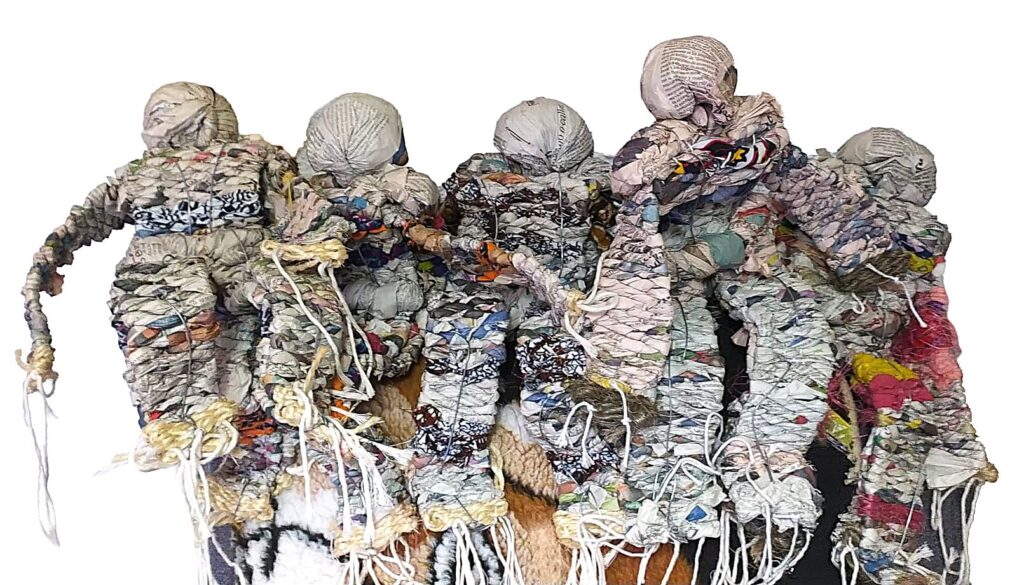
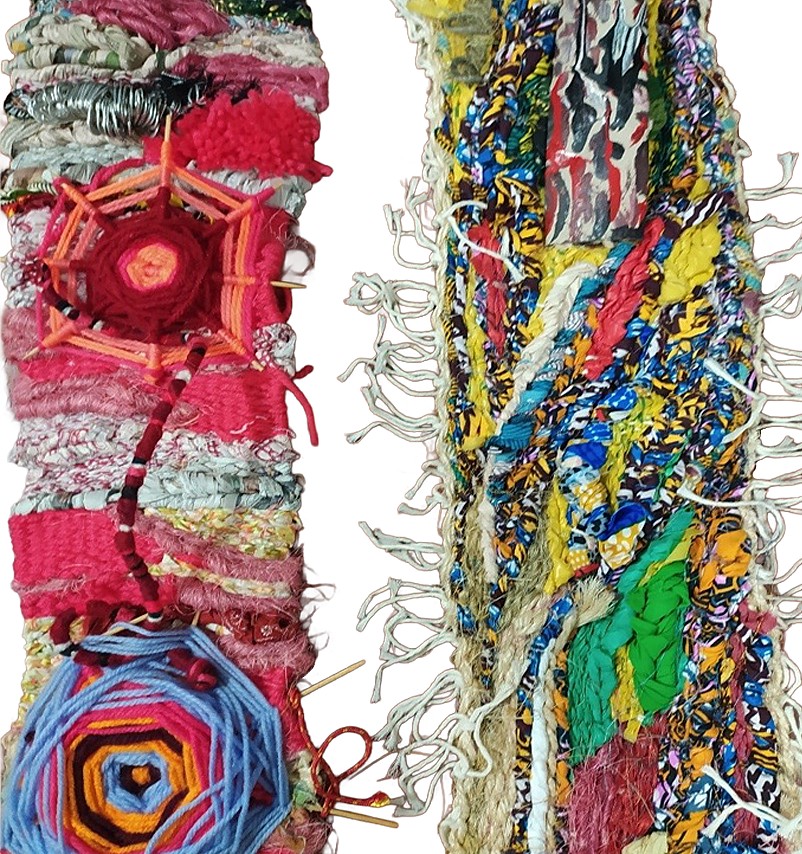
Although his legacy is not well known to the general public, it is part of national and international collections, including those of the Reina Sofía Museum, the National Anthropology Museum, the Miguel Hernández Literary Legacy Foundation, the National Museum of Scotland or the Norval Foundation of South Africa and, until next November, the Cultural Center of Spain in Bata offers the exhibition “Póchó Guimarães Malabo and the works that speak.” Part of an investigation carried out by the Spanish artist María Bueno, which is titled In-tangle with Pótyó Guimarães and that precisely associates the stories and times of Equatorial Guinea and Spain, those of one’s family and that of the other, taking into account trips, conversations, individual and collective experiences and, of course, also materials.
In addition to this exhibition, which Bueno and Justo Bolekia Boleká curated, this work has also taken the form of a book –We are ghosts with stiff skin who don’t know how to say anything.-, and both place Guimarães in a broader context than that of ethnic classifications: his production is linked to that of other artists who have made textiles their own as a main or occasional means of work and the causes of its validity in the present are analyzed. The latter go through his references to issues such as racism, the importance of community, exercises of resistance and freedom, which connect him with current authors, like him, more eager to be popular than famous.
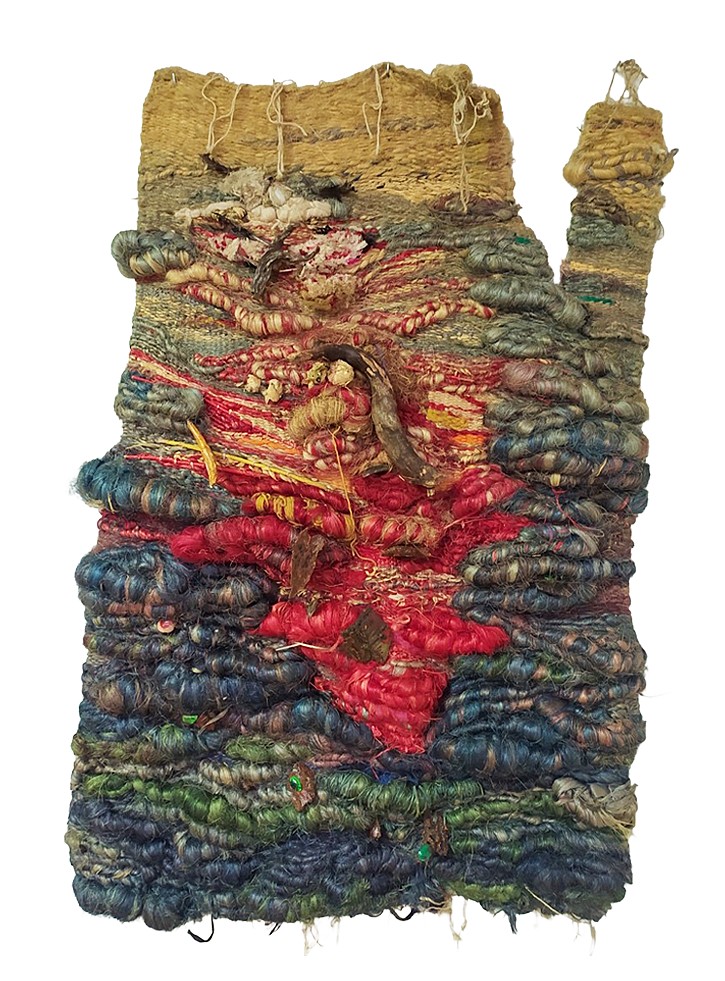
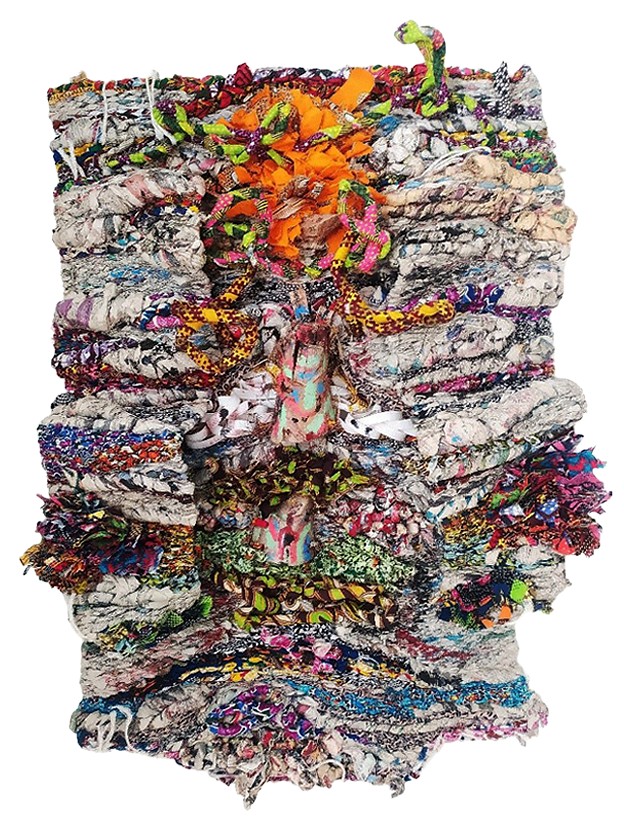
«Póchó Guimarães Malabo and the works that speak»
CULTURAL CENTER OF SPAIN IN BATA
Lumu Matindi Walk, s/n
Coat
From September 4 to November 3, 2026