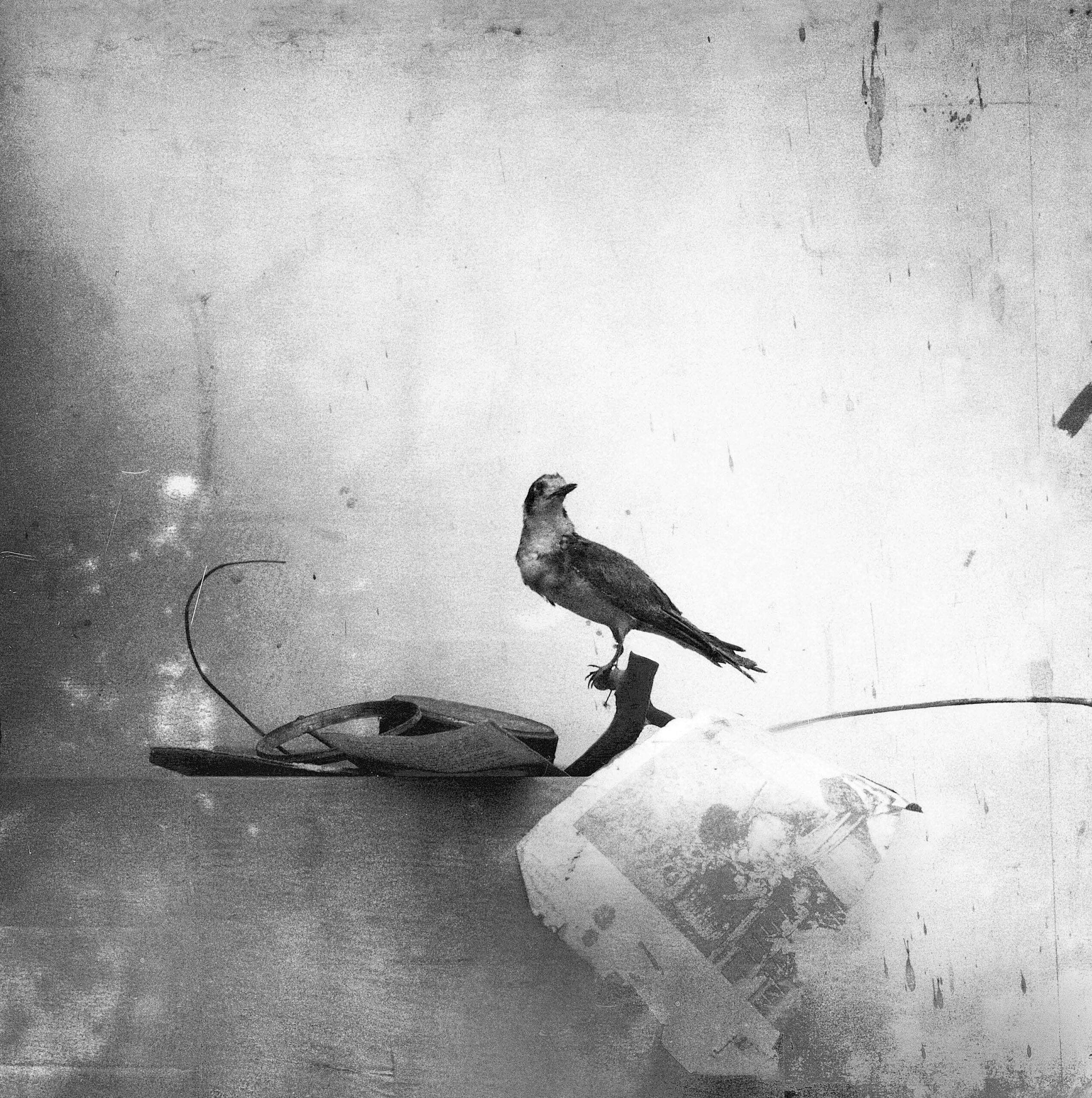
Manuel Franquelo was about to finish his studies in Industrial Engineering when he decided to abandon them to train in Fine Arts at the Complutense, and he began specializing in painting, but gradually his desire for objectivity directed towards the simplest motifs, ordinaryled him to pick up the camera in the early nineties never to return to the brush.
He has often been described as a photorealist (because, by generation – he was born in 1953 in Malaga – he was not far from those desires), but this author explained during his lifetime, on more than one occasion, that the real center of his interest was to understand how we construct what we call reality and how we wanted to represent it. He did not exactly seek to photograph to document, but it is evident that he did intend to leave, in part, a record of everyday life and also to distance himself from the ties that still associated art with manual skill, rather than with the underlying ideas.
The axis of his work has been, in any case, what we consider insignificant or banal – not the tiny, but what goes unnoticed – as opposed to the heroic and spectacular, the latter concepts that aroused distrust in him, perhaps because they are more easily manipulated by ideologies and authorities. He conceived this position as a symbolic resistance, as was perhaps also the fact that his production is very small: his projects required so much preparation time and such a degree of detail that they necessarily had to be scarce.
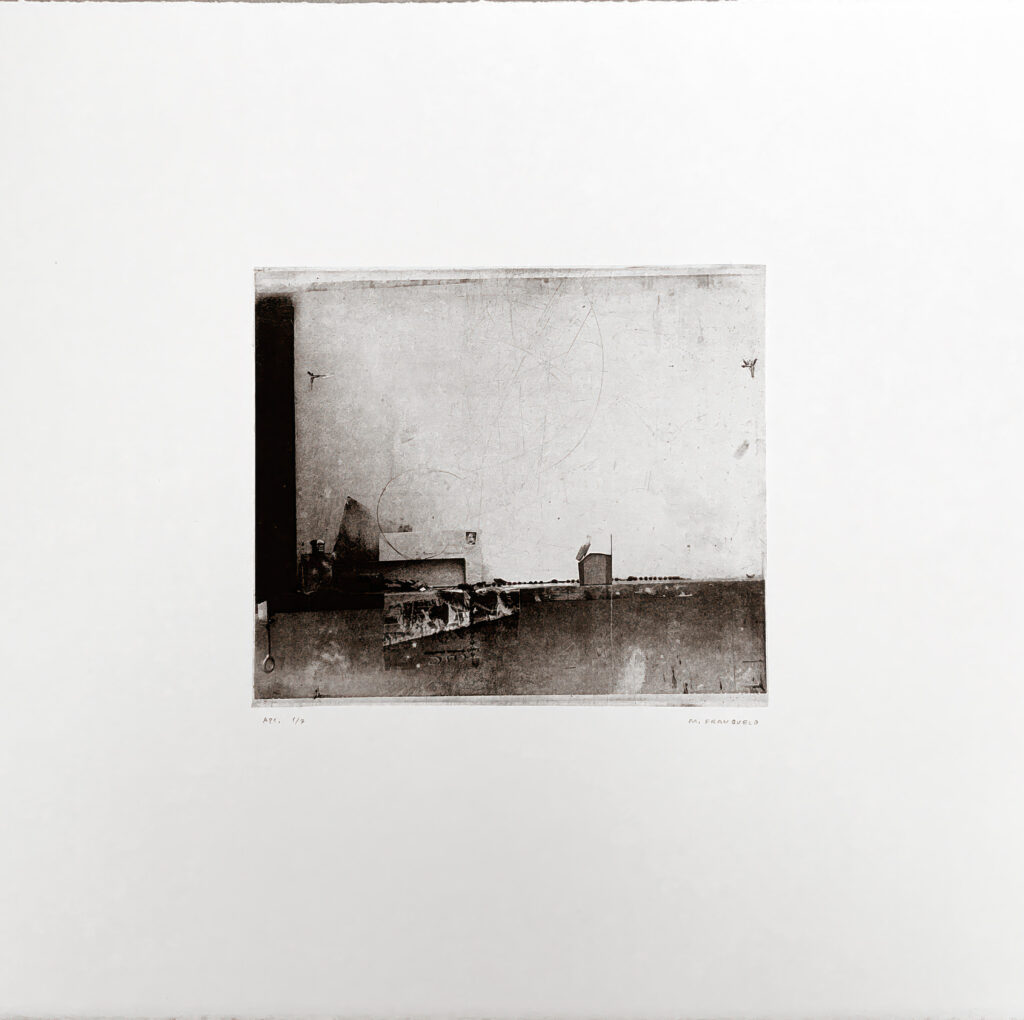
Manuel Franquelo. The language of things (#2)2002. Courtesy of the artist. © Manuel Franquelo, VEGAP, Malaga, 2026
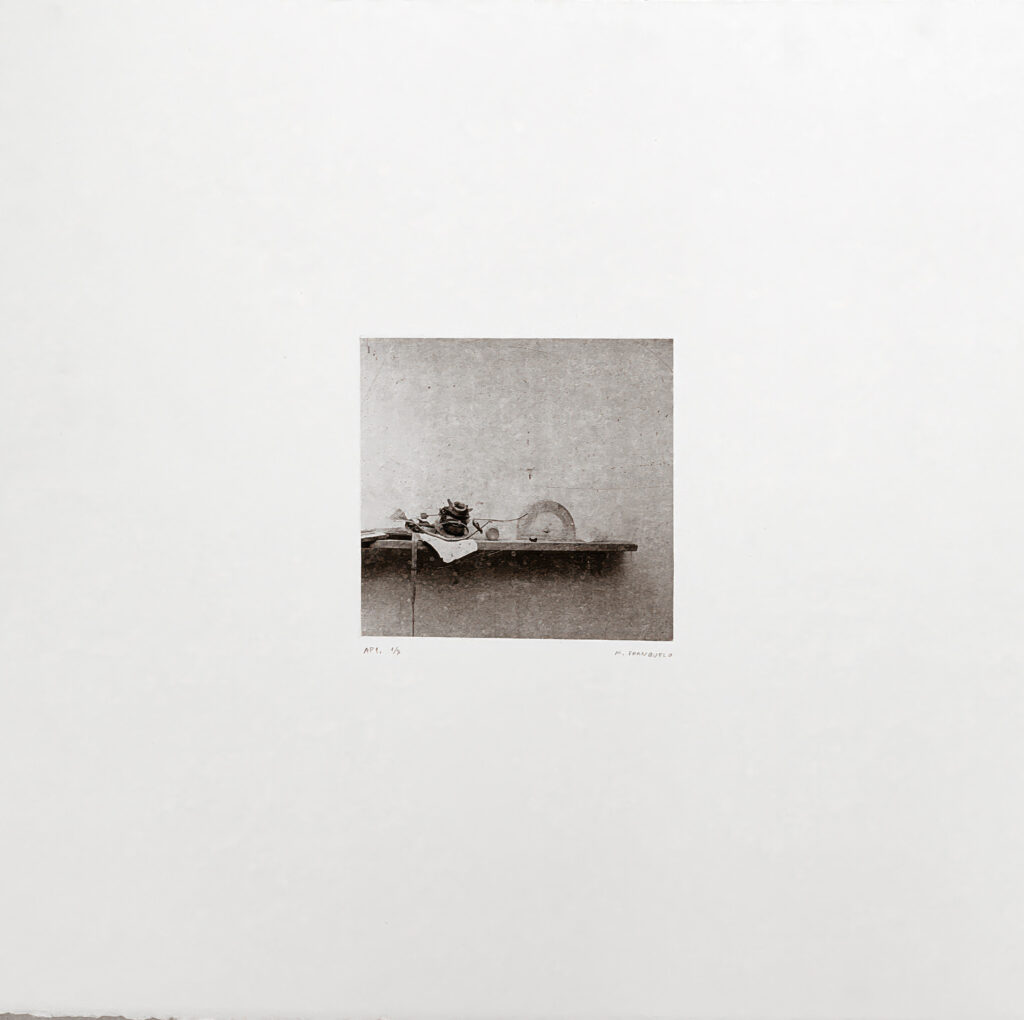
Manuel Franquelo. The language of things (no. 11)2002. Courtesy of the artist © Manuel Franquelo, VEGAP, Málaga, 2026
Two years after his death, the Carmen Thyssen Museum in Malaga offers Franquelo, in its Coffered Space, the exhibition “The Language of Things”, which for many will mean the discovery of a meticulous author who did not crave market success and, for that reason, did not make an effort to associate himself with trends.
It is a small format exhibition, organized with the collaboration of his family – his son Manuel is also an artist – and presented as an intimate tribute: it consists of fourteen prints that make up the series that gives title to this proposal, dated 2002, and two photographic prints around the same motifs of the previous set, images that show his propensity for solitary work, an almost ascetic austerity and also an experimentation that earned him the National Prize of Engraving in 1988.
These prints collect objects present in his workshop, which accumulated there more or less casually and which generated a particular cosmos, perhaps that of someone who dedicated himself to treasuring glances, moments. They were made with multiple plates from a series of photographs taken by Franquelo himself in his studio, with a 9 × 12 cm Kodak camera and Polaroid film. The original compositions were digitized, manipulated by the artist and then transferred to copper plates using photoaquatint. Furthermore, he later intervened directly on them with abrasive techniques and dry point.
This is the only graphic series that Franquelo carried out (he was awarded that National Prize only for it) and his paintings are only half a dozen, dated between 1985 and 1993. Even so, we will not have the feeling that anything essential was left in his inkwell despite that parsimony; for Art Trends declared: It seems to me that trying to compete in the 21st century in the field of the attention economy, from contemporary art, is a sterile and naive goal. I have tried to survive with a modest amount of attention so that, in return, I can have the time and freedom necessary to build some resistances and micro-revolutions that can be of some use to me and to the society to which I belong. Often you have to give in to some things in order to gain intensity in others; It’s not easy to have everything at the same time.
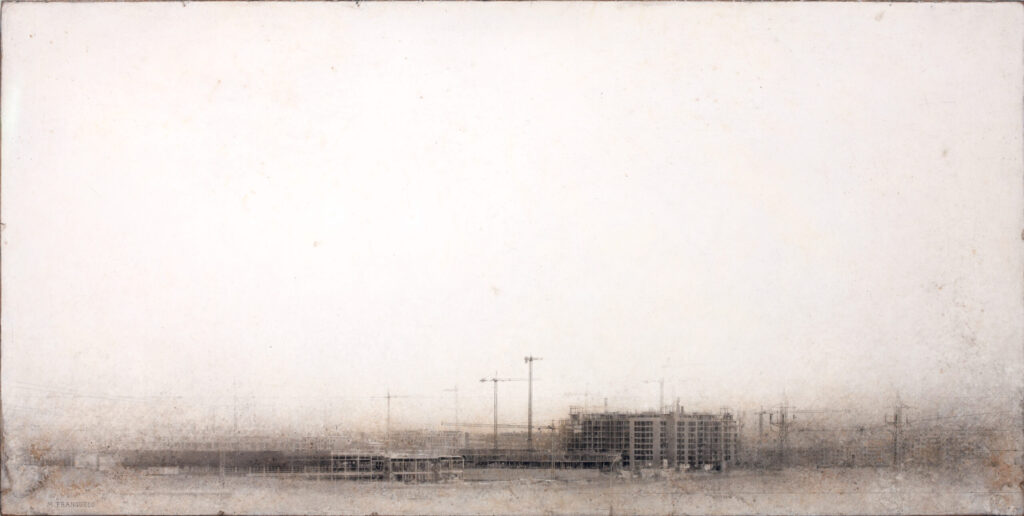
Manuel Franquelo. Untitled (Landscape of the Ensanche de Vallecas), 2008-2009. Private collection. © Manuel Franquelo, VEGAP, Malaga, 2026
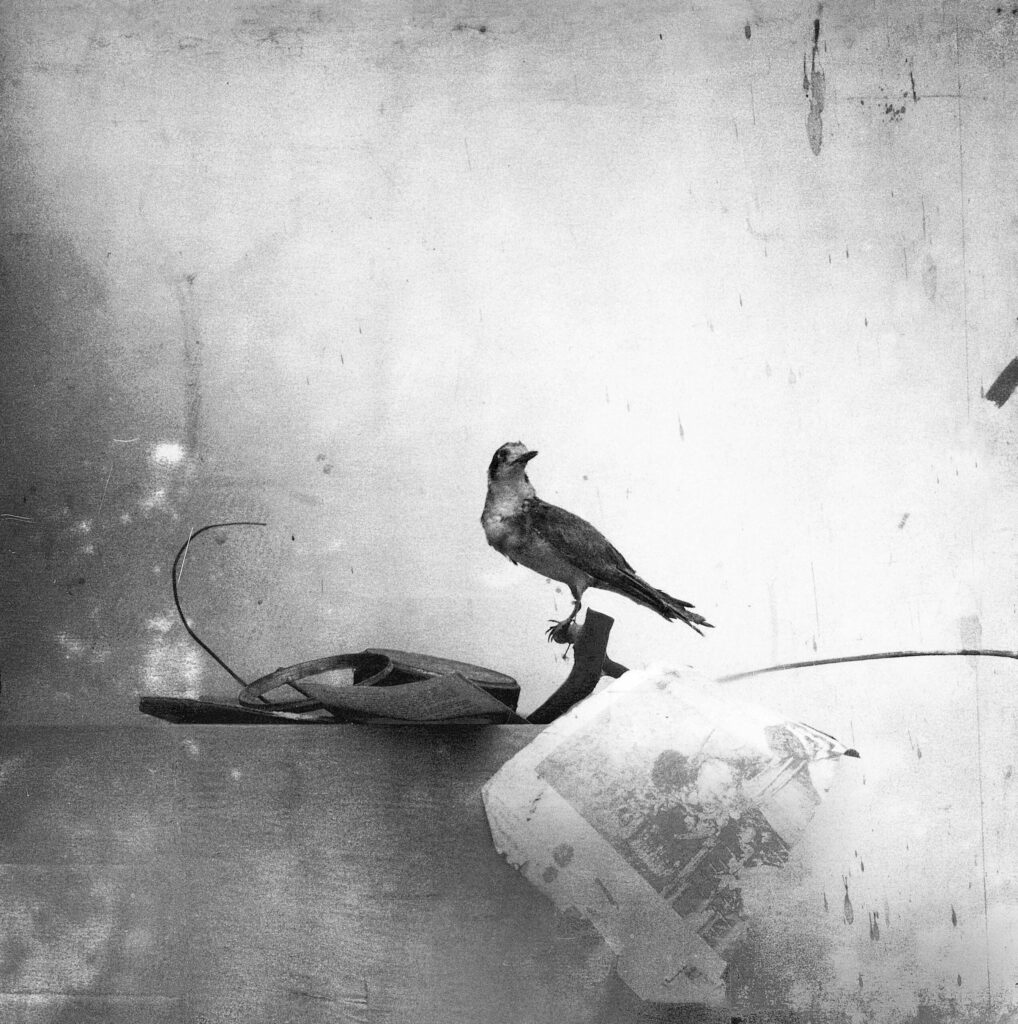
Manuel Franquelo. Still life with bird2003. Courtesy of the artist © Manuel Franquelo, VEGAP, Málaga, 2026
«Manuel Franquelo. The language of things
CARMEN THYSSEN MUSEUM MÁLAGA
C/ Compañía, 10
Malaga
From June 12 to October 12, 2026