Madrid,
I started taking photos for intuition. I discovered that the world around me was beautiful and that beauty could retain it with a shot through the rectangle. I fell in love with everything.
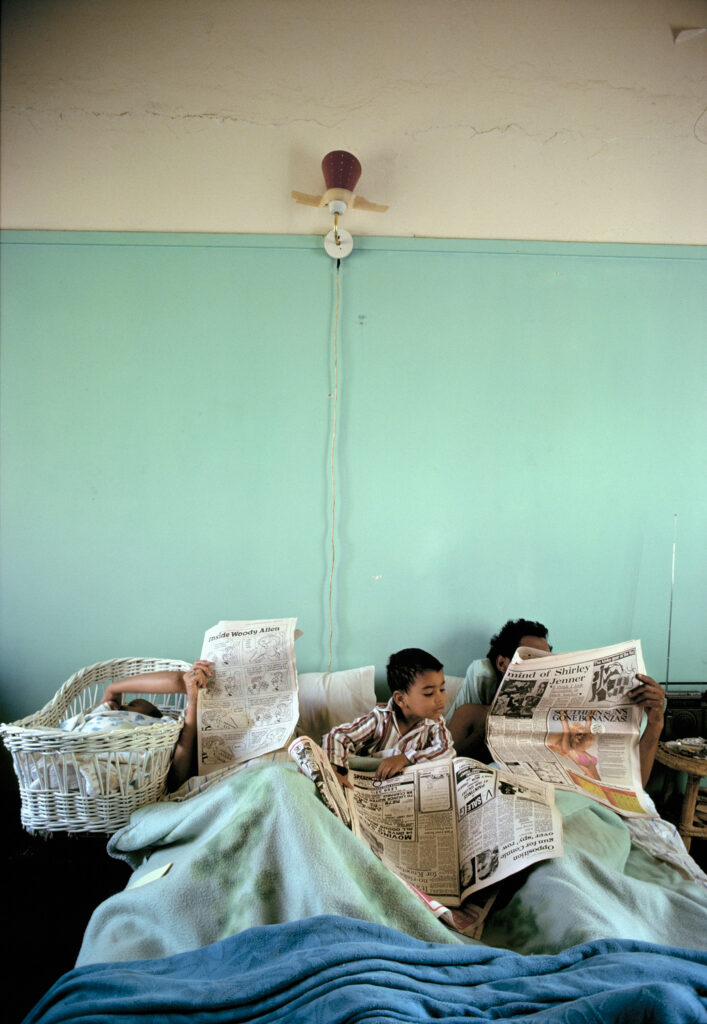
Thus the Chilean photographer Julia Toro began to work, whose production first in Spain by the Lázaro Galdiano Museum. His work, in black and white, is guided by curiosity, fascination with simplicity and human relations: in the sixty images that make up this exhibition, “photographic state”, we will find evocations of pain, absence, fragility, love between couples or among neighbors.
Toro looks at everyday details in which he detects expressiveness – the curve of heels, one leg entering the bathtub, a smoking pipe – and prefers them to the crisp views of sets. A part of these compositions carried out in their country during the Pinochet dictatorship and come to portray the small life among the ordinary people, which does not stop throbbing despite other people’s yugos: the meetings between friends, the family lunches, the Sunday walks through the park, the poetry recitals, the laughs and the affection.
The creations of this artist, cousin of the writer José Donoso and of late photographic vocation (began in the middle towards his forty), suggests introspection and nostalgia, looks at trains, bars, workers or erotic scenes: he has been one of the few authors to cultivate the male nude. He looks at each other with closeness and even intimacy, as poet Claudio Bertoni said: I like Julia’s photographs because there is sex and passion and bedrooms and spots of men and women everywhere (…) because she is never cruel, because she is always in love with what she photographs, because she never mocks anyone, she does not expose, not betrayed, she does not take advantage, she is never inconsiderate with anyone.
The routine serves us Chilean without shame, but with tenderness, ensuring that its presence does not modify too much the behavior of its models, but in turn emphasizing that it contemplates them from emotion. This exhibition, curated by Rodrigo Gómez Rovira, has not been raised as retrospect, but as a review of their eyes, full of naturalness, to personal relationships. However, they also find Toro’s life: Life is full of photos. If one exacerbates the eye and pays attention, the eye frames and cuts what surrounds you. Photography is a passion, a wild eye that goes out to shoot its prey (…). I keep doing them because I want to keep alive.


As a photographer, he also undertook his career Íñigo Navarro, and then work as a film director and screenwriter and, finally, dive into the painting.
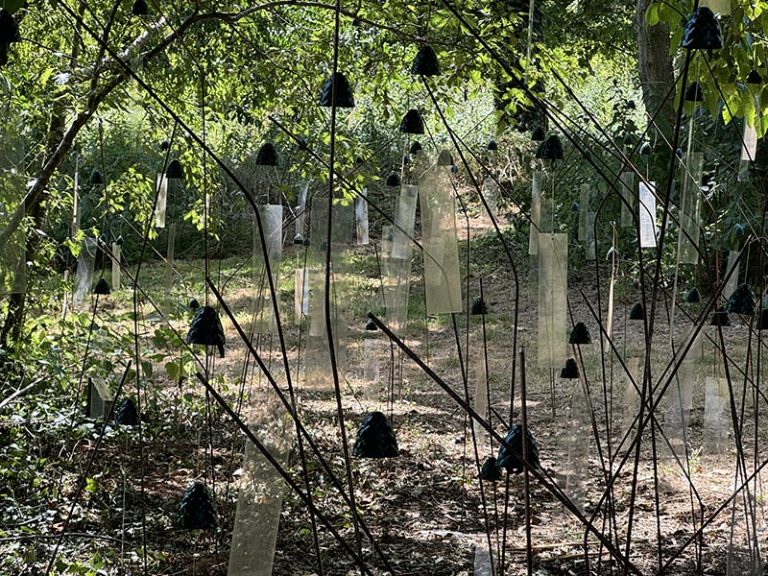
His current exhibition at the Galdian Lázaro, “yesterday a tiger stepped on your shadow”, is a plea in favor of this last discipline: its large format canvases – in which it is possible to appreciate echoes of the peculiar realisms cultivated by Neo Rauch and Michaël Borremans – are related here to fundamental works of the collection of this museum, starting with Way of flying of Goya.
The Golden Age is another of its referents, as well as the Berlangian cinema, literature and music, and its reduced, almost austere palette, exercises some contrast to the disconcerting elements that incorporates their work and that introduce in them irony, in addition to constituting a way of approaching classical roots compositions to contemporaneity.
Navarro’s connections with Goya are not only formal or thematic, but also sentimental: his mother was a restorative in the Prado Museum and some of the Aragonese works, and it was in the Pinacoteca where this Madrid artist began to set the idea of devoting himself to creation.

In Way of flyingGoya introduced us a man using an artifact with wings that, apparently, allowed him to rise; Navarro is interested in devoting himself to a task that he understands, rightly, just as complicated: to return to figurative painting his past institutional relevance. To that end, try to demonstrate that figuration can also imply ruptures and generate own atmospheres today, far from the paths of pop art, animation, urban art or the digital universe.
They await us in the Galdiano Lázaro, on a tour of Begoña Torres, greyhound races, ball fights, flights without motor and masks that link concern and amusement; Half -way scenes between the canons of the Spanish school and the aforementioned of the new Central European figuration.
“Yesterday a tiger stepped on your shadow” also has a smell: that of a fragrance amaderad with a floral footprint that Valérie Aucouturier, perfume and historian, has devised to open our senses.

“Yesterday a tiger stepped on”
From September 27 to November 23, 2025
“Photographic state. Julia Toro”
From September 11 to November 9, 2025
Lázaro Galdiano Museum
C/ Serrano, 122
Madrid