
Bilbao,
In March 2025, the Guggenheim Museum Bilbao began the exhibition cycle On sitewhich invites international artists to create new and specific projects to be exhibited in this center, relating to Gehry’s architecture. After Refik Anadol and Mark Leckey, the third author to join this initiative is the South African Igshaan Adams, born in 1982 in Cape Town and very present in exhibitions at American and European institutions for nearly seven years.
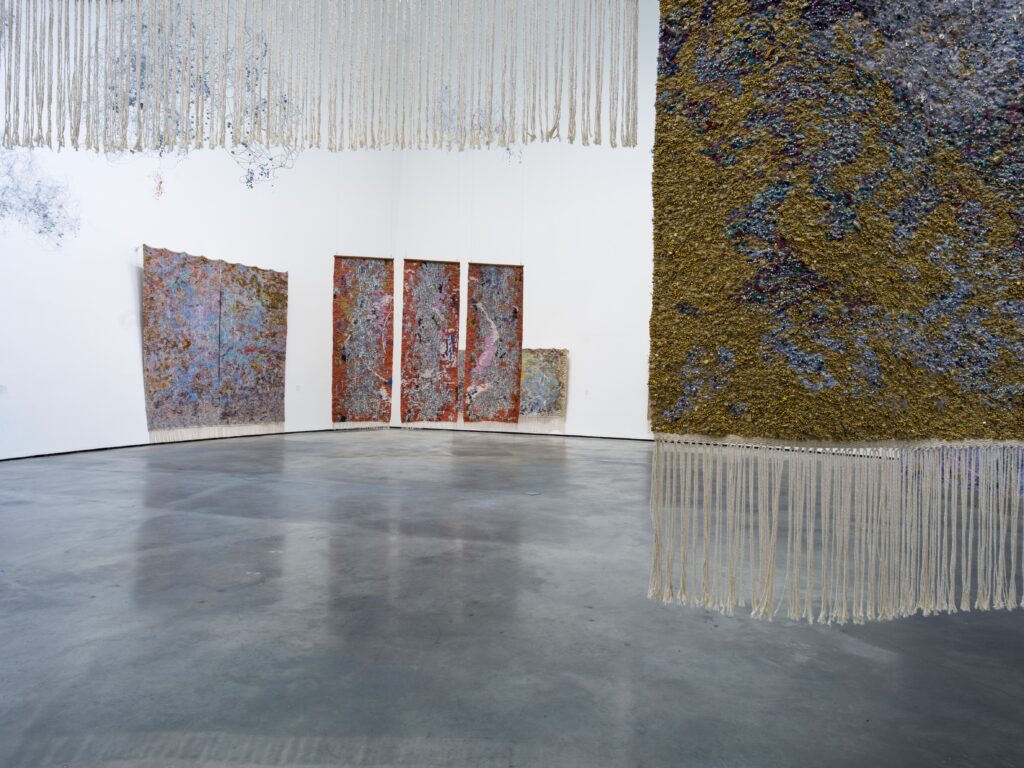
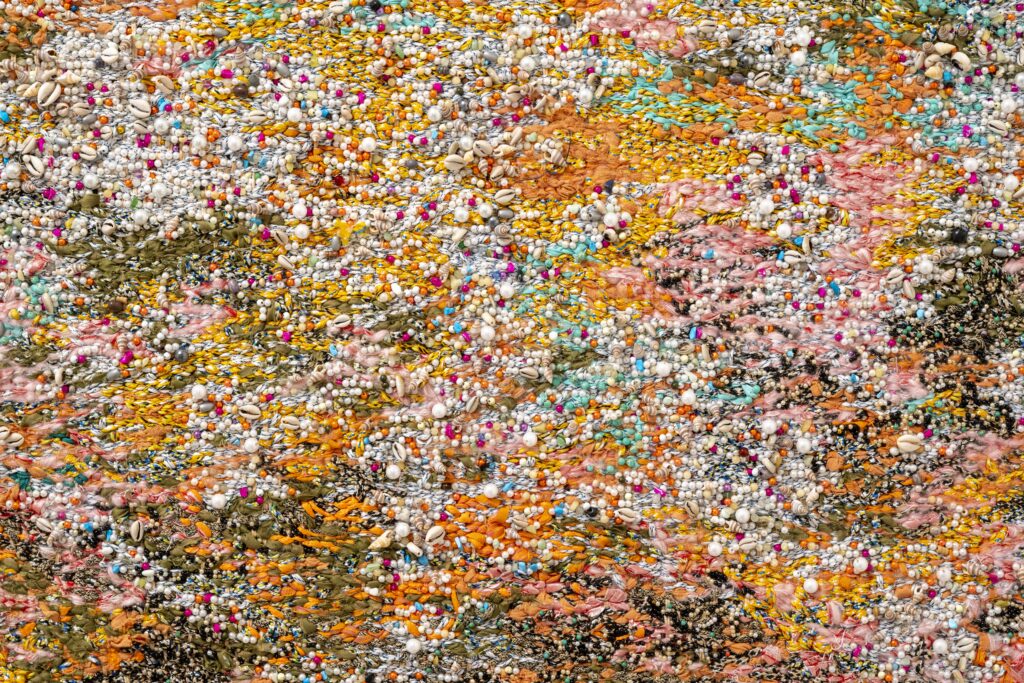
Under the curatorship of Lekha Hileman, and until next November, we can visit in Bilbao “Raising the Dust: The Archive of the Body”, a project that consists of pieces in various techniques (sculpture, installation, textile art) that have in common their creation from simple or found materials, such as wire, beads or ropes, which evoke very specific forms of sensoriality and also certain cultural references, memories or symbolic links with religion, race or sexuality.
This proposal wants to be both intimate and immersive and suggests the possibility of granting a material translation to concepts that are not, such as memories or empathy towards the other, fundamentally through knitting, an act that has historically been developed both individually and collectively, in both cases with very specific implications.
“Raising the Dust” is related to Adams’s biography: the artist grew up in Bonteheuwel, a suburb of Cape Town where apartheid segregation had been very evident and forced resettlements were frequent. This author was able to observe how ideology and that discriminatory system shaped both individual lives and the urban planning of that area; For this reason, through these works made with elements closely linked to his childhood and youth, which generate very intricate developments, he wanted to reflect how the memory of racism, and also homophobia, leave a long-term influence on beliefs, ways of life and created objects.
Igshaan Adams’s earliest works were based on randomly found discarded household goods and the patterned linoleum floors common in Cape Town domestic interiors: their geometries, familiar to South Africans, are translated by the artist as intimate abstractions. Gradually, his production has expanded towards what he calls desire lines: the trajectories marked by the repeated and continuous movement of bodies in space, sometimes against the usual routes. In these creations he handles a notion of movement that goes beyond that of the trace it leaves: it entails a negotiation that is physical and also collective with our way of relating to the environment and appropriating it.
More recently, Adams has continued to study movement, but now as a process and as a form. Collaborating with the Garage Dance Ensemble collective in O’okiep, the place of origin of part of her family, she has devised pieces born from the convergence of weaving and dancing: she has invited a group of dancers to move on painted linoleum printing what she calls dance prints; These are monotypes full of layers that record the gestures of skin and material contact, the rhythm and freedom of the participants. These movements, for the artist, can become trauma healers, especially if they occur collectively.
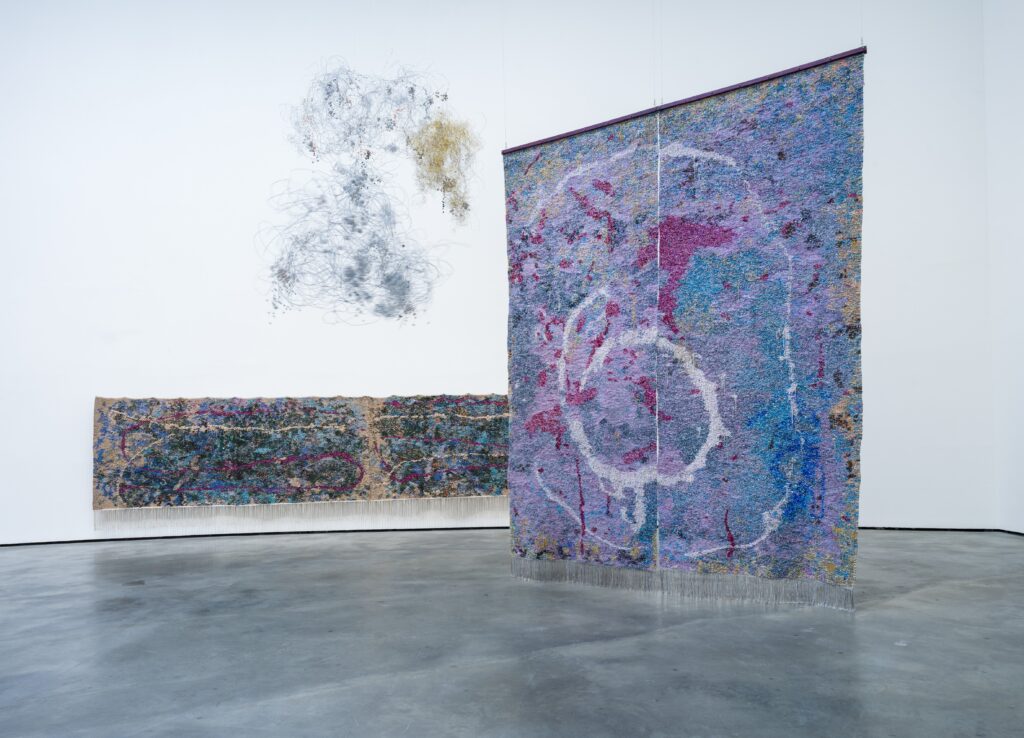
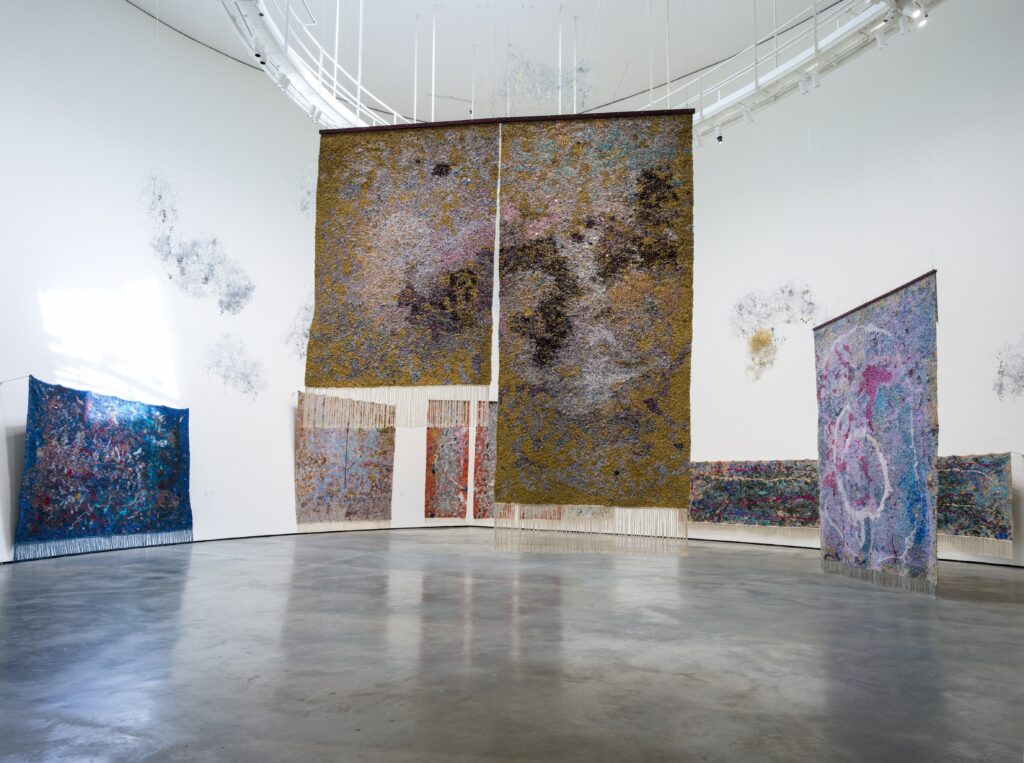
The works that have arrived at the Guggenheim are the result of performances that Adams has directed in Athens along the same path: African and Greek dancers joined them and the imprints of their movements have been used as templates that have been transferred to a new series of large-format woven tapestries that we can see in Bilbao, suspended to allow the public to move around them.
Some hang from curved supports, so that we can see both sides; others, however, are accompanied by smaller, cloud-like shapes, as if fragments of color and movement have broken away and are flowing freely.
Thus, in both the works and the viewer, movement becomes both a record of experience and a means of transformation, charting routes through which to review or repair past histories of division.
“in situ: Igshaan Adams. Raising the dust: The body archive”
GUGGENHEIM MUSEUM BILBAO
Abandoibarra Avenue, 2
Bilbao
From May 5 to November 1, 2026


