Last year, just in the year of his centenary, Gustavo Torner, an artist attached to Cuenca, like Góngora to his nose, died because he was born there and because he was part of the group that gave its name to the city, born in the fifties and very close to the authors of the El Paso collective, which was his contemporary. Together with Gerardo Rueda and Fernando Zóbel, Torner exemplified the possibility of an art that does not lose its references to the real world as a motif and as a foundation, no matter how much it uses an abstract plastic vocabulary.
He used very diverse registers and techniques – painting, sculpture, collage, drawing, monotypes – dominated by a high sense of construction and spatial composition, as he usually started from the idea of collage to elevate it to that of assembly. It is evident in the configuration of his diptychs and polyptychs, some of them conceived as plastic tributes to Jorge Manrique or TSElliot, but also in that of his sculptures. At the base of his methods lies his desire to rethink the physical essence of the work of art and to confer significance to each fragment that composes it.
Trained in forestry engineering, his first works, dated in the forties and fifties, were botanical sheets made in watercolor and a set of photographs whose theme was nature portrayed in close-up (pine and poplar trunks, plastered walls, roots, rocks and dry bushes). In these photographic images, in theory so distant from the bulk of his production, there is, however, the germ of his first paintings, which by their titles and the pictorial process refer to an obsessive recreation of the landscape, its colors and its surfaces.
Speaking of his paintings, since the late 1950s, along with oil, he made use of other non-artistic materials, such as sand, feldspar, hemp, latex or aluminum. Likewise, he created a rigid compositional structure in his canvases by dividing the pictorial surface into two fields: in the upper, larger field, he developed a field of color, while in the lower one he concentrated material experimentation and almost exhausted the expressive resources of the materials. Both for his processes and for the incorporation of pieces of reality into the work, Torner approached the international currents of Informalism and New Realism. Regarding his work as a sculptor, both in monumental pieces and those of smaller dimensions, he did not avoid conceptual and technical complexity, but quite the opposite.
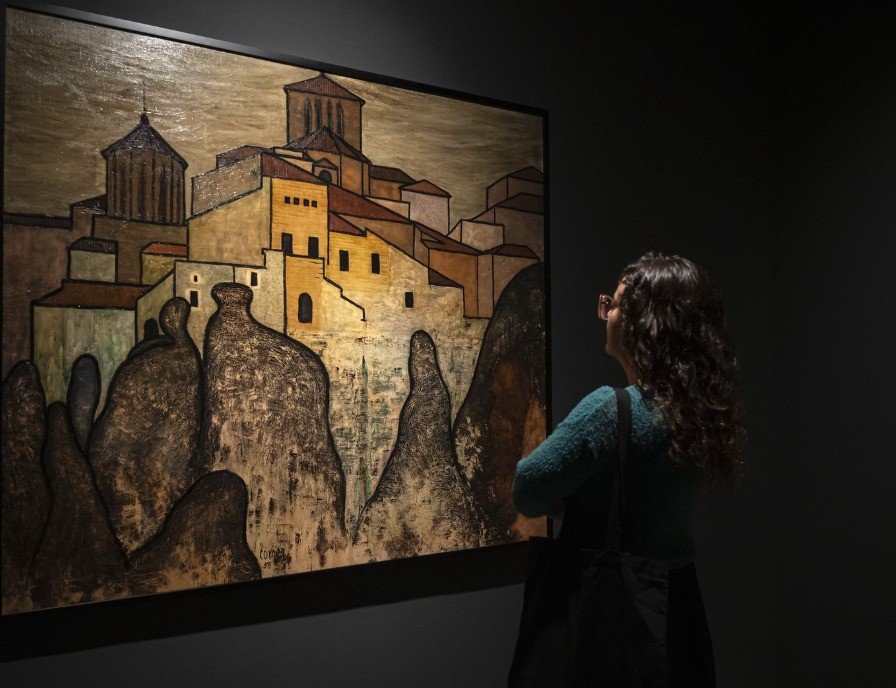
Gustavo Torner. The secret harmony of thought. Bancaja Foundation
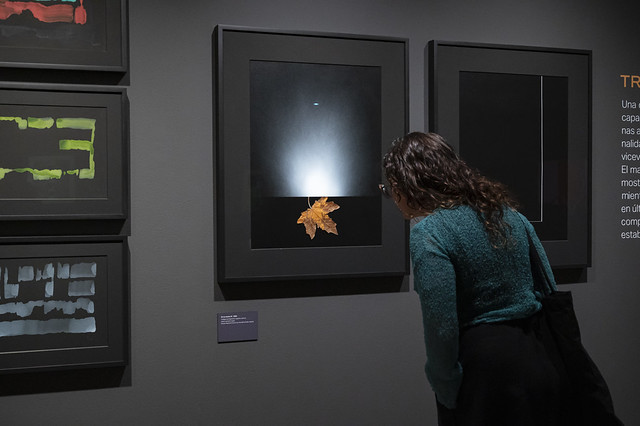
Gustavo Torner. The secret harmony of thought. Bancaja Foundation
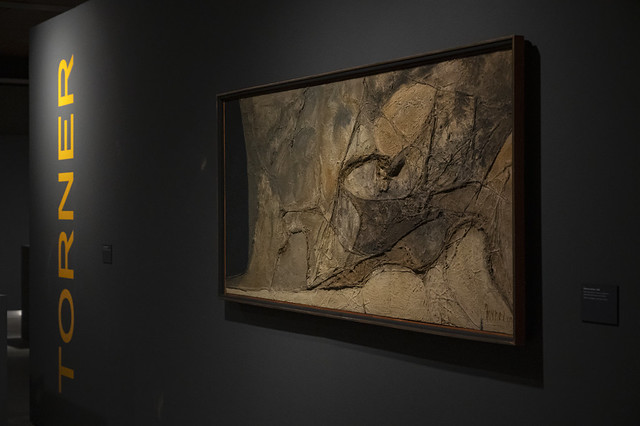
Gustavo Torner. The secret harmony of thought. Bancaja Foundation
His entire career is now reviewed by the Bancaja Foundation at its Valencia headquarters, in an exhibition curated by Alicia Vallina and titled “The secret harmony of thought.” Follow his steps from those figurative beginnings to his latest extremely simplified compositions, passing through the bulk of his abstract creation.
There are forty of his works together, dating back half a century (from 1955 to 2004) and representative of those diverse media in which he worked. Coming from Spanish private and public collections, they are structured here in four sections based on as many aesthetic concepts: geometry as a mystical order, the relationship between matter and emptiness, creative transversality and the poetics of silence.
Languages and dating aside, they all have their origin in common: the meticulous observation of the natural world without attempting to reproduce it, but rather the capture of its internal structures, largely invisible to our eyes, and its rhythms.
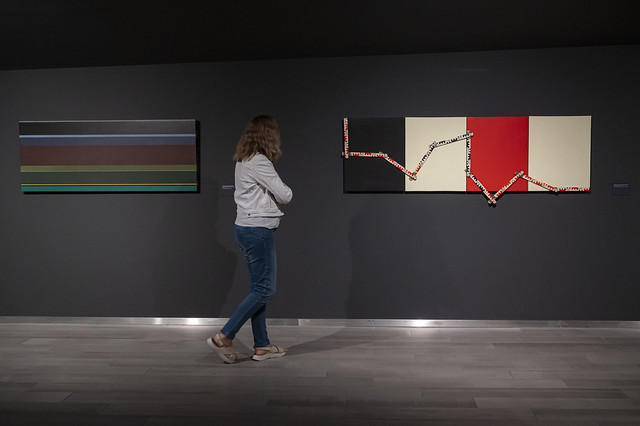
Gustavo Torner. The secret harmony of thought. Bancaja Foundation
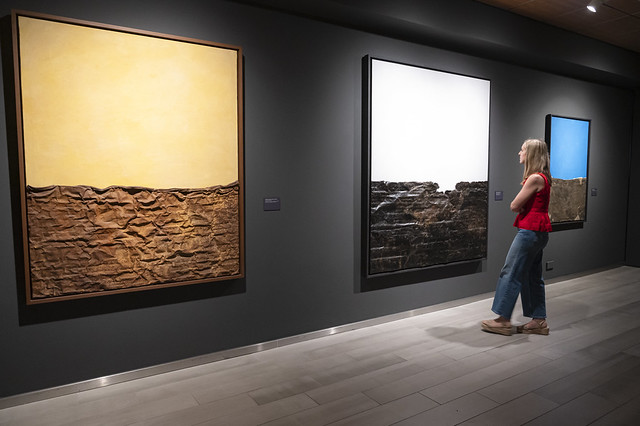
Gustavo Torner. The secret harmony of thought. Bancaja Foundation
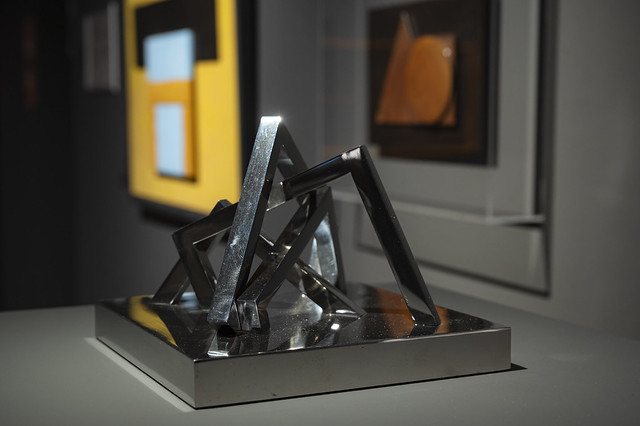
Gustavo Torner. The secret harmony of thought. Bancaja Foundation
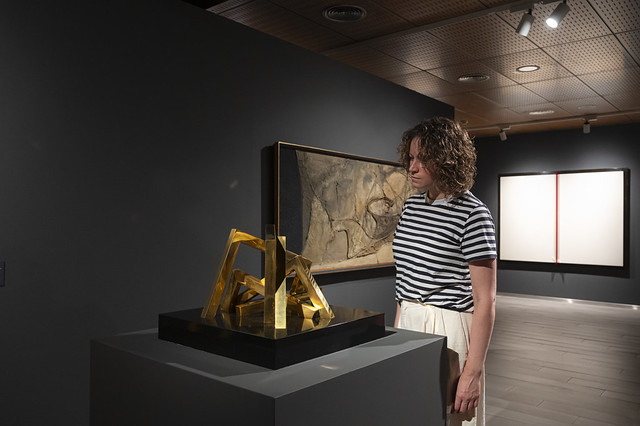
Gustavo Torner. The secret harmony of thought. Bancaja Foundation
Gustavo Torner. “The secret harmony of thought”
BANCAJA FOUNDATION
Plaza de Tetuán, 23
Valencia
From June 19 to September 20, 2026