The project, with a total amount of 4.8 million euros, benefited from a tranche of more than 2.5 M € specifically dedicated to the museum campaign and € 2.2 million from the National Recovery and Resilience Plan (PNRR).
The renovation concerns all the spaces of the Castello di Gorizia, with a particular care brought to accessibility: ramps, elevators, elevating platforms and trilingual multimedia supports in Italian, Slovenian and English make the course inclusive. The intervention targets both heritage valuation and compliance with international museum standards. The exhibition space is now organized around ten thematic rooms, favoring an immersive approach centered on the plurality of civil and military experiences of the First World War, in particular by the reconstruction of the battlefield through the restoration of a diorama incorporating interactive and audiovisual devices of new generation. This desire to go beyond the military fact to approach the memory question is part of the prerogatives of the ERPAC FVG, a site manager of the site since 2016.
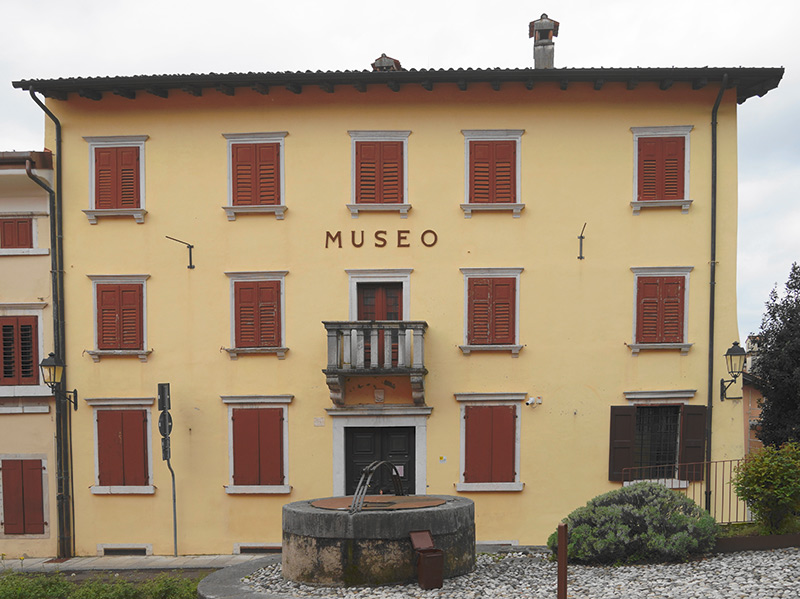
The Great War Museum of Gorizia was established in 1990. The curators Alessandra Martina and Lucio Fabi, already involved in the initial creation, piloted the selection and reorganization of the collections for a more European narration. According to Lucio Fabi: “It is not only a question of presenting objects, but of restoring a shared history and of offering a place of learning for the young generations”.
The reopening of the museum is part of an enlarged territorial dynamic carried by Go! 2025. The operation aims to position Gorizia as a cross-border cultural center, in synergy in particular with Casa Morassi-space dedicated to local Jewish culture and Italian-Slovenian relations-and the Museum of Fashion and Applied Arts, also renovated in the context of European investment. If Casa Morassi seeks the lighting of the contribution of different communities to the history of Friuli, the fashion museum emphasizes the transmission of textile know-how, thus offering a complementary panorama of the military-social themes of the Great War Museum.
The post-opening period is marked by a succession of events, scientific meetings and workshops aimed at registering the museum in long-term programming. This strategy of decompartmentalization, on a European scale, seeks to put forward the memory of the First World War.