Almeria,
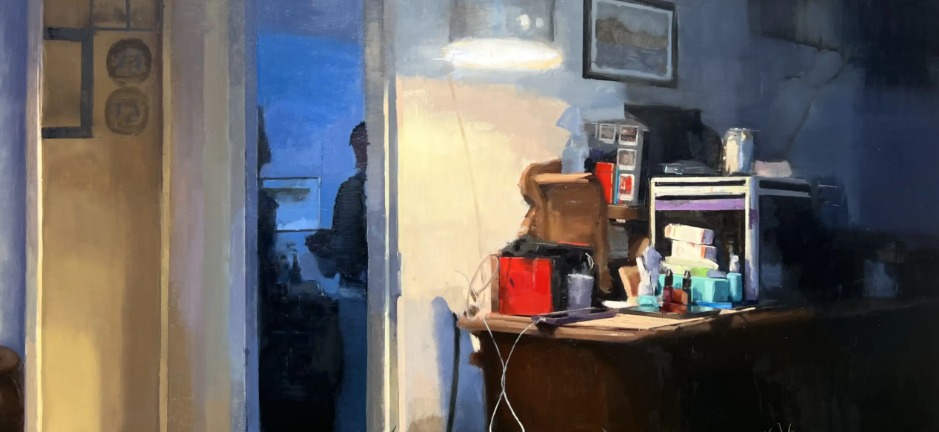
A world in the image of the artist, in which he could find himself welcomed and comfortable; bathed, furthermore, in silence. The observer can have no doubt that the rooms he sees are private and that it is not possible to have any interaction with the figures that occasionally appear in them, immersed in solitude and perhaps in daydreams.
Interiors, more than any other pictorial genre, allow the suggestion of stillness and harmony, of a purification that allows projecting in them what the contemplator carries inside; the small changes in atmosphere that changes in the position of a piece of furniture or a painting can generate, and of course the gradations of light; even the gentle dynamism that an open drawer or a piece of melting butter can give rise to.
This has been fundamentally the case since the Baroque, although some of the great domestic painters, such as Vilhelm Hammershøi (now in the Thyssen Museum) and Edward Hopper, worked in the 19th and 20th centuries. In any case, that path has never been extinguished, as proven by the sixteen Spanish artists, born between the forties and the nineties, who participate, in Almería, in the new group exhibition of the Museum of Contemporary Spanish Realism. MUREC, titled “From the threshold. Space and intimacy in contemporary Spanish realism.”
Those invited to this project, curated by Juan Manuel Martín Robles and Bienvenido Simón Robles, are José María Cuasante, José María Mezquita, Carlos Morago, Javier Riaño Urieta, Gonzalo Sicre, Álvaro Toledo, Pablo Carnero, Alejandra Caballero, Silvia Valverde Sánchez, Guillermo Masedo, Bea Sarrias, Lara Pintos, Carlos Sagrera, Virginia Bersabé, Diego Vallejo and Isaac Expósito, the latter winners of the two editions of the MUREC Young Realists Contest Award.
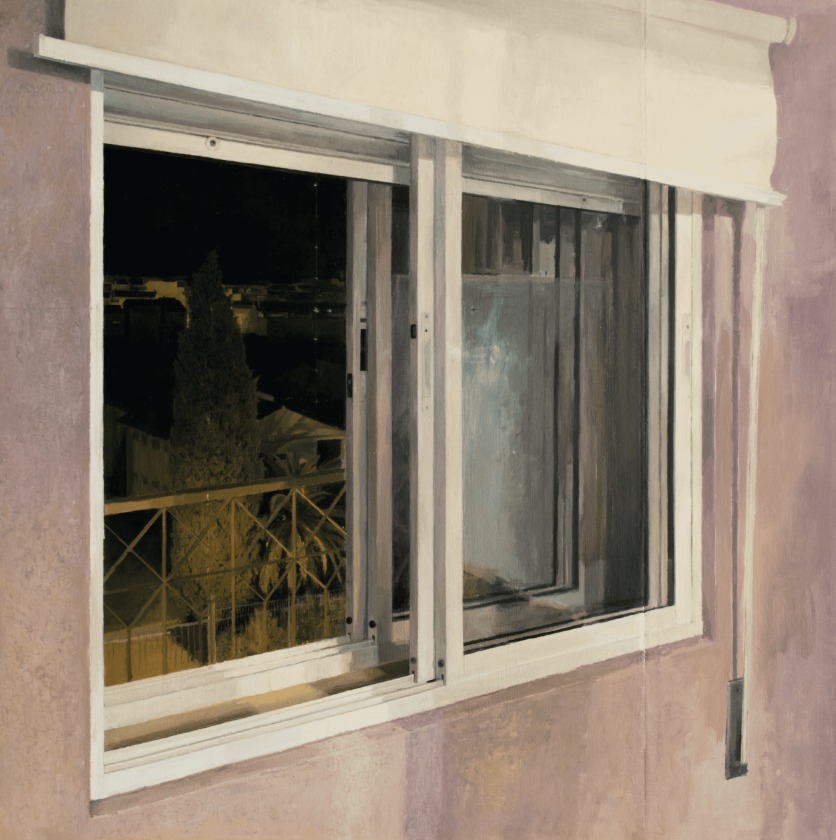
Based on the works of all of them, this exhibition aims to propose a reflection on the ways of living in our time and the ways of representing them, while claiming that perhaps our time marked by the saturation of images, even those of intimate spaces that are made public without mediating layers of thought, is the most conducive to valuing scenes constructed from and for silence.
The spaces that will come our way in the MUREC will never be flat in their possible readings: the half-open doors or windows refer to the absentees who left them that way; The objects and the decoration or emptiness of the walls also allude to them; and both can equally shelter, if sought, interpretations of collective significance, echoes of memory or conflict. In any case, to access one or the other it will be necessary to stop to look and dedicate effort to entering these thresholds: a gesture, that of contemplating without haste, that we can consider subversive today.
The participating artists have not painted interiors-scenery, like those usually shown by those who voluntarily exhibit their rooms in photos, but rather places for memory or suggestion: figuration has never equated to explicitness.
These thresholds, whether they are in the form of a hallway or an opening, are not anecdotes but frames of our gaze, the position granted to a spectator-voyeur who will not be able to completely enter where he sees, but will not remain outside either; It will remain at a distance that determines our perception, seduces us or frustrates us. In the same way, the spaces that we will appreciate, despite their usual simplicity, will never be neutral in that they are inhabited, transformed, remembered… and now dissected by a public that examines them from their present and their baggage.
Introspection is possible in them, but also the investigation into ways of life whose modification does not stop.
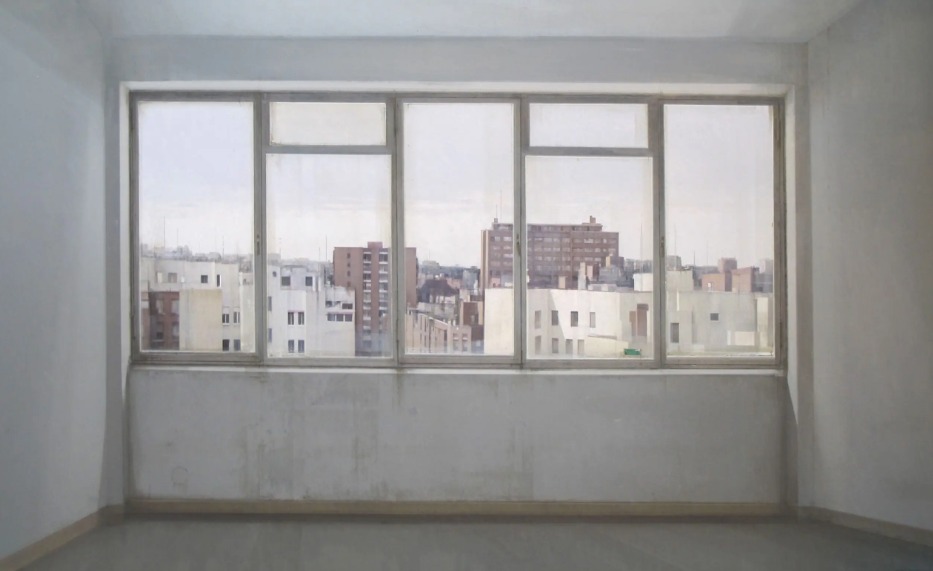
“From the threshold. Space and intimacy in contemporary Spanish realism”
MUSEUM OF CONTEMPORARY SPANISH REALISM. MUREC
Paseo de San Luis, s/n
Almeria
From April 25 to July 5, 2026