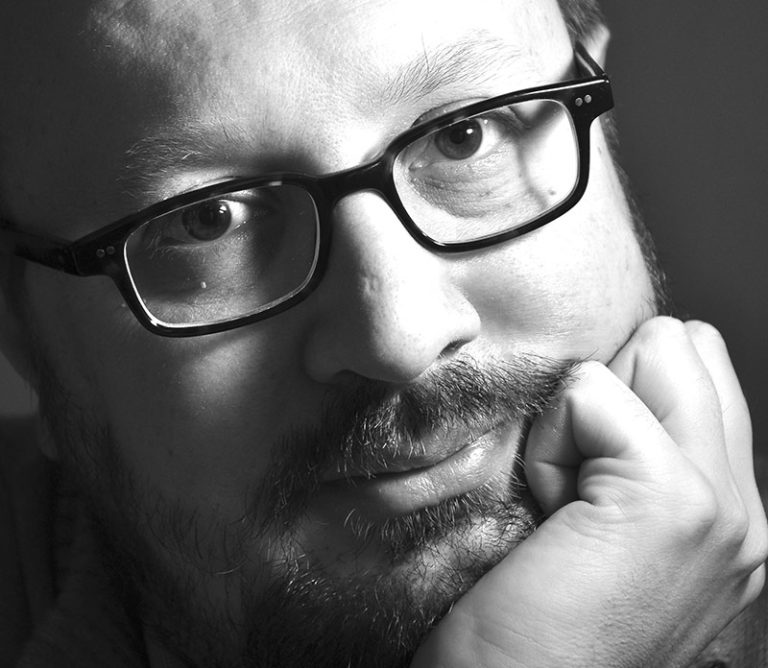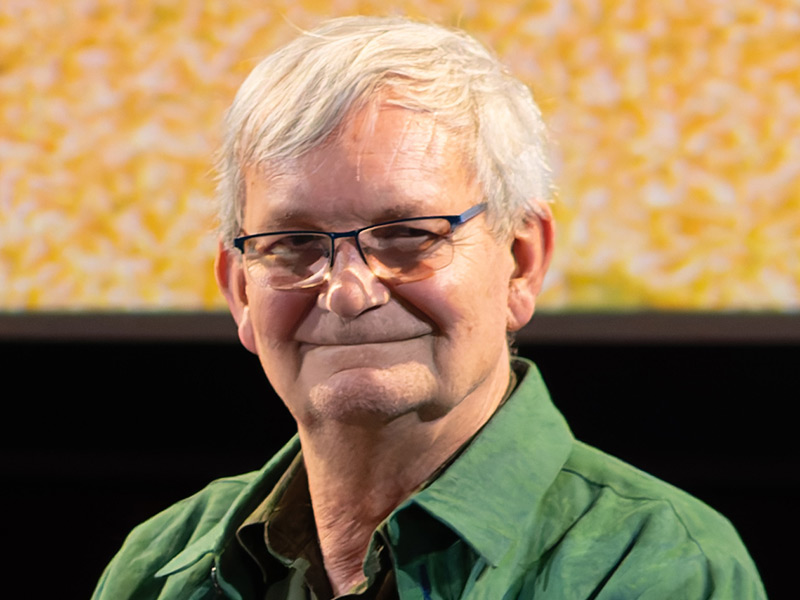
After the death of a star of architecture – Frank Gehry – another star, in photography, has just passed away on December 6. Martin Parr died aged 73 at his home in Bristol from cancer. An essential figure on the international scene, he will have had a lasting impact on contemporary society, making the ordinary a powerful photographic visual material.
Born in 1952 in the United Kingdom, Martin Parr trained in photography in the early 1970s, before settling in rural communities in the north of England where he documented daily life. He established himself very early as an attentive observer of British society, attached to popular practices, working class leisure activities and the middle class culture which was transforming during the Thatcher era.
In the 1980s, his work focused on the country’s social changes, between deindustrialization, new forms of consumption and the emergence of mass tourism. Settling in Bristol at the end of that decade, he built a work base there which would remain his home base until his death.
Martin Parr’s work is organized into large series that have become references for professionals: from rural communities to popular British seaside resorts, to the flows of globalized tourism. Sets like The Last Resort, The Cost of Living, Small World Or Common Sense have redefined the scope of social documentary through the use of color and a frontal approach to everyday life.
His images, immediately recognizable, are characterized by deliberately saturated colors, tight framing and confident use of flash, including in daylight. This aesthetic, often imitated, allows him to reveal the triviality of ordinary gestures, consumerist excesses and the kitsch of leisure activities, without ever renouncing a form of empathy and humor for his subjects.
A member of Magnum Photos since 1994, Martin Parr became its president between 2013 and 2017, helping to guide its editorial line and ordering policy. As such, he plays a determining role in the institutional recognition of documentary photography that is at once critical, playful and anchored in reality.
His work is the subject of dozens of monographs and exhibitions around the world, consolidating his status as an author as well as a photojournalist. In 2014, he created the Martin Parr Foundation in Bristol, a structure dedicated to the conservation of his archives and the support of British documentary photography, which in just a few years has become a place of reference for curators, researchers and publishers.
For image professionals, Martin Parr will remain one of the great inventors of a visual language in color, at the crossroads of satire and anthropological study. His work on social class, consumer behavior and mass leisure has provided a valuable reading framework for several generations of photographers, curators and critics.
Beyond his style, he has helped to move the boundaries between author photography, editorial commission and institutional production, simultaneously assuming the roles of photographer, editor, curator and book collector. This versatility makes him a reference figure for professionals wishing to combine artistic practice, circulation of images and reflection on the uses of the medium.
His death, announced by his foundation and by Magnum Photos, comes after several years of fighting against illness, a period during which he continued to photograph, exhibit and transmit, despite fatigue and physical constraints. He leaves behind his wife Susie, his daughter Ellen, as well as a vast network of collaborators.