Davos,
…I hope for an international exhibition where Picasso and I are together.
Kirchner formulated the wish in 1933 and it has taken almost a century to make it a reality. Until next May, the museum of this artist in Davos (Switzerland) houses a hundred paintings, sculptures, drawings and engravings by two of the defining authors of contemporary art; From this confluence we hope to be able to extract useful readings about the common concerns of these first swords, who belong to the same generation (they were born a year apart), who never met personally and who, however, approached each other in their respective works quite frequently.
Over almost four decades, both responded to the same historical and social upheavals (wars, the rise of the urban world and the machine, the cult of the body and its efficiency and social unrest), but with different aesthetic and technical strategies, as we know.
If Picasso joined the Parisian avant-garde early and soon became the great formal renovator of 20th century painting by embarking on Cubist waters, his production receiving an exceptional reception in Germany and Switzerland even before the First World War, Kirchner, however, developed his art initially under the umbrella of the Die Brücke group, which deliberately departed from academic traditions in search of new forms of expression that ensured immediacy, authenticity and spontaneity, and was not always understood for it. After moving to Berlin in 1911 (he was Bavarian), the metropolis itself became his central theme.
For the latter, the First World War marked a before and after personally and pictorially: after suffering both a physical and psychological collapse, he moved to Davos, where he lived and worked until his death. In his late work, he experimented increasingly with abstraction without abandoning figuration, with the stated goal of integrating art of German origin into the international context. The one who always welcomed Picasso, praised again and again by Kirchner in his correspondence: Any child can see that Picasso creates in a very different way and from a completely different attitude.. EITHER: The most peculiar and the best is, without a doubt, Picasso.
“Kirchner. Picasso” is divided into four thematic sections, but each of them refers, in turn, to a decade between 1900 and 1940, so the tour pays a lot of attention to that context in which both worked. And this chronological arc also corresponds to that of Kirchner, who died in 1938.
The inaugural section is dedicated to the search for new visual languages around 1900 and features early works by the two that document their departure from academic traditions and their interaction with currents and environments that were close to them, such as the circus and music hall. Highlights Jeanne (1901), by Picasso, an image still marked by impressionism that points, however, towards a psychological intensification of the motifs. and with Barcelona at night (1903) we can also trace, in an exemplary way, the evolution of the Andalusian in the management of space, light and composition.
From Kirchner’s first stage before joining Die Brücke we will see two dancers (1910-1911); Common themes have been intentionally selected pointing to obvious differences in their treatment.
A second section focuses on the metropolis as a germinal space of modernity: in the interwar years, Paris and Berlin were places of artistic concentration, acceleration, sensory overload and social tension. At the same time, this chapter addresses the interaction of both artists with non-European creation, as well as the importance of sculpture and still life for their subsequent development.
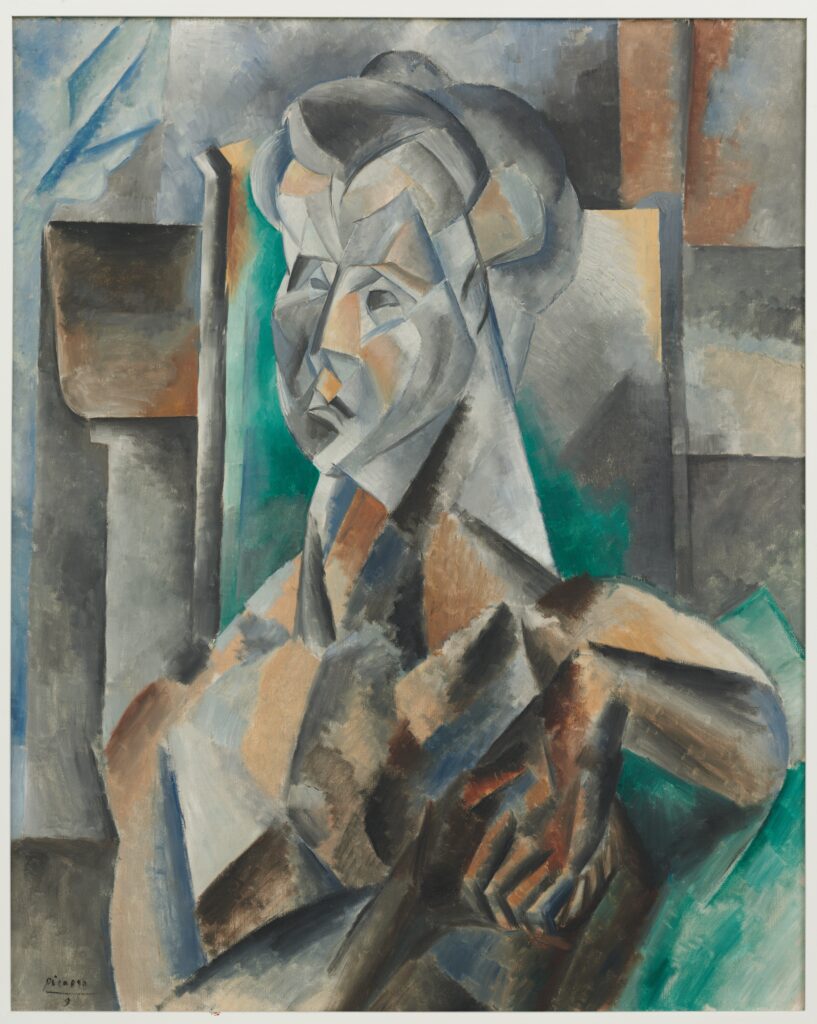
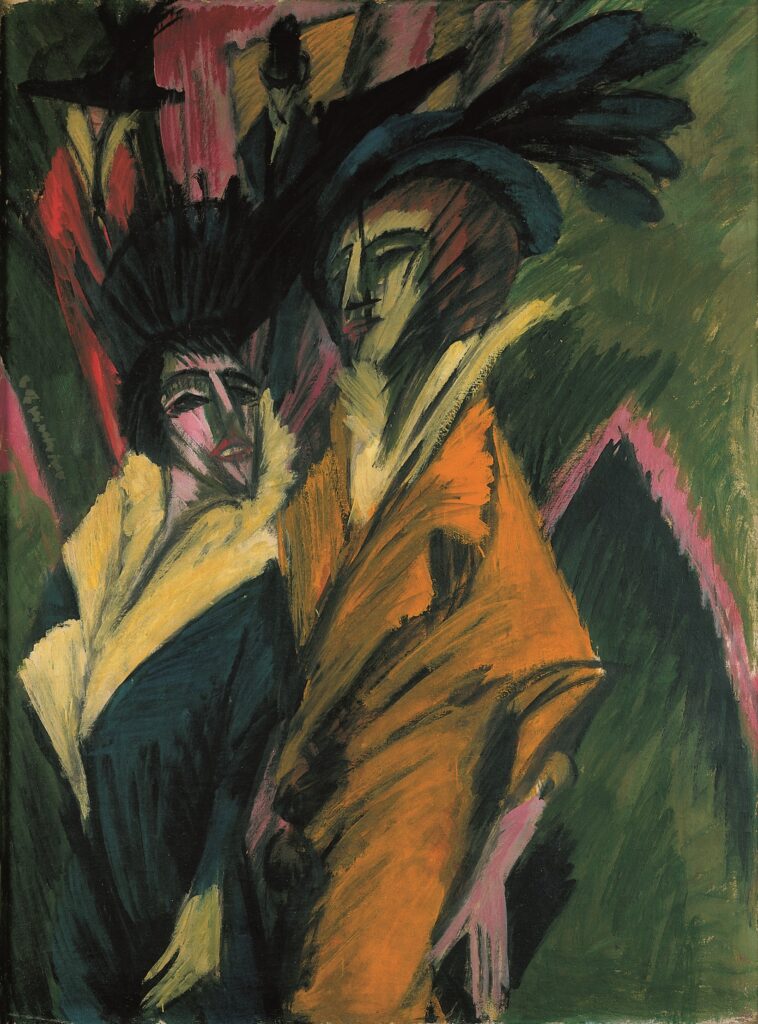
will not be missing woman in green (1909) by Picasso, arriving at the Van Abbemuseum in Eindhoven, one of the key works of Cubism, contrasting with Two women on the street (1914) by Kirchner. As an alternative to the urban experience, retreat into nature also gained ground in his creations, for example in two bathers (1912), by Ernst Ludwig, a matter of very extensive tradition that the avant-garde – it is known – did not abandon.
The third episode of the exhibition includes a phase of pictorial reorientation in both of them after the First World War. A selection of works from the 1920s is presented: Picasso moves between different stylistic approaches and combines classical elements with a more liberal formal language, as we will see in mother and son (1921) or woman head (1932); Kirchner, after moving to Davos, shaped what was called his New Style. Works like Totentanz (Dance Macabre) (1926-1928) show clearer codes, a rhythmic line and a reduced but vibrant use of color.
A final room is filled with works that would represent his response to the political and cultural events of the 1930s, years of defamation of recent art in Germany, under National Socialism, and of the campaign against what was baptized as “degenerate art.”
Pablo Picasso produced unforgettable portraits of Dora Maar during this period, such as woman with hat (1938), while Kirchner’s late work is represented, among other pieces, by Color Dance II (1932-1934) or Reclining nude woman (1931), the production of which is usually linked to the retrospective of Picasso himself that could be seen in Zurich in 1932.
The exposition gets it right by not simplifying the stylistic parallels or claiming direct influences between one and the other; rather, it raises questions about the origin of their different approaches to a relatively common, and turbulent, reality and time, and regarding their handling of the desire for tradition (Mediterranean or Germanic) and the desire for rupture. It will be possible to detect that Kirchner’s compositions remained marked by an existential urgency that clearly differs from Picasso’s often analytical point of view.
The opinions of the man from Malaga regarding Kirchner were not documented, but this exhibition is, in any case, the reflection of a crazy time and two clear ways of looking at it.
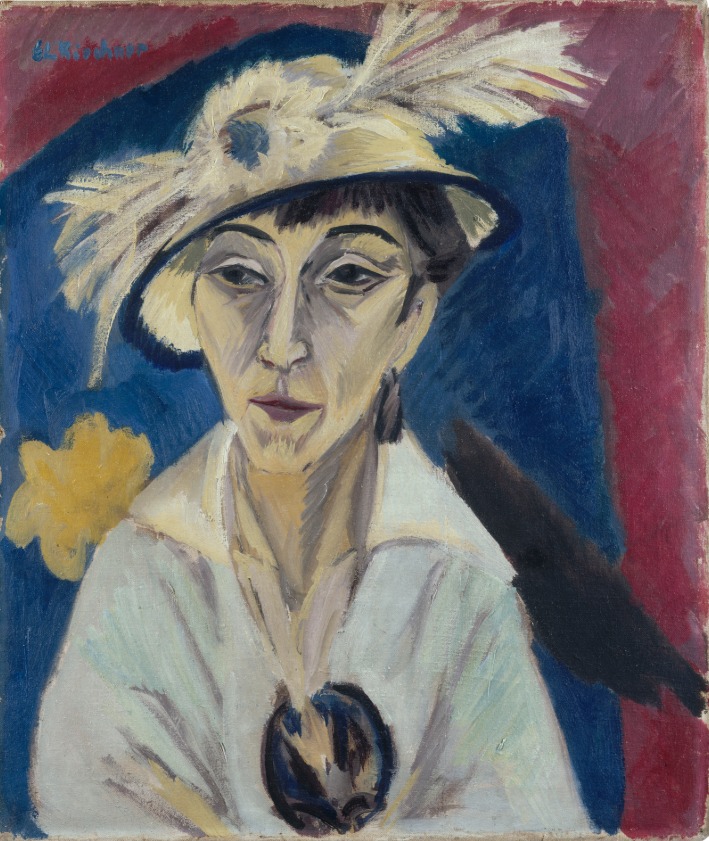
“Kirchner. Picasso”
KIRCHNER MUSEUM DAVOS
Promenade 82
Davos
From February 15 to May 3, 2026