Limoges (Haute-Vienne). There are those buildings that have a lasting impact on the minds of the inhabitants of a neighborhood, or even a city. The Charles-Michels building, with its Eiffel-style metal structure and large glass roof, has long been a must-visit place for many Limougeauds: its vast atrium and passageways housed the activities of a large fabric and clothing store from 1900 to 2013. In May 2025, the Frac-Artothèque Nouvelle-Aquitaine took up residence in this vast setting, ideally located in the city center. Catherine Texier, its general director, says she has “was touched by the residents’ anxiety that the memory of the building would disappear” with the rehabilitation of the building, entrusted to the Jakob + MacFarlane agency. It is therefore in the desire to place the contemporary art institution in historical continuity that the founder of the Limoges art library launched a curatorial program devoted to the question of clothing. In order to “take a new look at 40-year-old collections”continues Catherine Texier, the curatorship of the cycle of exhibitions has been entrusted to independent curator Marianne Derrien.
An extensive program
“No counterfeiting. Anatomy of a Garment” is much more than a two-part exhibition. It is a program in several sequences until the summer of 2027 allowing visitors to understand the theme of clothing from different angles and over a long period of time based on works by artists represented in the collection of the Regional Contemporary Art Fund or guests. Accustomed to bringing together different generations in her projects, Marianne Derrien has put together a corpus of works by emerging artists and others of international renown, such as Nil Yalter, Michel Journiac and Gilbert & George.
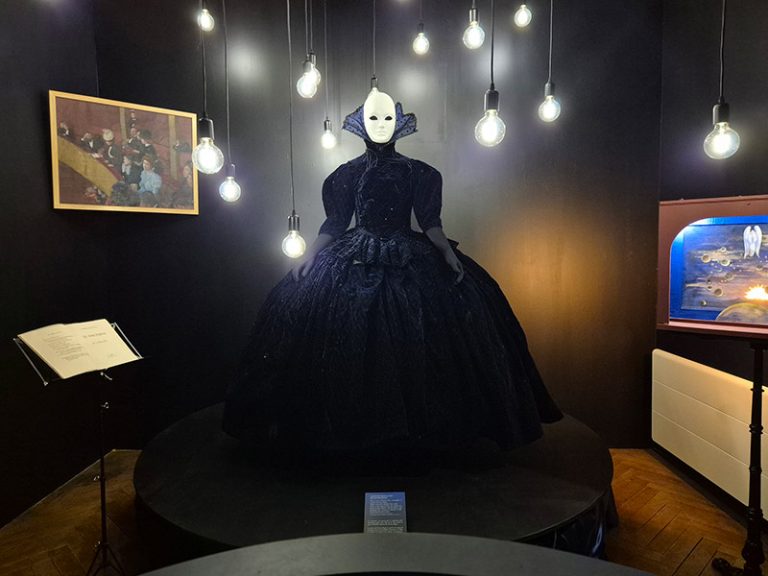
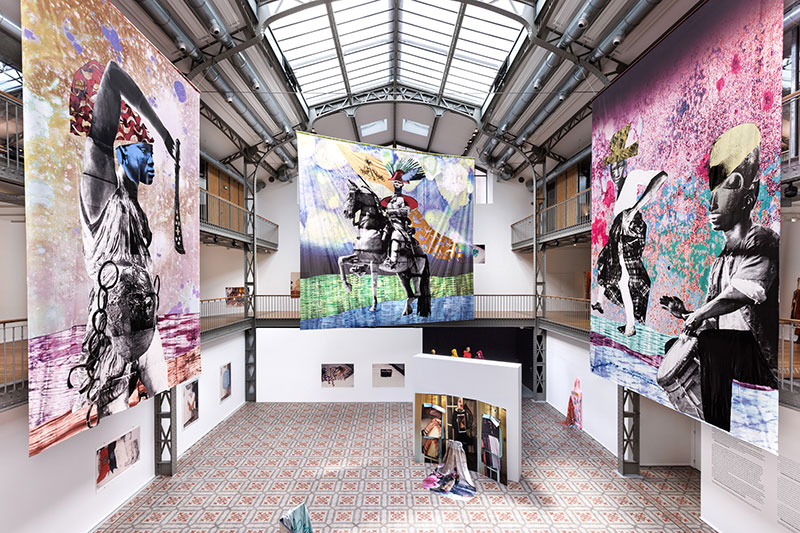
The project, which takes advantage of the possibilities offered by architecture, alternates between collective presentations and “capsule exhibitions” functioning like mini-“solo shows” on the scale of a room. This division not only gives rhythm to the visit, but also emphasizes the intimate and social dimension of clothing. The configuration of the space on the ground floor illustrates this double movement particularly well. The vast space of the atrium, bathed in natural light, hosts several monumental works by Raphaël Barontini and Chalisée Naamani [voir ill]two young artists who are interested in clothing as a vector of cultural identity and its properties in a colonial context. Using the codes of history painting, Barontini portrays key figures from historical movements for the liberation of peoples in large compositions hybridizing screen printing and strips of dyed cotton fabric. In a small side room, Nil Yalter presents his installation The AmbassaDRESS (1978) in which she explores unsavory aspects of her family past through a Lanvin dress that belonged to the wife of the Turkish ambassador to France and which she received as an inheritance at the end of the 1960s – according to rumor, the latter would have worn the dress at a ball in Vienna in the company of high Nazi dignitaries.
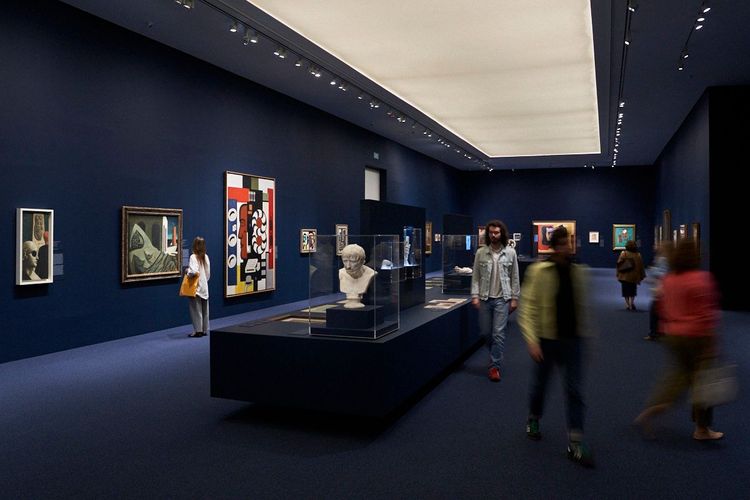
The exhibition is also an opportunity for the Frac to take some of its historic, rarely shown pieces out of its reserves. Visitors can thus rediscover the large photographic composition Calvin Street (1982) by the British duo Gilbert & George, acquired in 1985. In this work, the two artists appear in suits and ties in a composition taking up the plastic attributes of stained glass: the black rings look like fishnet and the intense red and bottle green seem to come straight from a church. Another emblematic piece from the Frac du Limousin collection, Leather and Denim. Copyrighto 5 (1987), from the General Idea collective, finds a special place on the first floor mezzanine.