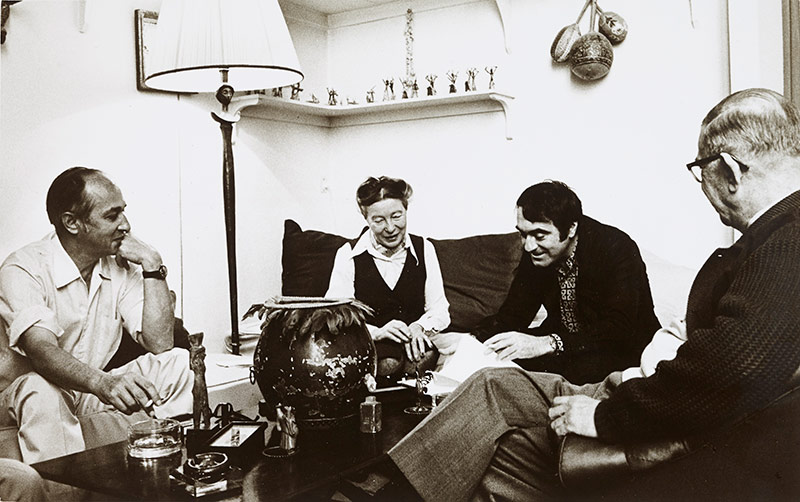
“Friendship was immediate. Sartre completes “Being and nothingness” which will give his theoretical framework to after-war existentialism; Giacometti then wonders about the just scale and the limits of the figuration to give to its tiny or figure or figure sculptures; Beauvoir writes “the guest”, her first book published in 1943 ”recalls Émilie Bouvard, commissioner of this unprecedented and exciting exhibition on their intellectual and artistic friendship, but also for her reflection on vertigo, “Limited state caused by an intense requirement as to what you create in your life”as she defines. State that represents Agnès Geoffray (born in 1973), artist invited by the Giacometti Foundation, through a series of photographs including that of Woman whoborn in response to the assertion of Giacometti: “I can only make one motionless woman and a man who walks. »»
“Giacometti is undoubtedly the only artist that Sartre admired”writes Simone de Beauvoir in The Age Force. The search for the absolutethe test that Sartre wrote for the sculptor’s exhibition at the Pierre Matisse gallery, in New York in 1948, “Is a founding text for the reception of Giacometti’s work after the war and seals their friendship”specifies Émilie Bouvard. At least until Sartre and Beauvoir’s commitment in politics separated them in the early 1960s. Beauvoir, however, maintained with his wife, Annette Arm, friendships well after the disappearance of Giacometti. Beauvoir is also particularly mentioned in this exhibition both through quotes on Giacometti extracted from his Memoirs and the head that made the artist in 1946 and by the reconstruction of the office of the office of 11 bis, rue Victor-Schoelcher, where the writer lived from 1955, a stone’s throw from the Giacometti Foundation, and whose library questions the reasons for which On art or an artist, although her sister Hélène de Beauvoir was.
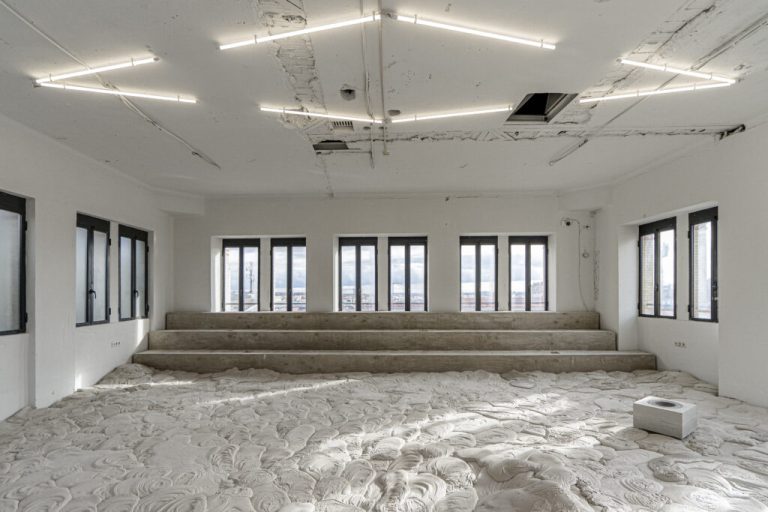
View of the exhibition “Beauvoir, Sartre, Giacometti. Dizziness of the absolute ”at the Giacometti Institute.
© Giacometti Foundation
© Adagp Paris 2025