Given the enormous, and then actually unprecedented, international recognition that Albrecht Dürer achieved, thanks more to his meticulous and expressive engravings than to his paintings, it was almost inevitable that his disciples would be overshadowed in attention, no matter how much originality and imagination they applied to their work. This was the case of Hans Baldung Grien, who was born thirteen years after his teacher, in 1484-1485, in southwestern Germany and who, thanks to his family’s integration into humanist circles, was able to receive a rich academic training.
When Baldung was a child, they moved to Strasbourg and it was in this city where he began to develop as a painter before entering as an apprentice, in 1503, in the workshop of the aforementioned Dürer in Nuremburg. He probably remained with him for four years until his return to Strasbourg, where he established himself as an artist: he was able to join the painters’ guild upon his arrival and developed most of his relevant production there, with the exception of the altarpiece of the Virgin on the main altar of the Freiburg Cathedral. We know that he led a comfortable life and that he was respected, that he became part of the municipal council and died at the age of sixty.
Grien, by the way, is not a surname but a nickname, and he would receive it already in his time with Durer due to his predilection for the color green; In any case, Baldung agreed with him and added that G to his monogram. His legacy is diverse: he created portraits of the nobility and elites of Strasbourg, religious works for the bourgeoisie or for ecclesiastical institutions, stained glass windows for civic authorities or widely distributed prints.
Hans Baldung Grien. Photography: © Museo Nacional del Prado
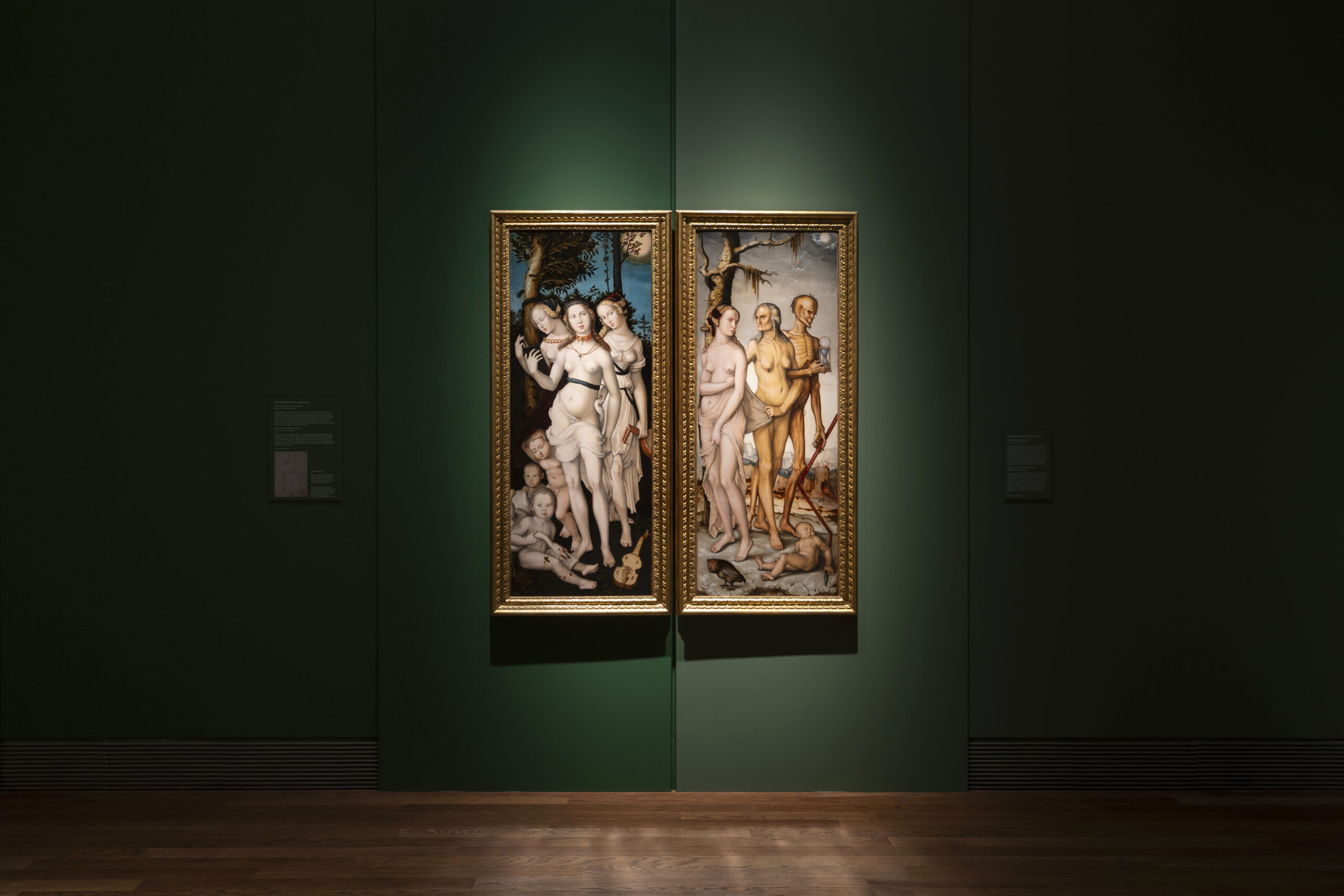
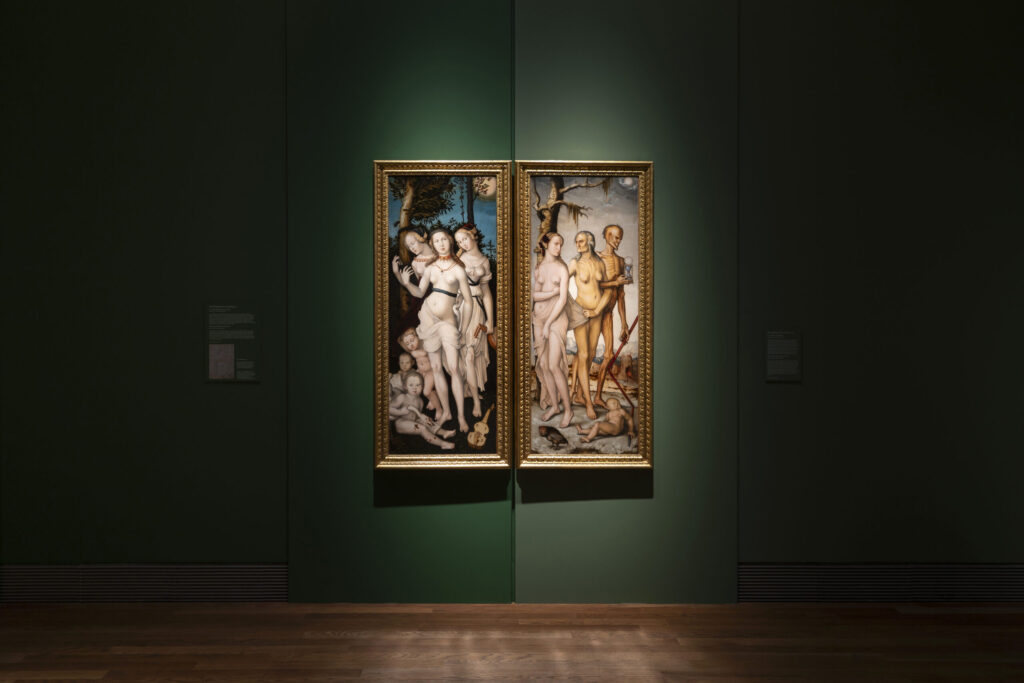
The Prado Museum preserves two fundamental oil paintings on panel from his late phase, which have always been considered a pair and, in fact, were immediately integrated as a diptych: they are Harmony (The three Graces?) and Ages and Deathboth dated between 1541 – 1544. They were restored in 2021, in an intervention that highlighted the German’s good use of glazes, which sometimes allow the drawing to show through; perimeter burrs that indicate that these pieces were painted already mounted on their paintings; and also obvious differences in the chromatic treatment of the two compositions: the shadows of The Harmony They are made in black pigment, which favors the sculptural appearance of the figures, while in The Ages It is the reddish and brown tones that grade the skin’s coloration and indicate its changes – towards darkness – over the years.
Until next March, both panels are the center of the first exhibition that Christine Seidel, new head of Flamenco Painting and the Northern Schools at the Prado, will curate at the museum: the reflection that these works raise regarding the ephemerality of beauty and the continuous proximity of death, and also that recent information related to its technical processes, are put in relation with thirteen other works from both the Prado collections and other institutions. We are talking about paintings, drawings, prints and sculptures that refer to the weight of Dürer’s legacy in the European culture of the moment and the relevance of that matter of the ages, of the end of youth and smoothness, as a theme that obsessed and pulsated until its subsequent flowering in the Baroque era, already at the hands of the vanitas.
Starting from this powerful heritage of Dürer, Baldung took and made his own models and iconography of the German Renaissance to take them to the field of meditation on the human condition and on the possibilities of the body and its sensuality to raise moral questions. To do this, he resorted to direct observation of both said body and nature, which in one case (The Harmony), allowed him to capture an ideal beauty, and in the other (Ages and Death), the inevitable consequences of tempus fugit. In 1600, these works were already in the Madrid Alcázar, after passing through, at least, the hands of the Count of Hesse and those of a commander of Charles V’s army, and they embody that implacable and tense duality between youthful beauty and a physical deterioration approached with great rigor.
These contrasts survive very clearly in a small boxwood statuette, dated around 1480 and by an unknown author, which seen from the front represents an elderly woman with an anguished expression trying to cover herself and in which, from the back, that decrepitude is greatly attenuated. It is the round bulk, the possibility of surrounding the figure, that allows this suggestive ambiguity. Polychrome was only applied to certain parts of the face and to the veil with which she tries to hide her body.
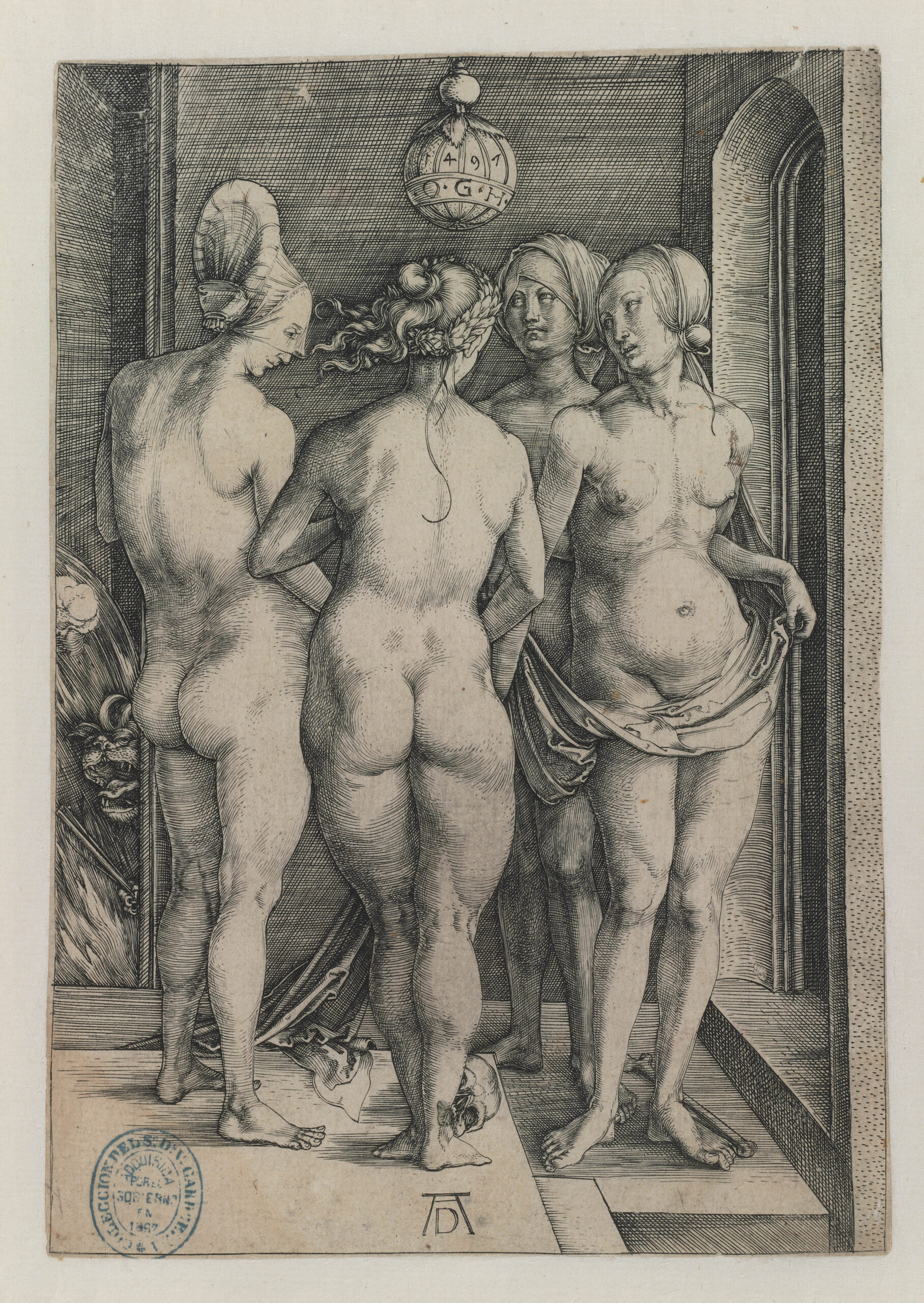
Albrecht Dürer. Four naked women either The four witchesaround 1550-1560. National Library of Spain
Paradoxes also populate Four naked women either The four witchesone of the first engravings dated by Dürer, in which the models, arranged in a circle as if they were part of a dance, could be interpreted as goddesses or graces if it were not for the skull and femur that we see at their feet and for a demon enveloped in fire at one end of the composition. They seem to embody different ages or a study of the nude, but this iconography raises many doubts; To a large extent, the attractiveness of the image lies in them.
We will also admire Dürer’s print Combat between Virtue and Pleasure in the presence of Herculesan evident example of the complexity and sophistication he achieved in the representation of the human figure, of muscles and postures, suggesting enormous dynamism (Baldung’s anatomies will normally be softer), together with the trial of Paris by Cranach the Elder, in which the nudity and youth of Hera, Athena and Aphrodite are accentuated by fashionable headdresses and jewelry and by veils tight around their hips.
As for the rest of Baldung Grien’s works in the exhibition, we will see, in addition to detailed drawings, The seven ages of women and two compositions dedicated to Adam and Eve (Thyssen) and Death and the maiden (Kunstmuseum Basel), panels in which he proved that, in addition to capturing death with implacable and almost tactile cruelty, he knew how to dwell on desire and eroticism. Actually, not that far away.
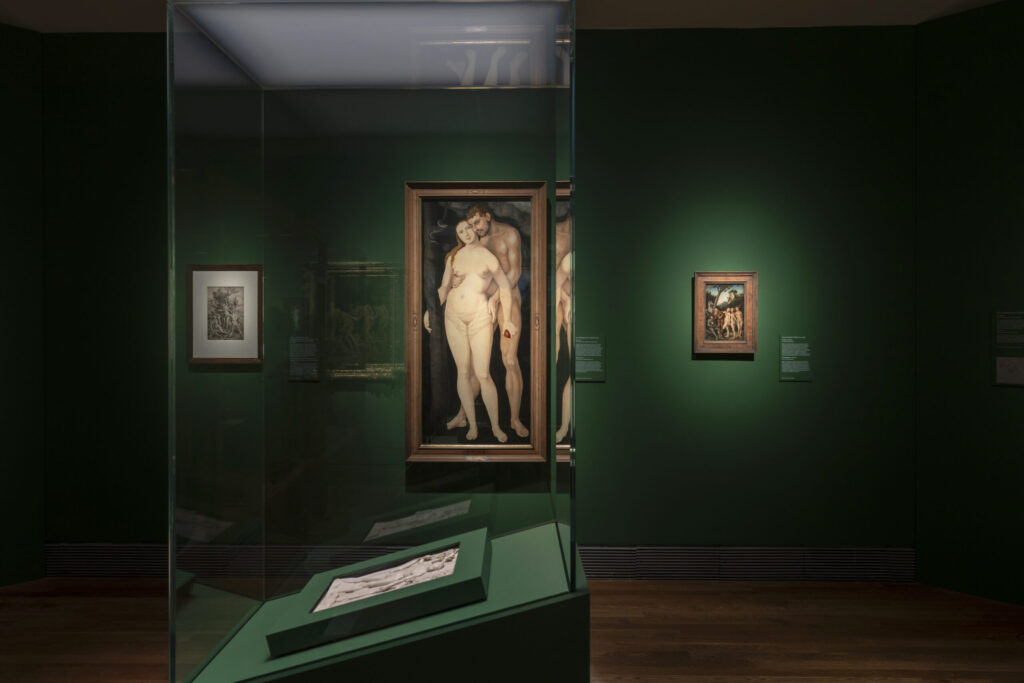
Hans Baldung Grien. Photography: © Museo Nacional del Prado
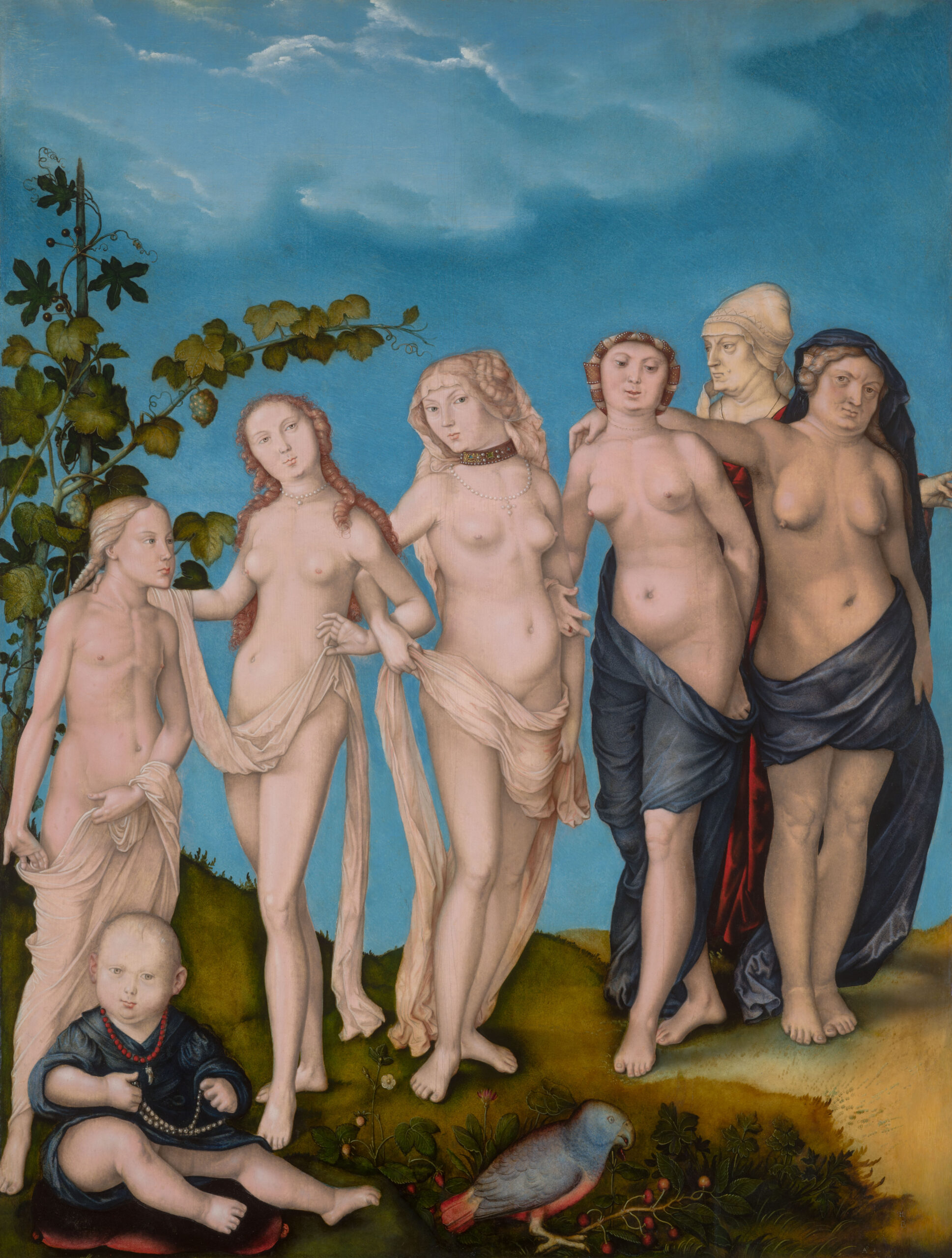
Hans Baldung Grien. The seven ages of women1544. Leipzig, Museum der bildenden Künste
Hans Baldung Grien
NATIONAL PRADO MUSEUM
Paseo del Prado, s/n
Madrid
From November 20, 2026 to March 7, 2027