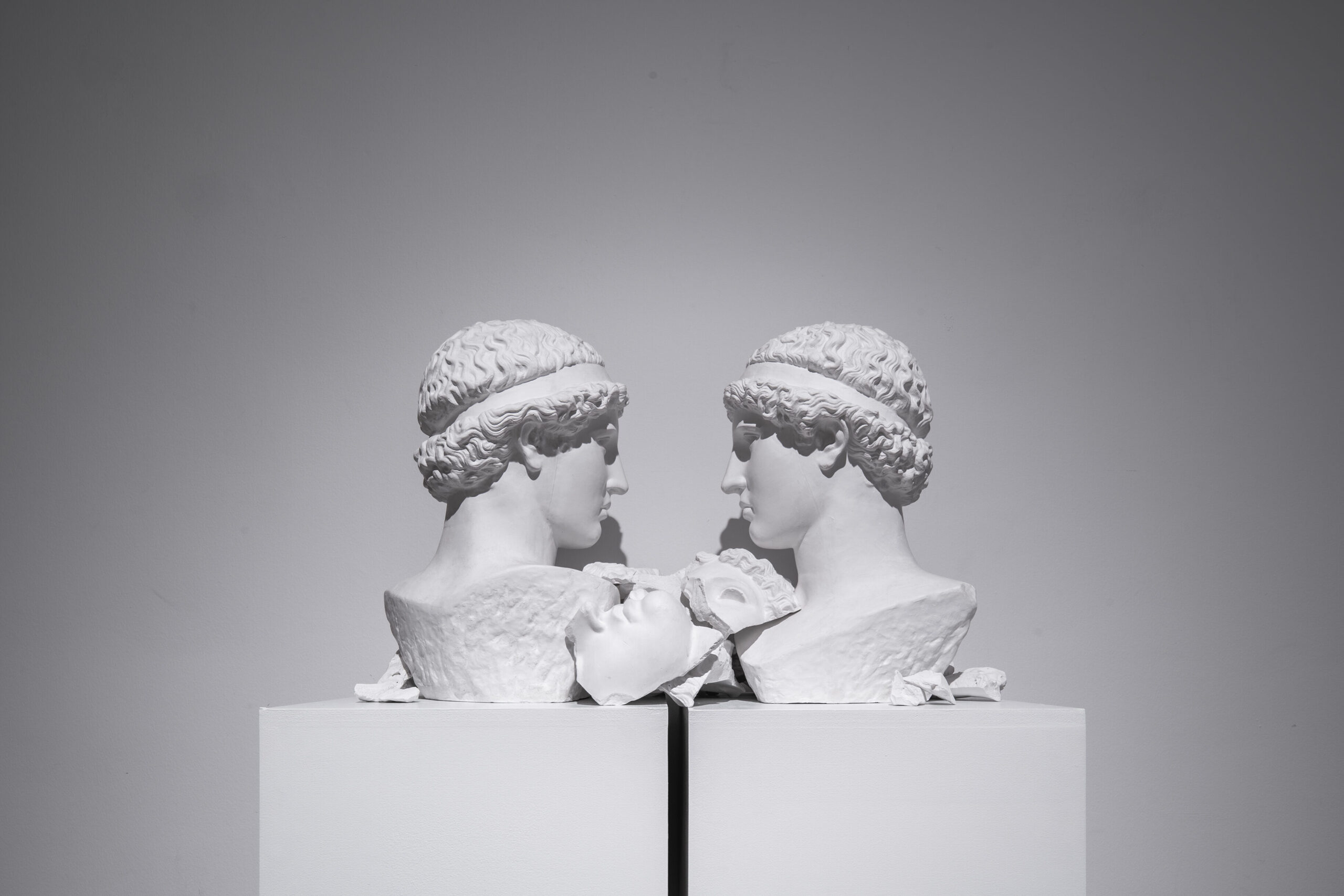
Before the end of World War I, it was already clear in Italy that the rise of the futurist movement would be fleeting; one of its main defenders, Carlo Carrá, departed from this (war-mongering) current in 1917 due to the impression he had on meeting Giorgio de Chirico in a field hospital in Ferrara.
This artist, of Italian parents, was born in 1880 in Volos (Greece), the point from which the Argonauts were said to have set out. Apollinaire said of him that he was one of the most surprising young painters he knew: before the war, he dedicated himself to searching for ways to overcome impressionism, the art of beautiful surfaces, and penetrate the “internal meaning of things.”
Both Carrá and De Chirico decided to formulate the aesthetics of a metaphysical painting that projected spaces full of deep melancholy, enormous loneliness and a restlessness that was difficult to define. The change with respect to futurism would, obviously, be radical.
The dynamism that had obsessed Marinetti or Boccioni, and at the time Carrá himself, would be replaced by a silent and almost oppressive immobility, and the “materialist” representation of the themes, by allegories with archaic echoes. Distancing themselves from the symbolism, whose agitated surfaces had earlier been adopted by Futurism, the metaphysical painters took the early Italian Renaissance as a point of inspiration and looked to Uccello, Masaccio, Piero della Francesca, their precise delimitation of figures and objects and their calculated, yet unreal, perspectives.
At that time Carrá was being treated in a clinic for a nervous condition and, when the doctors saw his works and those of De Chirico, they agreed that… both required treatment. It is a symptomatic anecdote of the moment that speaks of the generalized feeling of a latent threat, of loneliness, whose convincing expression in the production of Carrá and De Chirico raised blisters.
The second died in 1978, when he was about to reach a century of life, and in his long existence he managed to develop a style practically independent of the trends of his time. He remained indifferent to Impressionism, Fauvism and Futurism (he took them into account, more than anything, to distance himself from them) and admired the then reviled Arnold Böcklin and Max Klinger; with the latter he had studied in his early years in Munich.
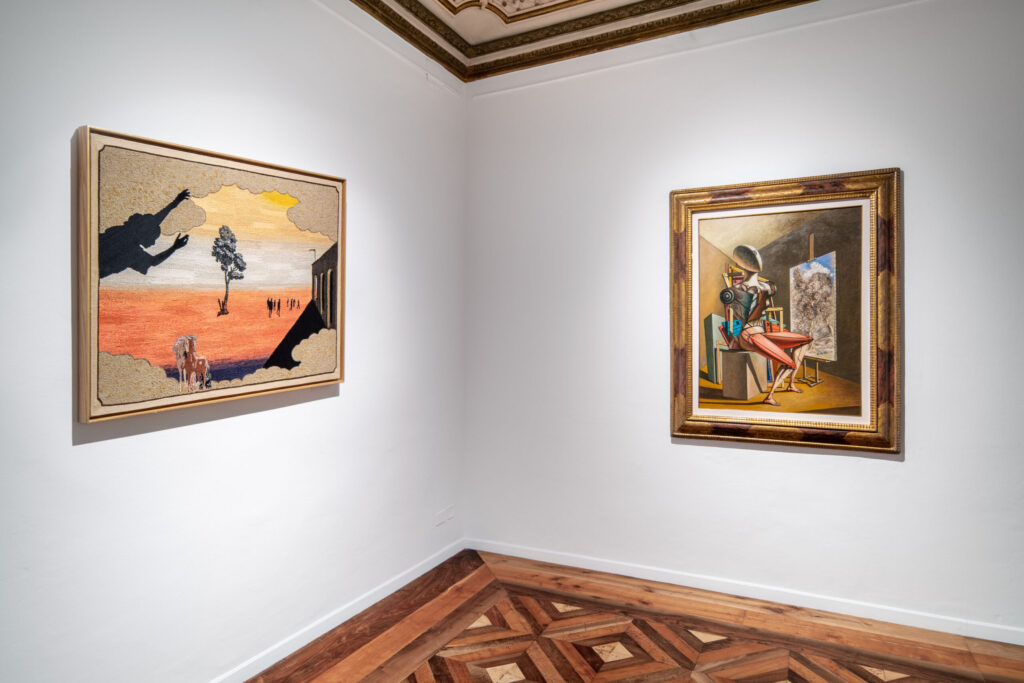
Giorgio de Chirico. The Contemporary Enigma. Mazzoleni, Turin
The formal logic of the architectures in De Chirico’s painting do not refer to Cubism, but to the first period of classical Italian art: to the squares of Ferrara, a somber city and a nostalgic point full of memories of past glories; also those of Turin and Florence, converted into open spaces without human life and populated only by faceless sculptures that project elongated shadows.
Monotonous arcades open like enormous abrupt gorges and exaggerated perspectives with their lines in strange foreshortenings and their singular vanishing points generate sinister voids and a sensation of unreality. On the horizon we can sometimes see a locomotive or a tram, ghostly trains that may have to do with his father’s job as a railway engineer.
De Chirico’s are Kafkaesque scenes full of color that speak of longing: green, brown and gray predominate. Tourist attractions take on demonic shapes and objects develop a disturbing and enigmatic life of their own. The expressive force of these silent spaces increases when the sculptures are replaced by tailor’s mannequins, ghostly figures with an anonymous presence, like idols; The alienation of scenes that could have been familiar to us is complete and De Chirico’s displacement of real things to a new context, in which they have an unexpected and incongruous appearance, sometimes causes surprise and other times… mystery.
The viewer is forced to perceive dreamlike and secondary realities and become involved in their interpretation, and the illogical juxtaposition of disparate things, which De Chirico said Nietzsche had invented, would later become the basis of surrealism. By the way, from the author of Thus spake Zarathustraand Schopenhauer, the artist wrote in his essay We metaphysiciansin 1919, to point out that they were the first to teach the deep meaning of the absurdity of life. He added that good artists were philosophers who have surpassed philosophy.
Very diverse objects are grouped in their metaphysical interiors: fragments of classical sculptures, plaster molds, rubber gloves, vegetables, fruits, cakes, scientific devices… Between them, or behind them, empty spaces emerge that over time are reduced or limited, as if De Chirico had begun to fear the cold breath of nothingness that he had previously invoked. The compositions become progressively more complex and confusing: there are those who appreciate some psychological insecurity in them.
In fact, by 1925, when the Surrealists were in ferment, De Chirico had long ago abandoned metaphysical painting. Already in 1919 he had defended a return to tradition, thus introducing an art widely adopted after World War I, in the stage of return to order. He began to copy the Renaissance masters, especially those of the 15th century, and to praise the great colorists up to Renoir, especially in his years before Impressionism.
In the same year 1919 in which he wrote that We metaphysicianspublished another essay that would be decisive in the future: The return to craftsmanshipwhose penultimate sentence was Pictor classicus sum. Thus, De Chirico sealed his return to the old masters.
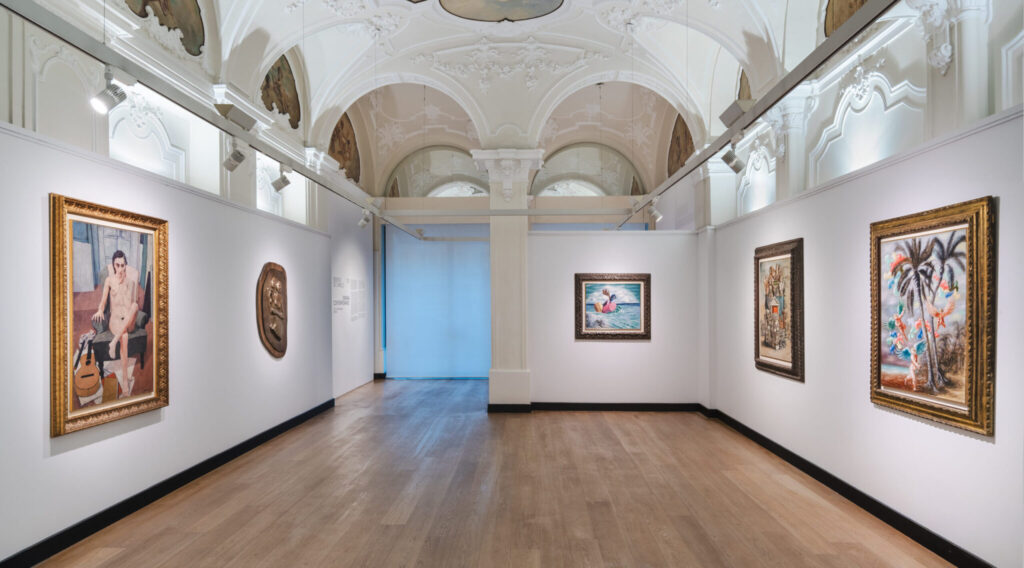
Giorgio de Chirico. The Contemporary Enigma. Mazzoleni, Turin
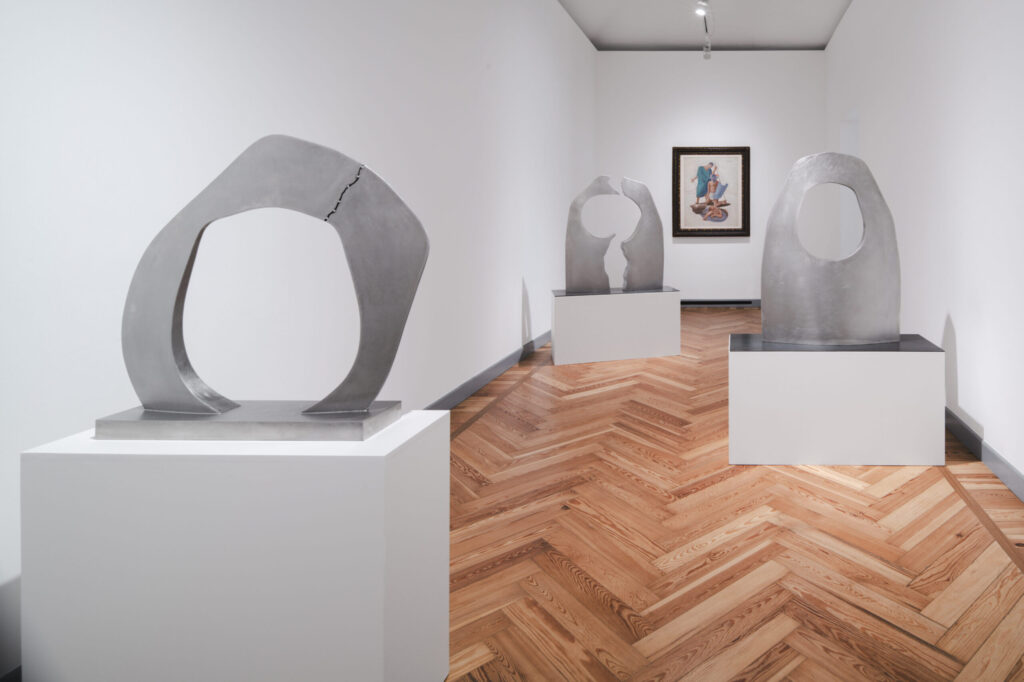
As a teacher, not so much as an ancient, contemporary authors that the Mazzoleni space wanted to bring together for its 40th anniversary continue to review his production. This gallery presents, at its headquarters in Turin, «Giorgio de Chirico. The contemporary enigma”: some of his essential works are exhibited in relation to compositions by creators who have drawn on his legacy, reinterpreting his most characteristic style and motifs, from the 1930s to the present.
Playing on juxtapositions, we seek to illuminate between each other the idea of a continuous metaphysics: a visual language as rich as it is ambiguous that runs through De Chirico’s entire career and that continues to resurface in the practices of subsequent generations. Some of the authors represented here have created new works specifically for the occasion, or site-specific installations; others have contributed unpublished pieces that enrich the narrative of the exhibition.
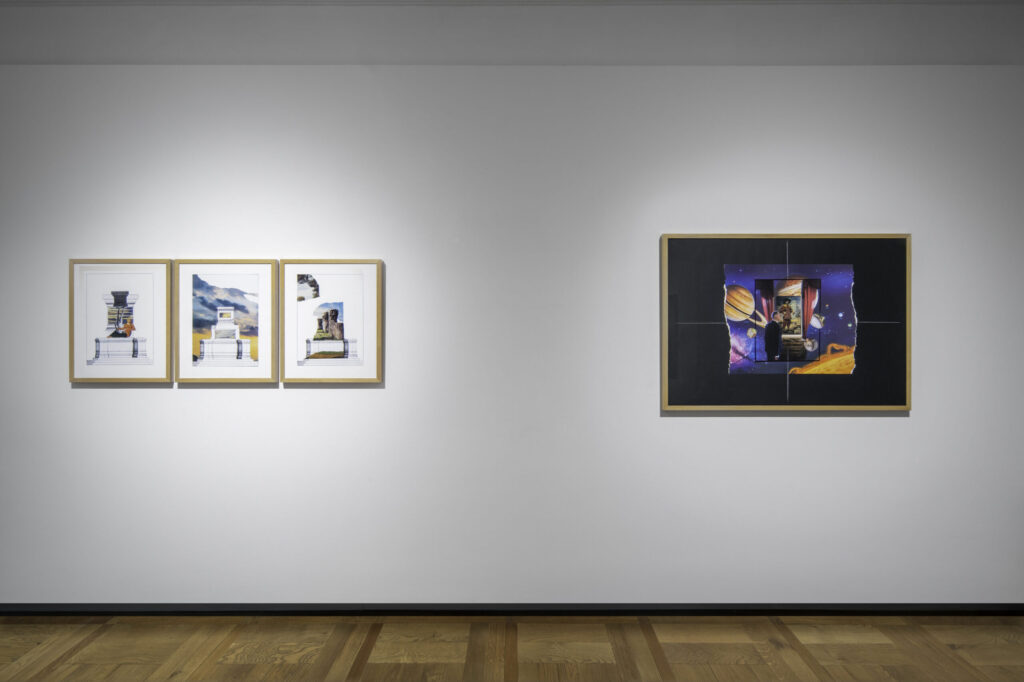
Giorgio de Chirico. The Contemporary Enigma. Mazzoleni, Turin
Giorgio de Chirico. The Contemporary Enigma. Mazzoleni, Turin
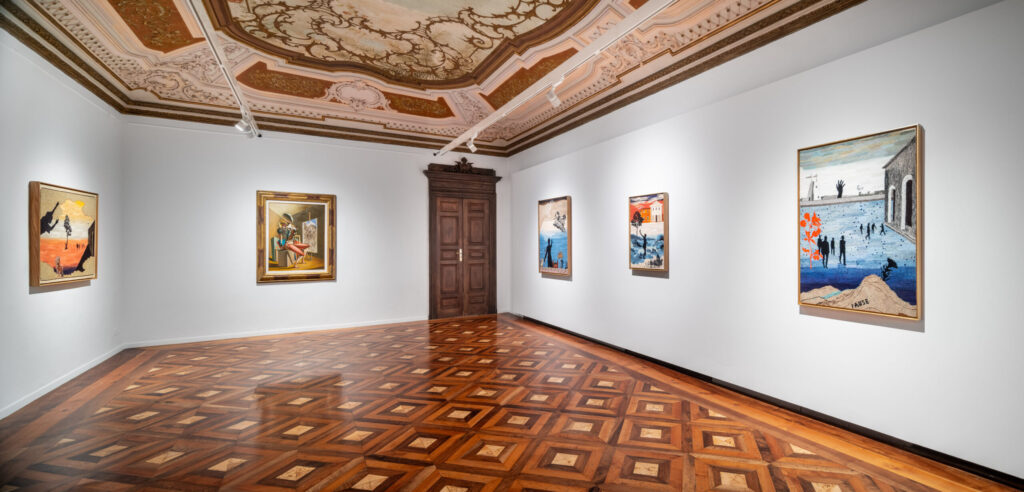
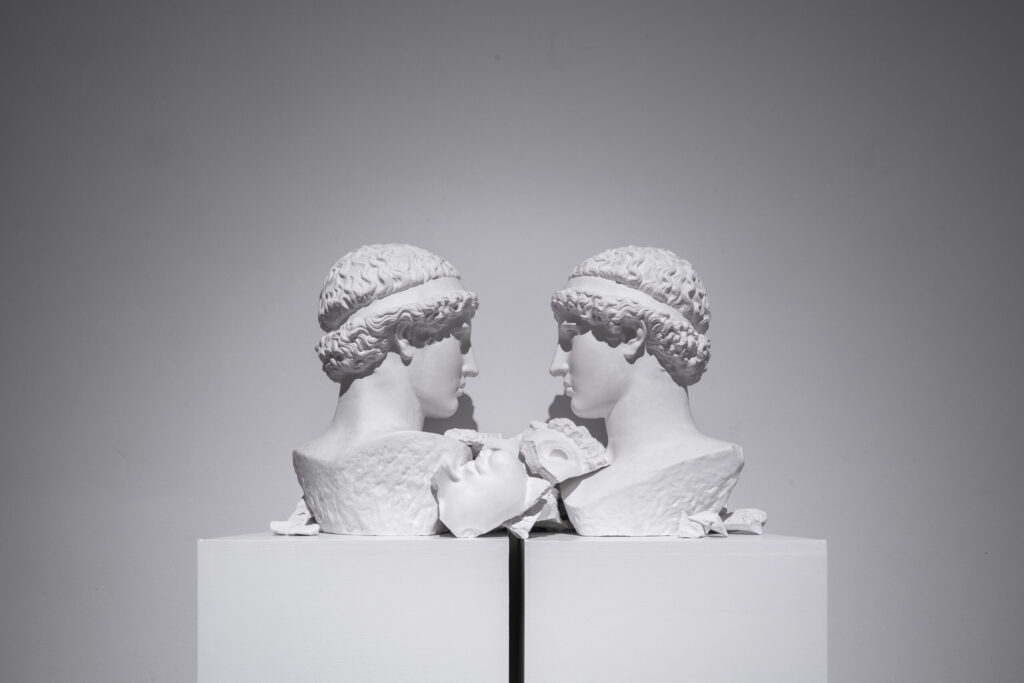
Alberto Savinio, Felice Casorati, Luciano Fabro, Giulio Paolini, Salvo and Wifredo Lam cultivated issues such as myth, the possibilities of classicism and metamorphosis like him. The shared metaphysical sensibility that links Gli Archeologi – Amore e Musica by De Chirico with Jeux d’Anges by Savinio, both dating back to the 1930s, resonates in Casorati’s paintings and in the monumental drawings of Luciano Fabro (Ogni ordine è contemporaneo d’ogni other ordine. Quattro modi d’esaminare la facciata del SS. Redeem Venice. Palladio1972-1973), which reimagine the Renaissance tradition, as well as in Paolini’s explorations of the ambiguity of the double and in Salvo’s constant reflection on classical models. Lam’s hybrid and visionary figures, for their part, introduce a mythology that resists colonial homogenization, while reconnecting, through dreamlike imagery, with their cultural roots.
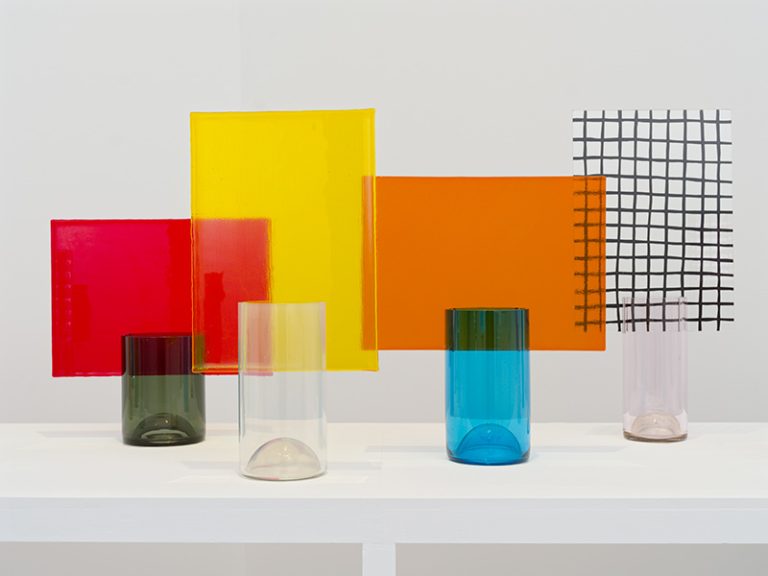
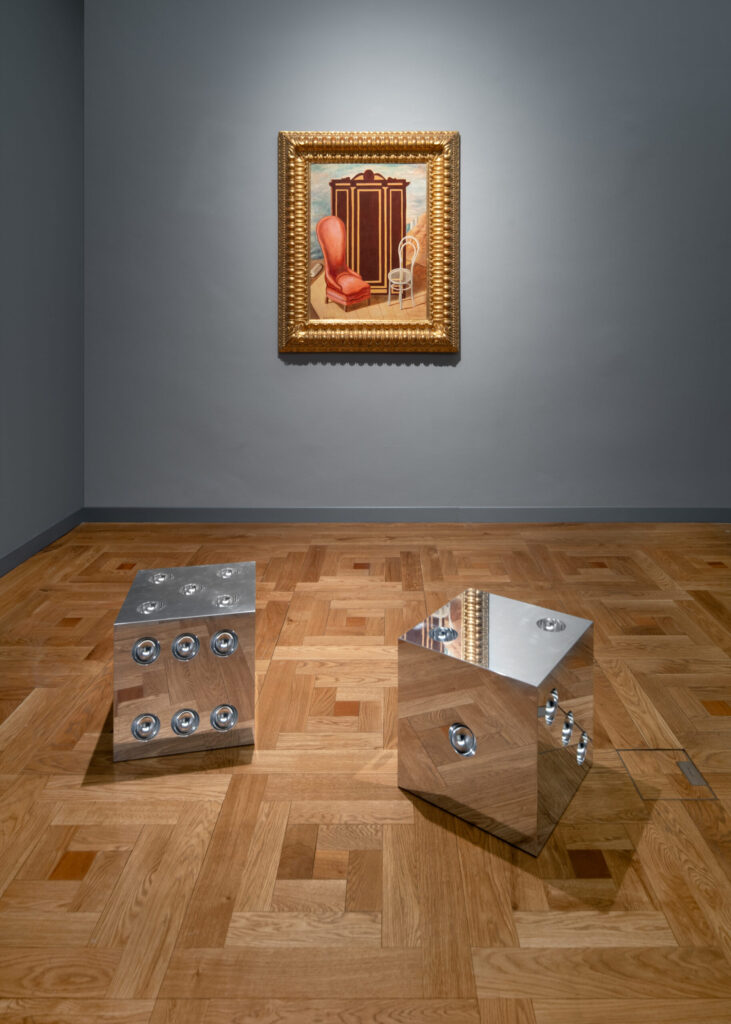
In Turin we will also see works by Nunzio, Salvatore Astore and Iran do Espírito Santo that extend these drifts towards a more physical and spatial dimension. In his works, matter, form and architecture become vehicles to revisit some central themes of De Chirico’s production: from the construction of space through the plastic force of matter – in the case of Nunzio -, through Astore’s reflection on the body as an essential structure to interpret reality, to the transformation – proposed by Do Espírito Santo – of the everyday object into a monumental and perceptually disconcerting presence, achieved through variations in scale and through the use of unexpected materials.
Giorgio de Chirico. The Contemporary Enigma. Mazzoleni, Turin
The landscapes in the exhibition are created by Marinella Senatore and Andrea Francolino, occupying a central place in their respective dialogue with De Chirico. In his new tapestries, conceived especially for the occasion by Senatore and presented together with the famous Pittore Paesista (around 1958), this landscape manifests itself as a space of collective construction, configured by memories, narratives and forms of participation. His face to face with De Chirico highlights how the symbolic dimension of nature continues to generate new shared imaginaries.
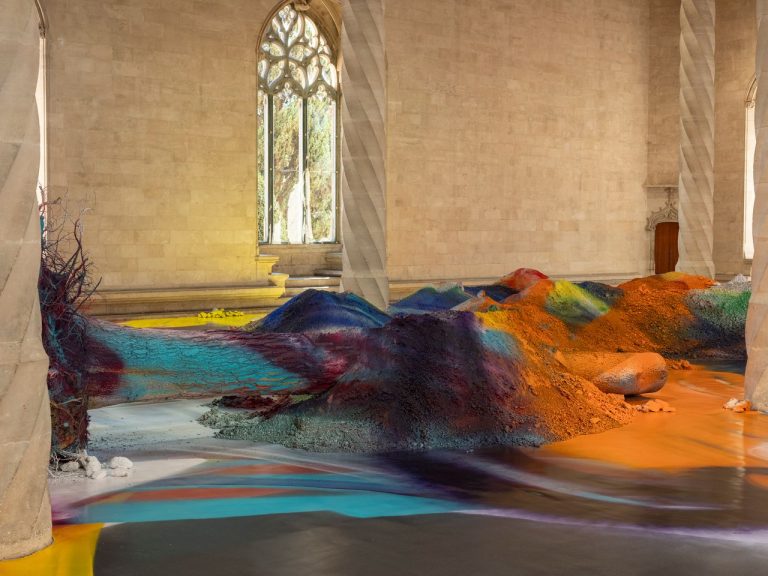
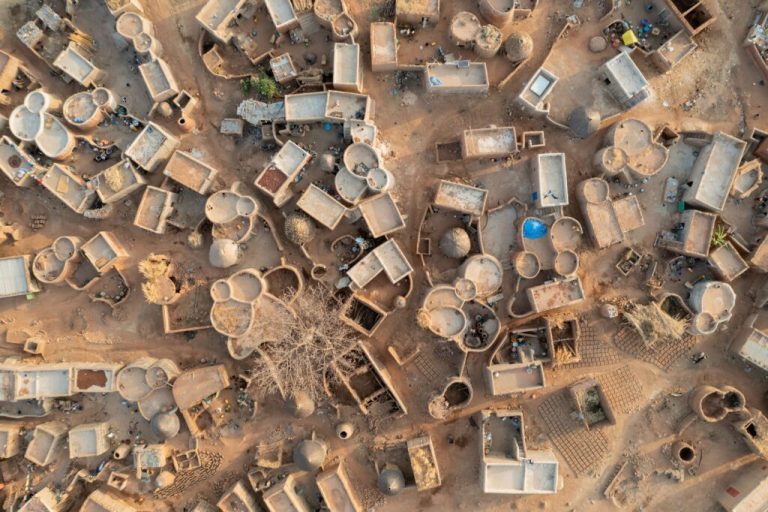
A complementary perspective on the same genre emerges in the specific installation that Andrea Francolino presents as part of her series Piazze. Through his crepe d’acqua (water cracksa metaphor for a perpetual cycle that combines permanence and change), the landscape becomes by his hand a physical and processual trace of time. Here too, the dialogue with de Chirico reveals the validity of a vision capable of transcending the mere description of the world to transmit its poetic and generative aspect.
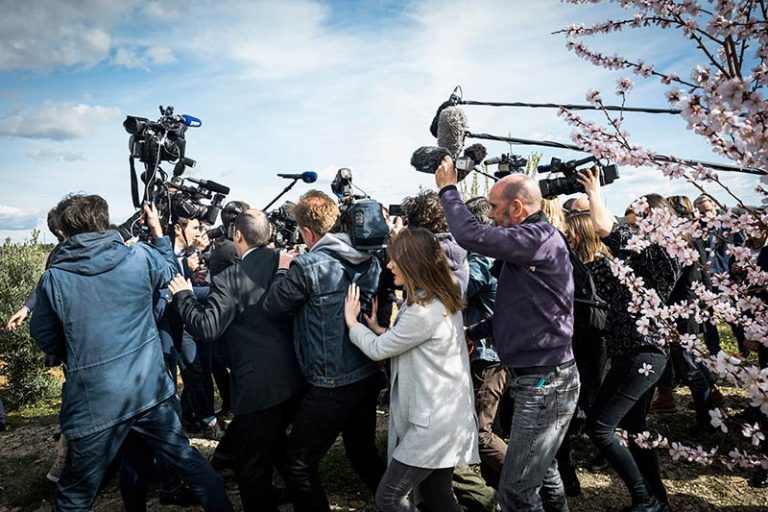
Completing the tour, the meeting between The Disquieting Muse (1958) and pieces by Michelangelo Pistoletto and Massimo Vitali once again place the human figure—and its representation in contemporary culture—at the center of our attention. From the ambiguities of identity explored in the Quadri specchianti from Pistoletto to Vitali’s photographs – where the contemporary landscape becomes the scene of a multitude of presences and micro-narratives, observed through an analytical, inquisitive and judgment-free gaze -, De Chirico’s metaphysical legacy continues to pulsate in new ways of observing the real, confirming the extraordinary vitality of an imaginary world that, more than a century later, has not lost its echo.
Giorgio de Chirico. The Contemporary Enigma. Mazzoleni, Turin
Giorgio de Chirico. The Contemporary Enigma. Mazzoleni, Turin
«Giorgio de Chirico. The Contemporary Enigma»
MAZZOLENI
Piazza Solferino, 2
Turin
From October 28, 2026 to January 16, 2027