
Chief heritage curator, Flore Collette (45) took over the management of the National Museum and Château de Pau estate (Pyrénées-Atlantiques), after seven years at the head of heritage for the City of Narbonne. She succeeds Paul Mironneau, who left office on August 31, 2026, after leading the establishment for more than three decades.
Flore Collette graduated from the École du Louvre and the National Heritage Institute (INP), Claude Lévi-Strauss class, in 2010, in the specialty Historical Monuments-Inventory. She began her career at the Nancy Museum of Fine Arts, where she worked for seven years. She notably participates in the museum’s renovation project and curates several exhibitions, including “The Autumn of the Renaissance, from Arcimboldo to Caravaggio” in 2013, for which she co-directs the catalog.
After Nancy, she joined the regional directorate of cultural affairs (Drac) of Occitanie as an advisor for museums for two years. In 2019, she was appointed director of heritage for the City of Narbonne (Aude), curator of the Archbishops’ Palace-museum and historical monuments. She ensures the conservation of municipal collections and the monitoring of heritage buildings.
In Pau, she succeeds Paul Mironneau, paleographic archivist and general heritage curator, in office since 1994. The latter accompanied the transformations of the castle and its museum, as well as the administrative reunion of the monument and its estate. In 2013, a ministerial decree created the National Museum and Château de Pau estate in the form of a service with national competence (SCN), bringing together the museum, the park, the outbuildings and the collections.
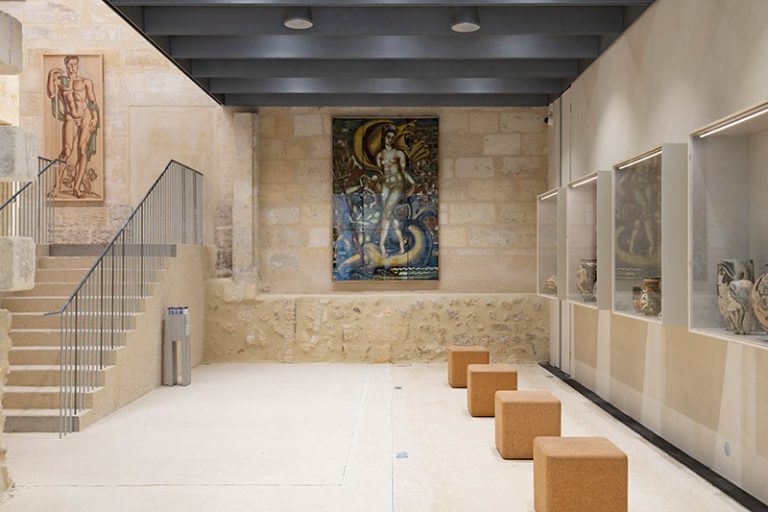
The Château de Pau occupies a special place among national museums. Former fortress of the viscounts of Béarn, transformed into a princely residence during the Renaissance, it is the birthplace of Henry IV, on December 13, 1553. Saved from destruction but very degraded during the French Revolution, the building underwent significant transformations under Louis-Philippe, from 1838, then under Napoleon III. These historic restorations explain a significant part of the arrangements and decorations presented today. Becoming a national museum in 1929, the castle preserves around 11,500 works and objects, including some 1,200 on display, according to data from the Ministry of Culture.
The collections include in particular a set of tapestries from the factories of Brussels, Paris and the Gobelins, furniture, paintings, drawings and documents dedicated to Henri IV, his entourage and the construction of his memory. The establishment thus combines the conservation of a historic monument, its 19th century decorations and a historical and artistic collection, with the management of a park and gardens.
Unlike national museums constituted as autonomous public establishments, a service with national competence is a structure of the State administration, directly attached to the Ministry of Culture. The Château de Pau comes under the general direction of heritage and architecture, through the French Museums Service.
Flore Collette arrives while several interventions are underway or planned on the estate. Interior restoration work, particularly on the structures, floors and ceilings of the castle, has been announced for the end of 2026. Since October 5, another project concerns the old park nursery: it aims to restore the historic landscape design, to enhance the 19th century plantations and to renew the plant collections.