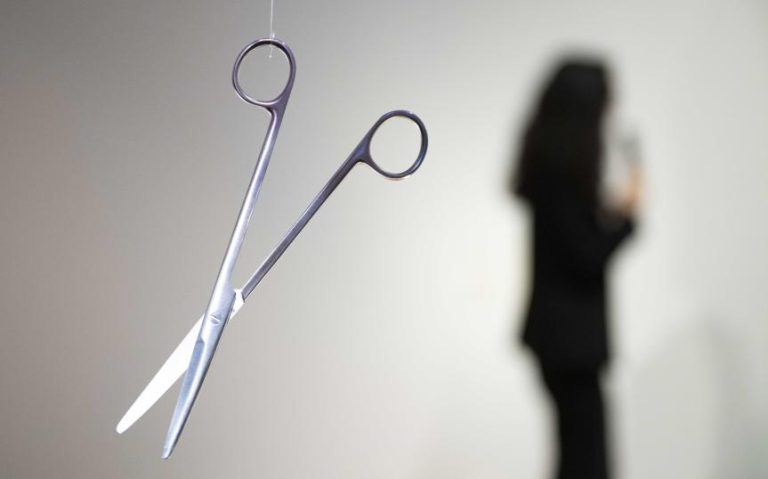
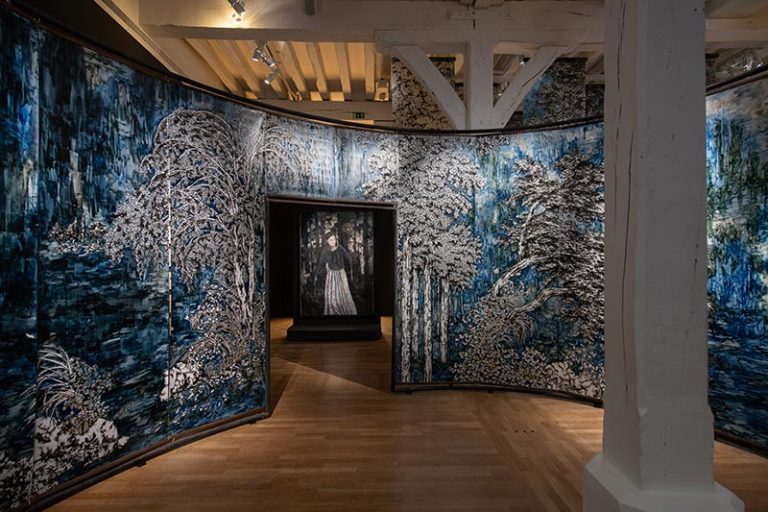
Eleven years ago Cristina Garrido was one of the winners of the contest Generationsconvened by the Montemadrid Foundation, with a project titled Just what it is that makes today’s exhibitions so different, so appealing? and that reviewed, based on a thousand images taken from the Internet, repeated trends in international exhibitions that standardize them and that have achieved the support of critics and the market: it referred to the proliferation of the fair and biennial model or the use of digital devices.
Without falling into the latter, the artist has now returned to La Casa Encendida to present an exhibition that is, indeed, different and attractive: after the Portuguese curator Paulo Mendes, she joins a line of work through which this institution will invite contemporary authors to present unpublished and own proposals based on its collections, which consist of cultural assets dated between the 16th and 20th centuries, a chapter dedicated to contemporary art, another for the decorative arts and the one that collects the creations awarded in this initiative Generations.
Garrido has worked with these four sections and has also added other objects to the assembly, those linked to the history of the Montemadrid Foundation itself, heir to the Caja de Ahorros y Monte de Piedad of Madrid, which initially constituted one of the oldest montes de piedad in Spain, dating back to 1702. For a large part of the public, it will be more unknown that that entity, of a charitable and social nature, is still active: jewelry can still be pawned in exchange for microcredits at low interest – both in the capital and in its subsidiaries in Móstoles, Granada, Córdoba, Alicante and Palma – and the benefits obtained from these loans revert to the operation of Casa Encendida itself.
During a year and a half of work, he first collected the pieces that caught his attention from intuition; They did not have a thematic thread in common, but he has chosen compositions and belongings that have allowed him to reflect on how value is constructed, what we understand by such, how it is modified over time and what brands and events – sometimes strange – determine that we grant it; also about the idea of custody and around care and lending.
Cristina Garrido. Touchstone. The House On. Photography: Maru Serrano, 2026
The entire exhibition – which is titled “Touchstone”, in reference to the procedure that allows jewelry to be appraised – has been conceived as an installation of interrelated elements that, as far as possible, come to meet us, ignoring the walls and standing in space. The assembly, by the Gonzalo del Val Studio, even reproduces the low ceilings that were characteristic of the Monte de Piedad.
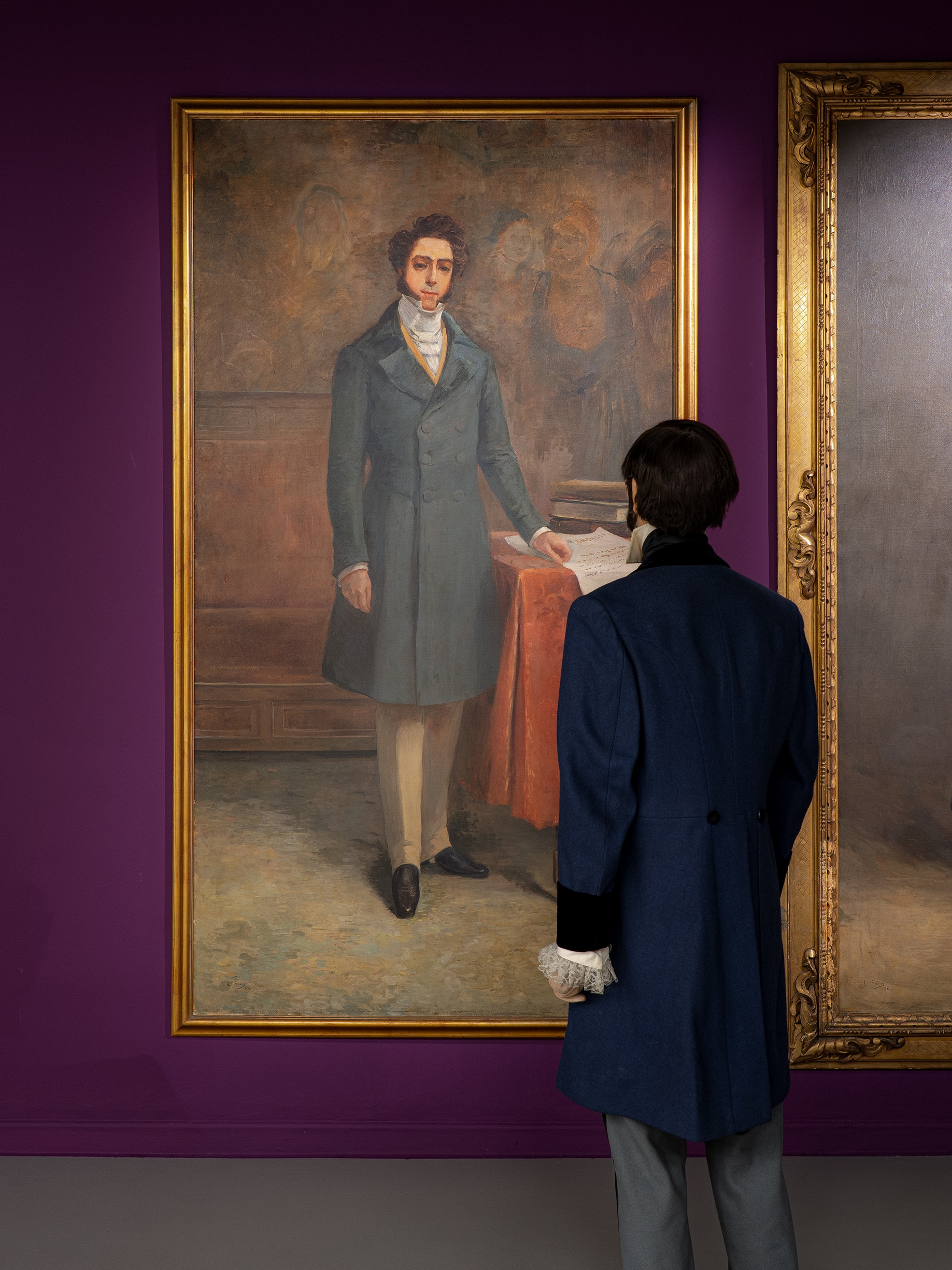
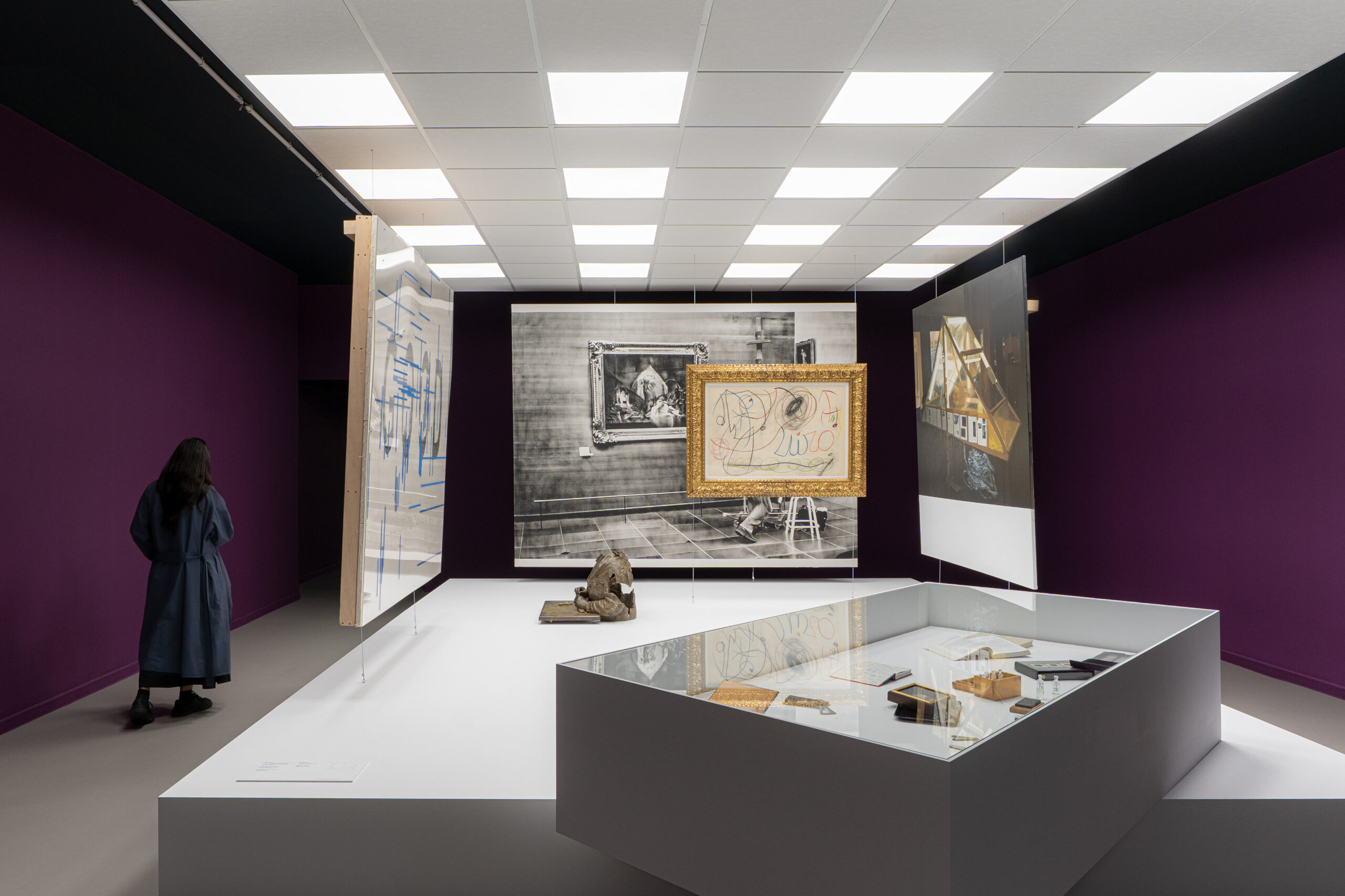
The tour begins with an atypical photograph by Santos Yubero dated 1951; It is a representation with mannequins of the first imposition of savings and two of those same figures, on a human scale, contemplate the image: those of the widowed Marquis of Pontejos, Joaquín Vizcaíno, promoter of the foundation of the Savings Bank, and Clotilde Arizcun, the woman who deposited 1,000 reales, the maximum amount allowed in that start of popular savings financial services.
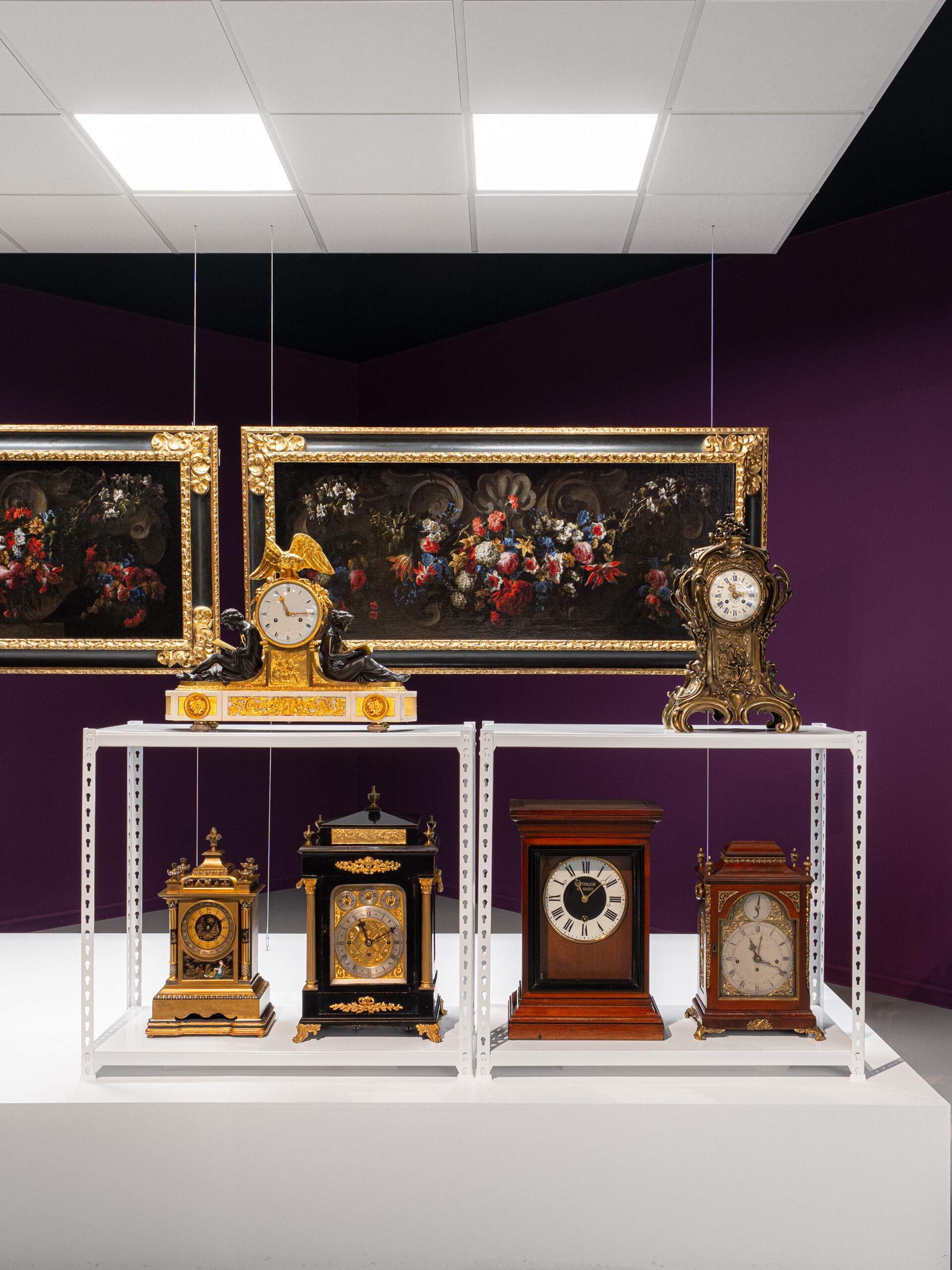
Moving along the itinerary we will see the two floral still lifes by Juan de Arellano that for a time were the highest valued pieces in the collection – they have already been superseded; As the exhibition shows again and again, our philias and attentions can be as weak and ephemeral as the flowers themselves – and also the video Abuseby Javier Peñafiel, in which a shot, precisely into a garden, seems to evoke the relationships between capturing images and hunting. The sound of the shots is also paired with the sound of the seconds marked by a selection of six historic clocks located on a shelf with an industrial aesthetic similar to the one where they are normally kept. They had a decorative character of which they were stripped, but then and now they have to be equally maintained: a watchmaker will come to La Casa weekly to set them on time, because they tend to lag. Here the artist emphasizes what custody has as a poetic act and action that requires knowledge, in this case difficult to replace.
Cristina Garrido. Touchstone. The House On. Photography: Maru Serrano, 2026
Contemporary works share a room with those pieces from the past: the manual reproduction, by José Ramón Amondarain, of a composition from the Louvre; an oil on canvas in which Sandra Gamarra replicated a Hirshhorn installation; a conglomerate of portrait-format canvases by Pep Agut that can lead to reflections on the criteria for the formation of taste and artistic collections; a tiny surreal landscape by Dalí in which his signature occupies a disproportionate space; another Miró canvas in which, once again, there is nothing but emptiness and his signature; and a bronze bust of Julio López Hernández depicting a faceless retiree rummaging through her purse. Authorship or originality, here the playing field, caused the profit, which is influenced by the appraisal.
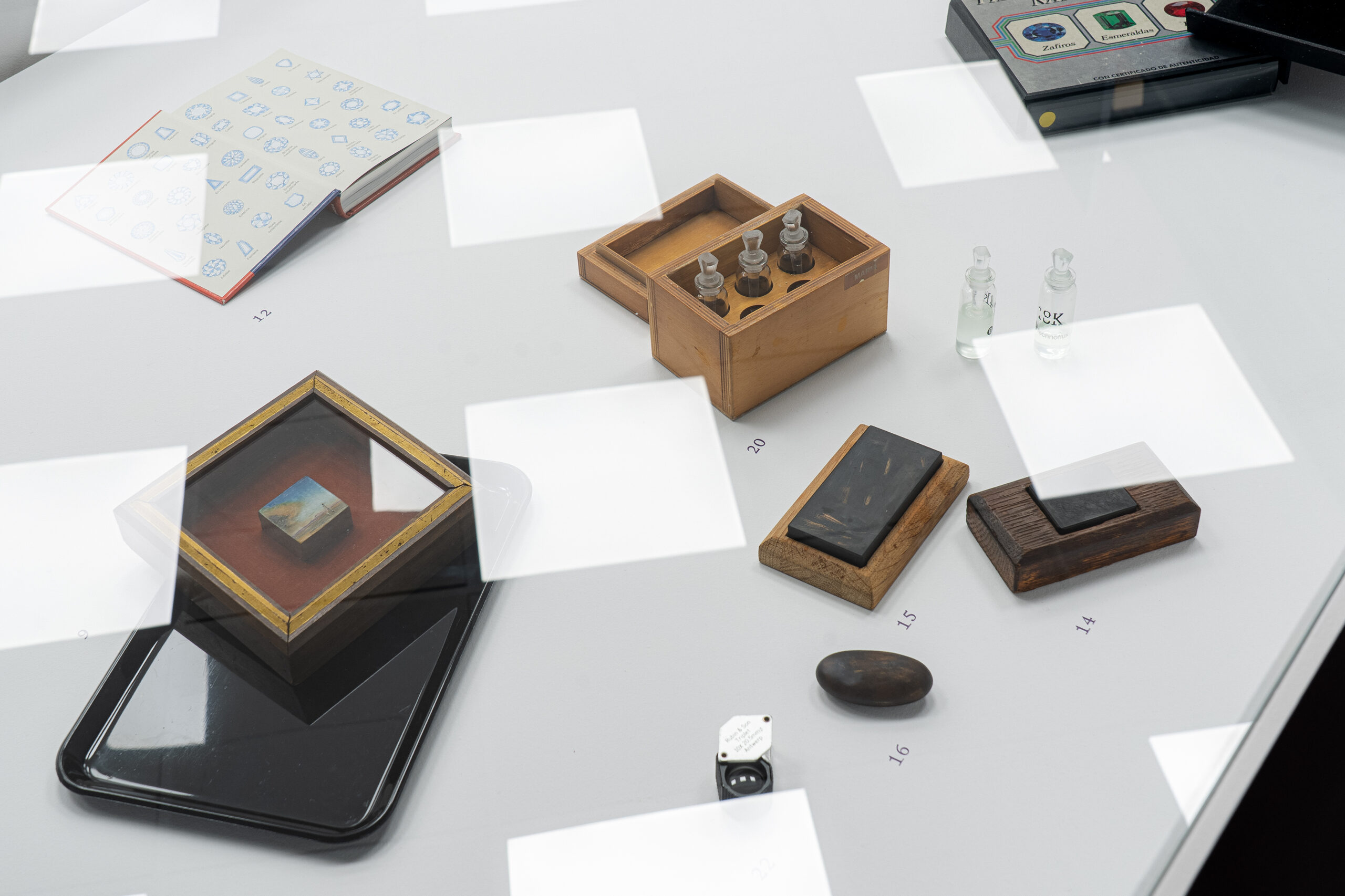
In jewelry and coins, the experienced craft of appraisers intervenes, such as that of the watchmaker – and often female -, and also the touchstone, a small jade used to test the purity of precious metals: the piece to be checked is rubbed on it and a drop of nitric acid is applied to reveal its composition. The method was already used in ancient Greece to verify the purity of gold and continues to be used; Some of those instruments have been arranged in a display case, next to a jewelry box belonging to Garrido’s grandmother.
Cristina Garrido. Touchstone. The House On. Photography: Maru Serrano, 2026
Cristina Garrido. Touchstone. The House On. Photography: Maru Serrano, 2026
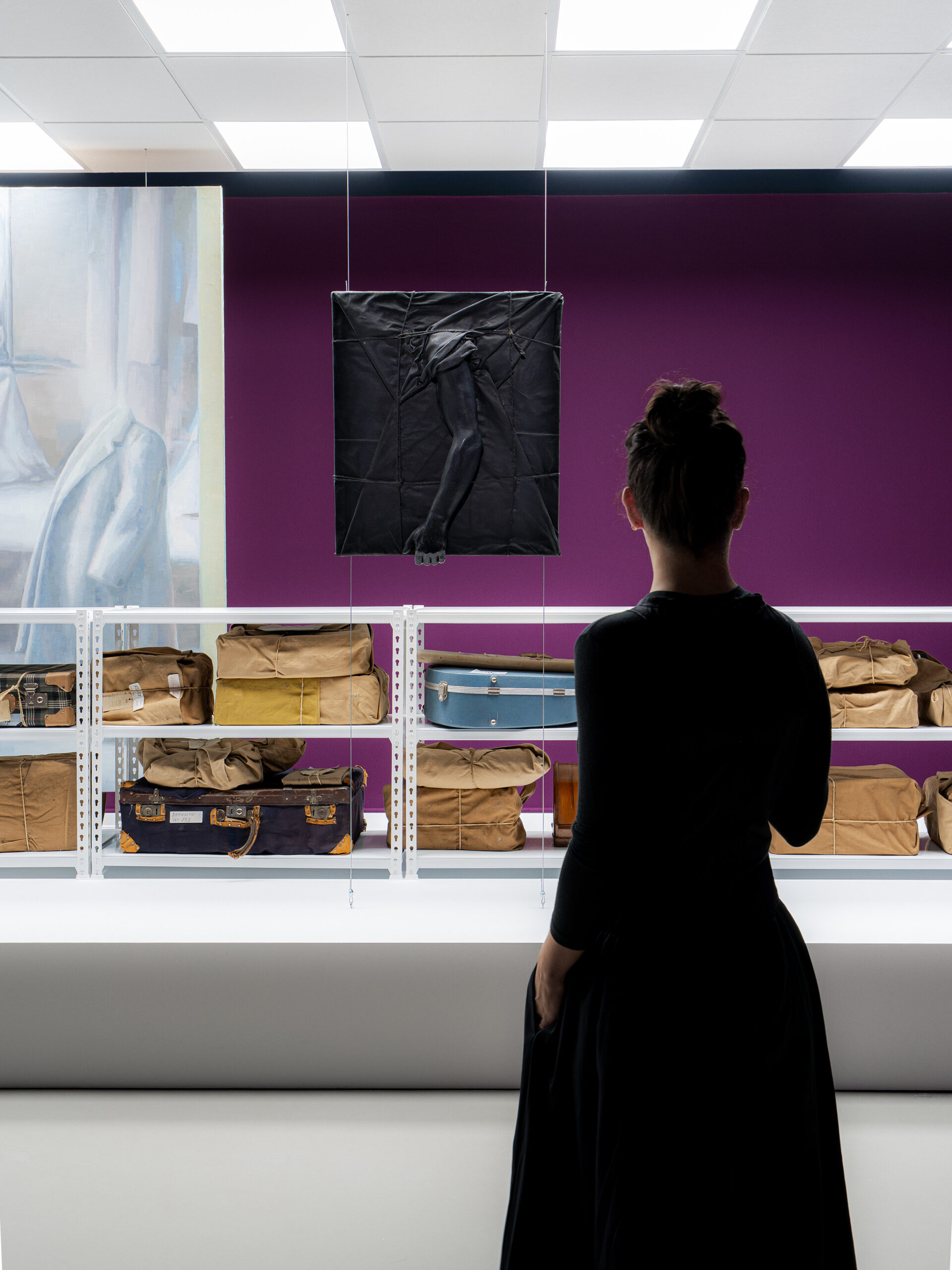
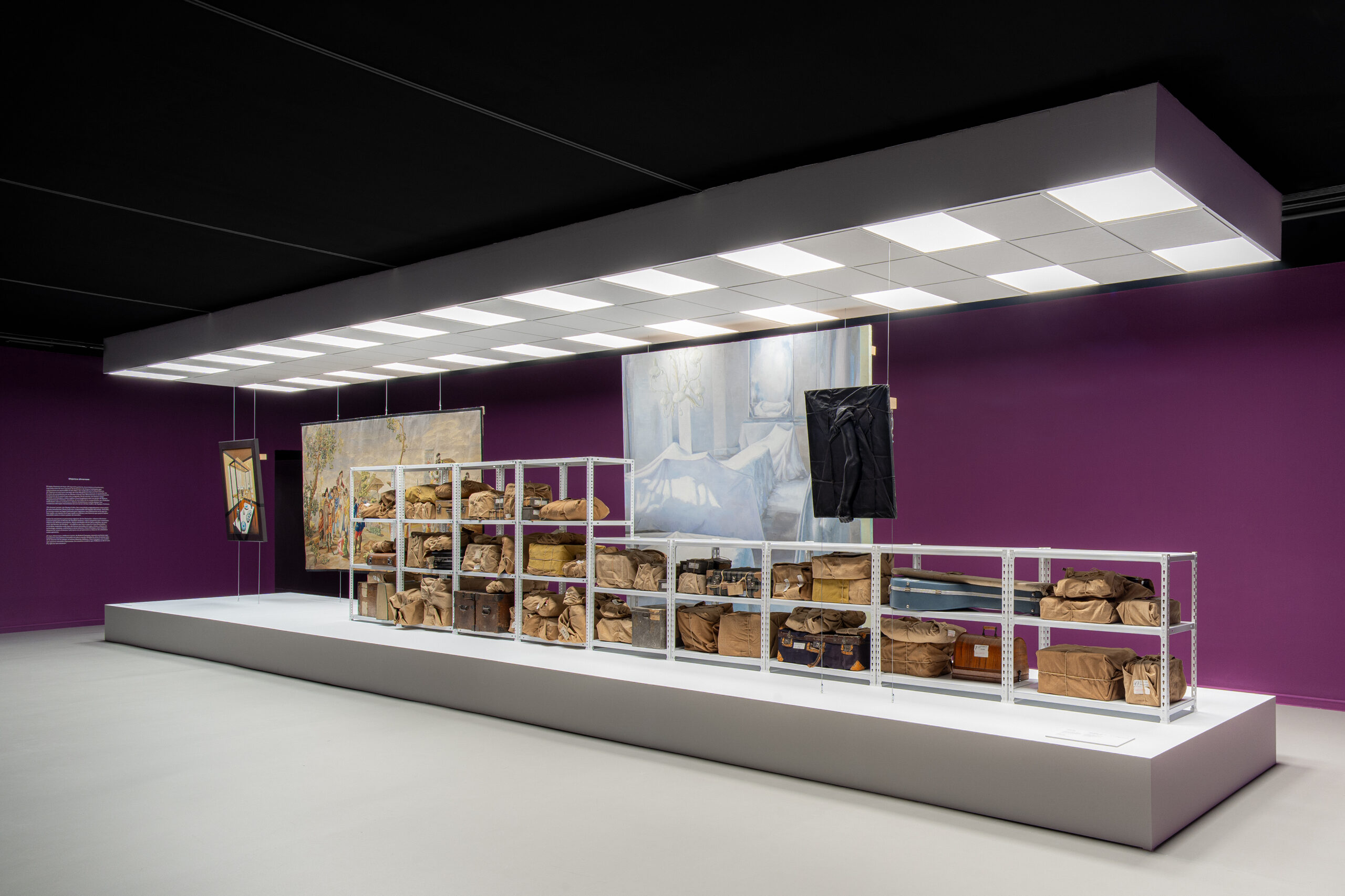
Beyond these jewels, and in what was the headquarters of a pawn shop, this Madrid author continues studying what and who makes a work valuable and what role the contexts in which it is presented play: said value is not approached as an inherent property of the pieces, but as an evident quality that grows and decreases; it is contributed and denied. They denied it, decades ago, to the accumulation of musical instruments, encyclopedias, sewing machines, suitcases or household appliances that Garrido had organized in the last room of the exhibition: pawned at the time, no one recovered them or wanted to do so, free of charge, when notified some time later. We sense all these belongings under their original packaging, carefully carried out by professional packers, trained to handle blankets and ropes.
They are disturbing due to their ghostly side, they seem to give rise to a poor intervention and here they are accompanied by a tapestry commissioned by Caja Madrid from the Real Fábrica in the seventies, a sort of pastiche of Goyesque scenes that gives an account of the popular material culture of the 19th century in Madrid; a canvas by Chema Cobo in which furniture appears protected by sheets, which refer to absence as much as these ownerless objects; or the composition of Rafael Canogar The trip. Tribute to Millaresmade upon his death. One arm, that of that artist, carries a wrapped canvas that refers to the works that the canary could no longer devise.
Cristina Garrido. Touchstone. The House On. Photography: Maru Serrano, 2026
Death continues to be another latent “presence” in the exhibition, which culminates with an image by Sánchez Portela, belonging in this case to the collections of the Reina Sofía Museum, in which a line of women waits to pawn belongings when this resource was a more widespread means of subsistence – between two hundred and three hundred people, however, continue to go to the Monte de Piedad in Madrid every day.
Garrido has articulated a very original journey, halfway between the past and the present, in which the sought-after art and the forgotten object, even the viewer himself, seem to be part of a great evanescent vanitas.
Cristina Garrido. Touchstone. The House On. Photography: Maru Serrano, 2026
Cristina Garrido. “Touchstone”.
THE HOUSE ON
C/ Ronda de Valencia, 2
Madrid
From October 9, 2026 to March 7, 2027