At the end of last August we heard the news of the death of Ximo Michavila, the Valencian artist who began his journey in the seams of academicism to gradually make a non-cold geometry the basis of his language and even approach abstraction from paths already advanced by the Impressionists.
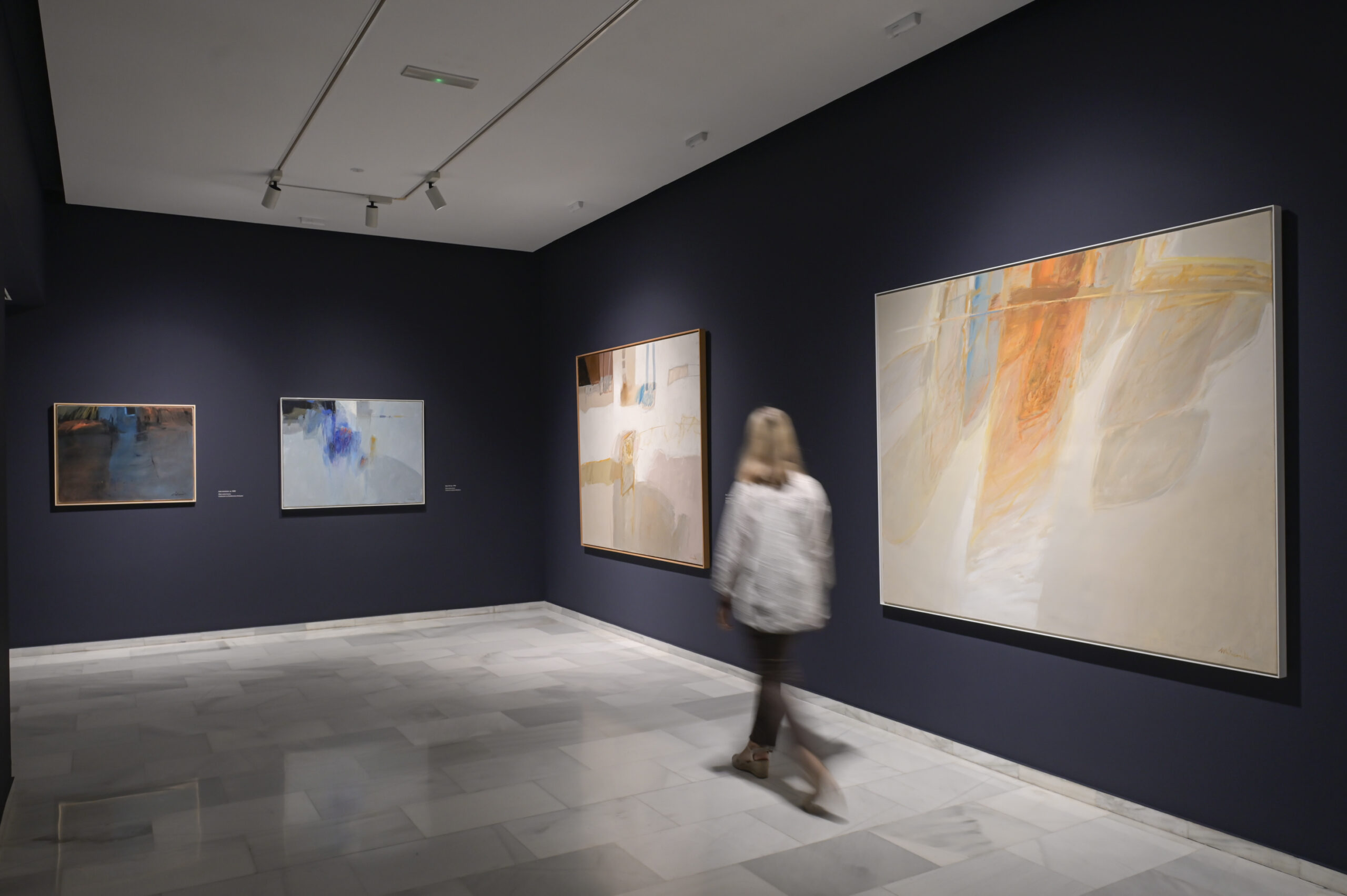
At that time, the Bancaja Foundation was finalizing the details of the anthology intended to commemorate the century that has passed since its birth, an exhibition that has been curated by Juan Manuel Bonet and that reviews his six decades of career, from his fully figurative beginnings to his musically inspired pieces, through his geometric compositions or close to constructivism of the sixties and seventies and his landscape abstractions dated around the eighties. The most recent pieces in the exhibition, which brings together nearly a hundred, date from 2004 and some will be unpublished to the public, such as night call (around 1980), Dawn (2004) or R+A2:C7-646 (1982).
Born in L’Alcora, in a family linked to education and sensitive to culture, Michavila was a victim of the Civil War in his childhood – a bombing in Sagunto caused him physical and also intimate injuries – and, following the family trail, he first trained as a teacher before enrolling in the Royal Academy of Fine Arts of San Carlos and studying, later, in El Paular, Segovia and Rome, where he immersed himself in the work of Giorgio de Chirico, Sironi, Morandi, Magnelli or Fontana. From that stage of learning, his representations of the Cathedral of Segovia – based on Zuloaga -, the Plaza Mayor of Turégano – from a much more synthetic vision – and the mountain range of Cuenca, which he observed from a perspective similar to that then cultivated by the School of Madrid, have ended up in Valencia. Of course, Valencia and its surroundings also passed through his canvases: in the nostalgic suburban circus (1956), in two geometrizing views of the port (Boats at the dock1956, and Shipyard1958) and in other synthetic representations of the Albufera, which prefigure those that he would develop in his later active times.
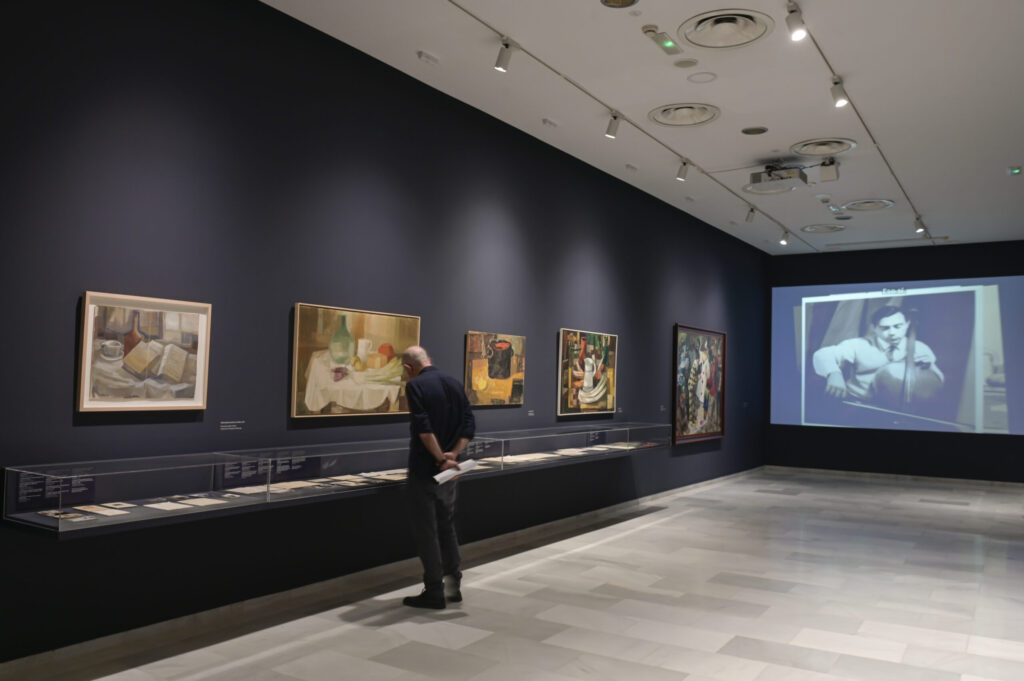
Ximo Michavila. Centennial (1926-2026). Bancaja Foundation, Valencia
Without leaving aside teaching, he was part, in successive years, of the groups that marked avant-garde creation in Valencia: Los Siete, Parpalló, the Mediterranean Artistic Movement and Before Art. In some and others he was able to coincide with Ángeles Ballester, Vicente Castellano, Aguilera Cerní, Juan Genovés, Juan Portolés Juan, Eusebio Sempere and more recent figures such as Elena Asins, Soledad Sevilla, Teixidor or Yturralde. In this phase Michavila gained international projection, being able to exhibit in Italy or Argentina and also at the 1960 Venice Biennale, and above all he developed a personal and creative friendship with Amador, Luis Caruncho (who included him in a constructivist collective held in Kandinsky, his Madrid gallery), Amadeo Gabino, José María Iglesias, Palazuelo, Gerardo Rueda and Jesús de la Sota.
Under his guidance, his work made its way towards geometry and also expanded the diversity of its formats, from easel painting to murals for churches and public buildings or the decoration of ships. In fact, it is not possible to appreciate Michavila’s entire career without analyzing his work as a muralist, figurative first – and an observer of the primitive masters and the Italian Novecento – and then geometric, often using steel. The entirety of his geometric legacy was not unscathed, if we look at it, by Italian spatialism, in terms of the use of relief and monochrome, even though he also had among his references Herbin, the Russian constructivists, Max Bill, Richard Mortensen, Vasarely or the kineticists and that he was not afraid of contaminating his motifs with allusions to the cosmos or urbanism.
The golden decade of his work with lines was between 1968 and 1978, and in this exhibition images such as Galaxy (1976) or Dawn (1972).
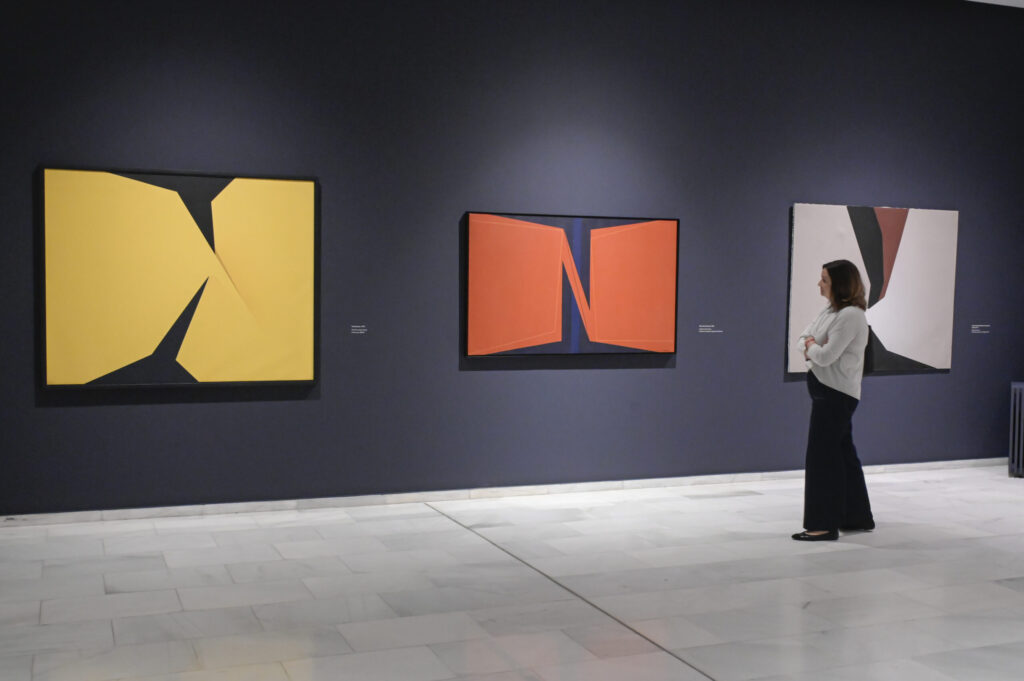
Ximo Michavila. Centennial (1926-2026). Bancaja Foundation, Valencia
He would almost never abandon that linearity, with its emotional and lyrical imprint, until 1978 and from his series The Llacderived from his love for Albuferaand its subseries The river. Then, after a certain crisis that led him to consider the geometric path exhausted, he began to immerse himself in those pieces with an almost abstract tendency and diluted brushstrokes that would occupy him for a decade and would be antecedents of his compositions based on music: in the cycle Counterpointhe dedicated works with an intense palette to contemporary authors such as John Cage – whom he heard at the first Encuentros de Pamplona -, Kurt Weil, Arnold Schönberg and Pierre Schaeffer.
We can say that nature – the waters, the vegetation and the simple constructions that sprung up around them – were the other great axis of his production along with geometry, and that he was not oblivious to its deterioration nor did he stop being concerned about it. He worked from his own photographs and notes from life and some of these works were progressively exhibited in the Theo Valencia room, which would later be called La Nave. He knew how to capture the light tinged by the reeds or on the rice fields, the light present between the crops, the movement of the reeds or algae or the passage over the waters of the wind and clouds. From this moment stands out L’alqueria (1981), although we will detect a slight geometric survival that evokes Kupka in El Palmar (1980).
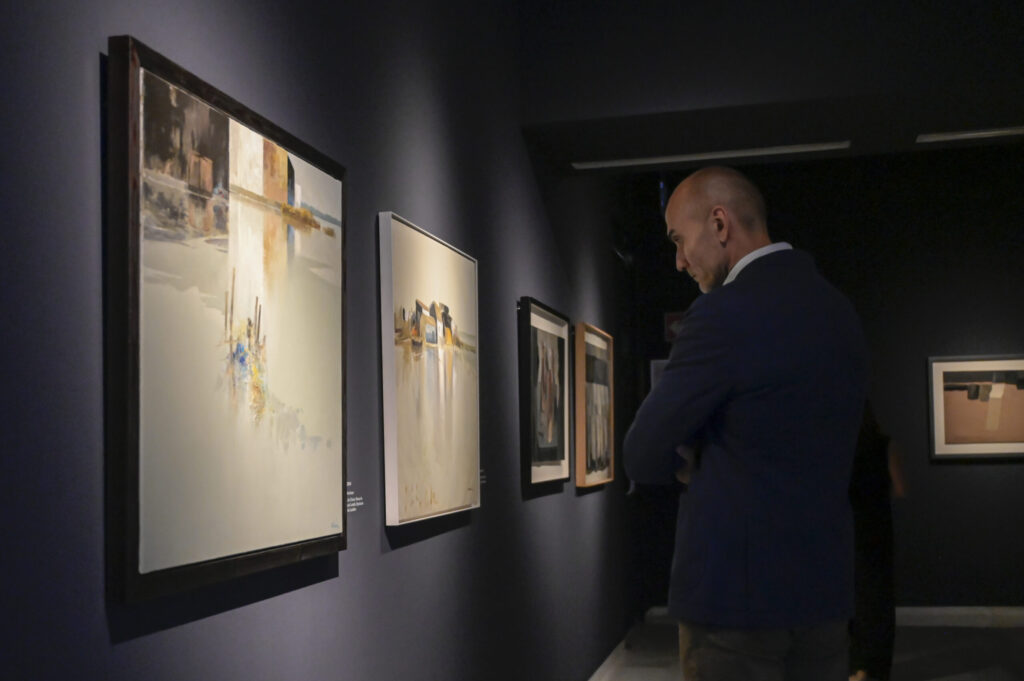
Ximo Michavila. Centennial (1926-2026). Bancaja Foundation, Valencia
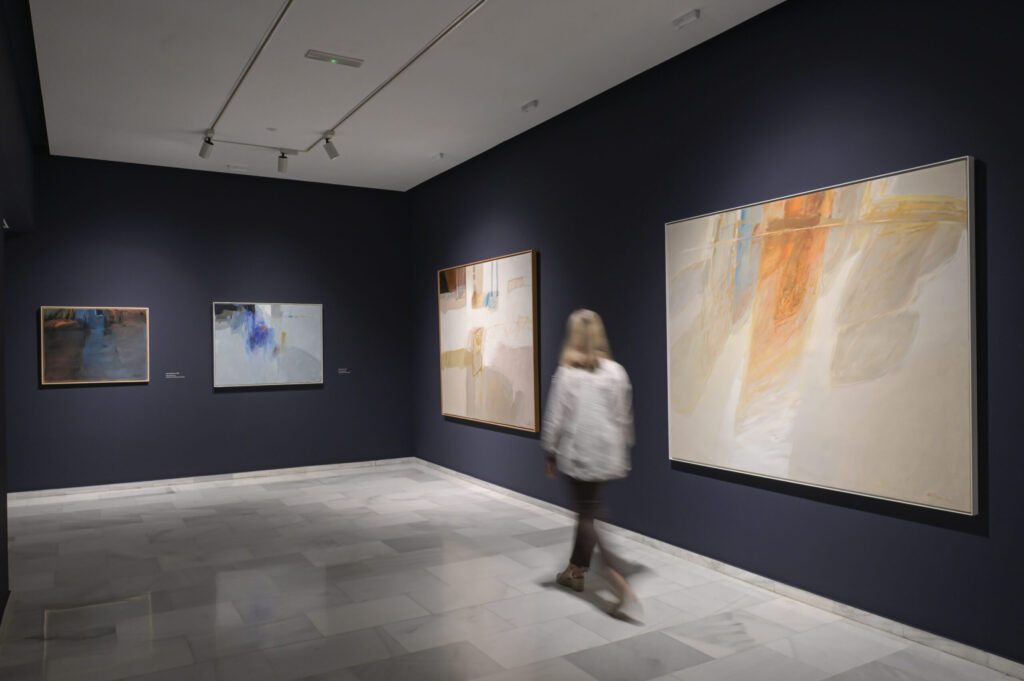
Ximo Michavila. Centennial (1926-2026). Bancaja Foundation, Valencia
The assembly is completed with abundant documentation: this artist’s archive is preserved by the General and Photographic Archive of the Provincial Council of Valencia, which has lent original catalogues, brochures, exhibition posters, photographs, correspondence, designs and images of his work as a theatrical set designer for the occasion; He devised sets for texts by Max Aub, Samuel Beckett, Jean Cocteau and García Lorca.
His trajectory was not linear nor did it stagnate; it seems that he settled down, remaining attentive almost equally to influences and his own demands.
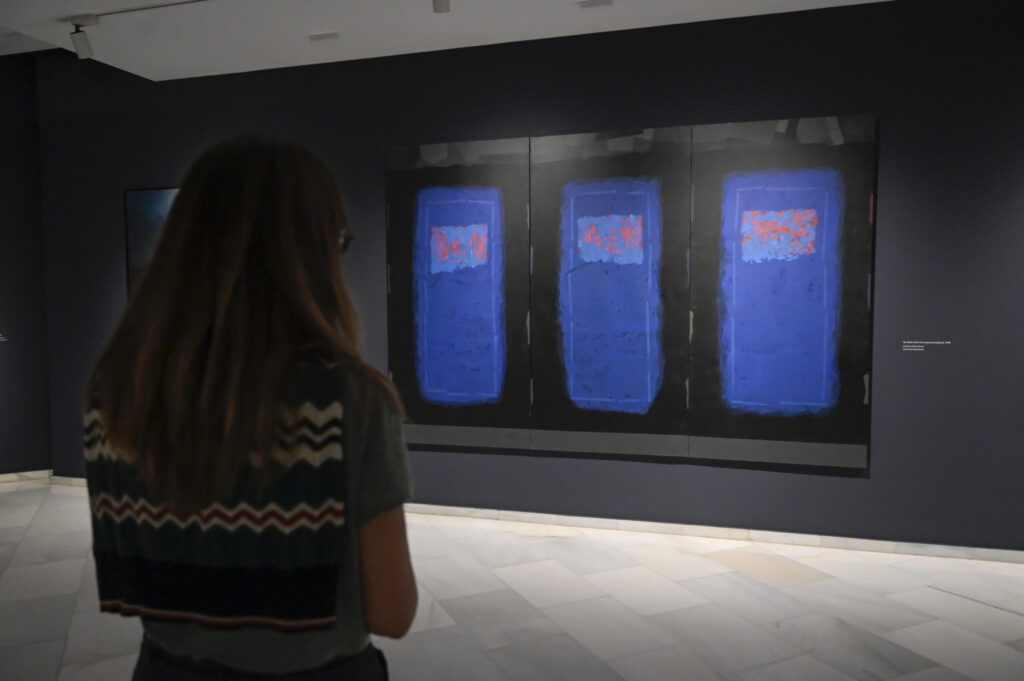
Ximo Michavila. Centennial (1926-2026). Bancaja Foundation, Valencia