After receiving a written request from Bridget Houseago, director of the Lyme Regis Museum specializing in the paleontological heritage of the Jurassic Coast, Liberal Democrat parliamentarian Edward Morello called for a reform of the regulation of fossil exports in the United Kingdom, so that they can be classified as national treasures.
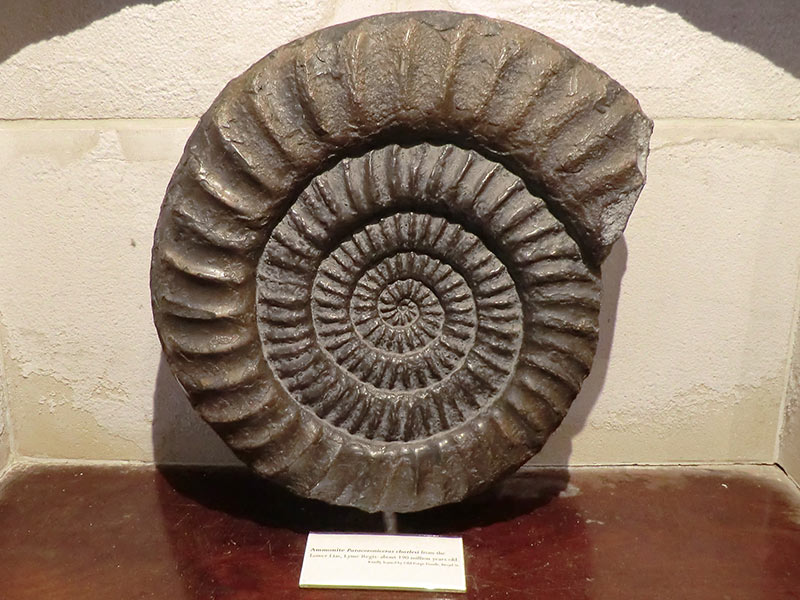
This request follows the publication, on August 8, of an investigation by the British daily The Guardian revealing the sale of a private collection of fossils taken from the Dorset coastline – part of the so-called “Jurassic Coast” – to the Abu Dhabi Natural History Museum in 2025. It belonged to private collector Chris Moore, and includes hundreds of specimens which officials at the Lyme Regis Museum have highlighted as exceptional.
Before considering selling his collection outside the country, Chris Moore approached the Natural History Museum in London and the Amgueddfa Cymru Museum in Wales, but neither institution had the funds necessary for the acquisition. For its part, the Lyme Regis Museum told the Guardian that it had not been made aware of the sale, even though its teams were familiar with this collection, which they considered to be one of the best private collections in Dorset.
MP Morello’s request aims to fill a gap in UK legislation relating to the protection of national heritage. The Reviewing Committee for Exports of Works of Art and Objects of Cultural Interest (Reviewing Committee) has the possibility to recommend to the Minister responsible for Culture to delay the issuance of an export license for works threatened with leaving the territory, in order to give priority to potential British buyers, or to allow a museum to raise the funds necessary for its purchase. This mechanism can only be deployed provided that the work corresponds to at least one of the three “Waverley criteria” – historical connection, aesthetic importance, scientific interest –, making it possible to prove that “his departure would constitute a loss for the country”.
However, the UK cultural goods export control regime only covers “manufactured or produced” objects. Fossils, which do not meet this definition, therefore escape this system and cannot, as they stand, be examined using the Waverley criteria. The reform defended by Edward Morello aims to allow paleontological specimens of exceptional scientific or national importance to benefit from a comparable mechanism of temporary suspension of their export.
In France, paleontology is also not among the independent criteria allowing private property to be qualified as a national treasure under the Heritage Code. In 2018, the Court of Cassation heard the case of Cretaceous fossils seized in Le Havre. The investigating chamber of the Lyon Court of Appeal admitted that they could fall into the category of cultural property, or even national treasures. In a judgment of September 12, 2018, the criminal chamber overturned this decision, considering that the judges had not sufficiently justified, with regard to the Heritage Code, that the fossils concerned could receive these qualifications. The Court did not, however, lay down the general principle according to which a fossil could never constitute a national treasure.