West Bank. Since 1995, the West Bank has been divided into three zones (A, B and C) administered either by Israel (zone C: East Jerusalem and the Jordan Valley), or by the Palestinian Authority (zone A: Jericho, Ramallah, Bethlehem, Nablus, Jenin, Tulkarem), or jointly (zone B: villages in the center and west of the West Bank). The archaeological sites in each area therefore depend on different organizations. On the Israeli side, it is the “Staff officer of Archaeology” of the Civil Administration, reporting to the Ministry of Defense, who is in charge: Israel has temporarily occupied the area since 1967, which cannot therefore be administered by the Ministry of Heritage.
On the proposal of Likud and far-right religious parties, the bill approved at first reading provides for the creation of a new civil authority to supervise all archaeological sites, called “Heritage Authority in Judea and Samaria”. In official Israeli communications, “Judea and Samaria” refers to the West Bank, but this terminology is not recognized internationally. This authority would report directly to the Israeli Ministry of Heritage and no longer to that of Defense, and would ensure the management of all sites in the West Bank. The first paragraphs of the text set out the objective of “establish the direct responsibility of the State of Israel for the management of antiquities, heritage and archaeological sites in Judea and Samaria.” The text also provides “a legislative framework to prevent and reduce damage (to these sites), in particular the protection, conservation, development, accessibility and rescue of Antiquities and sites”. This is therefore a change in the mode of administration established by the Oslo Accords.
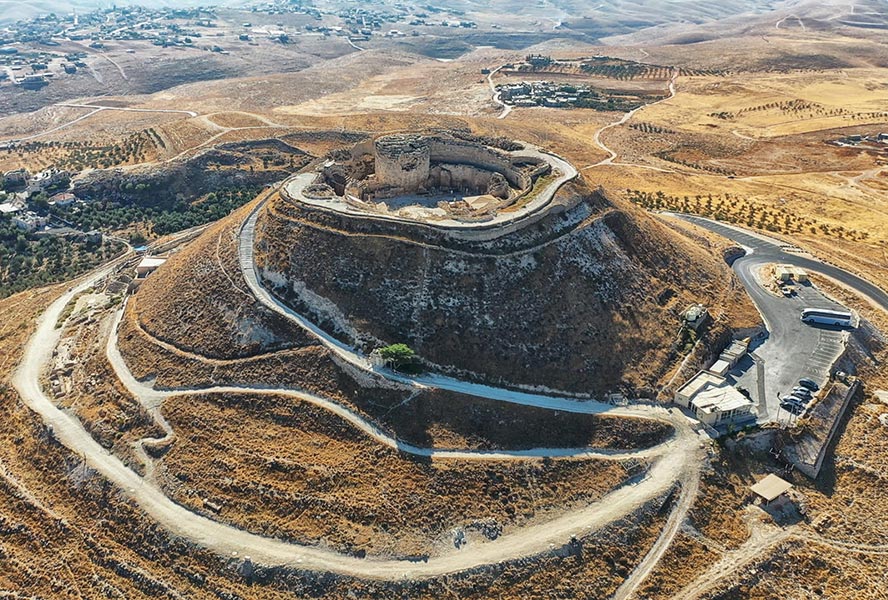
Among the arguments put forward to justify the text, MP Amit Halevi, a member of Likud, affirms that the conflict against Iran and Hamas must include “a cultural victory”thus making the link between ongoing wars and the preservation of Israeli heritage. This text comes after two years of heated debates on the accelerated colonization of the West Bank and the status of the archaeological sites located there: in addition to the construction of illegal settlements, several sites have recently been damaged by Israeli settlers, without condemnation from the government. Despite this destruction, the ultra-nationalists are demanding total management of the archaeological sites of the West Bank, including the biblical cities of Samaria, Jericho and Shiloh, the caves of Qumran, the palace and the tomb of King Herod (see ill.).
The report from the NGO Emek Shaveh
According to the Israeli NGO Emek Shaveh, which documents attacks on heritage, the main issue lies in the transfer of heritage management to a civil authority, acting “a de jure annexation”according to his lawyers. The second issue is the extension in zones A and B of excavation and heritage preservation activities by Israel: Emek Shaveh specifies that for several months the Staff Officer of Archeology had already seen his prerogatives extended to these zones, in violation of the Oslo agreements. Emek Shaveh adds that under the 1954 Hague Convention, the occupying authority must “manage Antiquities as legal guardian” for the benefit of the occupied populations and not for its own account. Finally, according to the NGO, this bill “ politicizes archeology »using the term” heritage ” in the title, and by creating an authority linked to the government and its supporters among the settler communities. The members of this authority would in fact be appointed from among the representatives of the settlers, excluding the Palestinian Authority. If the exploitation of heritage has existed in Israel since its creation (read JDA 625), this bill, once adopted, risks ratifying an annexation of zones A and B, preventing the Palestinian Authority from accessing the archaeological sites under its custody since the Oslo Accords.