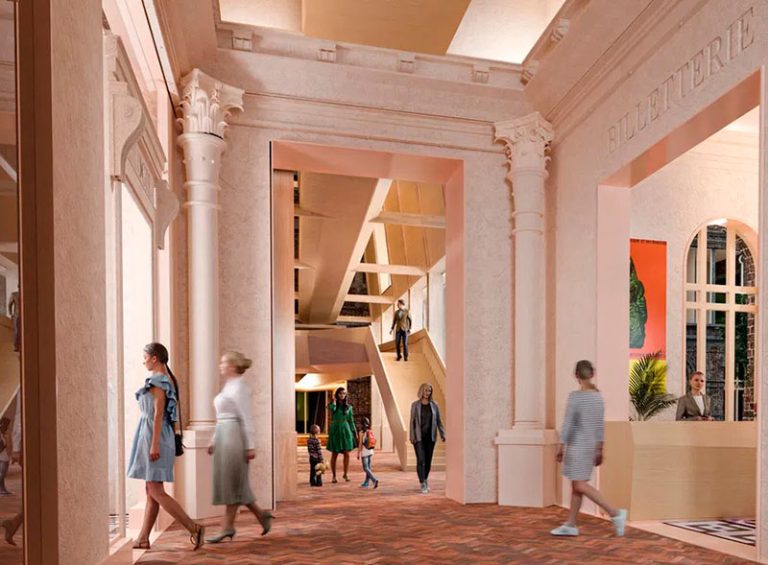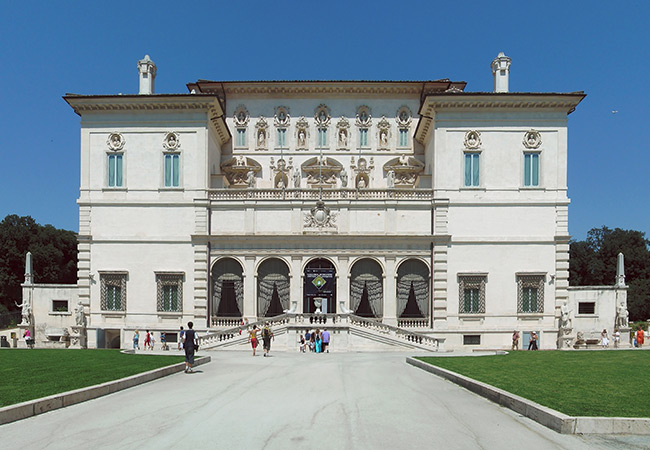
Rome’s Borghese Gallery has sparked controversy by launching plans to build a new building attached to its 17th-century villa. The museum management justifies the extension by several concrete needs. It wishes to increase public reception capacity, streamline flows, improve security and create spaces for mediation, conferences and temporary exhibitions. The new building would also make it possible to exhibit works that are rarely shown today.
The Borghese Gallery welcomes a constantly increasing number of visitors and operates with a strict reservation system. Each two-hour slot is limited to around 180 people and sells out well in advance during peak season. Attendance will reach nearly 630,000 visitors in 2025, compared to just over 500,000 ten years earlier. A significant part of the collections also remains kept on the third floor and in the reserves, due to lack of exhibition space.
At the head of the museum since 2020, art historian Francesca Cappelletti therefore launched a “technical sponsorship” procedure at the start of the year intended to finance a feasibility study for an extension attached to the villa. The engineering and architecture company Proger offered to finance this study for around 875,750 euros and obtained the role of technical sponsor. The contract provides that Proger covers the costs in exchange for institutional visibility linked to the extension
The municipality of Rome reinforced the solidity of the file with a deliberation adopted in May. Mayor Roberto Gualtieri recognized the “public interest” of the extension and mandated municipal services to support the procedure. The municipality points out, however, that any intervention must respect the opinions of the Environment, Town Planning and Culture departments as well as those of the municipal superintendence, the park falling under municipal property.
Heritage associations immediately denounced the project. Italia Nostra Roma and the Ranuccio Bianchi Bandinelli association published a joint text entitled “Giù le mani dalla Galleria Borghese” (“Don’t touch the Borghese Gallery”), calling on the institutions to abandon the new building. They affirm that the villa and its park form a coherent whole where the relationship between architecture and nature constitutes a heritage in itself. According to them, any construction within the wooded area would destroy the landscape balance of Villa Borghese.
Opponents also criticize the use of a sponsor. Italia Nostra and Bianchi Bandinelli believe that private funding of the study introduces an asymmetry of interests and implicit pressure in favor of expansion. They consider it problematic that a private operator like Proger benefits from a considerable image advantage by associating its name with a transformation of a world-famous museum. They also fear that a logic of valorization will lead to an increase in commercial flows and services to the detriment of the quality of the visit and the conservation of the site.
The protest has spread to citizen groups. The Amici di Villa Borghese association refuses any new construction near the gallery, while the SOS patrimonio storico di Roma group has mobilized its members to send protests to the political authorities and the museum management. These collectives are already discussing administrative and legal appeals.
Art historians also intervened in the debate. In a virulent column, Tomaso Montanari describes the extension as “blasphemy” against national heritage. He compares this hypothesis to the addition of a modern growth on Brunelleschi’s dome and denounces a management logic treating the museum as a hypermarket intended to increase flows and revenue.
The controversy quickly took on a national political dimension. Fabio Rampelli, vice-president of the Chamber of Deputies and elected representative of Fratelli d’Italia (far-right), attacked the initiative head-on and demanded the resignation of Francesca Cappelletti. According to the Radiocolonna website, he criticizes the director for not having consulted the Minister of Culture before undertaking an operation of such magnitude and also criticizes the role of Proger.
Since the 17th century, the Borghese Gallery has housed the collection assembled by Cardinal Scipione Borghese, who had the building built between 1613 and 1616 as a showcase for his works rather than as a residence. The collection today brings together sculptures by Bernini, including Apollo and Daphne, The Abduction of Proserpina and David, as well as paintings by Caravaggio, Raphael, Titian and Veronese. The Italian state acquired the estate at the beginning of the 20th century and opened the park to the public.