Two Polish nationals, Erwin Bankowski (50 years old) and his daughter Karolina Bankowska (26 years old), orchestrated, between 2020 and 2025, one of the most audacious artistic scams of the past decade in the United States. They managed to smuggle more than 200 counterfeit works attributed to Andy Warhol, Banksy, Pablo Picasso, Andrew Wyeth, Raimond Staprans, as well as Native American artists Fritz Scholder and Richard Mayhew, into the biggest auction houses and galleries in New York and across the country, for a total amount of at least $2 million (€1.7 million).
The father and daughter appeared in Brooklyn federal court last April. They pleaded guilty to conspiracy to commit wire fraud and misrepresenting Native American-produced property. They face a maximum sentence of 20 years in prison. According to The New York Times, however, federal guidelines recommend sentences of 33 to 41 months. Added to this are at least $1.9 million (1.7 million euros) in damages and possible deportation to Poland at the end of their sentence. The final sentencing date has been set for August 5.
Erwin Bankowski and Karolina Bankowska resided in Lawrence, Mercer County, New Jersey. They presented a respectable appearance. Karolina moved around the galleries and auction rooms, playing the role of an heiress anxious to sell family treasures. His father probably ensured logistical coordination and the link with the forger based in Poland. The duo began taking action in 2020, commissioning meticulous imitations of works by big names in contemporary and modern art from a Polish artist, whose identity has not been made public.
The Bankowskis favored lesser-known works by big names: early works by Andrew Wyeth, militant engravings by Banksy (notably a piece on cardboard denouncing the war in Iraq), less famous paintings by Warhol, or even landscapes by the African-American and Native American painter Richard Mayhew. Targeting less documented pieces reduced the risk that an expert or savvy collector would immediately spot the deception.
The most ingenious link in the scam lay in the fabrication of false provenances. According to Artnet the Bankowskis developed a multi-layered method. The works were presented as having belonged to private collections of individuals close to the artist, to collections of defunct companies, or to galleries that have since closed, making any verification almost impossible. The father and daughter bought old books to engrave custom stamps reproducing the stamps of long-gone art galleries, which they then affixed to aged paper. Falsified certificates of authenticity completed the arsenal of legitimation. The forgeries were consigned to renowned galleries and auction houses.
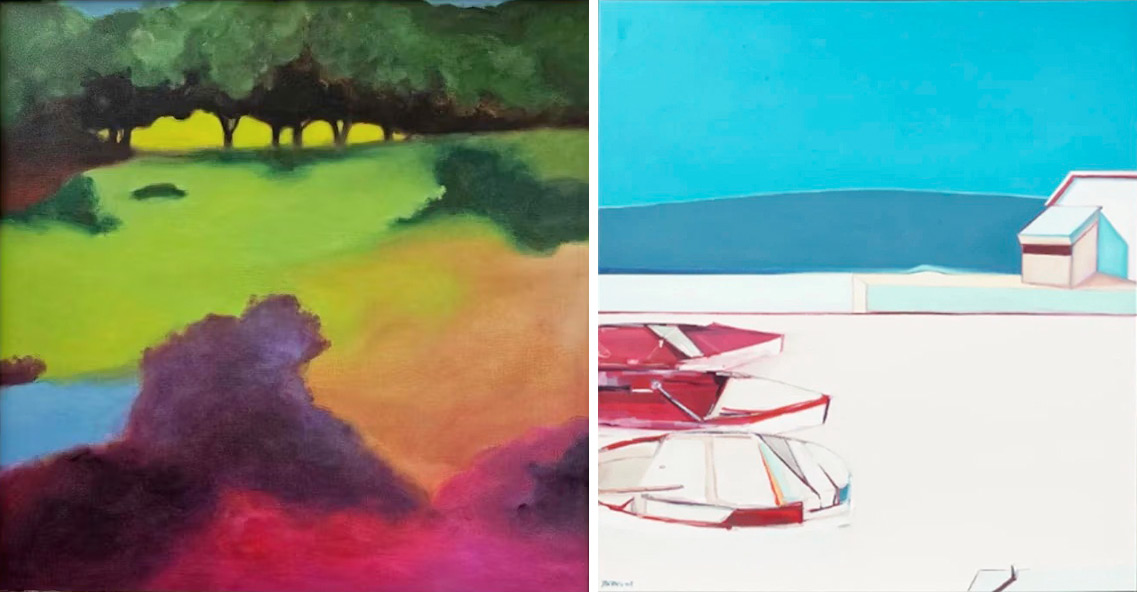
Brands like Bonhams, Phillips, DuMouchelles, Freeman’s and Antique Arena have agreed to put some of these works on sale, without discerning the deception. The highest known sale concerns a colorful landscape signed by the name of Richard Mayhew, sold for 160,000 dollars (137,000 euros) by the DuMouchelles house in Detroit. A fake Warhol depicting a nude was purchased for $5,500 (4,700 euros). A piece attributed to Banksy, executed on cardboard and linked to the war in Iraq, would have found a buyer for around 2,000 dollars (1,700 euros).
The first suspicions emerged during a visit by Karolina Bankowska to the private gallery of New York dealer Robert Rogal, about a year before their arrest. She presented herself with a painting by Andrew Wyeth, a watercolor landscape similar to the artist’s early works, which she wanted to consign, estimating to obtain between 20,000 (€17,000) and 30,000 dollars (€25,700). Robert Rogal had accepted, but with doubts: “The provenance was a little unclear. But she seemed credible. It was not an obvious counterfeit.”. He ultimately refused to put the work up for sale, in part because the stamp on the back seemed “too clean” to him. When he called Bankowska again to ask for the painting back, she never answered.