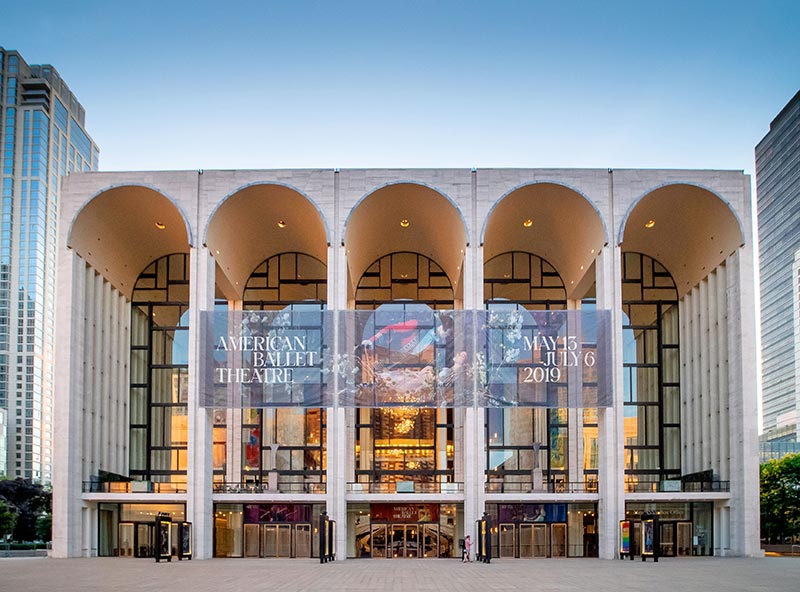
The Metropolitan Opera (Met) in New York has just lost a Saudi partnership presented a few months earlier as a solution to its financial crisis. The institution had in fact announced last September a strategic partnership with the Saudi government, presented as potential support of up to 200 million dollars (185 million euros) over eight years. On paper, the deal was supposed to offer the Met a breath of fresh air. In fact, it was only a non-binding protocol of intent, with no guarantee of funding. Saudi Arabia withdrew from the partnership, citing the economic consequences of the war in Iran and disruptions to oil exports through the Strait of Hormuz.
The Met was already going through the worst period in its 142-year history. With an annual budget of around 330 million dollars (305 million euros), the main American opera was struggling to emerge from the pandemic. Its ticket revenues only covered about a third of its operating budget, leaving an annual deficit of around $50 million (46 million euros). Since 2022, management had already withdrawn nearly 120 million dollars (111 million euros) from its endowment fund, or more than a third of a reserve estimated at 217 million dollars (201 million euros). In this context, the Saudi partnership appeared to be a possible outcome.
The partnership provided for the Met orchestra and productions to travel to Riyadh every February for a three-week residency at the Royal Diriyah Opera House, a venue still under construction and scheduled to open in 2028 or 2029. Peter Gelb, general director of the Met, assured that this partnership would cover a substantial part of the institution’s needs until 2032 and would stop drawing on reserves.
But the agreement had no binding force. In January, the expected funds still did not arrive, and Peter Gelb publicly admitted his doubts. Faced with this uncertainty, the Met launched emergency measures: 22 administrative positions were eliminated, the remuneration of the highest paid executives was reduced, Peter Gelb himself accepted a reduction in his remuneration, the following season went from 18 to 17 productions and the planned creation of Mussorgsky’s Opera was postponed. The institution is also exploring new sources of income, notably renting the hall to pop artists on evenings without opera. These measures were expected to save 15 million dollars (14 million euros) in the second half of the current financial year, then an additional 25 million (23 million euros) the following year.
The institution therefore finds itself facing an immediate deficit of 30 million dollars (28 million euros) to be filled before July 31. The situation is all the more worrying as a large short-term loan matures in February 2027. The rating agency Moody’s has also repeatedly downgraded the Met’s credit rating, bringing it below the investment grade threshold, a sign of growing market distrust.
Peter Gelb mentions several avenues, notably the sale of Chagall’s murals, estimated at 55 million dollars (50 million euros). A public fundraising campaign must also be launched.