Madrid,
Fifteen years after its last major exhibition in Spain, which took place at the ICO Museum, the MAPFRE Foundation dedicates an anthology to Helen Levitt that now arrives in Madrid after its visit to its Barcelona space KBr. This new retrospective, curated by Joshua Chuang, has the particularity that it is the first to be considered based on the entire production and archives of this New York author – her documentation has only been available for consultation very recently.
Levitt, who died in 2009 at the age of 96, is considered one of the great American photographers of the last century due to the peculiarity of her look at urban life in the popular areas of New York and for her style halfway between the lyrical and the documentary. Her images feature the small moments of everyday life, seemingly banal moments that she turned into metaphorical by considering them potentially representative of the society of her time, and which she also endowed with a certain mystery: one that captivates the viewer, eager to guess an underlying narrative.
And yet… we cannot say that there is. The artist avoided giving too many explanations about her work, she avoided too many clues: she preferred that this information could not detract from her photographs and that they connect with the public through emotion. She pointed out that in her scenes it happens only what you see.
Probably that path, that of sensations, was what led Levitt to be captivated, at a very young age, by literature, theater and cinema, and to pick up the Leica very early, although his training was not long. In a studio in the Bronx, and as an apprentice to J. Florian Mitchell, he was able to learn the technical rudiments of the image; He acquired his first camera at the age of twenty (it was a Voigtländer) and a little later he joined the New York Film and Photo League collective, which emerged in the Great Depression with purposes of social change.
There she met Cartier-Bresson, who had a lot to do with her deciding to pursue an independent career as a photographer; His favorite settings would be related to the neighborhood where he was born: Brooklyn. He documented daily life on its streets, also in other areas of a then humble character, such as the Lower East Side or Harlem, and paid attention above all to childhood and moments dominated by naturalness. He paid attention to the social conditions in which they had to operate, but gradually he wanted to distance himself from the pretension of objectivity to achieve greater ambivalence.
He achieved recognition, more in his country than internationally (his work was published Fortune and P.M; the MoMA gave him an individual in 1943) and, already in that decade of the forties, he would begin to explore cinema and photography in color, although he returned intermittently to black and white. It also progressively opened up to new scenarios, such as the metro and rural areas; He also visited Mexico, a mecca for other American photographers.
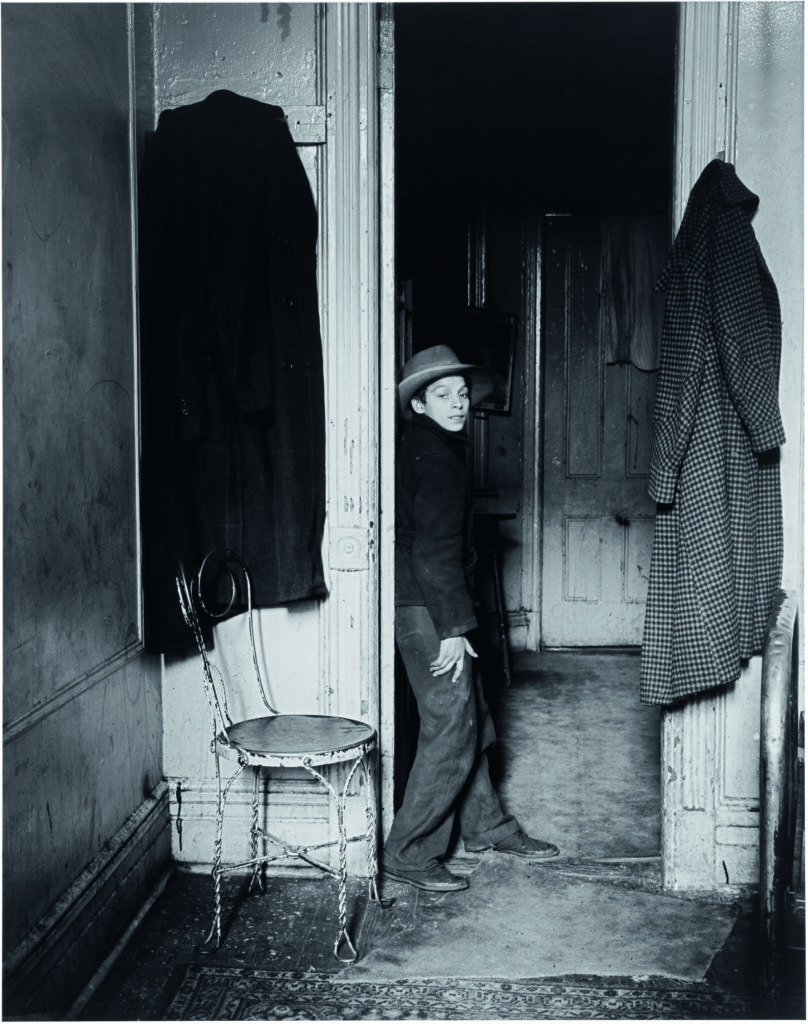
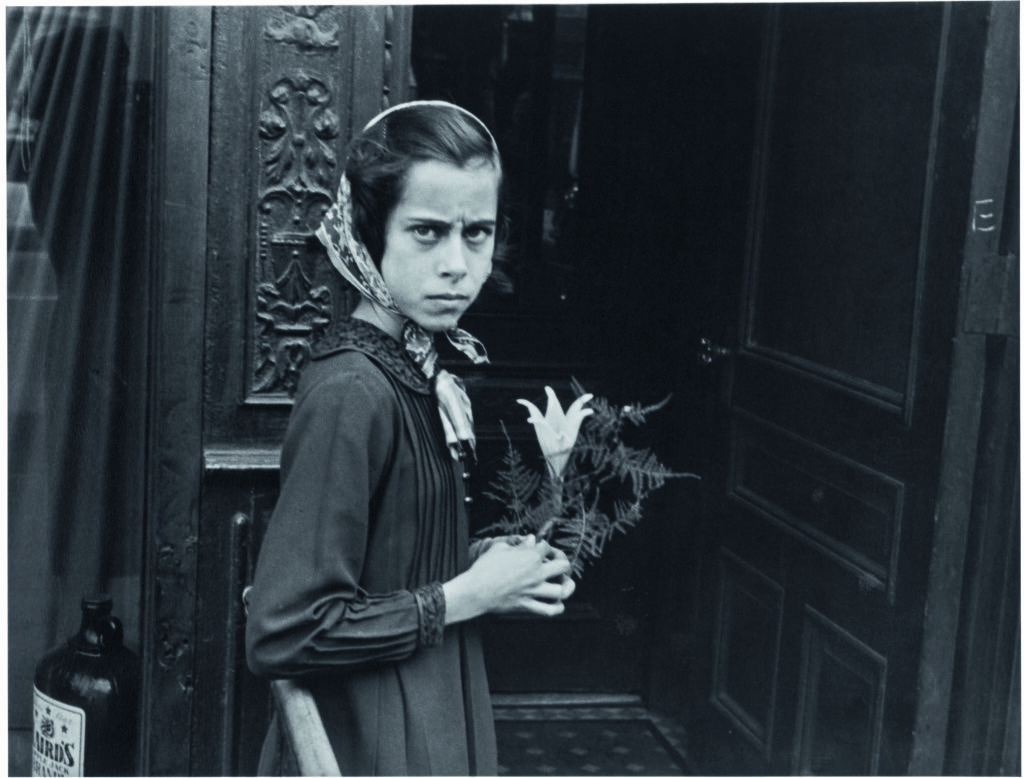
More than two hundred works from all stages have arrived at the MAPFRE Foundation, in black and white and color. The earliest ones give proof of his attempts to define his career, which at first seemed to be directed towards the documentary field, although, as we said, he wanted to escape labels.
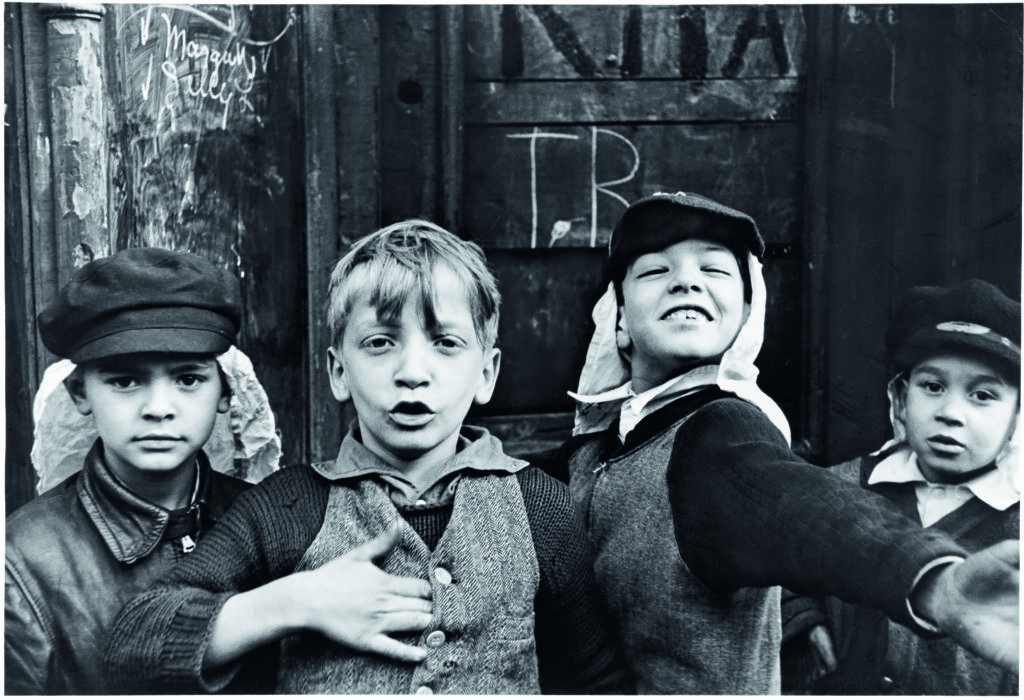
She was a children’s teacher at the New York City Federal Art Project and it is likely that her attention to children and the drawings made with chalk on the street, very varied and lacking in prejudice, began then at a time when, both in the United States and in Europe, taste was opening towards the primitive. Not long after, he entered the circle of Walker Evans, to whom he felt close, and with his 4×5-inch camera and tripod he took some scenes of gypsy families outside and inside their homes. From now on, he would photograph in immigrant-majority neighborhoods mothers chatting, children playing, or pedestrians victims of the heat on sidewalks and lots; They are his most famous creations.
It was Walker Evans, by the way, who introduced him to James Agee and the painter and art historian Janice Loeb, who promoted his production at the time when Levitt wanted to make his way. Agee knew how to understand her well: he embarked on a publication about his photos and in his text he explained that, in addition to portraying lower-class children in New York, he wanted, above all, in line with Hopper, to underline the alienation and nostalgia that were only possible in the city. That book, which came to light late due to Agee’s death, was called A Way of Seeing.
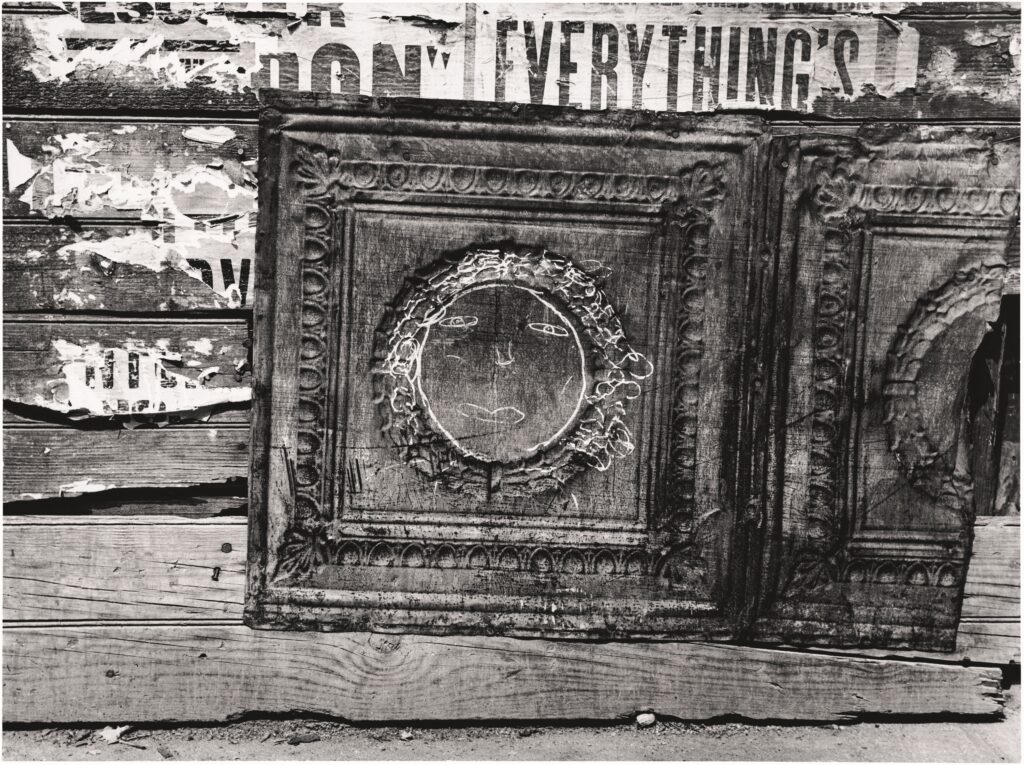
Mexico was, for her as for others, a turning point. He stayed there for about half a year in 1941 and made street scenes, but no longer playful, but crude, always dedicated to the less fortunate. He stated that he was deliberately trying to run his practice beyond the topic of children and their games; In some way, his work then was defined above all by what he wanted to distance himself from: pictorialism, objectivity, sentimentalism and current events.
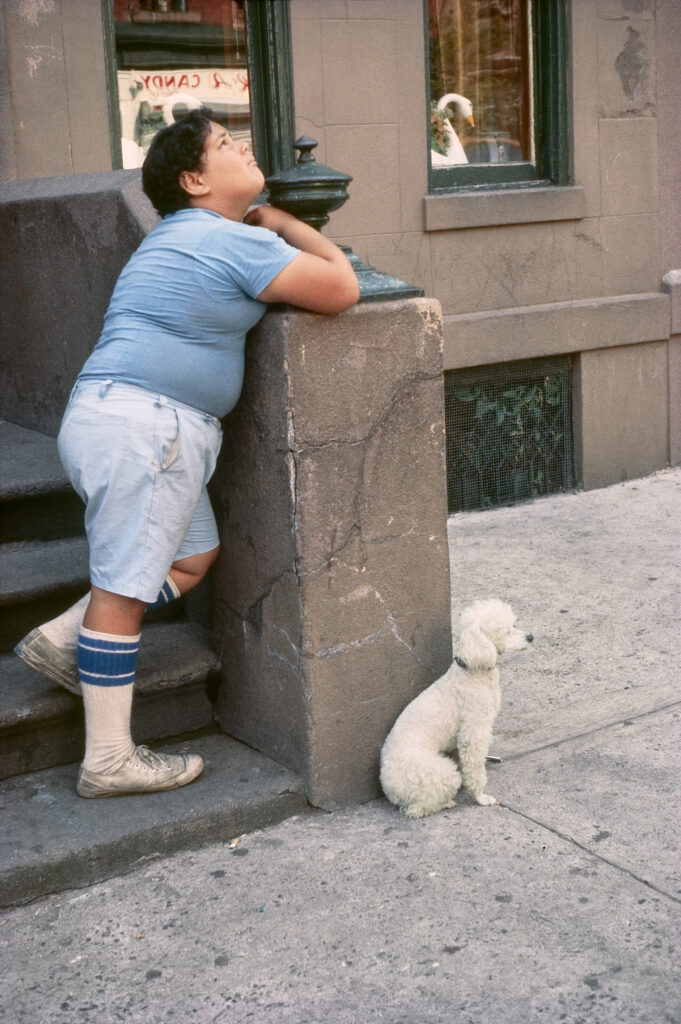
When he worked in color – and a Guggenheim scholarship in 1959 was a great incentive to delve into possible chromatic techniques – he did so as if he were still using black and white, again in New York and on the most dangerous streets of the Bronx. She did not seek, however, to take over the hardest moments or try to move: she remained attached to everyday life, which Joel Sternfeld called a simple humanity.
In the 1960s, Levitt stopped photographing and in 1970 a thief stole most of his color creations; This circumstance led him to resume his work in Brooklyn, New Jersey and New Hampshire and in the suburban area, which offered him a very diverse cast of popular and not so popular types. He wanted to recover what was lost and he paid attention, as the curator points out in the exhibition catalogue, to the laughter that resists in the midst of a rude world.