
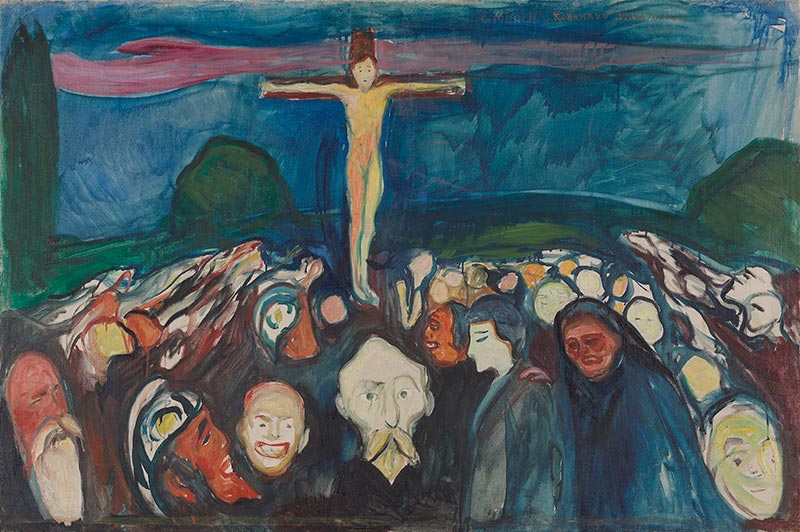
Vienna. Under the title “Gothic Modern”, the two curators, Ralph Gleis and Julia Zaunbauer, offer a highly acute confrontation between works from the late Middle Ages and productions from the 19th and 20th centuries by artists from German-speaking countries and Northern Europe.
Arnold Böcklin (1827-1901), Self-portrait with death as a violinist1872, oil on canvas, 75 × 61 cm, Staatliche Museen zu Berlin, Alte Nationalgalerie.
© Nationalgalerie, SMB / Andres Kilger
The Albertina exhibition shows that the Gothic has been a source of inspiration for several generations of modern artists. If its subject seems a little reheated as it has been treated, the exhibition stands out thanks to its abundance of masterpieces and the accuracy of its comparisons.
The five thematic sections focus on the success of certain iconographies with modern artists. Essential of the genre, the section devoted to the dances of death and the motif of the young girl and Death mirrors emblematic works such as The Three Ages of Life and Death (1509-1510) by Hans Baldung [voir ill.] and the series of “Simulacra of Death” (1524) by Hans Holbein the Younger with the famous Maiden and Death (1908) by Marianne Stokes and the engravings of “Danse Macabre” (1924) by Robert Budzinski.
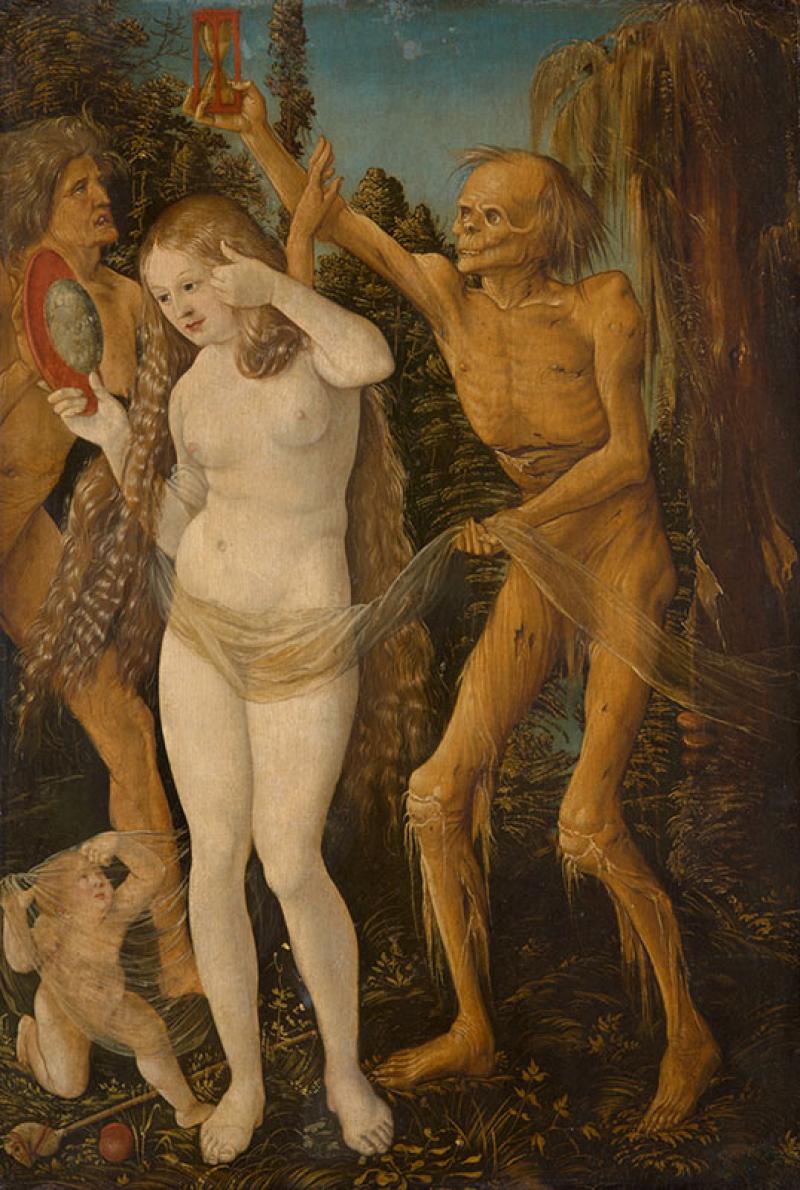
Hans Baldung Grien (1485-1545), The three ages of Life and Deathc.1509, painting on wood, 48 x 32 cm, Kunsthistorisches Museum, Vienna.
© KHM-Museumsverband
The most striking room of “Gothic Modern” is undoubtedly that devoted to the iconography of the Entombment, which remarkably highlights the importance of the dead Christ (1520-1522) by Holbein for several artists whose work maintains a disturbing dialogue with that of the master, like Lemminkäinen’s Mother (1897) by Akseli Gallen-Kallela and engraving The Oppressed (1900) by Käthe Kollwitz.

Hans Holbein the Younger (c.1497-1543), The dead Christ1522, 30.5 × 200 cm, Kunstmuseum Basel.
“Gothic Modern” not only presents paintings, sculptures and graphic arts, it also mobilizes an interesting corpus of decorative arts (furniture, stained glass, tapestries) in order to show the fascination of 19th and 20th century artists for traditional techniques. A stained glass window and illuminations by Gallen-Kallela are among the rare gems of the exhibition.
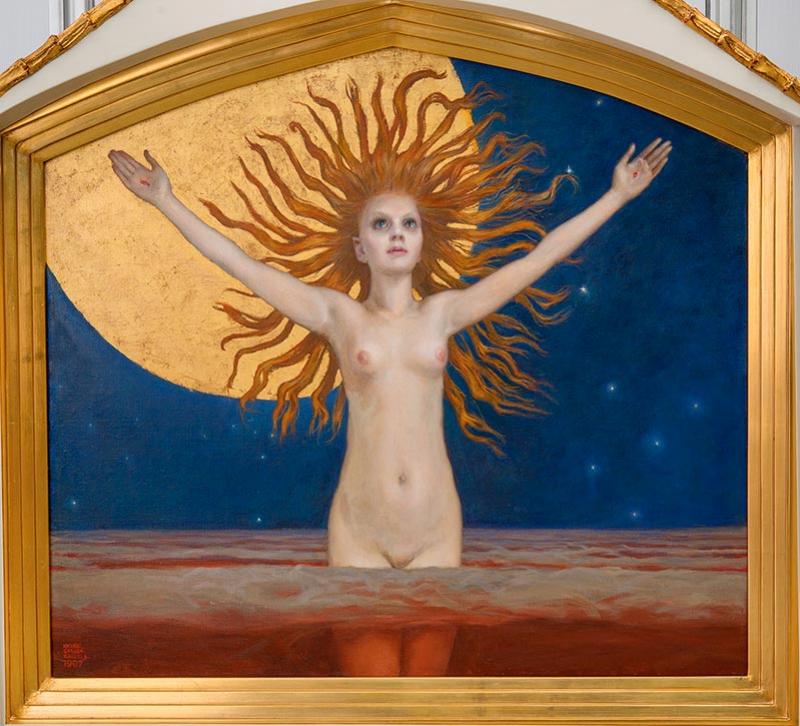
Akseli Gallen-Kallela (1865-1931), Ad Astra (2nd version), 1907, oil on canvas.
© Matias Uusikylä / Signe and Ane Gyllenberg Foundation


