Cleveland,
Filippo Lippi died when his son Filippino was barely twelve years old, but without knowing the work of the former, absolute master of the Renaissance in Florence, it is impossible to understand that of the latter.
Fra’ Filippo Lippi was trained in the Carmelite convent of Santa Maria del Carmine in that city, where in addition to studying the works of the artists who had worked there in the 14th century he could take the measure of Masolino and Masaccio, who in 1424-1425 were employed in the Brancacci chapel, in mutual company and unitary composition and in frescoes that laid the foundations of the Quattrocento.
In contact with both, Lippi Sr. acquired the necessary knowledge to adopt a modern conception of volumes that could be built through light and color and also to propose his spaces from the appropriate perspective. That was the germ of his masterpieces, which he would deploy with the support of the dense network of Carmelite contacts in Italy. Still young, he moved to Padua, where he developed a pictorial language that would become, along with that enlightened by Donatello and Leon Battista Alberti, the point of contact between the artistic culture of Cosimo de Medici’s Florence and that of northern Italy.
If Giorgio Vasari’s story is true that Lippi was captured by Barbary pirates in the sea of Ancona, during a day of navigation, and that he was freed after sketching the image of his master in charcoal, that artist would have enjoyed (or suffered) an adventurous life until settling, in the mid-1450s, in Prato, where he painted the frescoes for the choir of the Pieve and where he seduced and kidnapped a girl from the convent of the city, Lucrezia Buti, who would be the mother of Filippino Lippi. Even his death could have had romantic overtones: it is believed that he was poisoned by Buti’s indignant relatives or by some other later lover.
It would be in Prato where Filippino was born, in 1457, and a decade later he moved to Spoleto, in whose Cathedral his father, who died in 1469, was then working. Very shortly after, in 1472, Filippino appears in some documentation as painter with Sandro di Botticellowho had been a student of his father, from whom he learned the rudiments of line and color, how to achieve narrativity and also that graceful aspect of his figures. Everything remained, in some way, at home: it was from Botticelli that Lippi Jr. took the stylistic inheritance of the creator of the Herod’s Banquet.
In 1481 Filippino was already in Florence, where he enrolled in the Brotherhood of San Paolo, to which Domenico Ghirlandaio and his brother Davide, Lorenzo de’ Medici and the poet Angelo Poliziano belonged, with whom Filippino would establish working relationships.
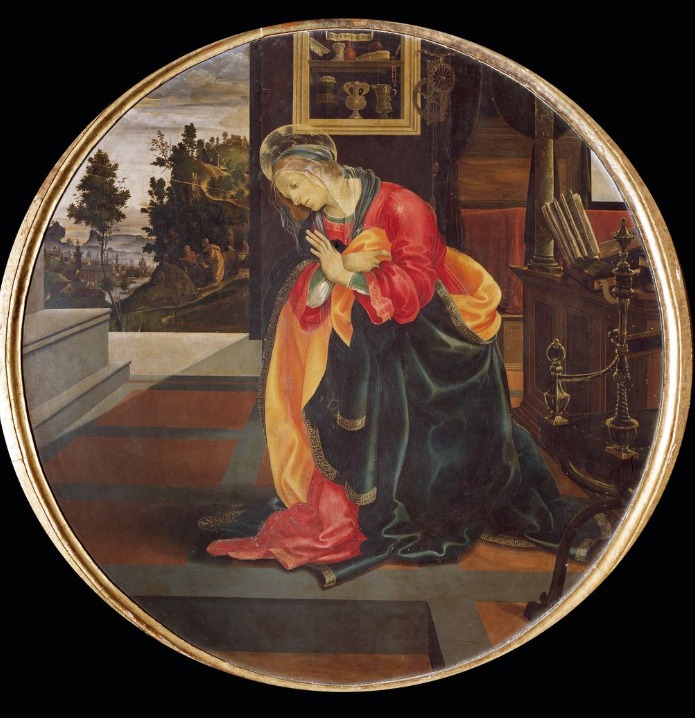
He was commissioned to complete the frescoes in the Brancacci del Carmine chapel, so relevant in his father’s training – a new circle was closed between them – and also to carry out the tondi for the Palazzo Comunale of San Gimignano, which proved his already consolidated mature style, capable of generating a peculiar monumental intimacy in everyday spaces where the divine is manifested through the perfection of light; the altarpieces for Tanai de’ Nerli, Rucellai, for Prato, Lucca and Bologna; and the Vision of Saint Bernard (ca. 1484-1486), commissioned by Piero di Francesco del Pugliese for the family chapel of the Campore convent of the monks of Badia fuori Porta Romana.
In 1487, Filippino received a call from the banker Filippo Strozzi, but shortly after he was summoned to Rome, in 1488, by Cardinal Carafa, to paint his monumental private chapel in the church of Santa Maria sopra Minerva, at the suggestion of Lorenzo de Medici.
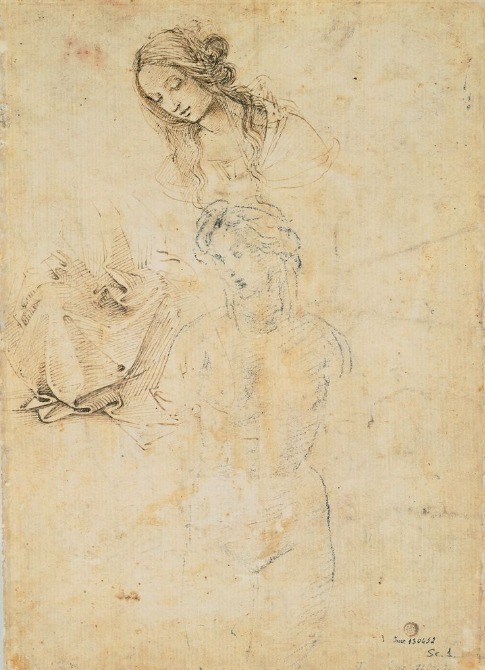
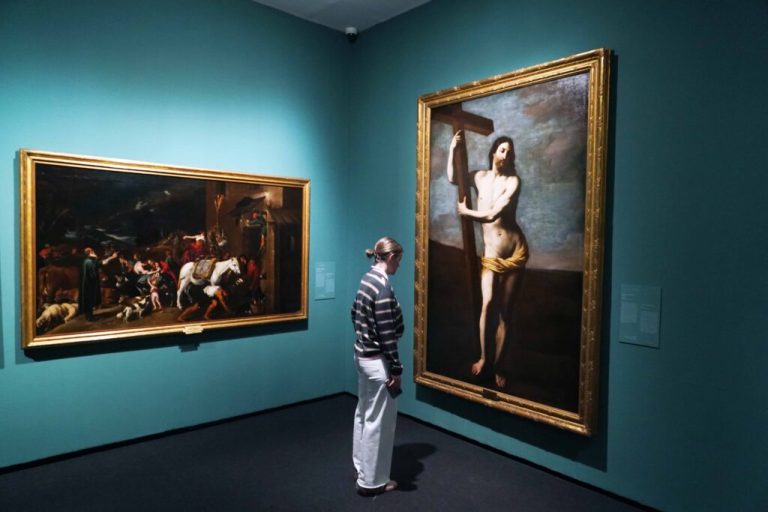
The Roman experience would mark a new stage in his career and one of the current exhibitions at the Cleveland Museum of Art is dedicated to it, which highlights how that stay in the city, which lasted between 1488 and 1493, would leave a fundamental mark on his later production.
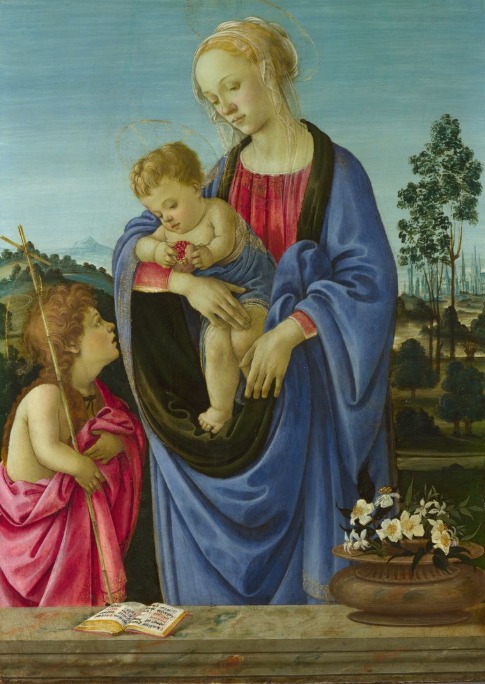
Twenty-five paintings by Filippino (who died early in 1504) and his Florentine precursors and successors have arrived at this center, as well as antiquities with which they can be directly related; Some come from museums such as the Metropolitan in New York, the National Gallery in London and the British royal collections, the Uffizi or the Gemäldegalerie in Berlin and, in some cases, it is the first time that they can be seen outside of Europe.
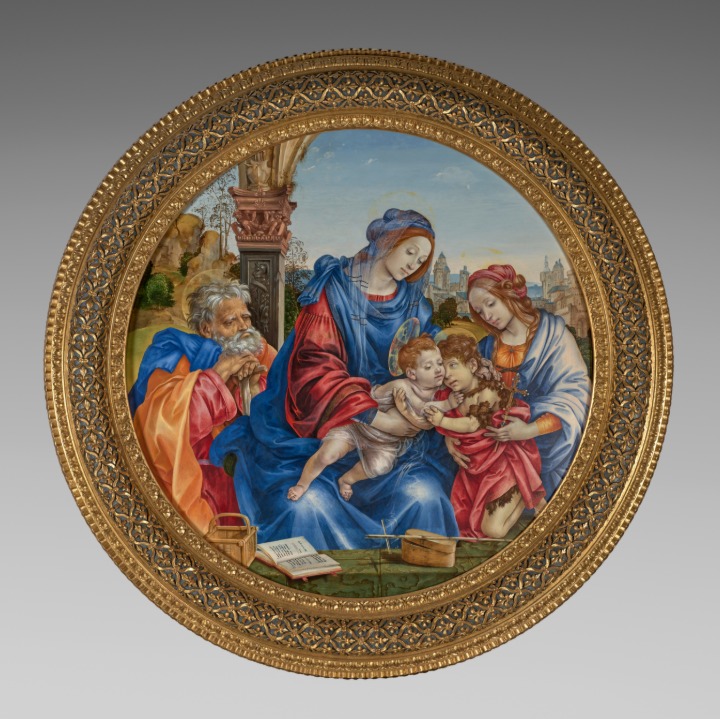
The exhibition begins by examining the artist’s training with his father and Botticelli, the path towards the consolidation of his independent style and his first commissions, before focusing on the aforementioned Roman period, with the tondo of the Holy Family together with Saint John the Baptist and Saint Margaret as the central axis. Belonging to this same museum, it is exhibited together with its preparatory drawing for the first time: it was requested by the aforementioned Cardinal Garafa, a prominent figure in Florence at that time both politically and spiritually.
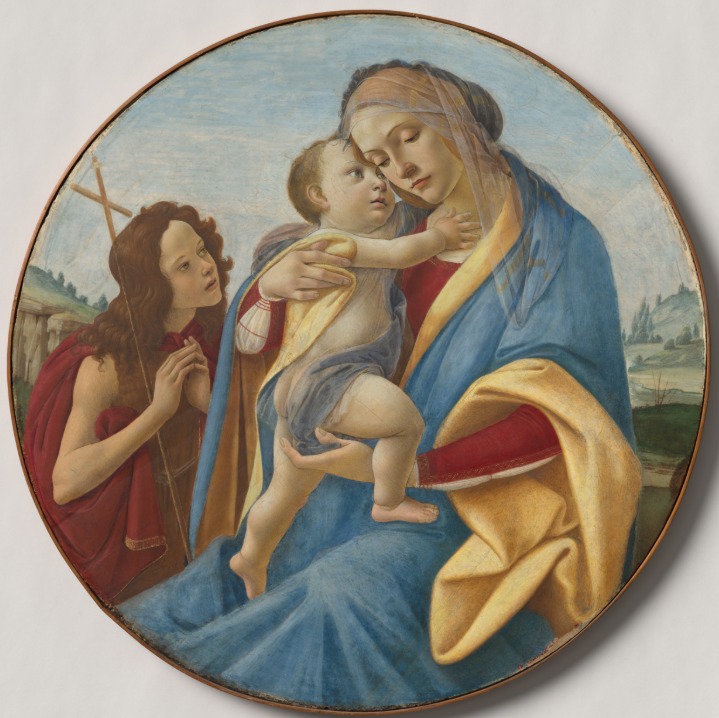
Both this piece and his work for Santa Maria sopra Minerva highlight the weight of Antiquity in Filippino’s work: his continued inspiration in Roman sculpture, murals and architecture. The montage juxtaposes his creations (in many cases, sketches and drawings) with ancient statues to illustrate this constant classical reference.
The final section of the exhibition analyzes, finally, the enduring influence of Rome on Filippino’s work through his adaptations of ancient designs and compositional elements, as well as the impact of the tondo of the Sagrada Familia on authors who belonged to his circle or who did not, such as Raffaellino del Garbo and Leonardo da Vinci.
Thanks to a significant donation from the Cleveland Museum’s Painting and Drawing Society, this tondo has a new frame: it replaces the previous one, which was not original and did not fit its scale or characteristics. The current one was carved and gilded by hand in Florence and is based on a prototype created for Botticelli.
“Filippino Lippi and Rome”
CLEVELAND MUSEUM OF ART
11150 East Boulevard
cleveland
From November 26, 2025 to February 22, 2026