UNESCO has announced the inclusion of six new sites on the List of World Heritage in Danger, which lists properties threatened by dangers of human or natural origin observed within their perimeter. Three of them were simultaneously inscribed on the World Heritage List and on the World Heritage in Danger List according to an emergency procedure, which allows deviations from the ordinary schedule when the immediate safeguarding of a property so requires.
The decision was taken within the framework of the UNESCO World Heritage Committee, currently taking place in Busan in South Korea until July 29. The use of the emergency procedure, allowing the deadlines of a regular registration process to be exceeded, is justified by the recognition of an imminent danger weighing on the protection of the property concerned. The sites of Boma-Badingilo in South Sudan, Mount Amel Castles in Lebanon and Sebastia in the State of Palestine have benefited, following the identification of serious threats requiring rapid measures.
Risks of different natures weigh on these three heritage sites, but most are of human origin. Boma-Badingilo National Parks host the Great Nile Migration, the largest movement of land mammals in the world. Millions of antelopes roam its great savannahs every year, alongside elephants, lions and other animals. Currently, their unique biodiversity is threatened by commercial poaching and wildlife trafficking and infrastructure development
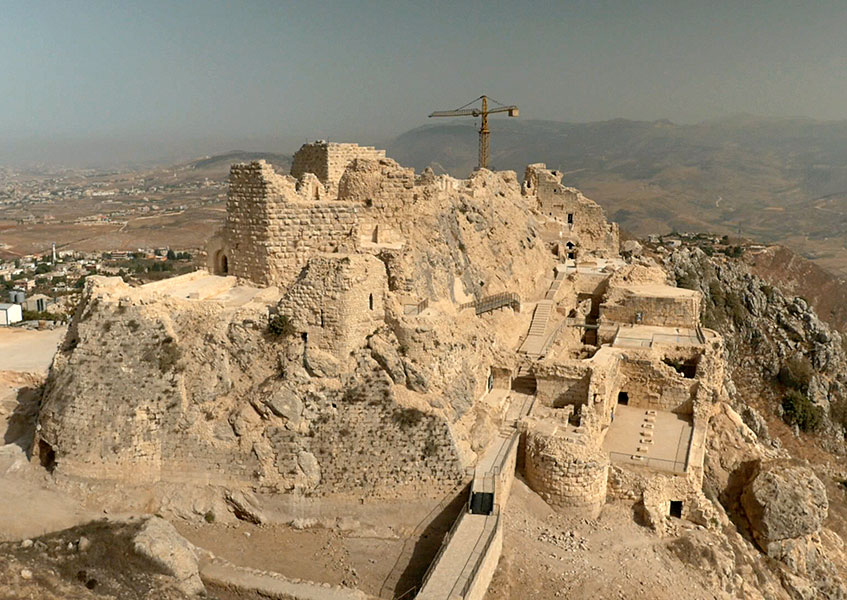
In Lebanon, the five castles of Mount Amel make up a fortified defensive network from the 12th century, which traces centuries of history, from the time of the Crusades to the end of the 19th century. Israeli bombings have already damaged these monuments, which remain threatened by the persistence of hostilities despite the agreements reached in June between the Lebanese and Israeli governments. Another target of conflicts in the Middle East, the Palestinian archaeological site of Sebastia brings together the testimonies of the civilizations that have succeeded one another since the 9th century BC. Specifically, UNESCO has identified as a direct threat the project to expropriate the site announced in November 2025 by Israel, aimed in particular at developing infrastructure there.
Also joining the List of World Heritage in Danger are three sites previously registered with UNESCO, whose current situation “weighs on the values which had justified their inscription”. These include the ancient city of Chersonese Taurica in Ukraine, located in Russian-occupied Crimea, where new constructions and large-scale archaeological excavations have altered the authenticity and integrity of the property, as well as the historic center of Paramaribo, in Suriname, whose authenticity and integrity are affected by several recent constructions, notably the new National Assembly hall and the Yogh car park, and Tyre, in Lebanon, directly threatened by the continuation of hostilities.
Beyond its symbolic significance, inscription on the List of World Heritage in Danger aims to mobilize the international community and initiate corrective measures. UNESCO distinguishes between “proven danger”, when the threats are precise and proven, and “endangerment”, when they are likely to harm the heritage value of the property. Under the ordinary procedure, only properties already inscribed as world heritage can join this List. The emergency procedure allows a State Party to request the simultaneous inscription of a property on the World Heritage List and on the World Heritage in Danger List. International assistance can then be requested from the World Heritage Fund.