Spain, “the other country of cheese”. As proof, the mayor of Toledo presented a private cheese museum project a few days ago, which must open in twelve months. According to him, this future establishment “Will not be any museum”but a key element of the city’s tourist strategy, designed to diversify the offer and attract an audience interested in gastronomic heritage.
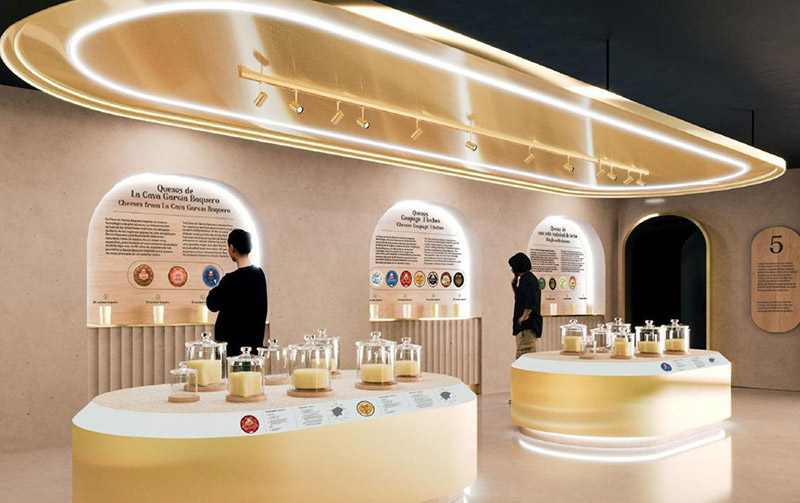
The museum will settle in a 1,500 m² unoccupied building since its construction in the 1990s, located in the Jewish district, facing the Santa María La Blanca synagogue. The museum route will be divided into eight sectors spread over several levels. The basement will host an exhibition on the history and origin of cheese, as well as – naturally – a shop. The ground floor will present milk production and manufacturing processes, while the first floor will be devoted to maturation as well as to the course of the founder of the company. Tasting spaces, a projection room and a panoramic terrace will complete the whole.
The project is led by the family company Lácta García Baquero, specialized in the manufacture and marketing of cheeses, created in 1962 and which has become an important player in the sector. The investment, estimated at six million euros, will be funded on the company’s equity.
3D projection of the future Museo del Queso García Baquero in Toledo, Spain.
© Quesos García-Baquero
This museum is part of a national dynamic where other establishments value the cheese heritage. The Museo del Queso Manchego in Manzanares (Castile-La Manche) combines collections and tastings. A second museum dedicated to cheese already exists in Toledo. In Idiazábal (Basque Country), an interpretation center presents local sheep production and offers sensory workshops. In Arenas de Cabrales (Asturias), a converted cellar simulates the natural conditions of refining of the Cabrales, with tasting at the end of the course.
The cultural importance of cheese in Spain explains the multiplication of these initiatives. The country has more than 200 varieties, 26 of which benefit from an appellation of protected origin. Each region has specialties, from the Manchego de Castille-la Manche to the Majoro de Fuerteventura, passing by the Basque Idiazábal or the Asturian Cabrals. Consumption, estimated at nearly 9 kg per capita and per year, is accompanied by many parties and regional competitions, such as the “Fiesta del QUESO CABRALES” in Asturias.
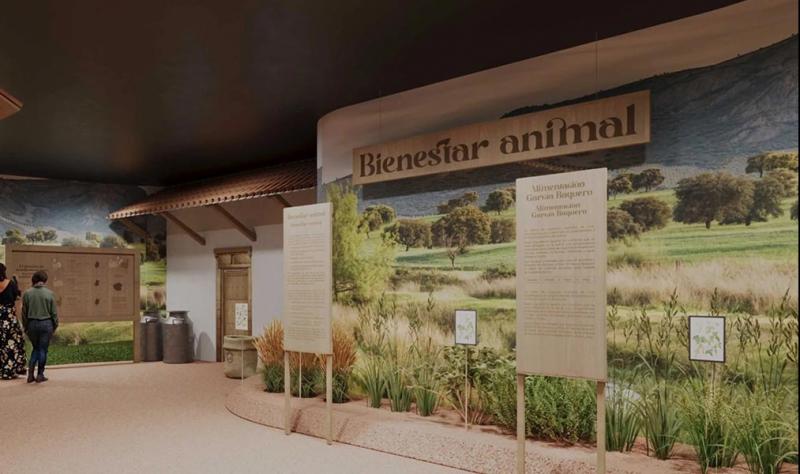
3D projection of the future Museo del Queso García Baquero in Toledo, Spain.
© Quesos García-Baquero